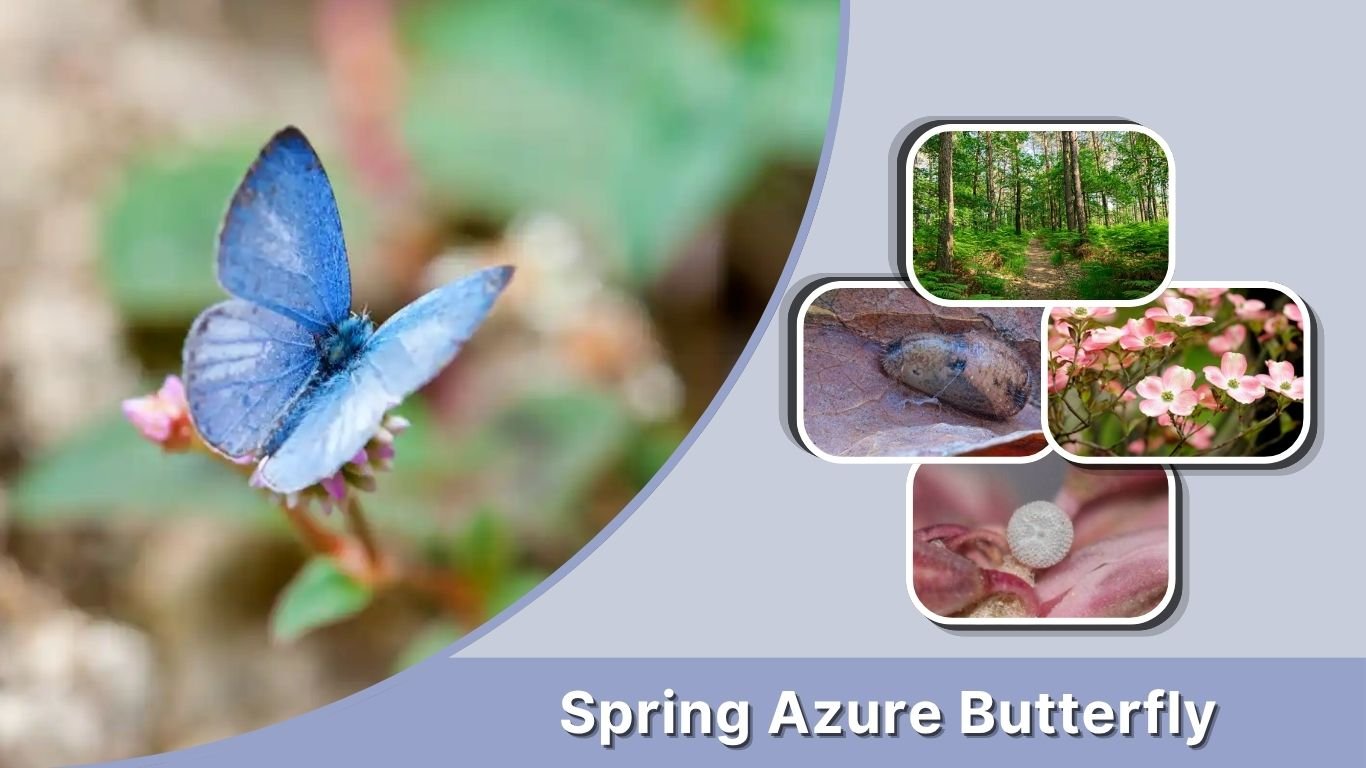
The spring azure butterfly is a small, delicate blue butterfly commonly seen during early spring in North America. Scientifically known as Celastrina ladon, this beautiful insect belongs to the Lycaenidae family and is recognized for its pale blue wings, subtle markings, and graceful flight. Spring azures frequently inhabit woodlands, forest edges, and flowering areas where suitable host plants grow. Their early seasonal appearance makes them a familiar sign of warmer weather. Understanding spring azure butterfly identification, habitat, caterpillars, life cycle, and feeding habits reveals fascinating details about this attractive species.
What Is a Spring Azure Butterfly?
The spring azure butterfly (Celastrina ladon) is a small North American butterfly belonging to the gossamer-winged butterfly family, Lycaenidae. This family also includes hairstreaks, coppers, and numerous other blue butterflies.
Spring azures are especially noticeable during early spring when woodland flowers begin blooming. Their small size and delicate blue coloration give them a distinctive appearance.
They are closely related to summer azure and other members of the genus Celastrina. Because several species look remarkably similar, accurate identification often requires considering their flight season, geographic location, and wing patterns.
Spring Azure Butterfly Identification and Appearance
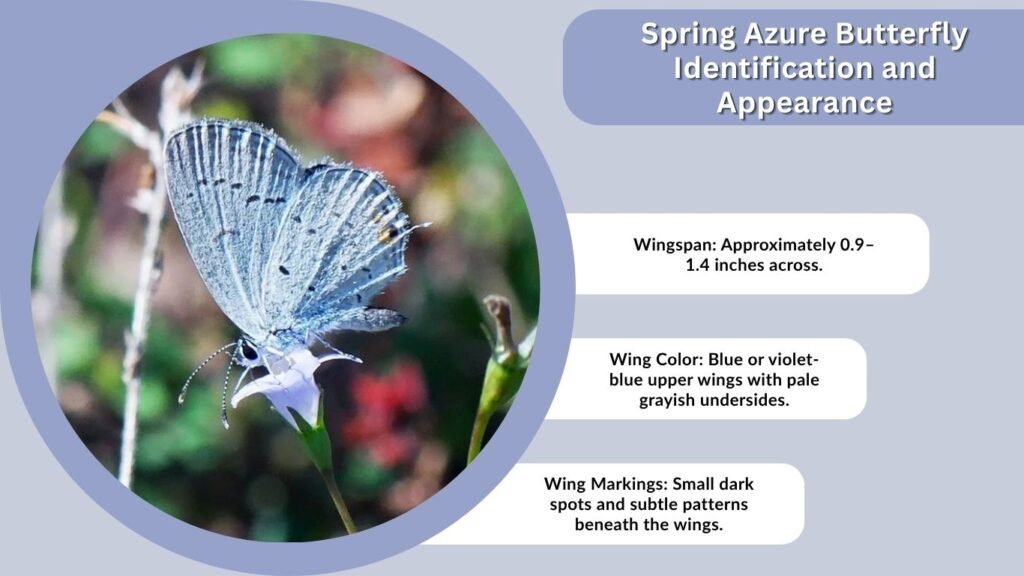
Spring azure butterflies have small bodies, rounded wings, and beautiful blue coloration. Their appearance differs slightly between males and females, and wing markings can vary among individuals.
Common identification characteristics include:
- Scientific Name: Celastrina ladon, belonging to the family Lycaenidae.
- Wingspan: Approximately 0.9–1.4 inches across.
- Wing Color: Blue or violet-blue upper wings with pale grayish undersides.
- Wing Markings: Small dark spots and subtle patterns beneath the wings.
- Antennae: Thin, club-shaped antennae with alternating light and dark markings.
- Flight Behavior: Quick, fluttering movements close to shrubs and woodland vegetation.
When resting with their wings closed, spring azures often appear pale gray or whitish. Their brilliant blue upper wings become more visible during flight.
Male vs. Female Spring Azure Butterfly
Male and female spring azure butterflies share many physical characteristics, but differences in their wing patterns help distinguish them.
Male Spring Azure Butterfly
Male spring azures typically have bright blue or violet-blue upper wings with relatively narrow dark borders.
They actively patrol woodland paths, forest edges, and flowering areas while searching for females.
Their blue coloration becomes particularly noticeable when sunlight reflects from their open wings.
Female Spring Azure Butterfly
Female spring azures usually have blue upper wings with broader dark borders, particularly along the outer edges of their forewings.
Their appearance may seem slightly darker than that of males.
Females spend time searching for suitable flowering host plants where they can deposit their eggs and support the next generation.
Spring Azure Butterfly Habitat and Range

Spring azure butterflies inhabit much of eastern and central North America, although the exact distribution of closely related azure species remains an area of taxonomic study.
They primarily occupy deciduous forests, mixed woodlands, forest clearings, and wooded stream corridors.
Adults frequently appear along woodland trails and near flowering shrubs where nectar is available. Some may also visit gardens located near suitable natural habitats.
Their populations depend on spring-flowering plants that provide food for caterpillars. The availability of these plants strongly influences local breeding activity and butterfly distribution.
Spring Azure Butterfly Life Cycle
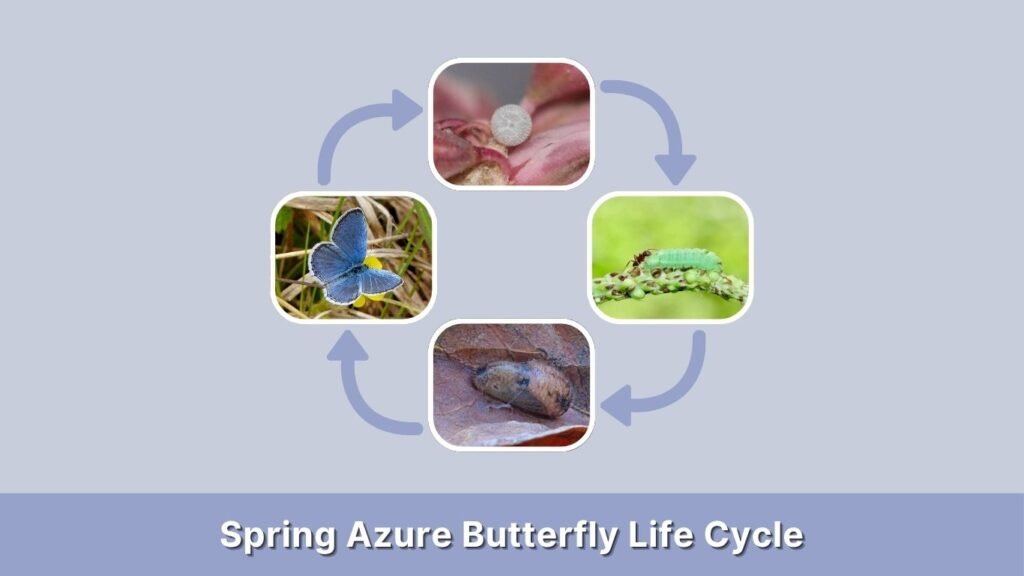
The spring azure butterfly undergoes complete metamorphosis, involving four developmental stages: egg, caterpillar, chrysalis, and adult.
Unlike butterflies that produce several generations annually, spring azures in many eastern populations have a relatively short spring flight period and typically overwinter as pupae.
1. Egg Stage
Female spring azure butterflies lay tiny eggs individually on flower buds of suitable host plants.
The eggs are small, pale, and difficult to notice without careful observation. After several days, depending on environmental conditions, caterpillars hatch and begin feeding.
2. Caterpillar Stage
Spring azure caterpillars have flattened, somewhat slug-shaped bodies that may appear green, pale, or pinkish.
They primarily consume flower buds, blossoms, and developing fruits rather than mature leaves.
Their development depends on the availability of suitable flowering plants.
3. Chrysalis Stage
After completing their growth, caterpillars transform into chrysalises.
The pupae are usually small and inconspicuous, helping them remain concealed within protected surroundings.
Spring azures commonly survive winter in this developmental stage, emerging as adults when favorable spring conditions return.
4. Adult Butterfly Stage
Adult butterflies emerge during the spring flowering season.
After their wings expand and harden, they begin searching for nectar and potential mates.
Females eventually lay eggs on suitable host plants, allowing the reproductive cycle to continue.
Spring Azure Butterfly Caterpillar Identification
Spring azure caterpillars differ considerably from the long, cylindrical caterpillars commonly associated with many moths and butterflies.
Their flattened bodies have a rounded, slug-like appearance, with coloration that may help them blend into flowering vegetation.
These larvae feed primarily on developing flowers and buds.
An interesting characteristic is their relationship with certain ants. Spring azure caterpillars may produce sugary secretions that attract ants, which can provide protection against some predators and parasitoids.
This relationship illustrates an important ecological interaction between insects.
Spring Azure Butterfly Host Plants
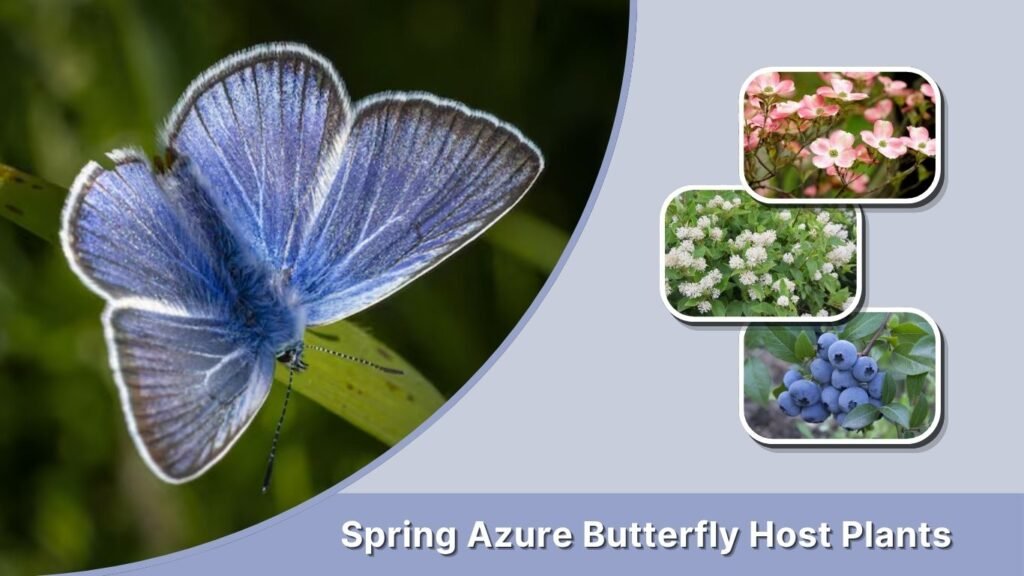
Host plants are essential for spring azure reproduction because female butterflies deposit eggs on vegetation that provides suitable food for developing caterpillars.
Commonly recorded spring azure host plants include:
- Flowering Dogwood: An important host plant providing flower buds for developing caterpillars.
- New Jersey Tea: A native flowering shrub used by spring azure larvae.
- Viburnum: Certain species provide suitable buds and blossoms.
- Blueberry: Some populations utilize flowering blueberry shrubs.
- Meadowsweet: A flowering shrub associated with azure caterpillar development.
Host plant preferences vary among geographic populations and closely related azure species. Selecting locally documented native plants provides the best support for butterfly reproduction.
What Do Spring Azure Butterflies Eat?
Adult spring azure butterflies primarily feed on flower nectar. Their long proboscis allows them to collect liquid food from small blossoms.
They frequently visit early-blooming shrubs and wildflowers in woodland environments.
Some adults also gather moisture and dissolved minerals from damp soil, a behavior known as puddling.
Spring azure caterpillars have different nutritional requirements. They consume tender flower buds, blossoms, and develop fruits from suitable host plants.
Spring Azure vs. Summer Azure Butterfly
The spring azure (Celastrina ladon) and summer azure (Celastrina neglecta) are closely related butterflies that can be difficult to distinguish by appearance alone.
Spring Azure Butterfly
Spring azures generally appear during the early spring flowering season. Males commonly have violet-blue upper wings, while females display darker wing borders.
Their caterpillars frequently use flowering dogwood and other spring-blooming plants.
Summer Azure Butterfly
Summer azures are commonly observed later in the growing season, although their flight periods may overlap with spring azures.
Their wings often appear powdery blue or whitish, and their caterpillars use several flowering shrubs, including dogwoods.
Because these butterflies are so similar, identification should consider location, season, host plants, and detailed wing markings.
How to Attract Spring Azure Butterflies

Creating suitable habitat for spring azure butterflies involves maintaining flowering plants, protected woodland vegetation, and reliable nectar sources.
Helpful gardening practices include:
- Plant Native Shrubs: Grow suitable native dogwoods, New Jersey tea, and locally appropriate host plants.
- Provide Spring Flowers: Include early-blooming native plants that supply nectar.
- Maintain Woodland Edges: Preserve sheltered areas near trees and flowering shrubs.
- Avoid Insecticides: Reduce chemical applications that may harm butterflies and caterpillars.
- Leave Natural Shelter: Retain some undisturbed leaf litter and vegetation where pupae may survive winter.
These practices encourage butterfly activity while supporting other beneficial insects.
FAQs
1. What is the scientific name of the spring azure butterfly?
The scientific name is Celastrina ladon. It belongs to the family Lycaenidae, commonly known as the gossamer-winged butterflies.
2. When do spring azure butterflies appear?
Spring azures generally appear during early spring, although their flight season varies depending on geographic location and temperature.
3. How big is a spring azure butterfly?
Spring azure butterflies typically have a wingspan of approximately 0.9–1.4 inches, making them relatively small compared with many familiar butterfly species.
4. What do spring azure caterpillars eat?
Spring azure caterpillars primarily consume flower buds, blossoms, and developing fruits from suitable host plants, including flowering dogwood and New Jersey tea.
5. Are spring azure butterflies rare?
Spring azures are widespread in suitable parts of eastern North America, but local abundance varies. Their populations depend on appropriate woodland habitats and host plants.