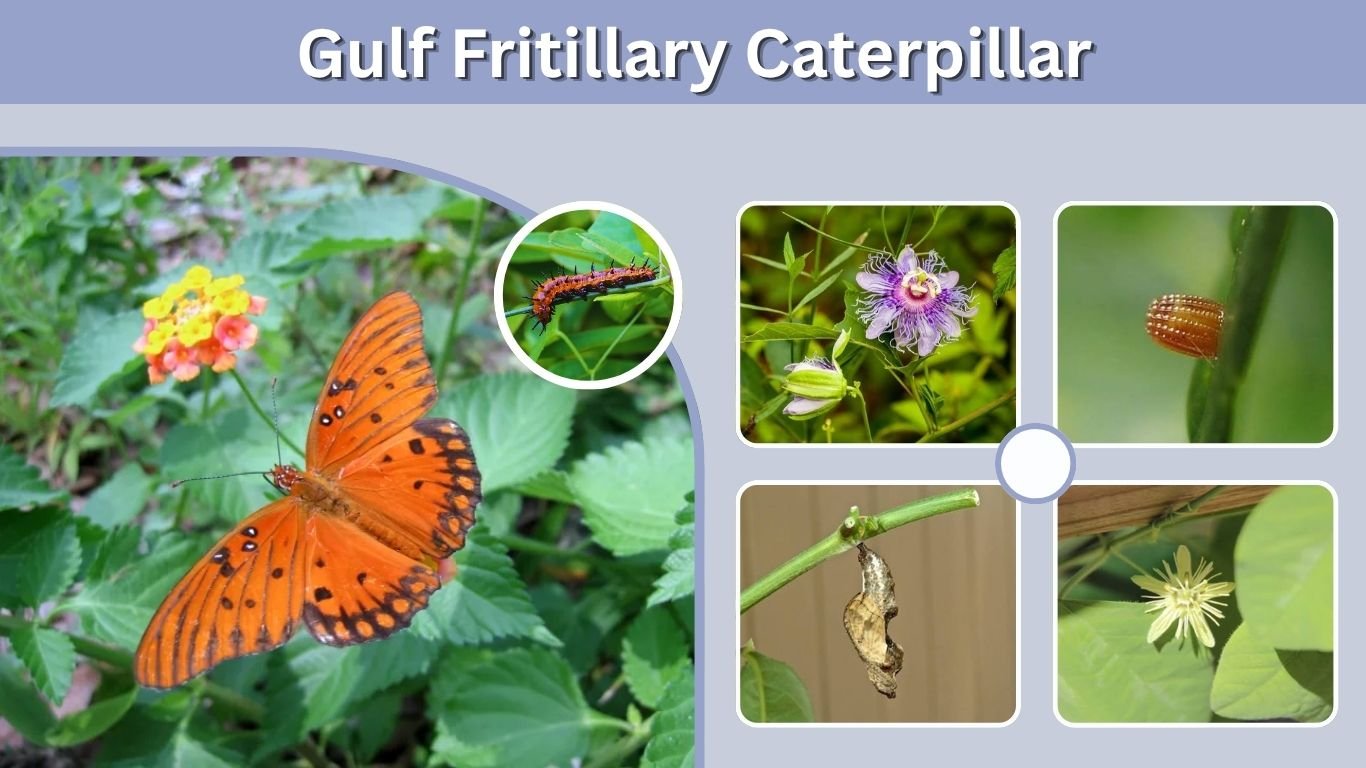
The Gulf fritillary caterpillar is a bright orange insect covered with long black spines, commonly found feeding on passionflower vines. Although its appearance may seem dangerous, these caterpillars cannot sting humans. They eventually transform into beautiful orange butterflies with distinctive silver markings beneath their wings. Gulf fritillary caterpillars play an important role in butterfly gardens, but their feeding habits can sometimes damage passionflower plants. Understanding their appearance, diet, life cycle, potential dangers, and care requirements can help gardeners identify and manage them safely.
What Is a Gulf Fritillary Caterpillar?
The Gulf fritillary caterpillar is the larval stage of the Gulf fritillary butterfly, scientifically known as Agraulis vanillae. This butterfly belongs to the Nymphalidae family and is commonly found in warm regions of North, Central, and South America. Its caterpillar is especially recognizable because of its bright coloration and unusual spiny appearance.
Gulf Fritillary Caterpillar Identification
Gulf fritillary caterpillars have several distinctive features that make identification relatively simple.
- Body color: Bright orange to reddish-orange, sometimes with darker stripes.
- Spines: Numerous long, black, branched projections covering the body.
- Body markings: Dark spots and stripes along the segments.
- Size: Mature caterpillars usually reach approximately 1.5 inches (3.8 cm).
- Host plant: Primarily passionflower vines.
- Movement: They crawl along leaves and stems while feeding on plant material.
Young caterpillars are much smaller and may appear darker than mature individuals. Their colors and markings become more noticeable as they grow.
Where Are Gulf Fritillary Caterpillars Found?
Gulf fritillary caterpillars are widespread throughout the southern United States, especially in Florida, Texas, and other warm regions.
They also occur in Mexico, Central America, the Caribbean, and South America.
These caterpillars are most often seen on passionflower vines growing in gardens, open fields, roadsides, and sunny woodland edges. Their distribution depends heavily on the availability of suitable host plants.
Are Gulf Fritillary Caterpillars Dangerous or Poisonous?
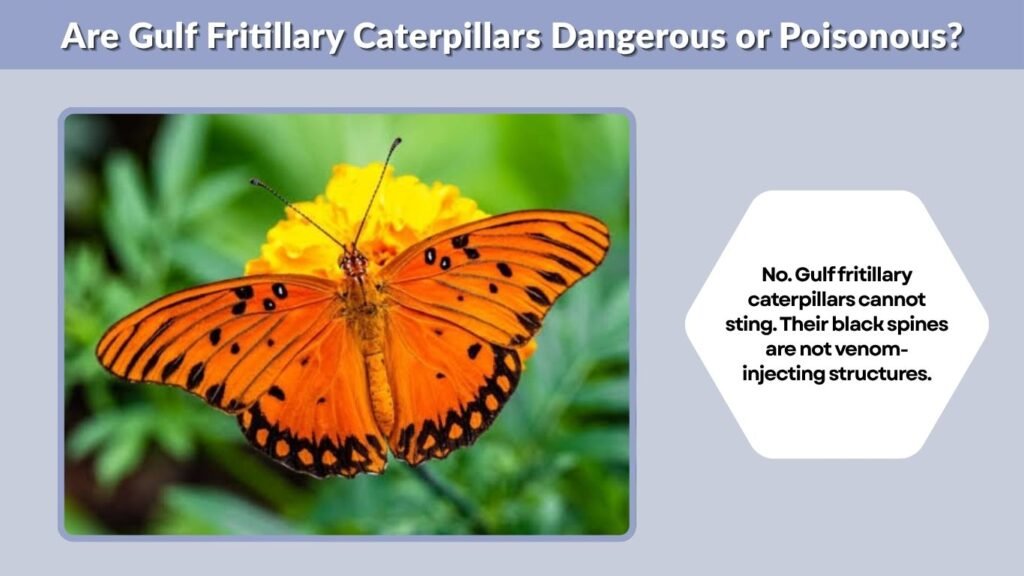
The black spines covering Gulf fritillary caterpillars can make them look threatening. However, their appearance is primarily a defensive adaptation rather than a mechanism for attacking humans. It is important to distinguish between their physical harmlessness and the chemical defenses they acquire from their food plants.
Can Gulf Fritillary Caterpillars Sting?
No. Gulf fritillary caterpillars cannot sting. Their black spines are not venom-injecting structures.
They do not possess the specialized stinging hairs found on some venomous moth caterpillars.
Although they are not considered dangerous to touch, unnecessary handling should be avoided. Rough handling can injure the caterpillar, and people with sensitive skin may experience irritation from contact with insects or plants.
Are Gulf Fritillary Caterpillars Poisonous to Humans?
Gulf fritillary caterpillars are not considered a typical human poisoning hazard through ordinary contact.
However, they feed on passionflower plants containing defensive chemicals. Some of these compounds can be retained in the caterpillar’s body, making it unpleasant or toxic to certain predators.
These defenses discourage animals from eating the caterpillars.
People should never intentionally eat caterpillars or allow children to put them in their mouths.
Are They Poisonous to Dogs and Cats?
Gulf fritillary caterpillars are not known to sting dogs or cats. However, there is limited evidence establishing the safety of swallowing them.
Pets may experience digestive discomfort after eating insects or plant material, particularly if large quantities are consumed.
If a dog or cat eats a caterpillar and develops vomiting, drooling, weakness, or other unusual symptoms, contact a veterinarian.
What Do Gulf Fritillary Caterpillars Eat?
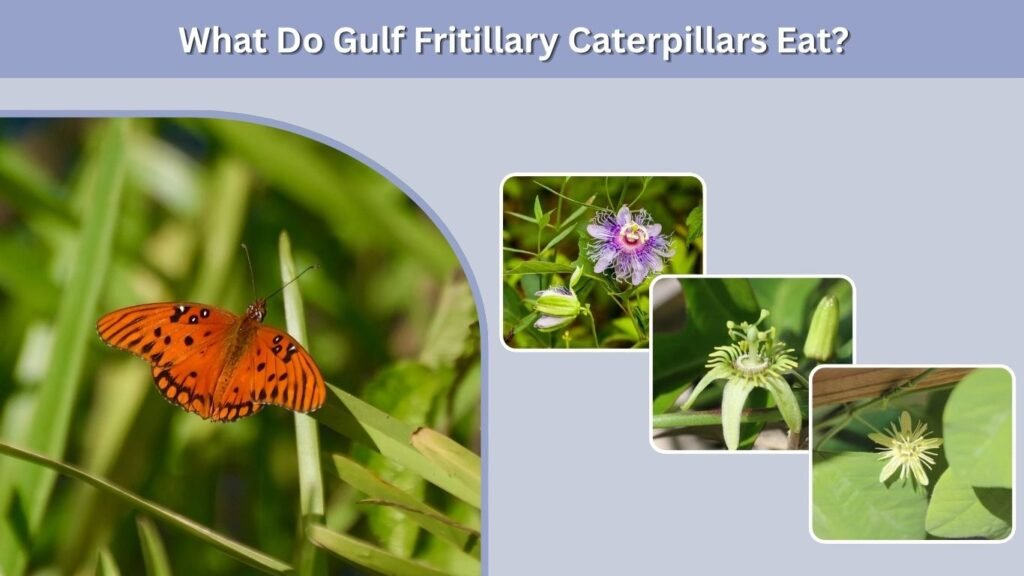
Gulf fritillary caterpillars are specialized feeders that depend primarily on passionflower plants. Unlike caterpillars that consume many unrelated plant species, they require appropriate host plants to complete their development. Their feeding behavior explains why gardeners frequently find several caterpillars on the same vine.
Gulf Fritillary Caterpillar Host Plants
Common host plants include:
- Purple passionflower (Passiflora incarnata): Also called maypop, this is a particularly important host plant.
- Corkystem passionflower (Passiflora suberosa): A vine commonly used by Gulf fritillary caterpillars in Florida.
- Yellow passionflower (Passiflora lutea): Another suitable native host plant.
- Other Passiflora species: Some additional passionflower vines support larval development, although not all ornamental varieties are suitable.
Female butterflies lay their eggs on or near these plants, ensuring newly hatched caterpillars have access to food.
How Much Do Gulf Fritillary Caterpillars Eat?
Young caterpillars consume relatively small amounts of plant material. However, their appetite increases considerably as they grow.
Mature larvae can eat large portions of leaves, stems, flower buds, and other tender parts of passionflower vines.
When several caterpillars feed on one plant, they may remove much of its foliage. Established, healthy vines often recover, although repeated heavy feeding can temporarily weaken smaller plants.
Gulf Fritillary Caterpillar Life Cycle and Stages
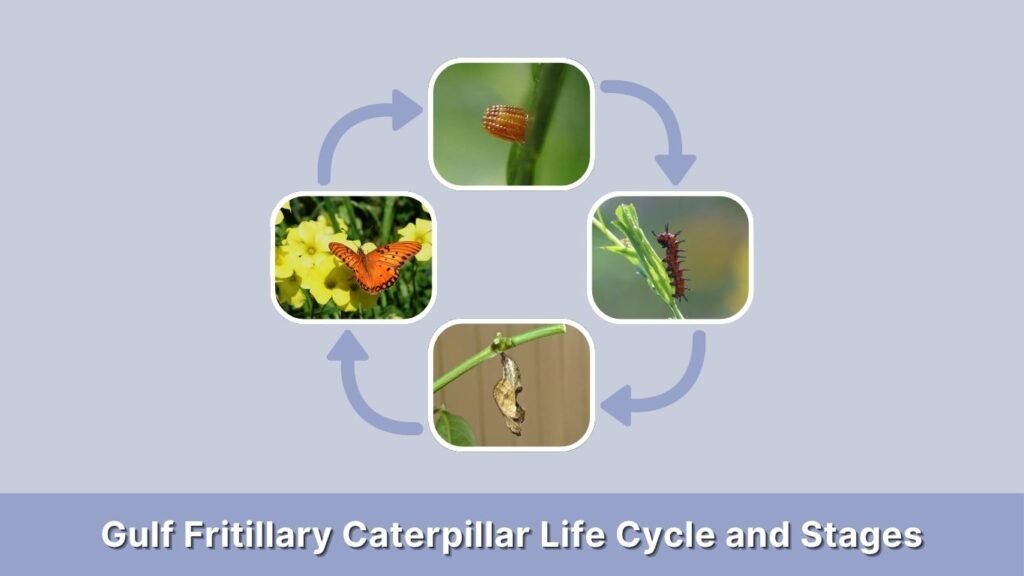
The Gulf fritillary butterfly undergoes complete metamorphosis, progressing through egg, larva, pupa, and adult stages. Environmental conditions, particularly temperature, influence how quickly development occurs. Understanding these stages helps explain the changes gardeners observe as caterpillars grow and eventually disappear from their host plants.
1. Egg Stage
Female Gulf fritillary butterflies lay small yellow eggs individually on passionflower leaves, stems, or tendrils.
Under favorable conditions, the eggs generally hatch within approximately three to five days. Newly emerged caterpillars begin feeding shortly afterward.
2. Caterpillar Stage
The Gulf fritillary caterpillar develops through five larval stages called instars.
Between each instar, it sheds its outer skin in a process called molting. As the caterpillar grows, its orange coloration and black spines become more pronounced.
The larval stage commonly lasts about two to three weeks, depending on temperature and food availability.
3. Chrysalis Stage
When fully grown, the caterpillar stops feeding and searches for a suitable place to pupate.
It attaches itself to a plant stem, leaf, or nearby structure and transforms into a chrysalis.
The Gulf fritillary chrysalis is usually brown or grayish-brown, with an irregular appearance resembling a dried leaf.
This stage often lasts approximately 10–12 days under favorable conditions.
4. Adult Butterfly Stage
After metamorphosis, the adult Gulf fritillary butterfly emerges from its chrysalis.
Its wings are initially soft and folded. After expanding and drying them, the butterfly becomes capable of flying.
Adult Gulf fritillaries have bright orange upper wings with black markings and striking silver-colored spots beneath their wings.
They visit flowers for nectar and eventually reproduce, beginning the life cycle again.
How to Care for Gulf Fritillary Caterpillars
Gulf fritillary caterpillars can be observed or raised successfully when provided with suitable food and a clean environment. The most important requirement is a pesticide-free passionflower host plant. Poor ventilation, insufficient food, and unnecessary disturbance can interfere with their development.
Providing the Right Environment
If you are caring for Gulf fritillary caterpillars, follow these basic guidelines:
- Provide fresh, pesticide-free passionflower leaves from a suitable host species.
- Keep the enclosure well-ventilated and protected from overheating.
- Remove droppings and decaying leaves regularly.
- Avoid overcrowding caterpillars in small containers.
- Provide enough space for caterpillars to form chrysalises.
- Avoid touching or moving caterpillars during molting or pupation.
Whenever possible, observing caterpillars on outdoor passionflower vines is preferable to collecting them unnecessarily.
How to Control Gulf Fritillary Caterpillars on Plants
Gulf fritillary caterpillars can sometimes damage ornamental passionflower vines by consuming large amounts of foliage. However, they are native butterflies in much of their American range and generally deserve protection rather than routine elimination.
Managing Caterpillar Damage Naturally
For gardeners concerned about defoliation, gentle management is usually sufficient.
Small numbers of caterpillars can be left alone, particularly on large, established vines. If a young plant is being heavily damaged, caterpillars may be carefully relocated to another suitable, pesticide-free passionflower vine where relocation is appropriate.
Providing additional host plants can also reduce pressure on individual vines.
Avoid broad-spectrum insecticides whenever possible because they can kill beneficial insects and other butterfly caterpillars.
FAQs
Are Gulf Fritillary Caterpillar Spikes Poisonous?
No. The black spines are not venomous stingers. However, Gulf fritillary caterpillars can retain defensive chemicals from passionflower plants, making them unpleasant or harmful to certain predators that attempt to eat them.
How Long Does the Gulf Fritillary Caterpillar Stage Last?
The caterpillar stage generally lasts approximately two to three weeks in favorable conditions. Development time varies with temperature, host plant quality, and environmental conditions. Caterpillars pass through five instars before pupating.
What Does a Gulf Fritillary Caterpillar Chrysalis Look Like?
A Gulf fritillary chrysalis is usually mottled brown or grayish-brown and resembles a dried leaf. It hangs from a supporting surface and protects the developing butterfly during metamorphosis.
Do Gulf Fritillary Caterpillars Eat Passion Fruit Plants?
Yes. Gulf fritillary caterpillars may feed on certain passionfruit and passionflower vines belonging to the genus Passiflora. However, not every cultivated variety is equally suitable for successful larval development.
What Are the Main Predators of Gulf Fritillary Caterpillars?
Predators and natural enemies include spiders, predatory insects, parasitic wasps, and parasitoid flies. Although their chemical defenses discourage some predators, Gulf fritillary caterpillars are not completely protected from attack.