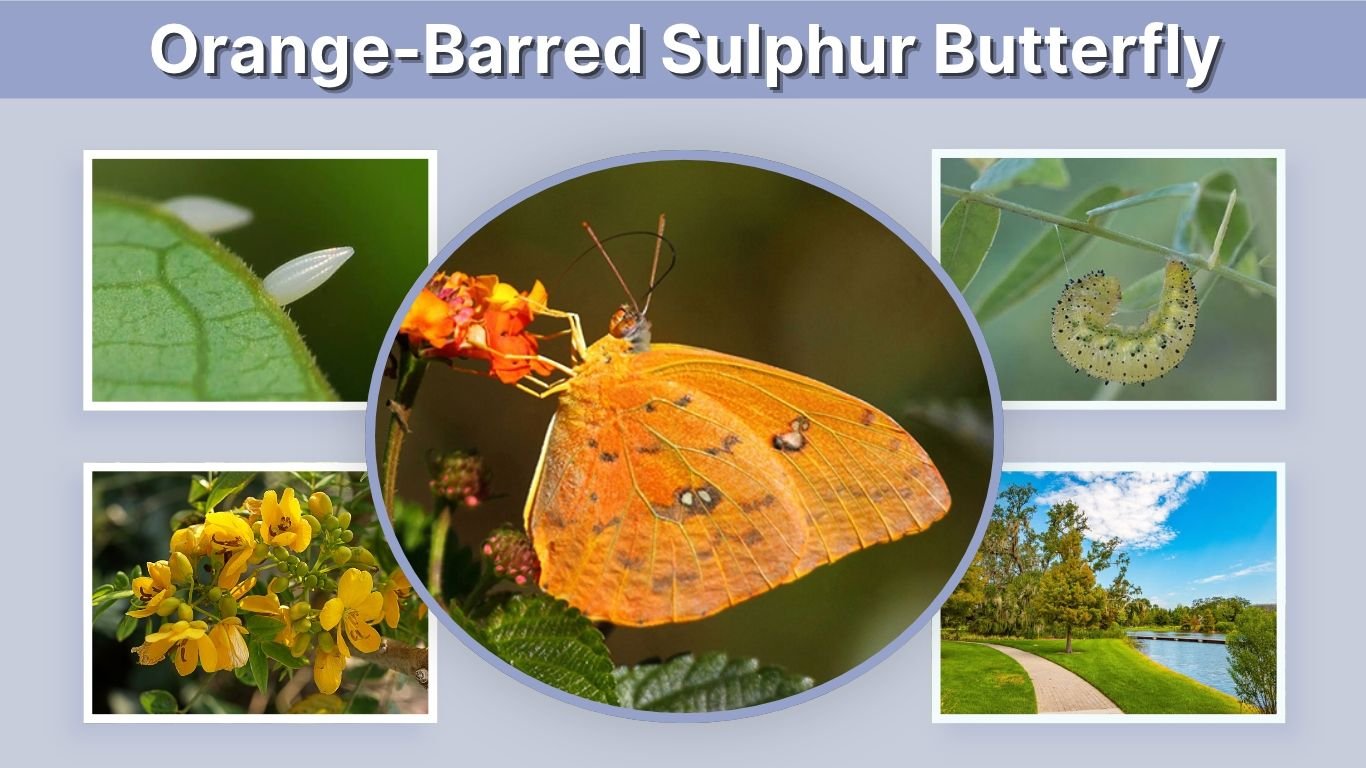
The orange-barred sulphur butterfly is a large, fast-flying species famous for its bright yellow wings and beautiful orange markings. Scientifically known as Phoebis philea, this butterfly inhabits warm regions of North, Central, and South America. It is commonly spotted in gardens, parks, forest edges, and other sunny locations. Its colorful appearance, interesting feeding habits, and unique life cycle make it popular among butterfly enthusiasts. Understanding its appearance, habitat, diet, caterpillar development, and behavior can help you identify this remarkable butterfly in the wild.
What Is an Orange-Barred Sulphur Butterfly?
The orange-barred sulphur butterfly (Phoebis philea) belongs to the Pieridae family, which includes numerous white and yellow butterflies. It is also called the orange-barred giant sulphur because of its relatively large wingspan. This butterfly is particularly recognizable by the bright orange bands displayed on the wings of males.
Orange-Barred Sulphur Butterfly Facts
- Scientific Name: Phoebis philea
- Common Name: Orange-Barred Sulphur Butterfly
- Alternative Name: Orange-Barred Giant Sulphur
- Family: Pieridae
- Order: Lepidoptera
- Subfamily: Coliadinae
- Wingspan: Approximately 7–10 cm
- Main Colors: Yellow, orange, and reddish-orange
- Adult Diet: Flower nectar
- Caterpillar Food: Senna and related plants
- Habitat: Gardens, parks, and open woodlands
- Distribution: Florida, Central America, and South America
Orange-Barred Sulphur Butterfly Behavior
Orange-barred sulphurs are powerful, rapid flyers that spend much of their time searching for nectar and potential mates.
They are especially active during warm, sunny weather. Their quick movements can make them difficult to observe closely or photograph.
Adults usually rest with their wings closed, displaying the more subdued colors and markings found on their undersides.
Orange-Barred Sulphur Butterfly Identification
Identifying an orange-barred sulphur butterfly involves examining its wing colors, size, and markings. Males and females differ significantly in appearance, making identification particularly interesting. The species resembles the cloudless sulphur but is generally larger and has more noticeable orange markings.
Male Orange-Barred Sulphur Butterfly
Male orange-barred sulphurs have bright lemon-yellow upper wings with a prominent orange-red band crossing each forewing.
Their hindwings display a broad orange-colored outer margin. These markings create a striking contrast with the yellow portions of the wings.
The underside is usually yellowish-orange with small brown or reddish markings that help the butterfly blend into its surroundings.
Female Orange-Barred Sulphur Butterfly
Female orange-barred sulphurs are generally larger than males and have more variable wing coloration.
Some females appear yellow-orange, while others have pale cream or whitish wings. Their forewings typically display dark spots and irregular black markings.
Yellow females may also have extensive orange-red coloring on their hindwings. These differences help distinguish females from the more uniformly bright males.
Orange-Barred Sulphur Butterfly Habitat and Range
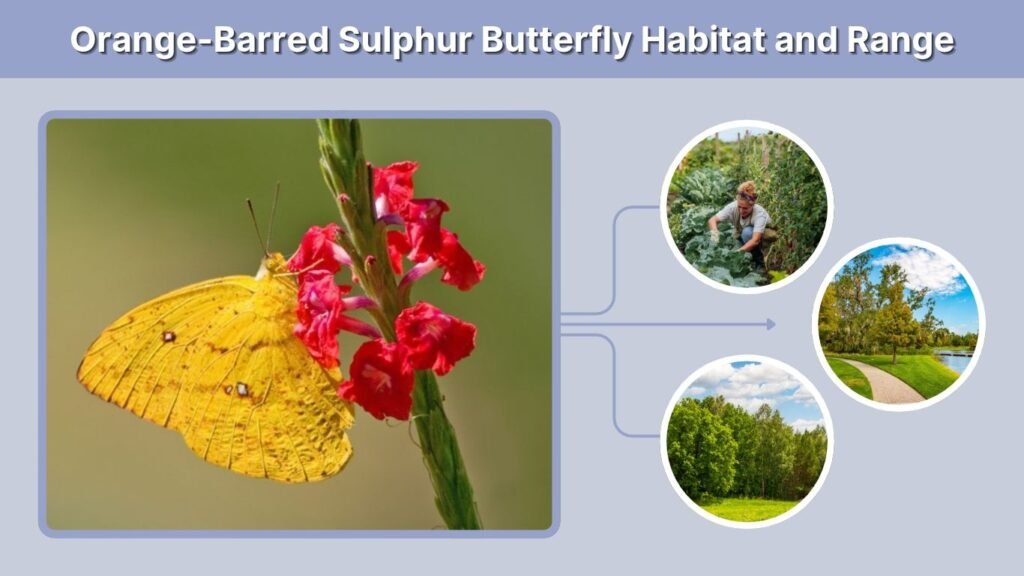
Orange-barred sulphur butterflies prefer warm, open landscapes where flowering plants and suitable caterpillar host plants are available. They frequently inhabit tropical and subtropical environments but can occasionally travel beyond their normal breeding range. Their adaptability allows them to occupy both natural habitats and human-maintained gardens.
Common Habitats
These butterflies can be observed in several environments, including:
- Gardens: Flower-rich gardens provide nectar and suitable host plants.
- Public Parks: Open, sunny parks offer feeding opportunities.
- Forest Edges: Areas along woodland boundaries provide flowers and shelter.
- Roadsides: Flowering roadside vegetation attracts feeding adults.
- Open Fields: Sunny fields provide space for flying and searching for mates.
- Tropical Lowlands: Warm tropical regions support breeding populations.
Geographic Distribution
The orange-barred sulphur occurs from Brazil through Central America and the Caribbean into southern Florida.
It is especially associated with tropical and subtropical climates. In southern Florida, adults may be observed throughout the year.
The species sometimes wanders northward into other parts of the United States. However, these occasional appearances do not necessarily indicate permanent breeding populations.
Its movements depend on weather conditions, suitable vegetation, and seasonal environmental changes.
What Do Orange-Barred Sulphur Butterflies Eat?
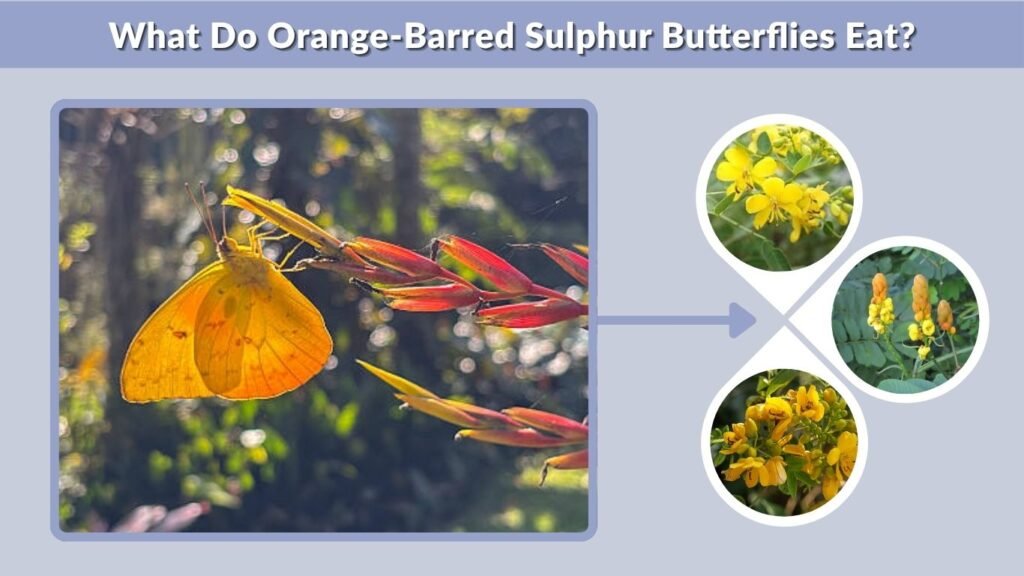
Orange-barred sulphur butterflies consume different foods during their adult and caterpillar stages. Adults primarily feed on flower nectar, while caterpillars depend on specific host plants. These feeding habits support their development, reproduction, and survival in natural environments.
Orange-Barred Sulphur Butterfly Host Plants
The caterpillars mainly feed on Senna and related plants belonging to the Fabaceae family.
Important host plants include:
- Coffee Senna: Senna occidentalis is a documented larval food plant.
- Candle Bush: Senna alata provides suitable foliage and flowers for caterpillars.
- Bahama Cassia: A host plant associated with orange-barred sulphur populations in Florida.
- Other Senna Species: Several related plants provide suitable food and egg-laying locations.
Female butterflies usually deposit eggs individually on the leaves or flowers of suitable plants.
Caterpillars frequently prefer feeding on flower buds and blossoms, although they also consume leaves.
Adult Butterfly Diet
Adult orange-barred sulphurs primarily consume nectar from flowering plants.
They have long, flexible proboscises that allow them to reach nectar inside deep flowers. Hibiscus and other tubular blossoms can provide valuable feeding opportunities.
Adults visit various colorful flowers throughout the day, particularly in warm, sunny conditions.
Nectar provides the energy necessary for flight, reproduction, and movement between feeding habitats.
Orange-Barred Sulphur Butterfly Life Cycle
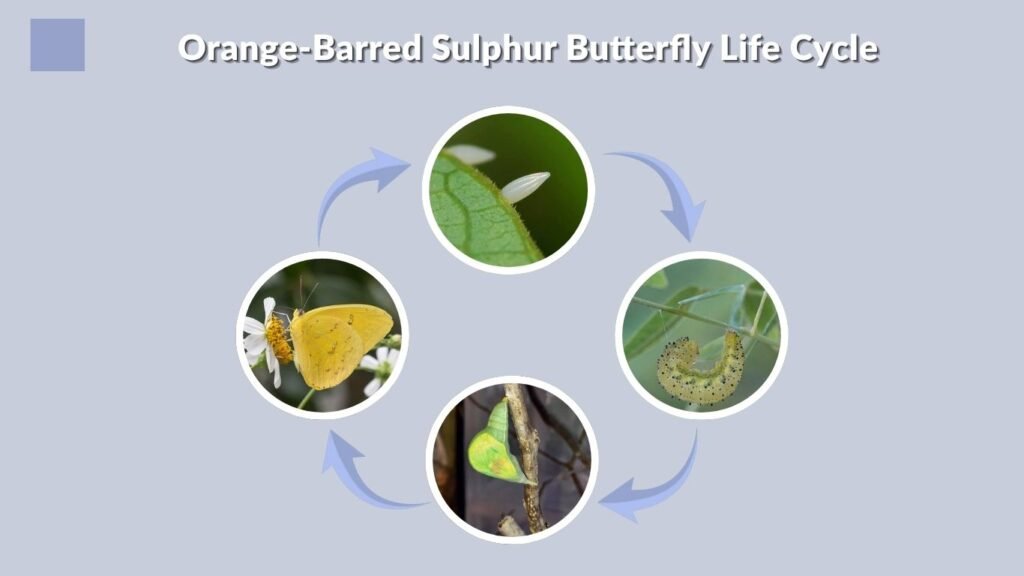
The orange-barred sulphur undergoes complete metamorphosis, developing through four distinct stages: egg, caterpillar, chrysalis, and adult butterfly. Each stage involves important physical and behavioral changes. Development time varies depending on temperature, food availability, and environmental conditions.
Four Stages of the Life Cycle
1. Egg Stage
Female butterflies lay their eggs individually on host plant leaves or flowers. The eggs are generally slender, spindle-shaped, and pale yellow or whitish. Young caterpillars emerge after embryonic development is complete.
2. Caterpillar Stage
Orange-barred sulphur caterpillars may appear green or yellow depending partly on their diet. Mature larvae have dark lateral stripes and numerous small dark markings. They feed actively on Senna leaves and flowers while growing through several molts.
3. Chrysalis Stage
When fully grown, the caterpillar attaches itself to vegetation and transforms into a chrysalis. The pupa can be greenish or pinkish in coloration. Inside the chrysalis, the insect undergoes major changes as its adult body develops.
4. Adult Butterfly Stage
The adult butterfly eventually emerges from the chrysalis with soft, folded wings. After expanding and drying its wings, it begins flying. Mature butterflies search for nectar, mates, and suitable breeding locations to continue their life cycle.
How Long Do Orange-Barred Sulphur Butterflies Live?
The lifespan of an orange-barred sulphur depends on temperature, food availability, predators, and other environmental conditions.
Adults generally survive for several weeks under favorable circumstances, although individual lifespans vary.
In warm tropical environments, the species can produce multiple generations throughout the year.
Orange-Barred Sulphur vs. Cloudless Sulphur Butterfly
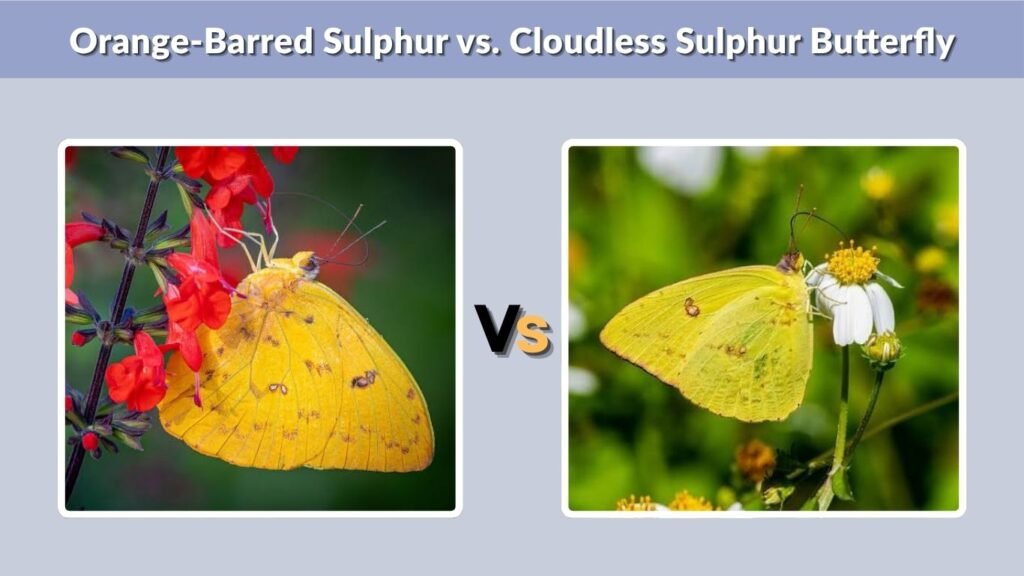
Orange-barred sulphurs and cloudless sulphurs are closely related species belonging to the genus Phoebis. They share similar yellow wing colors, strong flying abilities, and a preference for Senna host plants. However, their markings and sizes make them distinguishable.
Key Identification Differences
The orange-barred sulphur (Phoebis philea) generally has a larger wingspan than the cloudless sulphur (Phoebis sennae).
Male orange-barred sulphurs have a prominent orange-red forewing band and orange hindwing margins.
Male cloudless sulphurs, by comparison, have mostly uniform lemon-yellow upper wings without the distinctive broad orange bar.
Both species occur in Florida and other warm regions of the Americas, sometimes sharing the same feeding habitats.
Where to Find Orange-Barred Sulphur in Crimson Desert
The orange-barred sulphur butterfly also appears as a collectible insect in the video game Crimson Desert. Players searching for this butterfly are looking for an in-game gathering resource rather than information about the real species.
Orange-Barred Sulphur Butterfly Location in Crimson Desert
Community guides identify the Hernand region as a location for finding orange-barred sulphur butterflies.
Players can search sunny meadows, open grasslands, and areas with long grass. The butterfly is described as an uncommon insect that can be collected using bare hands.
It may appear in small groups, making suitable grassy areas useful for gathering multiple specimens. Exact spawn locations can vary, so using an updated interactive game map can help.
FAQs
1. What is the scientific name of the orange-barred sulphur butterfly?
The scientific name of the orange-barred sulphur butterfly is Phoebis philea. It belongs to the Pieridae family and is also called the orange-barred giant sulphur because of its relatively large size and distinctive orange wing markings.
2. What does an orange-barred sulphur caterpillar look like?
An orange-barred sulphur caterpillar can be green or yellow with dark side stripes and numerous small markings. Its coloration partly depends on its food source. Caterpillars primarily feed on Senna plants, especially their leaves, flowers, and buds.
3. Where are orange-barred sulphur butterflies found?
Orange-barred sulphur butterflies inhabit tropical and subtropical regions of the Americas. They are commonly found in southern Florida, Central America, and South America. They prefer gardens, open woodlands, parks, forest edges, and other warm, sunny habitats.
4. What do orange-barred sulphur butterflies eat?
Adult orange-barred sulphur butterflies feed on flower nectar, particularly from colorful blossoms such as hibiscus. Their caterpillars consume Senna plants and related vegetation. These food sources provide the nutrients required for growth, flight, and reproduction.
5. Are orange-barred sulphur butterflies migratory?
Orange-barred sulphur butterflies are strong flyers capable of traveling beyond their usual breeding range. They occasionally appear farther north in the United States. Their seasonal movements depend on environmental conditions, food availability, and suitable breeding habitats.