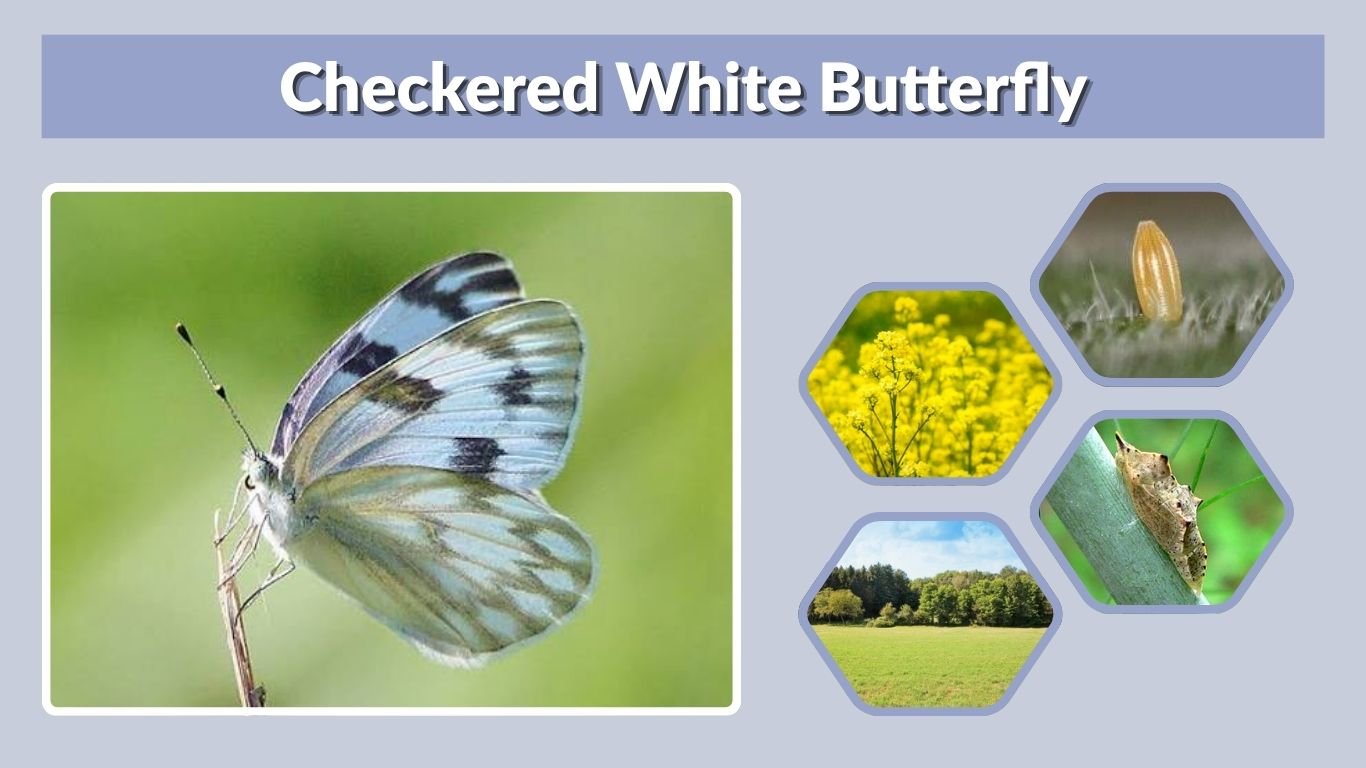
The checkered white butterfly is a fascinating North American butterfly recognized for its delicate white wings decorated with black or gray checkered markings. Commonly found in grasslands, open fields, gardens, and roadsides, this butterfly belongs to the Pieridae family. Its distinctive wing patterns, active flying behavior, and interesting life cycle make it a popular species among butterfly enthusiasts. Understanding the checkered white butterfly’s identification, habitat, caterpillar, host plants, feeding habits, and lifespan helps explain its important role in natural ecosystems and its relationship with native flowering plants.
What Is a Checkered White Butterfly?
The checkered white butterfly (Pontia protodice) is a medium-sized butterfly belonging to the Pieridae family, which includes whites and sulphurs. It is native to North America and occurs across much of the United States, northern Mexico, and occasionally southern Canada.
Its white wings feature distinctive dark markings that resemble a checkered pattern. The appearance varies between males and females.
Checkered White Butterfly Identification
- Scientific Name: Pontia protodice
- Common Name: Checkered White Butterfly
- Family: Pieridae
- Order: Lepidoptera
- Wingspan: 1.5–2.5 inches
- Wing Color: White with black or gray markings
- Body Color: Grayish-white
- Habitat: Grasslands, fields, gardens, and roadsides
- Diet: Flower nectar
- Host Plants: Mustards and related plants
- Distribution: North America
The checkered white is often mistaken for other white butterflies, especially the cabbage white. However, its stronger dark wing markings help distinguish it from similar species.
Checkered White Butterfly Habitat and Distribution
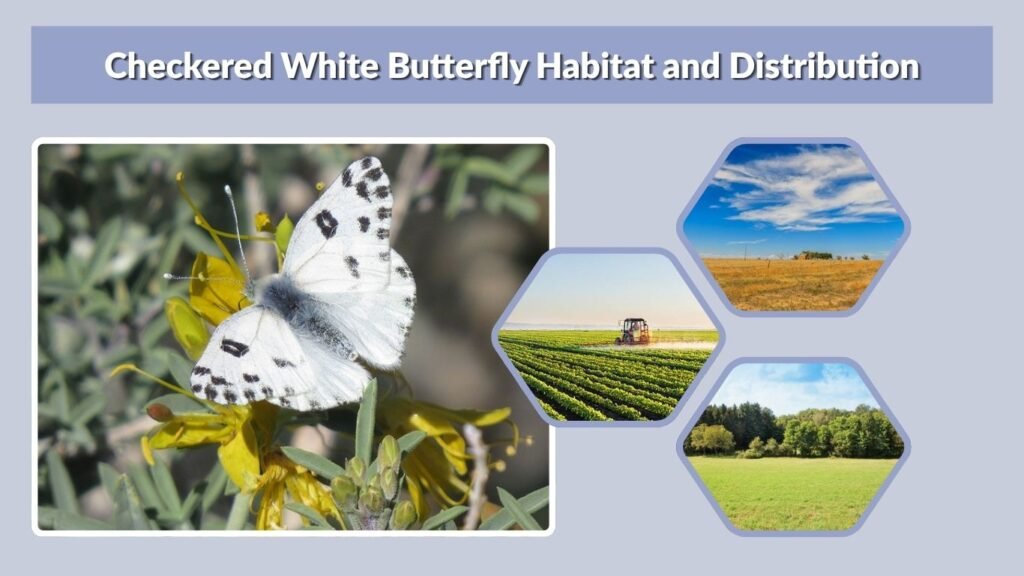
Checkered white butterflies inhabit open, sunny environments where flowering plants and suitable caterpillar host plants are available. They frequently appear in disturbed habitats rather than dense forests.
Their distribution changes seasonally because adults can disperse considerable distances.
Where Do Checkered White Butterflies Live?
These butterflies commonly inhabit prairies, agricultural fields, dry grasslands, vacant lots, and roadsides.
They are widespread in warmer parts of the United States, including Arizona, Texas, and California. They also occur in Florida, although their abundance varies by region.
In northern areas, they may establish temporary populations during warmer months.
The checkered white is not native to the United Kingdom. British observers are more likely to encounter other white butterfly species.
Checkered White Butterfly in Arizona and Florida
Arizona provides suitable habitats for checkered white butterflies, particularly in open desert-edge environments and areas containing wild mustard plants.
In Florida, they inhabit sunny fields, disturbed ground, and roadsides. Their occurrence can be irregular in some regions, including parts of southern Florida.
What Do Checkered White Butterflies Eat?
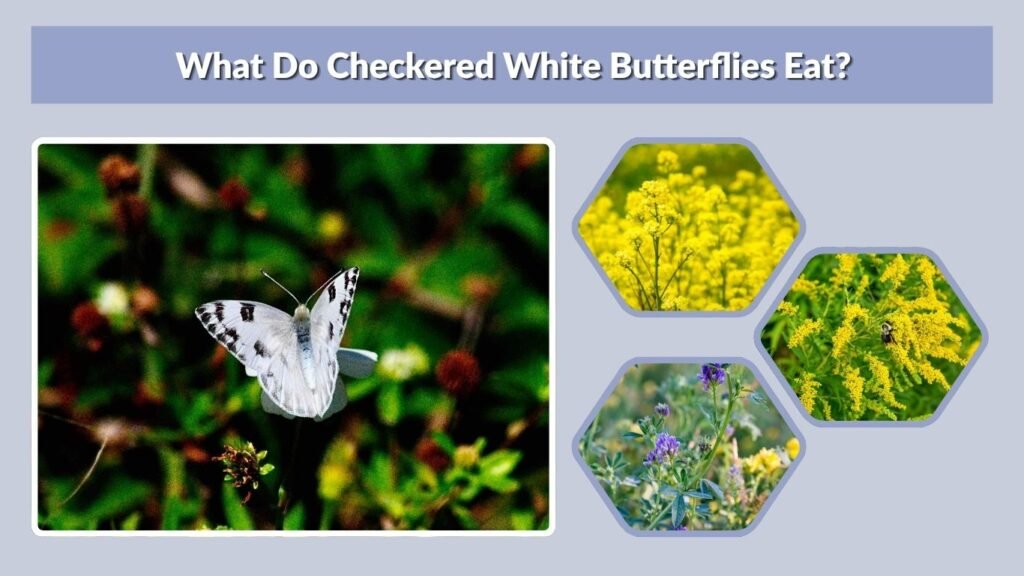
Adult checkered white butterflies primarily feed on flower nectar. Their long proboscis allows them to reach nectar inside blossoms.
They visit different flowering plants throughout their active season, helping transfer pollen between some flowers while feeding.
Common Nectar Sources
- Mustard Flowers: Provide accessible nectar.
- Alfalfa: Attracts adults in agricultural areas.
- Asters: Offer nectar during flowering periods.
- Goldenrod: Provides late-season feeding opportunities.
- Other Wildflowers: Supply food in open habitats.
Adults move between flowers during daylight hours, especially under warm and sunny conditions.
The availability of nectar plants influences their activity and local abundance.
Checkered White Butterfly Caterpillar and Host Plants
Checkered white butterfly caterpillars are sometimes called southern cabbageworms. They feed mainly on plants belonging to the mustard family.
Female butterflies select suitable plants for laying eggs, ensuring newly hatched caterpillars have access to food.
Checkered White Butterfly Caterpillar Identification
The caterpillar has a distinctive appearance that differs considerably from the adult butterfly.
- Body Color: Grayish-green or bluish-gray
- Markings: Yellow stripes and small black spots
- Body Length: Approximately 1 inch when mature
- Head: Grayish with yellow markings
- Surface: Covered with short, fine hairs
- Diet: Flower buds, developing fruits, and leaves
Unlike many caterpillars that primarily consume leaves, checkered white larvae often prefer developing flowers and seedpods.
Checkered White Butterfly Host Plants
Common host plants include pepperweed, wild mustard, shepherd’s purse, cabbage, and related members of the mustard family.
Some populations also use Rocky Mountain beeplant.
Caterpillars occasionally feed on cultivated vegetables, including cabbage and broccoli, although they are generally considered minor agricultural pests.
Hydrangeas are not recognized as typical caterpillar host plants for this species.
Checkered White Butterfly Life Cycle
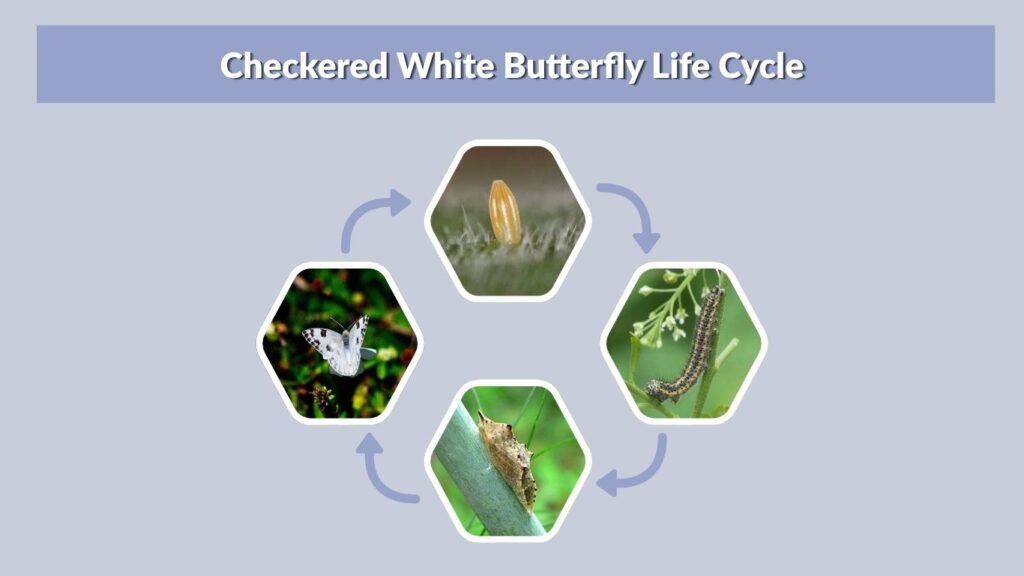
The checkered white butterfly undergoes complete metamorphosis, passing through four developmental stages: egg, larva, pupa, and adult.
Development depends on temperature, food availability, and seasonal conditions.
Egg Stage
Females usually deposit eggs individually on suitable host plants.
Fresh eggs are pale yellowish and gradually become orange. Their elongated shape and fine surface ridges help distinguish them from many other insect eggs.
Caterpillar Stage
After hatching, larvae begin feeding on their host plants.
They pass through several growth stages, shedding their outer skin as they increase in size.
Chrysalis Stage
Mature caterpillars transform into chrysalises, usually attached to supporting surfaces by silk.
The pupae are often grayish or greenish with subtle markings.
Some individuals overwinter in the chrysalis stage before emerging as adults.
Adult Butterfly Stage
Adult butterflies emerge with soft wings that expand and harden before flight.
They subsequently search for nectar, mates, and suitable egg-laying locations.
Multiple generations may occur annually in warmer regions.
Male vs Female Checkered White Butterfly
Male and female checkered white butterflies have similar body shapes but display noticeable differences in wing coloration.
Male Checkered White Butterfly
Males typically have predominantly white wings with dark spots and checkered markings concentrated on the forewings.
Their hindwings are generally cleaner and less heavily patterned.
Female Checkered White Butterfly
Females usually display more extensive dark markings across their wings.
Their patterns can appear brownish-gray rather than strongly black, creating a more heavily checkered appearance.
Seasonal variations may also affect coloration. Butterflies emerging during cooler periods can show darker markings than summer individuals.
Checkered White Butterfly Camouflage and Behavior
Checkered white butterflies use their wing patterns and natural surroundings to reduce visibility while resting.
Their pale coloration blends with bright, dry vegetation, while darker markings can interrupt the outline of their wings.
How Do Checkered White Butterflies Protect Themselves?
These butterflies primarily rely on flight, vigilance, and their natural coloration to avoid predators.
They frequently fly through open areas, visiting flowers and searching for mates.
Males patrol suitable habitats looking for receptive females. Their active flight makes them relatively easy to observe in sunny environments.
Is the Checkered White Butterfly Threatened?
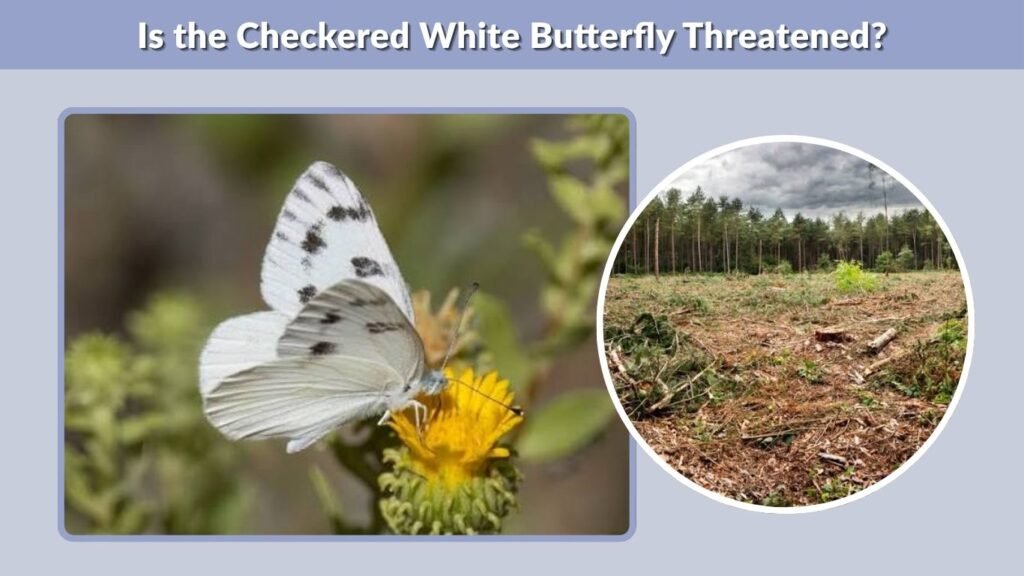
The checkered white butterfly is not considered globally threatened, although populations have declined in some regions.
It remains widespread across much of North America, particularly in suitable southern and western habitats.
Threats to Checkered White Butterflies
Habitat changes, loss of flowering plants, insecticide exposure, and unfavorable weather can affect local populations.
Some eastern populations have experienced substantial declines, while others remain relatively common.
Preserving wildflower-rich open habitats and suitable host plants helps support breeding populations.
FAQs
1. How Long Do Checkered White Butterflies Live?
Adult checkered white butterflies generally live for a few weeks, although their exact lifespan depends on weather, predators, and food availability. Their complete life cycle takes longer, particularly when individuals remain in the chrysalis stage during winter.
2. Are Checkered White Butterflies Rare?
Checkered white butterflies are widespread across much of North America but may be uncommon in certain regions. Their numbers fluctuate with weather conditions, habitat availability, and seasonal movements. Some eastern populations have declined considerably over time.
3. Are Checkered White Butterflies Found in Florida?
Yes, checkered white butterflies occur in Florida, particularly in sunny open habitats containing suitable host plants. They may appear along roadsides, agricultural areas, and disturbed fields. Their abundance varies between regions and seasons, including in southern Florida.
4. What Is the Difference Between a Checkered White and a Cabbage White Butterfly?
Checkered white butterflies typically have more extensive black or gray wing markings than cabbage white butterflies. Female checkered whites are particularly heavily patterned. Cabbage whites generally appear plainer, with fewer dark spots and distinctive dark forewing tips.
5. Are Checkered White Butterflies the Same as Checkered Skippers?
No, checkered white butterflies and checkered skippers are different insects. Checkered whites belong to the Pieridae family, while checkered skippers belong to Hesperiidae. Skippers generally have stockier bodies, rapid flight, and different wing shapes and markings.