

Bee stings are common outdoor hazards, especially during warmer months. While most people experience temporary pain and mild swelling, others can suffer serious allergic reactions that demand urgent medical care. Understanding how to identify, treat, and prevent these reactions can help protect both your health and safety when stung.
What Happens During a Bee Sting
When a bee stings, it injects venom into the skin through its stinger. This venom contains proteins that affect skin cells and the immune system, causing pain and inflammation. In most people, the reaction is mild and limited to the sting area. However, those allergic to bee venom can have an exaggerated immune response, which releases histamines and leads to symptoms that affect the whole body, including breathing difficulty or a dangerous drop in blood pressure.
Normal Bee Sting vs. Allergic Reaction
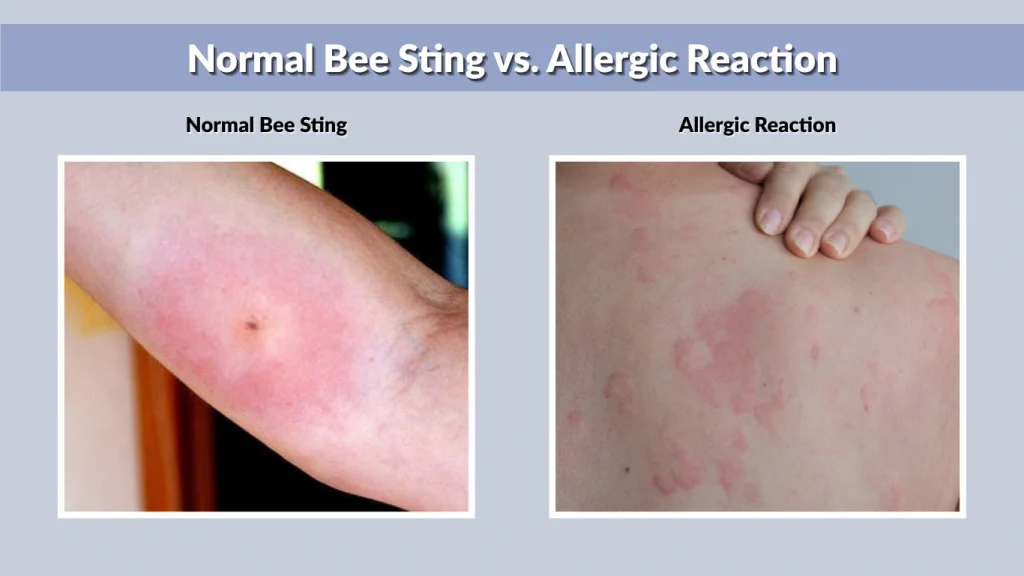
It’s important to distinguish between a normal reaction and an allergic one.
| Reaction Type | Common Symptoms | Duration |
| Normal Reaction | Local pain, redness, mild swelling | 1–3 days |
| Allergic Reaction | Widespread hives, severe swelling, difficulty breathing | Immediate & severe |
A normal bee sting often looks like a small red bump with mild tenderness. The discomfort usually fades within a few days. In contrast, an allergic reaction may spread far beyond the sting site, causing swelling in areas like the face, lips, or throat. In rare cases, it can escalate into anaphylaxis, a potentially life-threatening condition that requires immediate medical help.
Signs and Symptoms of Allergic Reaction

Mild Allergic Reactions
Some people experience mild allergic symptoms that go beyond a simple sting response:
- Local redness and itching around the sting site
- Moderate swelling that grows over a few hours
- Skin warmth and tenderness
Severe Allergic Reactions (Anaphylaxis)
A severe reaction can affect multiple organs and develop within minutes:
- Swelling of the face, throat, or tongue
- Shortness of breath or wheezing
- Dizziness, fainting, or confusion
- Nausea, vomiting, or abdominal cramps
- Rapid drop in blood pressure
If any of these symptoms appear, it’s crucial to use an epinephrine auto-injector (EpiPen) immediately and seek emergency care.
Delayed Allergic Reaction to Bee Sting

In some cases, symptoms don’t show up right away. A delayed allergic reaction can occur several hours or even a day after the sting. People may experience:
- Fatigue or weakness
- Fever or general body discomfort
- Redness or swelling spreading away from the original site
- Joint pain or rash
These reactions often indicate a secondary immune response. While they are usually less severe than immediate anaphylaxis, medical evaluation is still recommended to prevent complications.
Common Areas Affected by Allergic Reactions
Bee stings can occur anywhere on the body, but some areas are more sensitive or prone to complications.
- Foot and Leg: Swelling can make walking painful and difficult, often requiring rest and elevation.
- Hand and Arm: Inflammation may limit movement and flexibility, particularly if the sting occurs near joints.
- Face: Swelling around the lips, eyelids, or cheeks can become dangerous if it affects breathing or vision.
Facial reactions, in particular, should be treated as emergencies due to the risk of airway obstruction.
Allergic Reaction Timeline
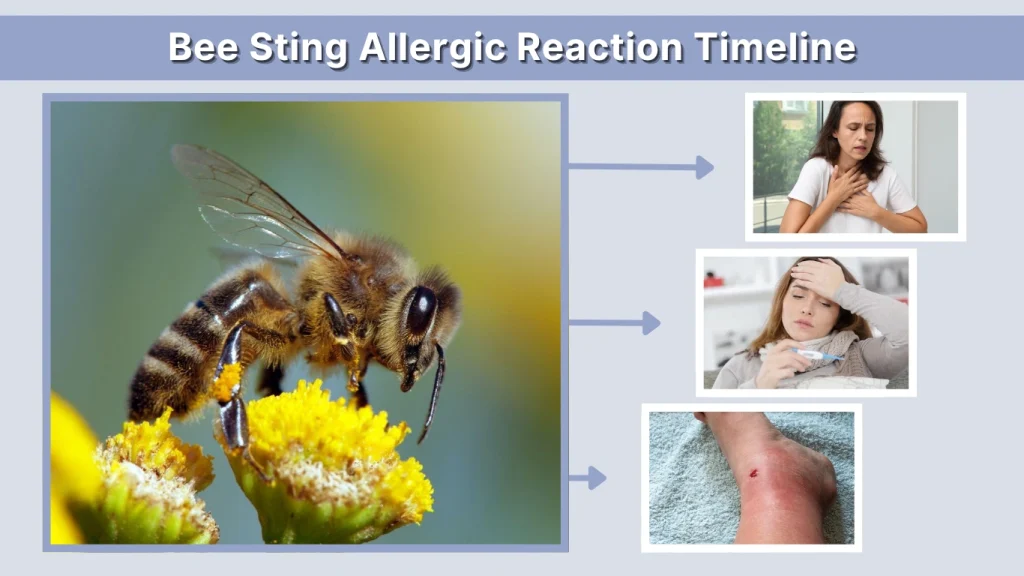
The timeline for bee sting allergic reactions can vary widely depending on sensitivity and exposure level.
- Immediate reaction: Usually occurs within minutes of being stung; includes hives, difficulty breathing, or dizziness.
- Delayed reaction: May appear 6–24 hours later; involves swelling, fever, or fatigue.
- Secondary infection: Can develop 24–48 hours after the sting if bacteria enter through the puncture wound.
Understanding this progression helps determine when to seek medical attention and what type of care is needed.
Treatment for Allergic Reaction to Bee Sting

Home Remedies for Mild Reactions
For mild reactions, immediate home care can reduce discomfort and prevent infection:
- Remove the stinger quickly using a flat object like a credit card.
- Apply ice to the sting site for 10–15 minutes to minimize swelling.
- Clean the area with soap and water to reduce infection risk.
- Take an antihistamine such as Benadryl to control itching and inflammation.
- Elevate the affected area to help with swelling and circulation.
Medical Treatment for Severe Reactions
If the reaction becomes serious:
- Administer epinephrine using an auto-injector immediately.
- Call emergency services even after using epinephrine, as symptoms can return.
- Receive oxygen or IV medication at the hospital if breathing is affected.
- Consult an allergist for future prevention strategies, such as venom immunotherapy.
Preventing Bee Sting Allergic Reactions
Avoiding bee stings is the best way to prevent allergic reactions. Simple precautions can reduce your risk significantly. Always stay calm around bees, as sudden movements can provoke them. Avoid wearing bright colors or strong perfumes, which attract bees. When outdoors, keep food covered, as sweet scents can lure insects. Gardeners or hikers should wear long sleeves, closed shoes, and gloves for protection.
People with known allergies should always carry an EpiPen and inform friends, coworkers, or family about their condition. Wearing a medical alert bracelet can also help responders act quickly during emergencies.
Bee Sting Allergic Reactions in Dogs
Dogs, like humans, can suffer from allergic reactions after a bee sting. Typical symptoms include:
- Sudden swelling of the muzzle or paws
- Excessive drooling or paw licking
- Difficulty breathing or whining
- Hives or vomiting
If your dog shows any of these signs, contact a veterinarian immediately. Treatment may include antihistamines, corticosteroids, or epinephrine, depending on severity. Preventive care—such as keeping pets indoors during high bee activity—is the best defense.
When to See a Doctor
Always seek medical attention if:
- Swelling spreads beyond the sting area.
- Breathing becomes difficult or noisy.
- You feel dizzy, faint, or confused.
- Symptoms persist for more than 48 hours.
Even if symptoms subside after using epinephrine, a hospital visit is essential, as reactions can return. Doctors can prescribe allergy medications and refer you to an allergist for venom immunotherapy, which gradually desensitizes your immune system to bee venom.
Managing Delayed and Recurrent Reactions
Sometimes, people experience a biphasic reaction, where symptoms return hours after initial recovery. These cases require careful observation for up to 24 hours after the first reaction. Always inform your healthcare provider about any previous allergic episodes so they can recommend ongoing prevention strategies, including allergy testing and prescribed emergency kits.
What to Do After a Bee Sting
If stung and you’re unsure whether you’re allergic:
- Stay calm and move away from the area to avoid additional stings.
- Remove the stinger immediately—the longer it stays, the more venom enters.
- Apply a cold compress to control pain and swelling.
- Take oral antihistamines if itching occurs.
- Monitor for symptoms such as dizziness, swelling, or difficulty breathing for at least 30 minutes.
If any severe symptoms develop, seek emergency medical help without delay.
Long-Term Allergy Management
People with a known bee venom allergy should take long-term precautions:
- Always keep an emergency epinephrine injector.
- Regularly check expiration dates of medications.
- Attend allergy therapy sessions if recommended.
- Inform employers or school staff about your allergy.
With proper preparation, most people with bee sting allergies live safely and confidently.
FAQs
What are the first signs of an allergic reaction to a bee sting?
The first signs often include hives, swelling around the sting site, and itching. If these symptoms spread or breathing becomes difficult, it could indicate anaphylaxis, which requires immediate medical treatment with epinephrine and emergency care.
How long does it take for an allergic reaction to occur after a bee sting?
Reactions can appear within minutes, though some may be delayed up to 24 hours. Immediate reactions are more dangerous, often causing swelling, breathing issues, or dizziness that demand quick use of epinephrine.
How can I tell the difference between a normal and allergic bee sting?
A normal sting causes mild, localized redness and swelling. In an allergic reaction, swelling spreads beyond the sting area, or symptoms like dizziness, hives, and breathing trouble develop, signaling the need for urgent care.
What is the best treatment for an allergic bee sting reaction?
For mild stings, remove the stinger, clean the area, and apply ice. Use antihistamines for itching. For severe allergic reactions, use an epinephrine injector immediately and seek hospital treatment for observation and follow-up care.
Can allergic reactions to bee stings happen later?
Yes. Delayed allergic reactions may develop several hours after the sting, leading to fatigue, fever, or spreading redness. Even if symptoms appear mild, consulting a doctor is essential to rule out serious delayed complications.
