
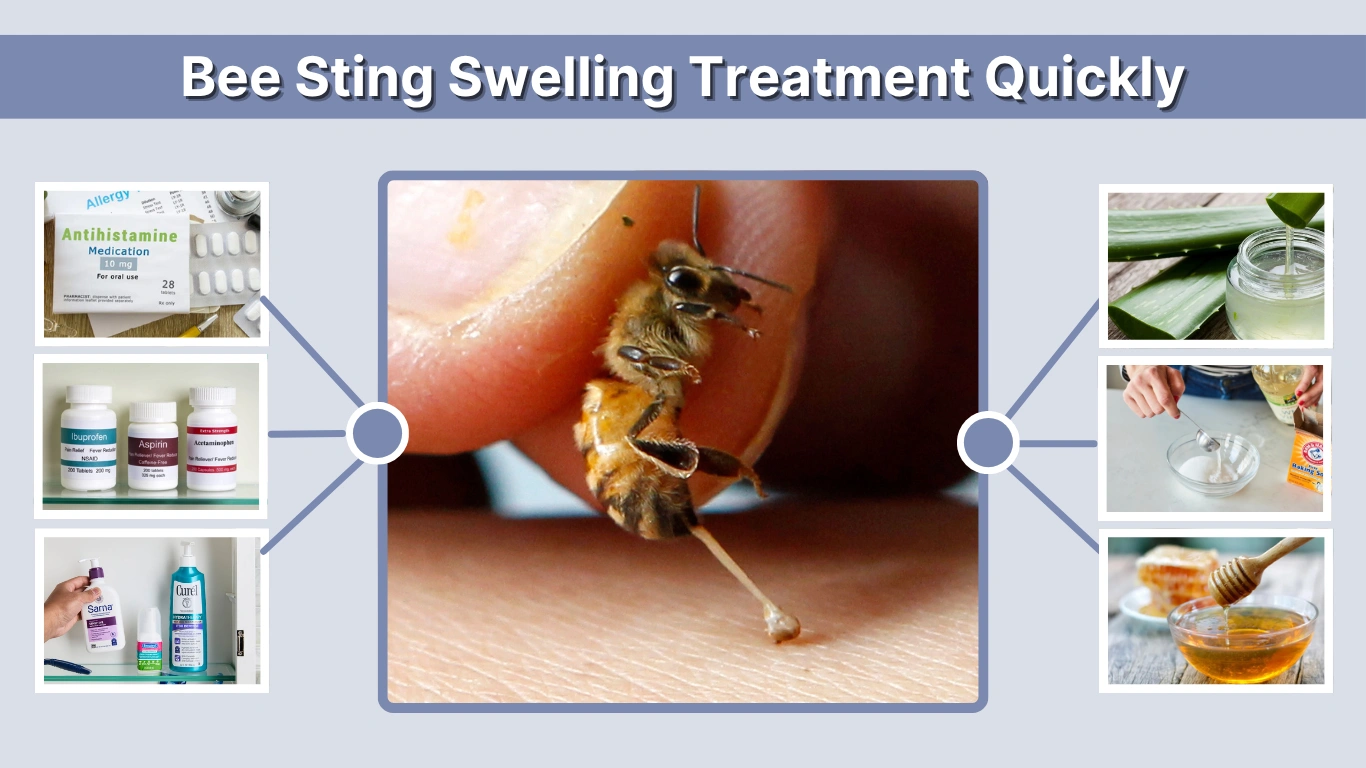
Bee stings are painful, and the swelling that follows can be both uncomfortable and alarming. Most reactions are mild, but some can persist for days if not treated properly. Understanding why swelling occurs, how long it lasts, and what treatments work best helps you manage symptoms safely and effectively at home.
What Causes Bee Sting Swelling
When a bee stings, it injects venom into the skin. This venom contains proteins that trigger your immune system, causing redness, warmth, and swelling. The body releases histamines as a defense, but these chemicals also create inflammation. People allergic or sensitive to bee venom often experience stronger reactions that last longer than usual.
Identifying Symptoms of Bee Sting Swelling

Bee sting swelling can vary from mild puffiness to severe inflammation. Recognizing symptoms early ensures faster relief and prevents complications.
- Redness and warmth around the sting site
- Itching or mild burning sensation
- Pain or tenderness when touched
- Swelling spreading beyond the initial sting area
- In rare cases, dizziness, nausea, or shortness of breath
If you notice widespread swelling or breathing problems, it could signal an allergic reaction that requires emergency medical care.
Immediate Actions After a Bee Sting

Quick action can prevent the venom from spreading and reduce swelling significantly.
- Remove the stinger immediately using a flat object like a credit card—avoid tweezers, as they can squeeze out more venom.
- Clean the area with soap and cool water to remove dirt and venom residue.
- Apply a cold compress or ice wrapped in a cloth for 15–20 minutes every hour.
- Keep the affected area elevated to limit fluid buildup.
- Avoid scratching, as this can worsen irritation or cause infection.
These steps are the foundation for effective bee sting swelling treatment and should always be performed first.
Bee Sting Swelling After 24–48 Hours
Swelling from a bee sting often peaks within one to two days. During this period, you might notice the area feeling warmer or more tender. This is part of your body’s natural inflammatory response. However, if the swelling increases after 48 hours or spreads to nearby joints or tissues, it could indicate a large local reaction.
Persistent redness, pus, or pain beyond three days might also suggest infection. In such cases, consult a doctor for antibiotics or stronger anti-inflammatory treatment.
Medication for Bee Sting Swelling

Over-the-Counter Options
Over-the-counter medications help relieve pain, itching, and inflammation caused by bee sting swelling.
- Antihistamines like cetirizine or loratadine reduce itching and allergic responses.
- Pain relievers such as ibuprofen or acetaminophen decrease soreness and swelling.
- Topical creams like hydrocortisone or calamine soothe irritation and redness.
Prescription Treatments
In severe cases, doctors may prescribe oral corticosteroids to manage large local reactions. For people with serious allergic symptoms such as throat swelling or dizziness, an epinephrine injection (EpiPen) is essential and potentially life-saving.
Home Remedies for Bee Sting Swelling

Natural remedies can be just as effective in soothing bee sting discomfort. These easy treatments help control inflammation and speed up healing:
- Aloe Vera Gel: Cools and moisturizes the sting site, easing redness and pain.
- Baking Soda Paste: Mix one teaspoon of baking soda with water and apply to the skin. It neutralizes venom acidity and reduces itching.
- Honey: Acts as an antibacterial agent and helps prevent infection while calming inflammation.
- Apple Cider Vinegar: Dab gently on the sting site to balance skin pH and reduce swelling.
- Ice Pack: Use frequently throughout the day to control pain and fluid buildup.
Always test home remedies on a small skin patch first if you have sensitive skin.
How to Reduce Swelling Quickly
The best way to reduce swelling from a bee sting is to keep the area cool, clean, and still. Applying ice every hour for 15–20 minutes helps shrink blood vessels and limit inflammation. You can also take an oral antihistamine to calm itching.
Avoid tight clothing around the affected limb, and elevate it to improve circulation. Staying hydrated helps your body flush toxins faster, aiding quicker recovery.
Duration of Bee Sting Swelling
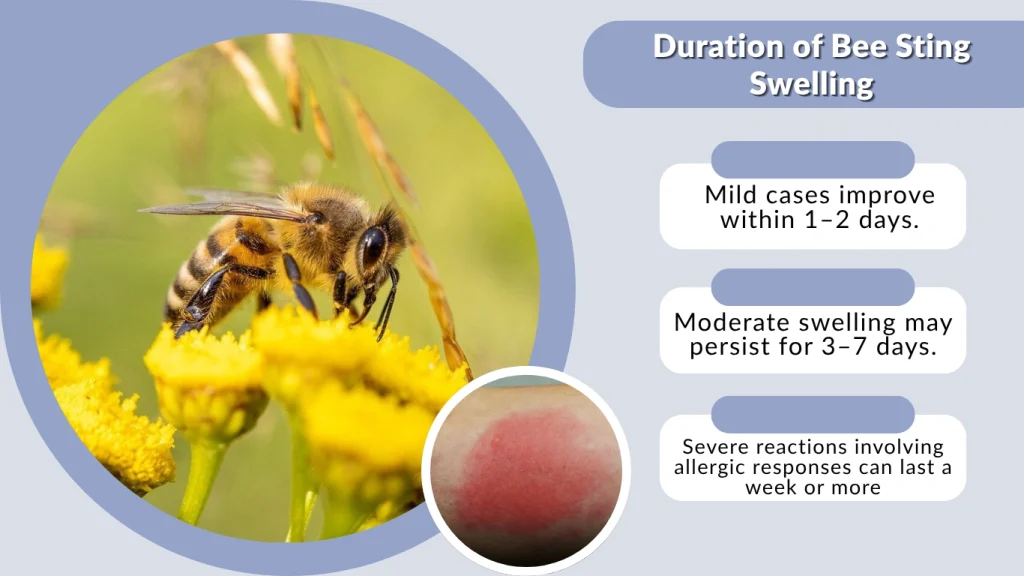
How long bee sting swelling lasts depends on the severity of your reaction and how quickly you treat it.
- Mild cases improve within 1–2 days.
- Moderate swelling may persist for 3–7 days.
- Severe reactions involving allergic responses can last a week or more and may require prescription medication.
If you still experience discomfort after seven days, it’s advisable to consult a healthcare professional for evaluation.
Facial and Eye Swelling From Bee Stings
Stings on the face, eyelids, or neck are especially concerning. These areas have delicate tissue that reacts strongly to venom, causing rapid swelling. Avoid pressing or rubbing the area, as this can worsen the condition.
Apply a cold compress gently and keep your head elevated while resting. If swelling interferes with your breathing, vision, or speech, seek immediate emergency care—this could signal a serious allergic reaction known as anaphylaxis.
Delayed or Recurrent Swelling
Sometimes swelling doesn’t appear right away. It might develop 24–48 hours later or even recur a week after the sting. This delayed reaction, known as a late-phase allergic response, happens when the immune system continues reacting to venom residues in the skin.
To manage delayed swelling:
- Apply a cold compress several times a day.
- Take oral antihistamines for itching and irritation.
- Use mild topical corticosteroids to reduce inflammation.
If symptoms worsen or include fever and redness spreading outward, contact a doctor immediately to prevent complications.
Swelling in Hands, Feet, or Fingers
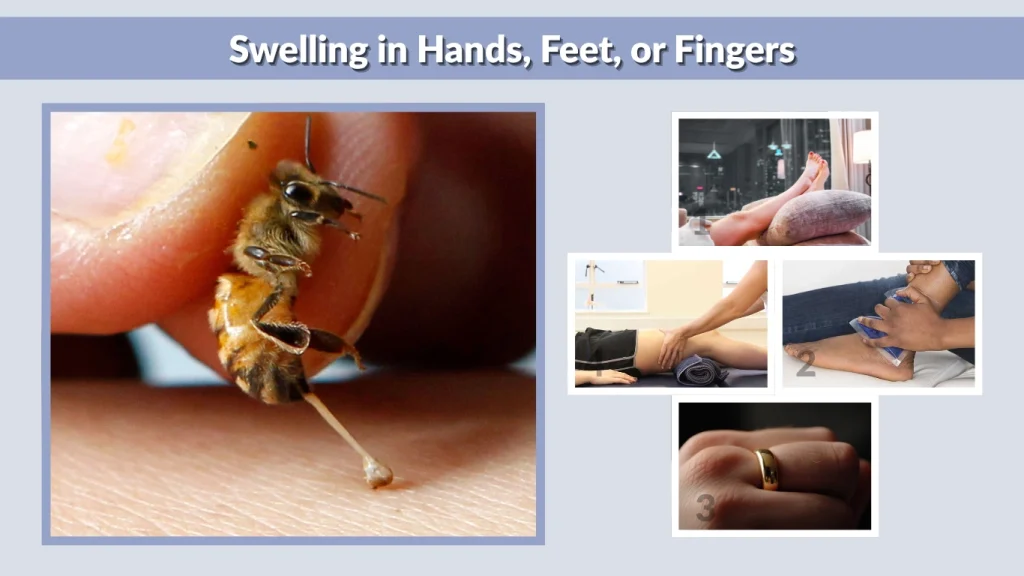
Hands and feet tend to swell more after bee stings due to limited space and poor circulation in these areas. The skin stretches, causing tightness, pain, and stiffness.
Here’s how to reduce swelling effectively:
- Elevate the affected limb above heart level.
- Apply ice for 15 minutes every hour.
- Avoid tight rings or shoes, as swelling may restrict blood flow.
- Massage gently once swelling begins to subside to restore mobility.
If the swelling lasts more than five days, medical advice is recommended to rule out infection or severe allergic reaction.
Long-Term Relief and Healing Tips
Once the initial swelling improves, proper aftercare ensures complete healing and prevents scarring or recurring irritation. Keep the sting site clean, dry, and lightly moisturized. Avoid scratching, as this can cause minor wounds to reopen.
Natural oils like coconut or tea tree oil can reduce itching and inflammation. Continue using antihistamines if mild itching remains. For deep or painful stings, topical antibiotic creams help prevent infection and speed healing.
Most bee stings heal within a week, but if you notice lingering pain, swelling, or discoloration, a healthcare check-up is necessary.
Preventing Future Bee Sting Reactions
Prevention is the best protection, especially if you’ve had previous allergic reactions. Follow these safety tips whenever you’re outdoors:
- Wear protective clothing like long sleeves, closed shoes, and light-colored fabrics.
- Avoid scented perfumes and lotions, which attract bees.
- Stay calm and move slowly if bees fly near you—sudden motions can provoke them.
- Keep food and drinks covered when picnicking outside.
- Carry an epinephrine auto-injector (EpiPen) if you have a known bee allergy.
Taking these precautions greatly reduces your chances of getting stung and helps ensure a safer outdoor experience.
FAQs
What helps bee sting swelling go down fast?
To reduce swelling quickly, apply a cold compress, take an antihistamine, and use a hydrocortisone cream. Elevate the sting area and stay hydrated to speed up recovery. These steps reduce inflammation within a few hours and ease discomfort effectively.
How long does bee sting swelling usually last?
Mild swelling from a bee sting typically lasts one to two days. Larger local reactions may persist for up to a week. If the area remains red, hot, or painful beyond seven days, medical evaluation is advised to rule out infection or severe allergy.
What are natural remedies for bee sting swelling?
Aloe vera, honey, and baking soda paste are among the best natural remedies. They soothe the skin, reduce itching, and minimize inflammation. Applying ice and diluted apple cider vinegar also helps calm the area without causing irritation.
Is swelling after 48 hours normal?
Yes, mild swelling can still occur after 48 hours, especially for those with sensitive skin. However, if swelling worsens or is accompanied by redness or fever, it could indicate infection. In that case, topical or oral treatment may be necessary.
When should I seek emergency help?
Seek immediate medical help if you experience throat or tongue swelling, dizziness, or difficulty breathing. These are symptoms of anaphylaxis, a life-threatening allergic reaction requiring urgent attention and possibly an epinephrine injection.
How can I stop itching after a bee sting?
Itching can be controlled using antihistamines, cold compresses, and calamine lotion. Avoid scratching, as it spreads inflammation. Applying aloe vera or baking soda paste provides quick, natural relief without side effects.
