

Bee stings are painful and often followed by swelling that changes over time. The body’s natural immune response causes redness, warmth, and irritation at the sting site. Understanding how swelling progresses—from the first few hours to several days later—helps you know what’s normal, what needs treatment, and when to seek medical care.
What Happens When a Bee Stings You
When a bee stings, it injects venom through its stinger into your skin. This venom contains proteins that affect cells and trigger the immune system. The body releases histamines, which cause inflammation, swelling, and pain. For most people, these symptoms are temporary, but for those sensitive to bee venom, swelling may last several days or become more intense.
Bee Sting Swelling Timeline Overview

Bee sting swelling typically follows a time-based pattern depending on your body’s reaction and how quickly treatment begins.
- 6 hours: Pain, redness, and a small bump appear.
- 12 hours: Swelling and itching begin to develop.
- 24 hours: The sting area becomes warm, tight, and more swollen.
- 48 hours: Swelling peaks, sometimes spreading slightly.
- 72 hours: Redness and swelling start to fade with proper care.
Each stage offers clues about how your body is reacting to the sting.
Bee Sting Swelling After 6 Hours
During the first six hours, symptoms are mostly localized. The skin becomes red and slightly raised, with sharp pain at the sting site. You might also feel mild burning or itching.
Immediate actions to take:
- Remove the stinger quickly with a flat object like a credit card.
- Wash the area with soap and water to remove venom.
- Apply ice or a cold compress for 15–20 minutes.
- Avoid scratching the area to prevent irritation.
These early steps help minimize swelling and prevent further venom absorption.
Bee Sting Swelling After 12 Hours

By the 12-hour mark, the swelling becomes more visible and the area feels warm or tight. The immune system is in full reaction mode, releasing histamines that make the skin inflamed.
Treatment tips:
- Take an antihistamine like cetirizine to reduce itching.
- Apply hydrocortisone cream to calm irritation.
- Continue using a cold compress to manage swelling.
- Elevate the affected area, especially if it’s on the hand or foot.
Most people will feel itching and mild discomfort during this phase, but symptoms remain manageable with home care.
Bee Sting Swelling After 24 Hours
After 24 hours, the swelling can become more pronounced. The skin may appear stretched, slightly warm, and red. This is still considered a normal localized reaction. The sting site might feel firm and tender, especially if located on a joint or extremity.
At this stage, try:
- Applying a baking soda paste (mix one teaspoon of baking soda with a few drops of water).
- Using aloe vera gel or honey to reduce inflammation.
- Keeping the area elevated to prevent fluid buildup.
- Taking ibuprofen for pain and soreness if needed.
If swelling extends significantly beyond the sting site or causes throbbing pain, you should monitor it carefully over the next day.
Bee Sting Swelling After 48 Hours
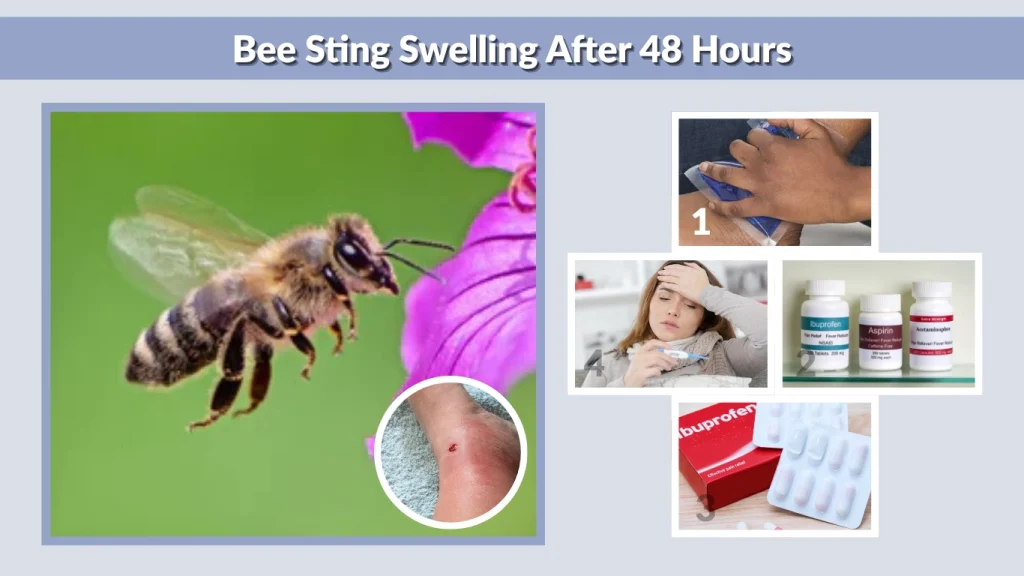
By 48 hours, swelling usually reaches its peak. The area can feel firm, sore, and warm. For most people, it doesn’t spread further and begins to ease afterward. However, if it continues expanding or becomes painful to touch, it might indicate a large local reaction or early infection.
What you should do:
- Continue applying cold compresses several times a day.
- Take an antihistamine to control persistent itching.
- Use anti-inflammatory medication like ibuprofen for relief.
- If redness spreads rapidly or you develop a fever, seek medical attention.
Proper care during this phase ensures the swelling starts to subside within the next 24 hours.
Bee Sting Swelling After 72 Hours
At the 72-hour mark, most people notice a clear improvement. The swelling begins to decrease, redness fades, and tenderness lessens. Itching may still linger, especially if the area was scratched earlier.
How to care for the sting at this stage:
- Apply moisturizing lotion or aloe vera to soothe dry or irritated skin.
- Avoid hot showers, as heat can trigger mild swelling again.
- Continue using antihistamines if itching persists.
- Keep the area clean to prevent secondary infection.
If the swelling has not improved by this point or continues to worsen, it may indicate infection or an ongoing allergic response that needs medical evaluation.
Delayed or Secondary Reactions
Some people experience swelling or itching again several days after the initial sting—this is known as a delayed or secondary reaction. It usually appears between 3–7 days post-sting.
Causes include:
- The body’s immune system reactivating against leftover venom proteins.
- A mild allergic response that develops slowly over time.
- Localized skin irritation from scratching or tight clothing.
Treatment options:
- Use oral antihistamines for recurring itching or swelling.
- Apply mild topical corticosteroids to calm inflammation.
- Seek medical advice if redness spreads, pain increases, or pus forms.
These delayed reactions are generally not dangerous but can be uncomfortable without proper care.
Facial or Eye Swelling After a Bee Sting

Bee stings near the face, eyes, or neck require extra caution. Facial tissue reacts quickly to venom and can swell dramatically, even from a single sting. This may look alarming but doesn’t always indicate a severe allergic reaction.
What to do immediately:
- Apply a cold compress gently to the area.
- Keep your head elevated while resting or sleeping.
- Avoid pressing or rubbing the swollen skin.
- If swelling affects your breathing, vision, or throat, seek emergency care immediately.
Facial swelling usually improves within two to three days but should always be monitored closely.
How to Reduce Bee Sting Swelling Faster

Reducing swelling effectively involves a combination of cooling, medication, and gentle care.
Proven methods include:
- Cold compresses: Apply ice every few hours for 15–20 minutes.
- Antihistamines: Reduce itching and allergic reaction intensity.
- Anti-inflammatory medicine: Ibuprofen helps with pain and swelling.
- Elevation: Keep the sting area raised to prevent fluid buildup.
- Hydration: Drink plenty of water to flush toxins faster.
Avoid using hot water or applying pressure, as both can worsen inflammation.
When to See a Doctor
Medical attention is necessary if swelling continues to increase after 72 hours or spreads to new areas. You should also see a doctor if you experience:
- Severe pain that doesn’t improve with medication.
- Red streaks, pus, or fever (possible infection).
- Shortness of breath, dizziness, or nausea (signs of anaphylaxis).
If you have a known bee allergy, carry an EpiPen and seek immediate emergency help after any sting, even if symptoms seem mild at first.
Long-Term Healing and Skin Recovery
After swelling subsides, your skin may remain slightly discolored or sensitive. Keeping the area moisturized helps it heal evenly. Use gentle, fragrance-free lotions or natural oils like coconut oil to restore softness.
Avoid scratching scabs or dry patches, as this may cause minor scarring. Most sting marks heal completely within a week, leaving no permanent damage if properly cared for.
Prevention Tips to Avoid Future Bee Stings
Preventing bee stings is always better than treating them later. Here’s how to stay safe outdoors:
- Wear light-colored, long-sleeved clothing when gardening or hiking.
- Avoid strong perfumes or scented lotions that attract bees.
- Keep food and drinks covered when outside.
- Stay calm if a bee approaches—move slowly and avoid swatting.
- If allergic, always carry prescribed medication like an EpiPen.
Following these habits reduces your risk of stings and ensures a quick, safe response if one occurs.
FAQs
Is it normal for bee sting swelling to last 3 days?
Yes, swelling lasting up to 72 hours is normal for most people. It typically begins to fade after three days with proper treatment and cold compresses.
Why does my bee sting swell more after 48 hours?
Swelling can peak at 48 hours because of the body’s delayed immune response. Continue ice therapy, antihistamines, and rest to manage symptoms effectively.
Can swelling from a bee sting last a week?
Mild swelling usually fades within three days, but large local reactions can last up to a week. Persistent or spreading swelling should be checked by a doctor.
What’s the best home remedy for bee sting swelling?
A mix of baking soda paste, aloe vera, and cold compresses offers fast relief. These soothe the sting, reduce inflammation, and prevent itching naturally.
When should I worry about bee sting swelling?
Seek immediate medical help if you notice difficulty breathing, throat swelling, dizziness, or chest tightness—these are signs of a severe allergic reaction.
