
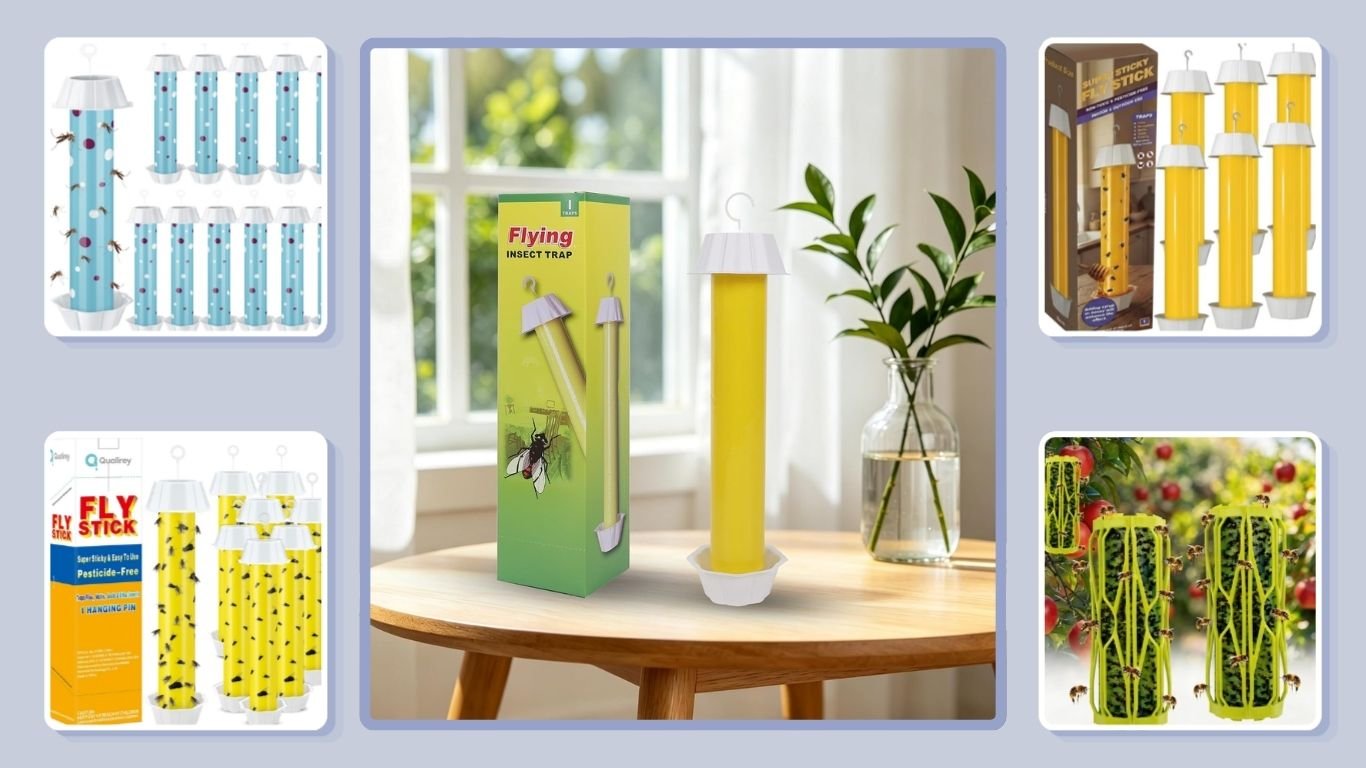
Indoor wasps can be difficult to manage, especially when they enter kitchens, garages, sunrooms, or other enclosed spaces. A reliable indoor wasp trap can help reduce flying insect activity without requiring constant spraying. The best options use sticky surfaces, hanging designs, reusable containers, or non-toxic trapping methods to capture wasps and other unwanted insects. In this guide, we review 7 of the best indoor wasp traps based on ease of use, placement flexibility, trapping design, maintenance, and suitability for household pest control.
1. Yellow Sticky Hanging Wasp Trap for Indoor & Outdoor Use
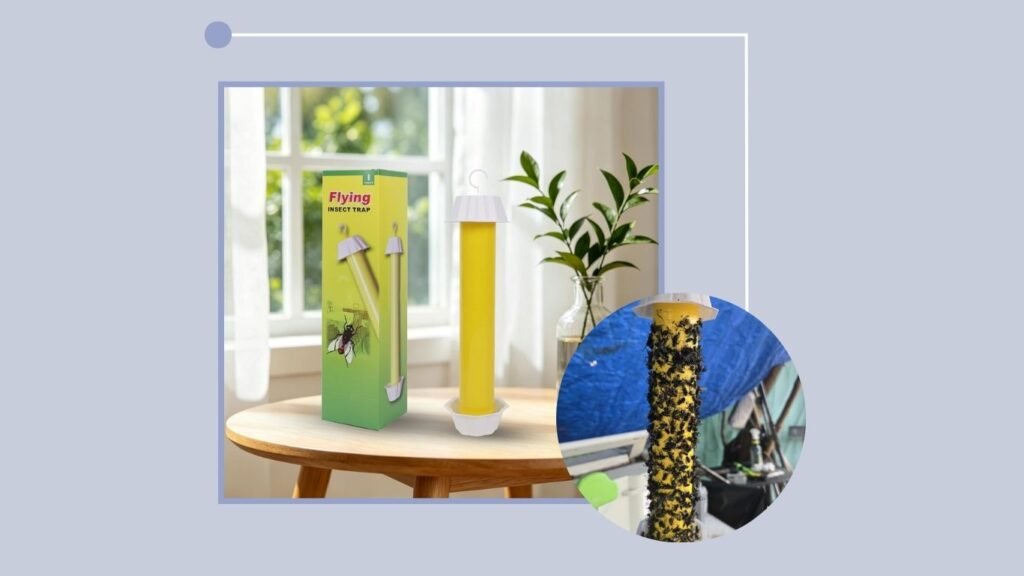
The Yellow Sticky Hanging Wasp Trap offers a straightforward way to capture wasps and other flying insects without relying on complicated equipment. Its bright yellow design helps attract attention from flying pests, while the adhesive surface captures insects on contact. The hanging format makes it especially convenient for garages, enclosed patios, utility rooms, sheds, and other areas where wasps may occasionally enter.
Key Features
- Bright yellow sticky trap design
- Suitable for indoor and outdoor placement
- Hanging installation
- No electricity or batteries required
- Adhesive surface for flying insects
- Easy to position in problem areas
Why It Is Best for Simple Wasp Monitoring
One of the main strengths of this trap is simplicity. There is no electronic setup, refillable reservoir, or complicated installation process. Users can hang it near areas where wasps or other flying insects have been noticed and allow the adhesive surface to work passively.
The bright yellow appearance can also make the trap more noticeable to certain flying insects, making it useful as part of a general monitoring strategy.
Trapping Performance and Everyday Convenience
The large sticky surface provides multiple contact points for insects flying nearby. This can make it useful in enclosed or semi-enclosed spaces where wasps tend to circle windows, doors, ceilings, or light sources.
Because it does not require power, it can remain in place continuously. Users only need to inspect the adhesive surface periodically and replace the trap when it becomes covered with insects or debris.
Best For Garages, Sheds, and Utility Areas
This trap is especially suitable for locations where spraying insecticide may not be convenient or desirable. Garages, storage rooms, workshops, barns, and covered patios can all benefit from a simple hanging trap.
For occasional wasp activity, its passive design offers an easy way to reduce flying insects without adding another powered pest-control device to the space.
2. Non-Toxic Sticky Fly & Wasp Trap
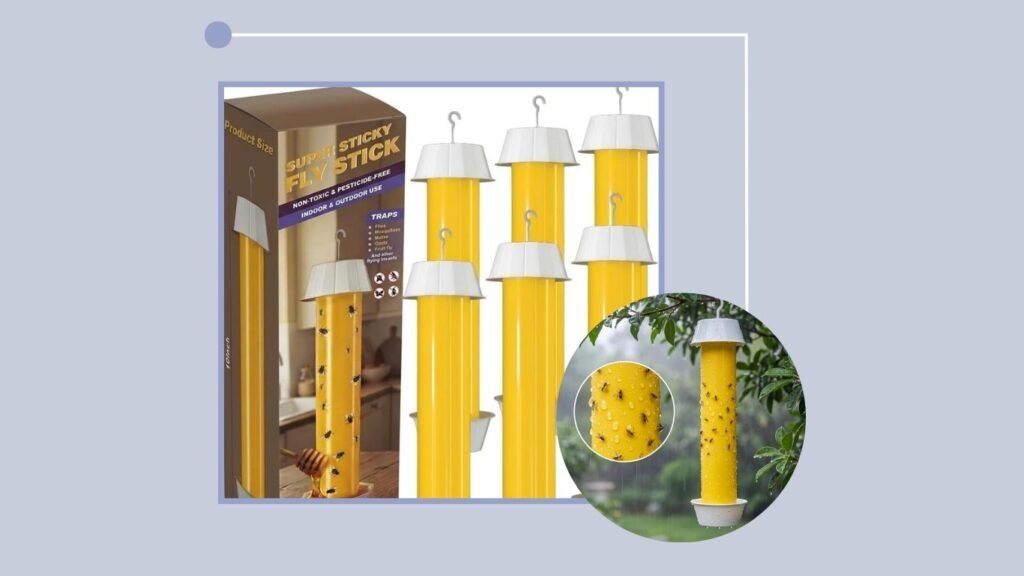
The Non-Toxic Sticky Fly & Wasp Trap is a practical option for homeowners who want a physical trapping method for wasps, flies, mosquitoes, and other flying pests. Rather than using an aerosol treatment, it relies on a sticky surface to capture insects that land or make contact with it. Its versatility makes it useful in indoor spaces as well as sheltered outdoor locations.
Key Features
- Non-toxic physical trapping method
- Sticky adhesive surface
- Suitable for flies and wasps
- Indoor and outdoor use
- No electricity required
- Useful for general flying pest control
Why It Is Best for Chemical-Conscious Households
Some users prefer not to spray insecticides around kitchens, garages, pet areas, or frequently used living spaces. A sticky trap provides a different approach by physically capturing flying insects instead of dispersing chemicals through the air.
This makes it particularly useful for people looking for a low-maintenance method that can remain active throughout the day.
Practical Performance in Active Areas
The trap can be placed near windows, doors, trash areas, or other places where flying insects frequently gather. Once an insect contacts the adhesive surface, it becomes trapped, allowing users to visually monitor pest activity.
The lack of electrical components also makes the trap easy to move between locations when activity shifts from one area to another.
Best For Multi-Pest Indoor Control
This product is useful when wasps are not the only flying insects creating problems. Its broader sticky design can help capture several types of unwanted insects, making it more versatile than a highly specialized wasp-only trap.
For households dealing with occasional flies, mosquitoes, and wasps at the same time, this type of trap can provide a simple all-around monitoring and capture solution.
3. Kittmip Solar-Powered Reusable Wasp Trap
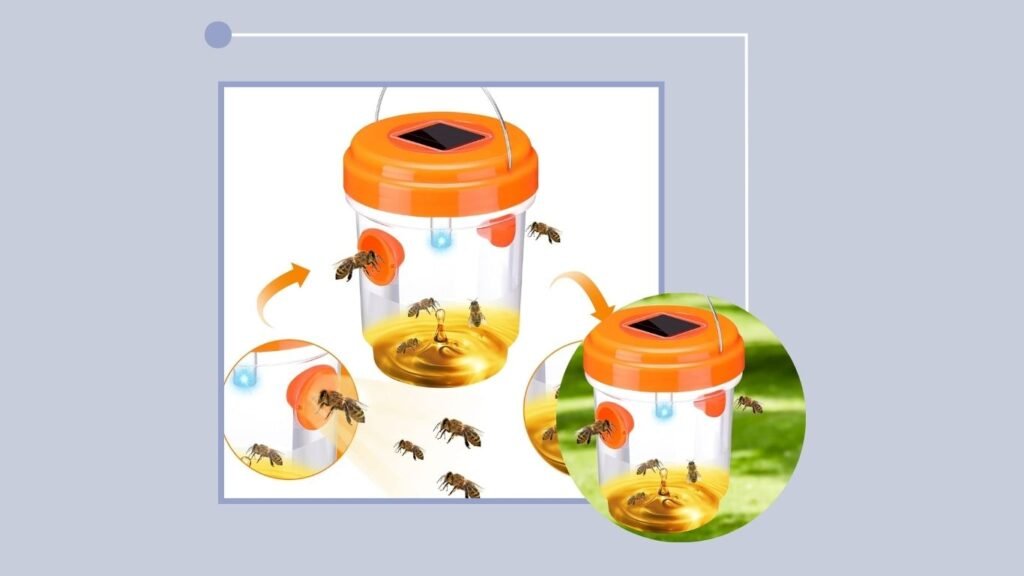
The Kittmip Solar-Powered Reusable Wasp Trap is designed for users who prefer a reusable trapping system rather than disposable sticky cards. Its hanging format makes it easy to position around patios, porches, sheds, and other areas where wasps commonly appear. The solar-powered feature adds convenience for outdoor use, while the reusable construction can make it a practical long-term option.
Key Features
- Solar-powered design
- Reusable trap construction
- Hanging installation
- Suitable for outdoor and sheltered areas
- Easy to reposition
- Designed for repeated seasonal use
Why It Is Best for Reusable Pest Control
Disposable traps are convenient, but homeowners who deal with wasps every summer may prefer a system that can be cleaned and used again. The reusable nature of the Kittmip trap makes it well suited to seasonal pest-control routines.
Instead of replacing the entire unit frequently, users can maintain the same trap and reposition it as activity changes around the property.
Outdoor Performance and Placement Flexibility
The hanging design allows the trap to be positioned near patios, pergolas, sheds, garages, garden edges, or other locations where wasps tend to gather.
Its solar-powered element can also make it appealing for outdoor areas without easy electrical access. There are no extension cords or indoor outlets required, which keeps the setup more convenient.
Best For Seasonal Wasp Problems
The Kittmip trap is particularly suitable for homeowners who experience recurring wasp activity during warmer months and want something more permanent than single-use sticky products.
Its reusable format and hanging design provide a more structured solution for outdoor or semi-enclosed spaces. For users who want a trap that can remain part of their seasonal pest-control setup year after year, this option offers useful flexibility.
4. Long-Lasting Adhesive Wasp & Flying Insect Trap
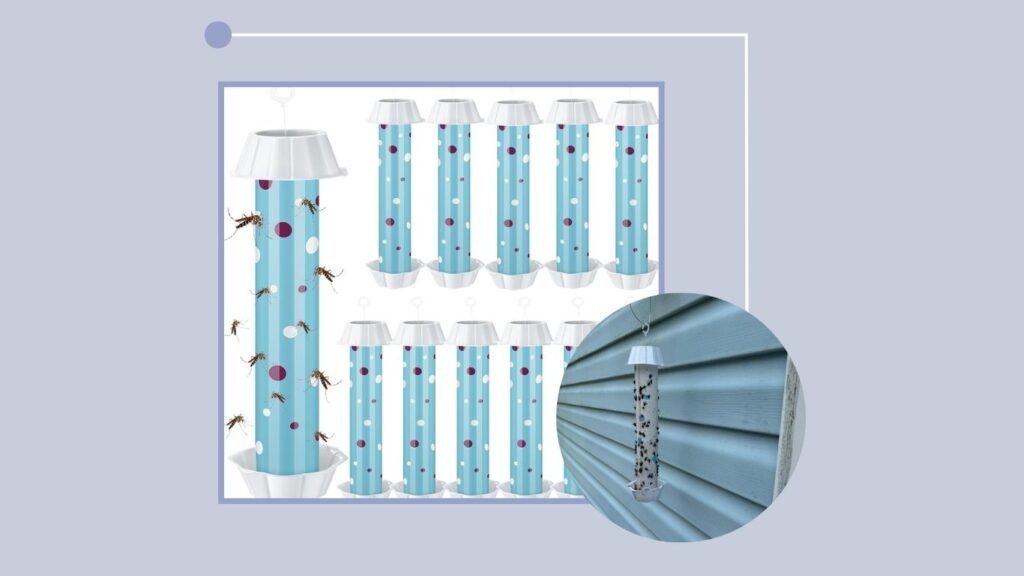
The Long-Lasting Adhesive Wasp & Flying Insect Trap is designed for people who want extended trapping coverage without frequent replacement. Its adhesive surface captures flying pests that come into contact with it, making it useful for wasps, mosquitoes, flies, and similar insects. The long-lasting format is particularly convenient for areas where flying pest activity continues for several days or weeks.
Key Features
- Long-lasting adhesive surface
- Suitable for wasps and flying insects
- Simple passive trapping design
- No electricity needed
- Useful for indoor and sheltered outdoor areas
- Easy to monitor visually
Why It Is Best for Extended Use
A trap that remains effective for a longer period can reduce maintenance, especially in storage rooms, garages, workshops, and similar locations that are not checked constantly.
Instead of replacing traps after only a short period, users can leave the adhesive system in place and monitor how quickly insects accumulate.
Trapping Coverage and Everyday Performance
The adhesive surface provides a straightforward physical barrier that captures insects once they land or touch it. This type of trap can be particularly useful near windows, light sources, doorways, and other areas where wasps and flying insects repeatedly gather.
The visible surface also makes it easy to judge how active the pest problem is.
Best For Low-Maintenance Pest Monitoring
This trap works well for users who prefer a set-it-and-check-it approach. Once positioned, it requires little attention beyond occasional inspection.
It is particularly useful in garages, sheds, utility rooms, and covered outdoor areas where people want continuous trapping without operating an electronic device. For recurring flying insect activity, the longer-lasting adhesive design can provide convenient ongoing coverage.
5. Qualirey Yellow Sticky Wasp Trap
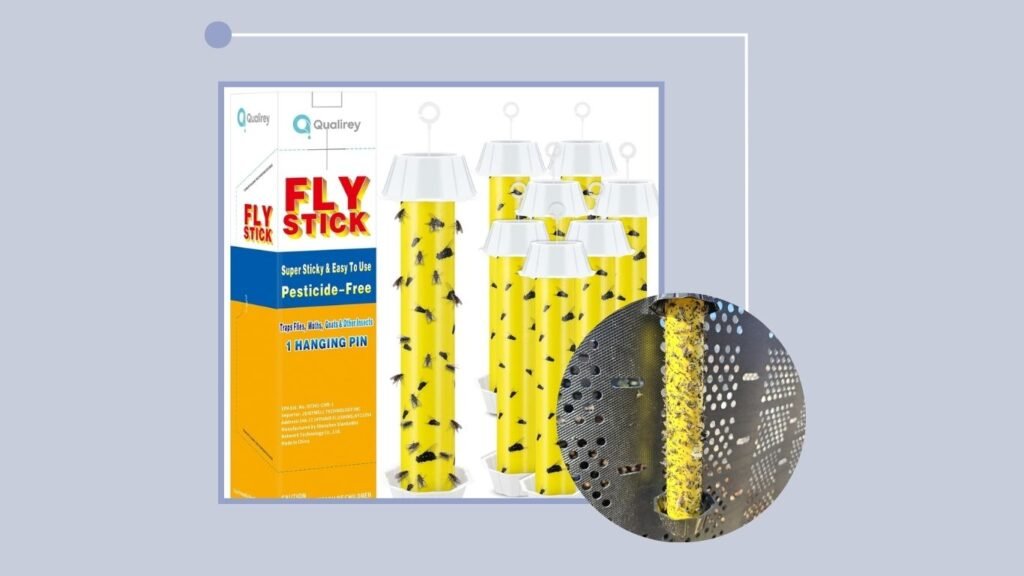
The Qualirey Yellow Sticky Wasp Trap combines a bright visual design with a sticky capture surface intended for wasps and other flying insects. Its simple construction makes it easy to use in a variety of locations, including garages, covered patios, workshops, greenhouses, and similar spaces. The yellow color can help make the trap visually attractive to certain insects while the adhesive surface handles the actual capture.
Key Features
- Bright yellow trap design
- Strong sticky surface
- Suitable for flying pests
- Easy indoor or outdoor placement
- No power source required
- Useful for monitoring insect activity
Why It Is Best for Visual Attraction
Yellow is commonly used in sticky traps because many flying insects are drawn toward bright colors. The Qualirey trap takes advantage of this simple visual attraction while combining it with a large adhesive area.
This can be useful in locations where insects repeatedly gather around windows, lights, or entry points.
Performance and Easy Maintenance
The trap requires very little setup. Once positioned in an active area, it can work continuously without batteries, cords, or refillable components.
Because insects remain visible on the surface, users can quickly see whether wasp activity is increasing or declining. When the adhesive becomes crowded or dusty, the trap can be replaced with minimal effort.
Best For Workshops and Semi-Enclosed Spaces
The Qualirey trap is particularly practical for spaces where flying insects enter regularly but where people may not want to use sprays.
Workshops, garages, barns, greenhouses, and covered patios can all benefit from a passive trapping system like this. Its straightforward design makes it a dependable option for users who value simplicity over more complicated trapping technology.
6. Sticky Stick Wasp Traps for Indoor & Outdoor Use
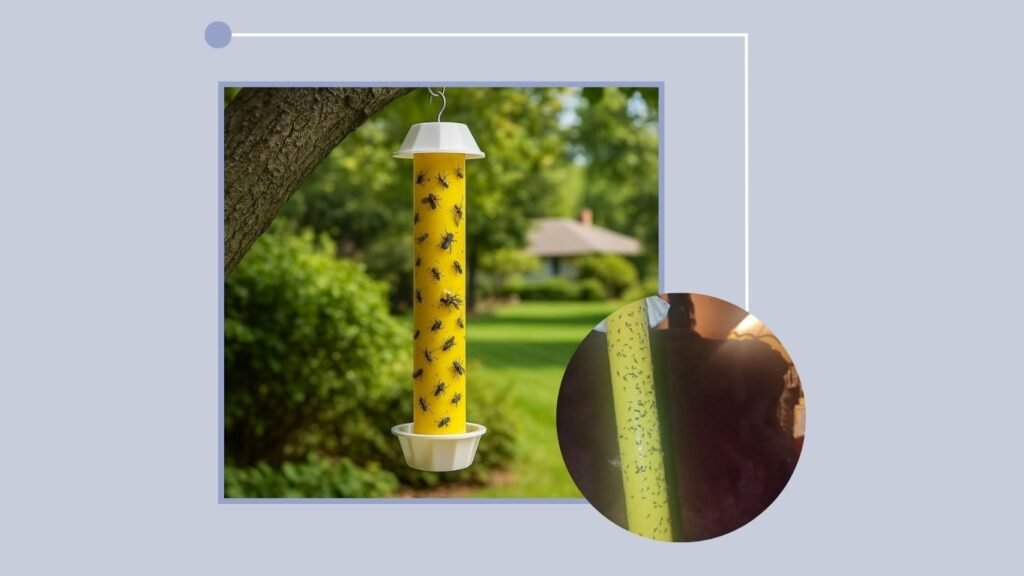
Sticky Stick Wasp Traps provide a compact physical trapping solution that can be used in both indoor and outdoor settings. Their narrow stick-style design makes them easier to place in areas where large hanging traps may be inconvenient. The adhesive surface captures flying insects that land on or brush against it, making the product useful for wasps as well as other common airborne pests.
Key Features
- Compact stick-style design
- Adhesive insect-catching surface
- Indoor and outdoor use
- Easy placement in tight areas
- No batteries or electricity required
- Suitable for general flying pest control
Why It Is Best for Tight Spaces
Large traps can be difficult to position around narrow windows, corners, shelves, or small utility areas. A stick-style trap offers more placement flexibility and can fit into locations where traditional hanging designs may take up too much room.
This makes it useful for targeted pest monitoring around compact indoor spaces.
Everyday Performance and Convenience
Once installed, the sticky surface works passively, requiring no daily adjustment. Users can place the trap close to active flying insect areas and visually inspect it over time.
The compact shape also makes it easy to use several traps in different locations rather than depending on one large central trap.
Best For Targeted Indoor Placement
These sticky stick traps are a practical choice for kitchens, garages, storage rooms, sheds, and other spaces where wasps occasionally appear.
Their compact profile gives users more control over placement, especially around windows or doorways. For households that want a simple way to monitor several small problem areas at once, the stick-style format offers useful versatility.
7. Hanging Wasp Trap Pack for Indoor & Outdoor Use
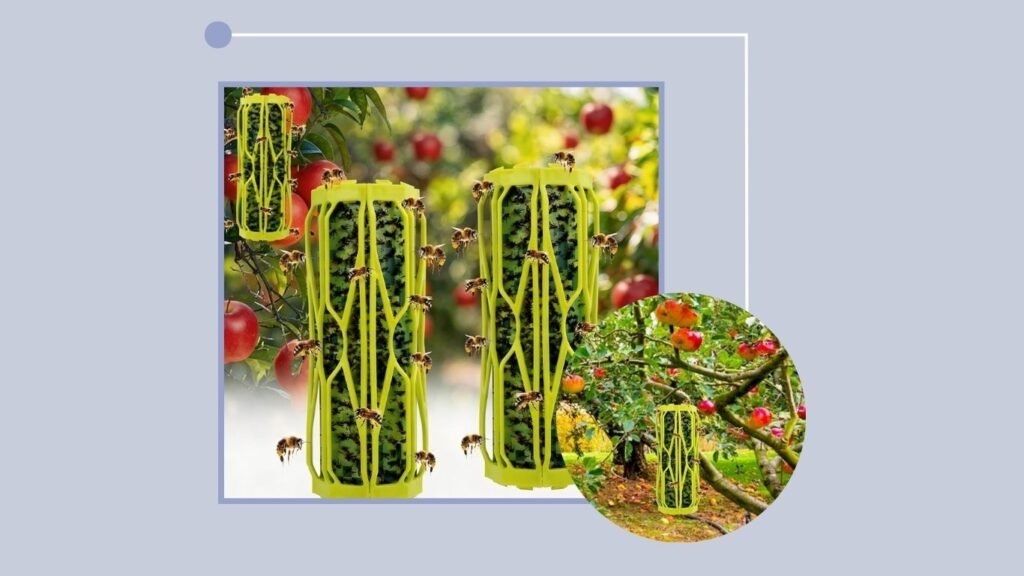
The Hanging Wasp Trap Pack is designed for homeowners who want broader coverage across several problem areas. With multiple hanging traps available, users can position them in different locations instead of relying on a single unit. This makes the pack especially practical for garages, patios, sheds, storage areas, and other spaces where wasp activity may occur at more than one entry point.
Key Features
- Multiple hanging traps included
- Suitable for indoor and outdoor use
- Easy to position in several areas
- Passive trapping design
- No electrical power required
- Useful for broader pest monitoring
Why It Is Best for Multiple Problem Areas
A single trap may not provide enough coverage when wasps are entering through several doors, windows, or exterior openings. A multipack allows users to create several trapping zones throughout the property.
This can help identify where activity is strongest while giving insects more opportunities to encounter a trap.
Coverage and Everyday Performance
The hanging design keeps traps elevated and easy to inspect. They can be positioned in garages, sheds, covered patios, entryways, or similar areas where wasps tend to fly.
Having several traps also makes it easier to adjust placement over time. If one location produces little activity while another captures many insects, users can reposition traps accordingly.
Best For Larger Homes and Recurring Wasp Activity
This multipack is particularly useful for properties with several wasp-prone spaces. Instead of repeatedly moving one trap between locations, users can keep multiple areas covered at the same time.
For seasonal infestations or homes where wasps frequently enter garages and outdoor living areas, the added coverage can make pest monitoring easier and more consistent. Combined with sealing entry gaps and addressing nearby nest activity safely, these traps can form a practical part of a broader wasp-control strategy.
FAQs
1. Do indoor wasp traps really work?
Yes, indoor wasp traps can help capture individual wasps and reduce flying activity inside garages, sheds, enclosed patios, and similar spaces. Sticky traps work through physical capture, while reusable traps may use attractants. However, traps do not remove an active nest, so recurring wasp activity may require locating and addressing the source.
2. Where should I place an indoor wasp trap?
Place traps near areas where wasps are frequently seen, such as windows, doors, garages, storage areas, or enclosed porches. Keep them away from heavily used seating areas so attracted insects are not drawn closer to people. Always follow the placement instructions provided with the specific trap.
3. Are sticky wasp traps safe to use indoors?
Sticky traps can be convenient indoors because they do not require spraying insecticides into the air. However, they should be positioned where children and pets cannot touch the adhesive. Avoid placing them directly above food-preparation surfaces or other sensitive locations.
4. How often should indoor wasp traps be replaced?
Replacement depends on how many insects are captured and how quickly the adhesive becomes covered with dust or debris. A sticky trap should generally be replaced when much of its surface is occupied or no longer sticky. Reusable traps should be cleaned and refreshed according to the manufacturer’s directions.
5. What should I do if wasps keep appearing indoors?
Repeated indoor wasp activity can indicate an entry point or a nest nearby. Check window frames, vents, attic openings, roof gaps, doors, and other possible access points. Seal appropriate gaps after confirming they are not active nest entrances. If a nest is inside a wall, attic, or difficult location, professional pest control may be the safer option.
