
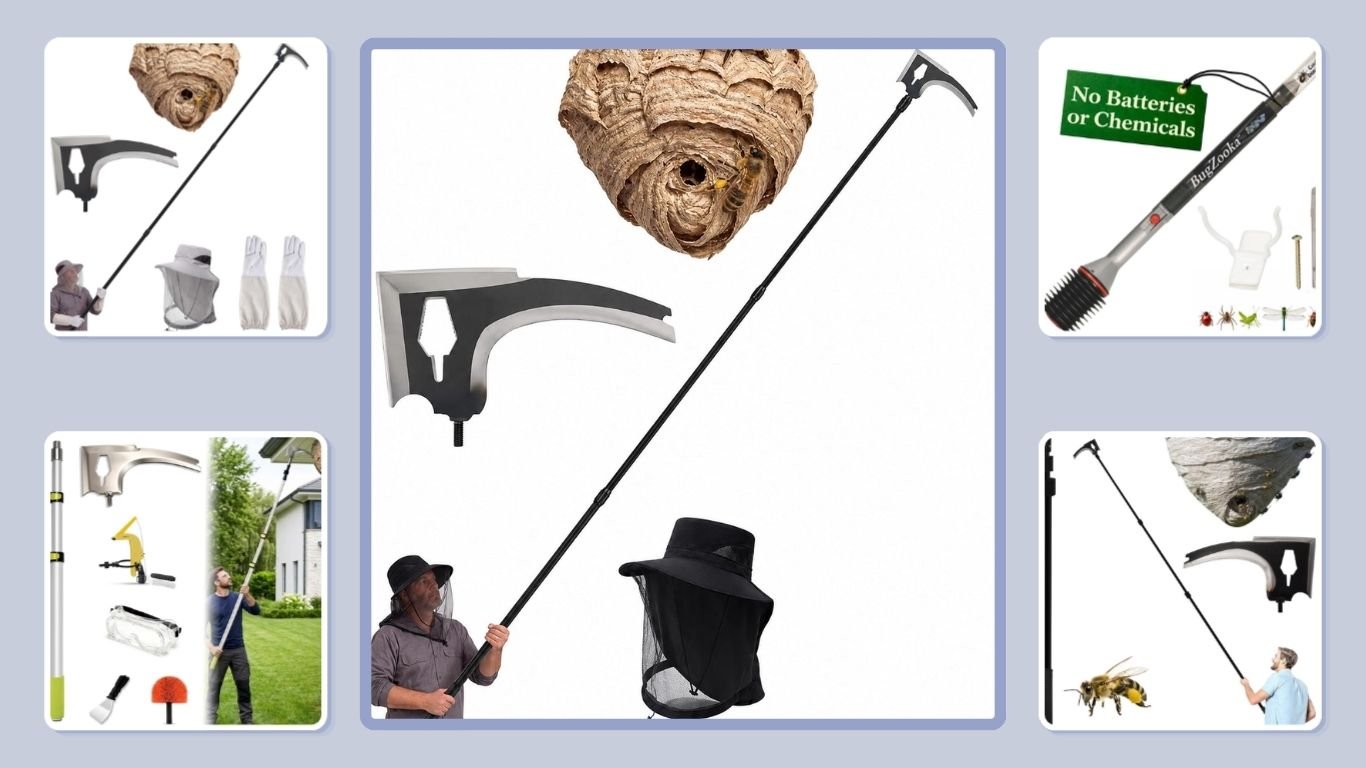
Using the best wasp nest removal tools can make it easier to remove nests, scrape away old buildup, and handle unwanted wasp activity around your home, garage, shed, or outdoor structures. Different tools are designed for different jobs, including nest scraping, extended-reach removal, and capturing individual insects without direct contact. Choosing the right tool depends on the nest location, size, and level of activity. In this guide, we review five practical wasp removal tools based on their design, usability, reach, and overall convenience.
1. Wasp Nest Removal Scraper Tool for Hornets & Yellow Jackets
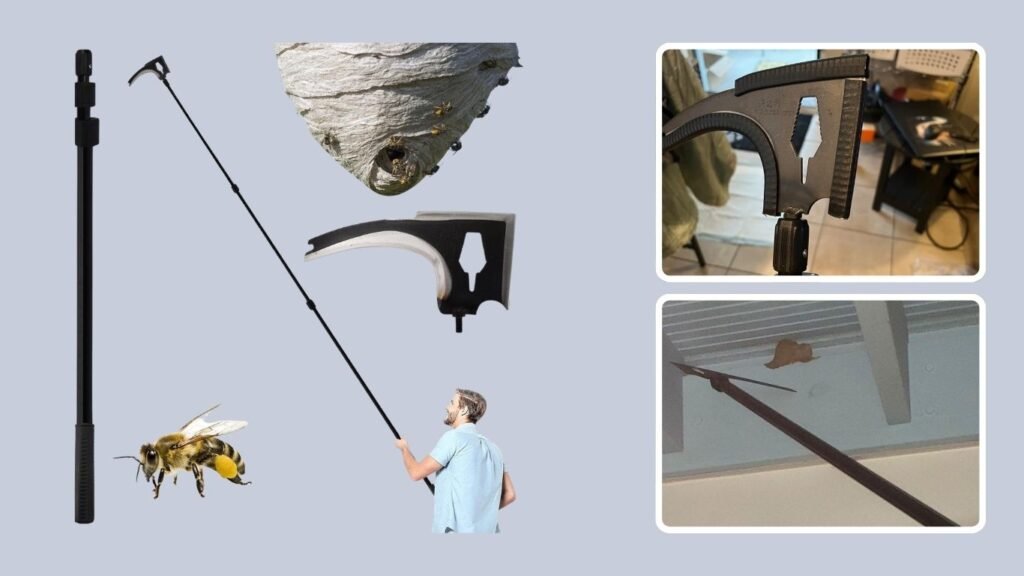
The Wasp Nest Removal Scraper Tool is designed to make physical nest removal easier while giving users more separation from the nest area than a handheld scraper. It is particularly practical for removing old or inactive wasp, hornet, and yellow jacket nests from exterior surfaces. The scraping design helps detach nest material from walls, eaves, sheds, and similar structures without requiring direct hand contact.
Key Features
- Designed for physical wasp nest removal
- Scraping attachment for stuck nest material
- Suitable for exterior walls and structures
- Helps increase working distance
- Useful for wasp, hornet, and yellow jacket nests
- Chemical-free mechanical removal approach
- Suitable for routine property maintenance
Why It’s Best For
This tool is best for homeowners dealing with old, abandoned, or already treated nests attached to exterior surfaces. The scraper design makes it especially useful when nest material remains firmly attached after the insects are gone.
It can also be helpful for seasonal cleanup when several small nests have accumulated around sheds, garages, eaves, or covered outdoor spaces.
Performance & Durability
A dedicated scraper gives better control than attempting nest removal with household objects such as sticks or brooms. Its performance is strongest on accessible nests where the scraping surface can make firm contact.
Durability depends on how much force is used and the hardness of the nest material. Using controlled pressure rather than aggressive twisting can help protect the tool and surrounding surface.
Pros & Cons + Overall Verdict
Pros
- Simple operation, no chemicals required, useful for attached nests, and keeps hands away from nest debris.
Cons
- Primarily intended for physical removal rather than controlling active wasps, and some locations may still be difficult to reach.
Overall Verdict: This scraper is a practical choice for homeowners who frequently need to clean inactive or previously treated wasp nests from exterior structures. Avoid scraping an active social-wasp nest; professional removal is safer when wasps are still defending it.
2. Gulfmew Wasp Nest Removal Tool
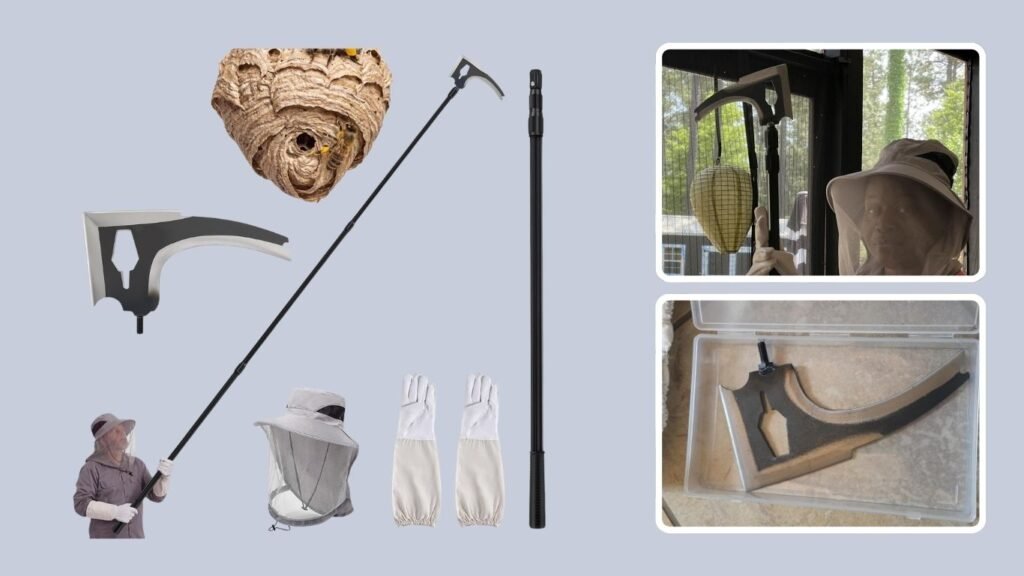
The Gulfmew Wasp Nest Removal Tool offers a dedicated alternative to improvised sticks, brushes, or household scrapers when dealing with unwanted nests. It is intended to help users physically detach nests from structures while keeping removal more controlled. This makes it particularly useful for property owners who regularly discover old nests around porches, garages, sheds, fences, and other sheltered locations.
Key Features
- Dedicated wasp nest removal design
- Suitable for exterior maintenance
- Helps avoid direct hand contact
- Useful for removing attached nest material
- Reusable mechanical tool
- No pesticide required for cleanup
- Convenient for seasonal nest removal
Why It’s Best For
This Gulfmew tool is best for people who want a purpose-built nest-removal accessory instead of using whatever happens to be available around the house.
It can be particularly useful after a nest has become inactive or has been professionally treated. Once wasp activity has stopped, the tool can help detach remaining nest material so the location can be cleaned and inspected for cracks or future nesting opportunities.
Performance & Durability
Performance depends heavily on nest location and how firmly the material is attached. Small paper nests may come away relatively easily, while hardened mud nests can demand considerably more scraping effort.
A reusable tool is valuable for properties that experience repeated seasonal nesting because it can be stored and brought out whenever old nests need to be cleared.
Pros & Cons + Overall Verdict
Pros
- Purpose-built design, reusable, suitable for regular property maintenance, and reduces the need to touch nest debris.
Cons
- Physical removal does not eliminate an active colony, and effectiveness depends on the nest’s location and construction.
Overall Verdict: The Gulfmew Wasp Nest Removal Tool is a sensible general-purpose option for clearing inactive nests and leftover material from around a home. Its biggest advantage is convenience for homeowners who encounter recurring nests and want a dedicated removal tool available when needed.
3. Wasp Nest Removal Tool for Mud Daubers & Wasps
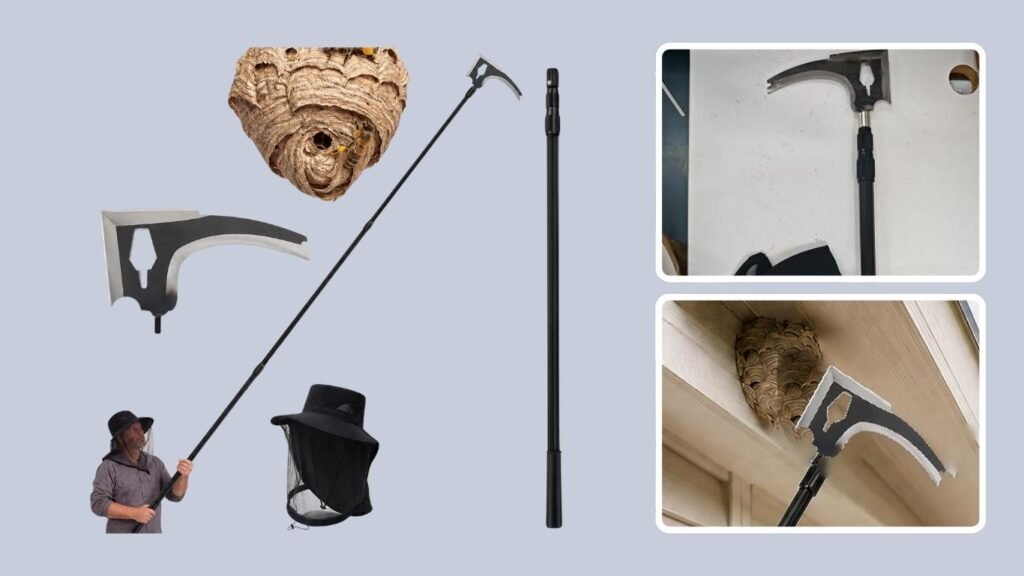
The Wasp Nest Removal Tool for Mud Daubers & Wasps is especially useful for nests that remain firmly attached to walls, ceilings, eaves, and other protected surfaces. Mud dauber nests can become hard and stubborn after drying, so a scraping-style removal tool makes cleanup much easier than trying to brush them away. It can also be used for suitable inactive paper-wasp nest cleanup.
Key Features
- Designed for wasp and mud dauber nests
- Useful for hardened mud nest material
- Helps scrape nests from exterior surfaces
- Reusable construction
- Reduces direct contact with nest debris
- Useful around eaves, garages, and sheds
- Chemical-free removal method
Why It’s Best For
This is the best choice in the lineup for mud dauber nest cleanup. Mud daubers build nests from collected mud, and those structures can adhere tightly to brick, siding, wood, and sheltered walls.
A dedicated removal tool provides more scraping leverage and control than a broom. It is particularly useful after a mud dauber nest is confirmed inactive and you want to clean the surface before another insect reuses the location.
Performance & Durability
Performance should be strongest on dry nests that can be loosened gradually from their mounting surface. Multiple passes may be necessary for thick or old mud deposits.
Care is important when scraping painted siding, soft wood, or other easily damaged finishes. Gradual pressure helps remove the nest without unnecessarily scratching the underlying material.
Pros & Cons + Overall Verdict
Pros
- Particularly useful for mud nests, reusable, simple to operate, and suitable for hard-to-remove residue.
Cons
- Scraping can potentially mark delicate surfaces, and it should not be used as a substitute for safely controlling an active defensive colony.
Overall Verdict: This tool stands out for homeowners dealing with mud daubers and dried nest buildup. Its targeted scraping function makes it more practical than a general-purpose household brush when nests are firmly bonded to exterior surfaces.
4. BugZooka WB100 Bug Catcher Vacuum
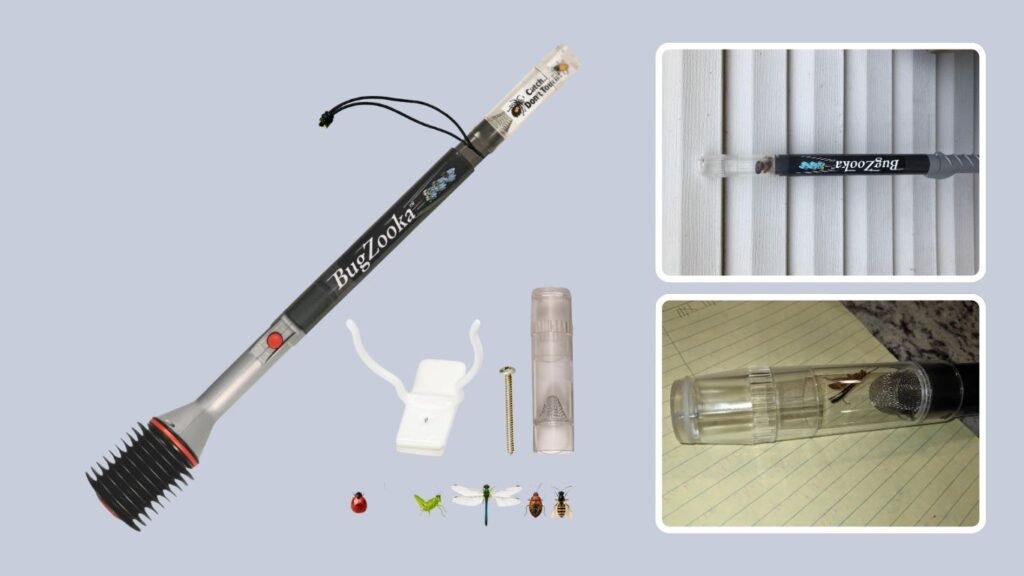
The BugZooka WB100 Bug Catcher Vacuum is different from traditional nest-removal scrapers. Instead of physically removing a nest, it is designed to capture individual insects without crushing them. This makes it useful when an isolated wasp or other unwanted insect enters a room and you want more distance than a cup-and-paper method provides. It complements nest tools rather than replacing them.
Key Features
- Vacuum-style insect catcher
- Designed for individual insects
- Long body provides additional reach
- Captures insects without swatting
- Helps reduce messy insect removal
- Reusable household pest tool
- Useful for multiple types of insects
Why It’s Best For
The BugZooka is best for individual wasps or insects that make their way indoors. A nest scraper is useless when a single insect is flying or resting on a window, but a bug-catching vacuum provides a more targeted solution.
It can also be useful for people who dislike crushing insects against walls or ceilings and prefer a cleaner capture method.
Performance & Durability
Performance depends on getting the opening reasonably close to a resting insect. Fast-flying wasps may be harder to capture, so it is generally more practical when the insect has landed.
Because the tool is reusable, it can serve beyond wasp season for spiders, stink bugs, beetles, and other household insects. Keeping the capture section clean helps maintain convenient operation.
Pros & Cons + Overall Verdict
Pros
- Reusable, useful for many insects, avoids splattering, provides extra reach, and works well for isolated indoor pests.
Cons
- Not intended for nest removal and may be difficult to use on rapidly flying or aggressive wasps.
Overall Verdict: The BugZooka WB100 is the most versatile product here for single-insect capture rather than nest cleanup. It makes a useful companion tool for homeowners who frequently encounter unwanted bugs indoors.
5. Wasp Nest Removal Tool Set
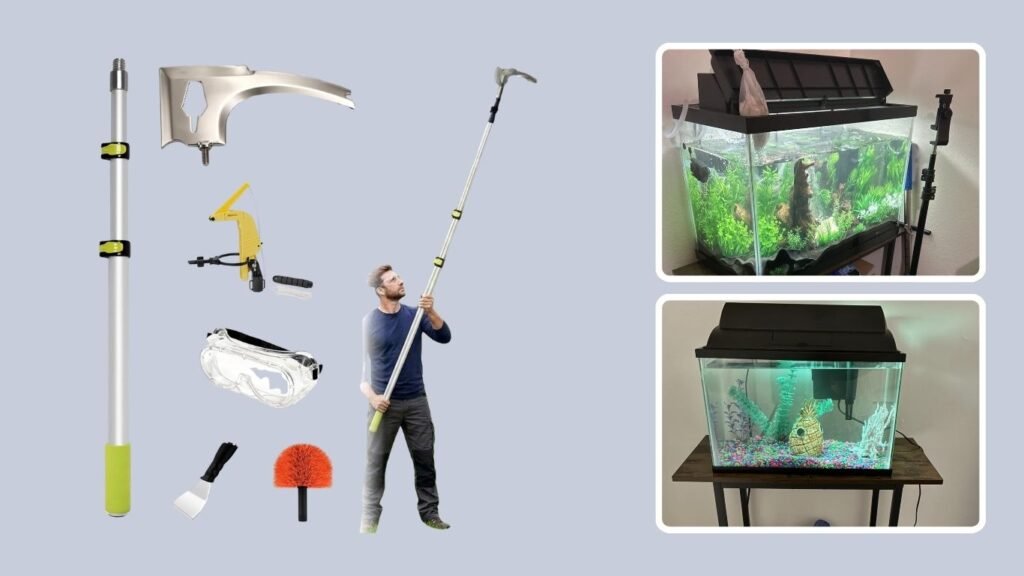
The Wasp Nest Removal Tool Set is designed for homeowners who want more than one option when cleaning up different kinds of nest material. A set can be particularly convenient when nests occur in different positions or require different approaches. Rather than relying on a single scraper for every situation, a multi-piece setup offers added flexibility for regular outdoor pest-maintenance work.
Key Features
- Multi-tool nest removal setup
- Designed for wasp nest cleanup
- Suitable for different removal situations
- Reusable components
- Helps minimize direct contact with nests
- Useful around exterior structures
- Practical for recurring seasonal maintenance
Why It’s Best For
This option is best for homeowners who encounter different nest types or locations throughout the year. One nest may be attached beneath an eave, while another may leave material on a wall or sheltered ceiling.
Having multiple removal components can make those situations easier to handle than relying on one fixed tool. It is particularly suitable for properties with sheds, barns, porches, garages, or numerous exterior nesting locations.
Performance & Durability
A tool set offers its greatest value through versatility. Instead of forcing one attachment to handle every job, users can select the component that provides the best access or scraping angle.
As with any nest-removal equipment, durability improves when the tools are cleaned after use and stored in a dry location. Avoid excessive pressure when working against hard surfaces or stubborn nest material.
Pros & Cons + Overall Verdict
Pros
- Versatile setup, multiple removal options, reusable, useful for larger properties, and convenient for seasonal maintenance.
Cons
- More components require additional storage, and the set may be unnecessary for someone who only removes one occasional small nest.
Overall Verdict: The Wasp Nest Removal Tool Set is the strongest choice for users who value versatility and repeated use. It provides more flexibility than a single-purpose scraper and is especially practical for maintaining properties where inactive nests appear in several different locations.
FAQs
1. What is the safest way to remove a wasp nest?
The safest approach depends on whether the nest is active. Old or inactive nests can often be removed with a scraper or nest-removal tool. Active nests, especially large ones or nests in difficult locations, are better handled by a pest-control professional.
2. Can I use a wasp removal tool on an active nest?
It is generally not recommended. Scraping or disturbing an active nest can trigger defensive behavior and increase the chance of multiple stings. Removal tools are better suited for inactive, abandoned, or previously treated nests.
3. What tool is best for removing mud dauber nests?
A dedicated scraping tool is usually the most useful option for hardened mud dauber nests. These nests can stick firmly to walls, siding, or eaves, so a controlled scraper provides better leverage than a broom.
4. Are bug catcher vacuums useful for wasps?
Yes, but mainly for individual wasps rather than nests. A tool such as the BugZooka can help capture a single resting insect indoors without swatting it, but it is not designed for nest removal.
5. Should I remove an old wasp nest after the wasps are gone?
Yes, removing an inactive nest can help clean the area and make it easier to inspect for cracks, damage, or future nesting activity. Always confirm the nest is inactive before touching or scraping it.
