
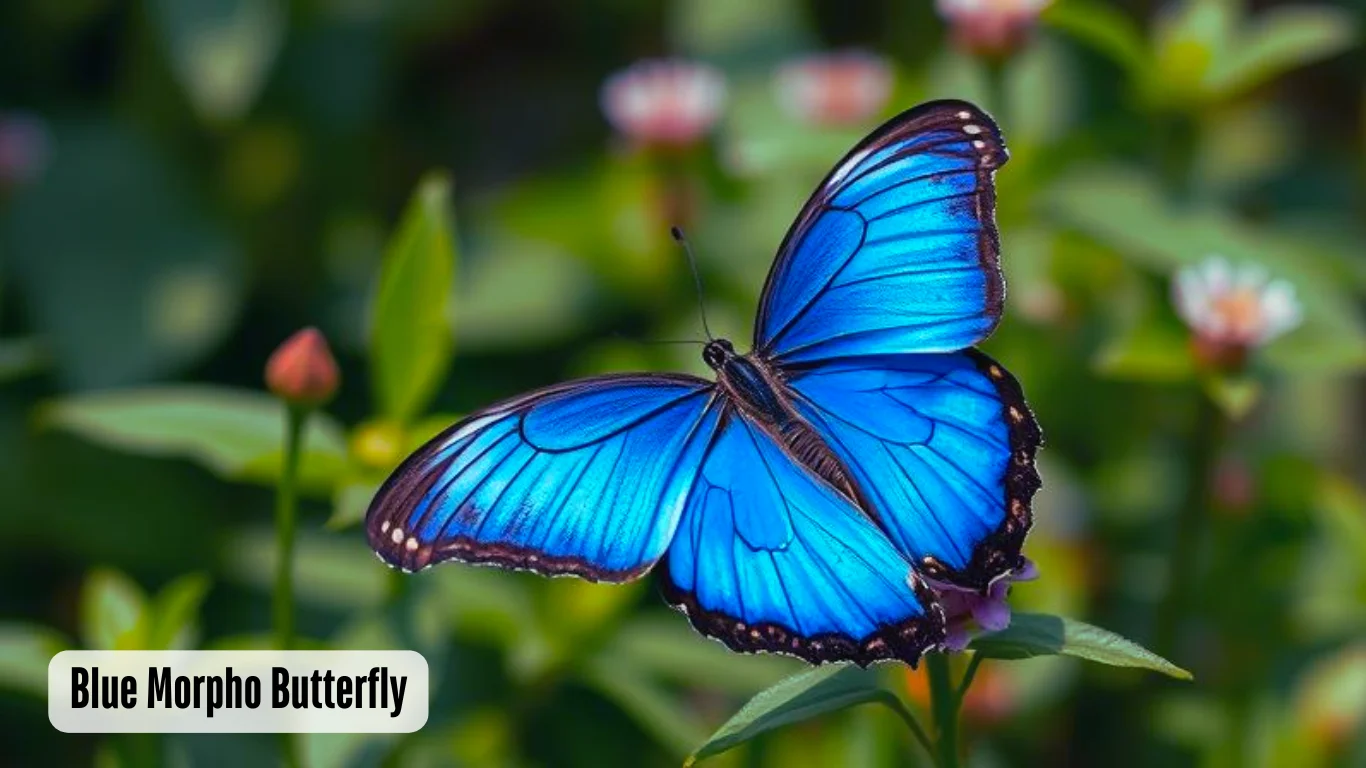
When you think of the most beautiful butterfly in the world, one species often comes to mind—the Blue Morpho Butterfly. With its electric blue wings and graceful flight, this butterfly has captured hearts and imaginations around the world.
In this article, we’ll dive deep into everything you should know about the Blue Morpho: its size, scientific name, fun facts, adaptations, and even its symbolism. Let’s explore the magical world of this stunning insect.
Blue Morpho Butterfly Scientific Name
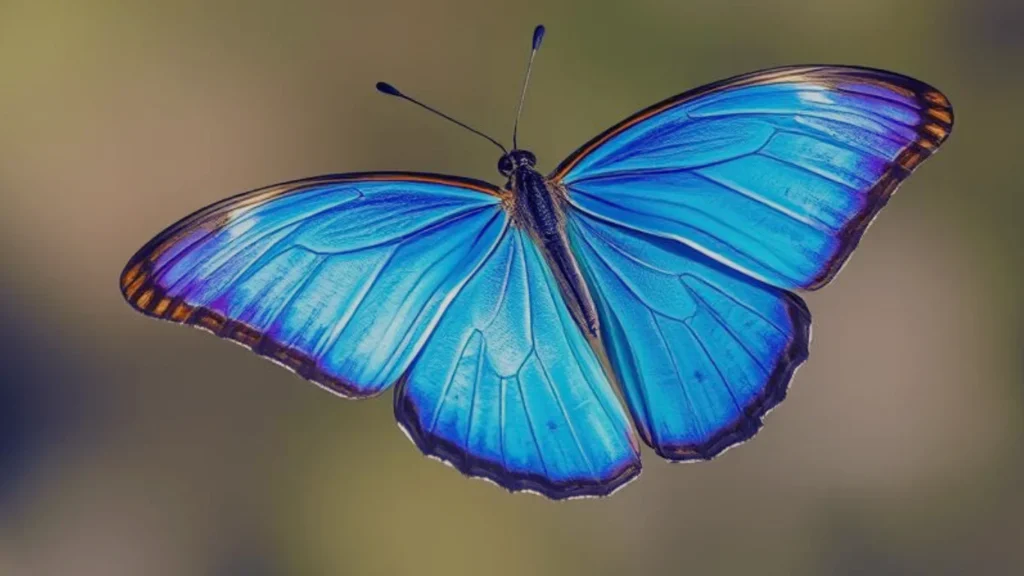
The scientific name of the Blue Morpho is Morpho menelaus. It belongs to the Nymphalidae family, which includes many large and colorful butterflies.
The name “Morpho” means “changed” or “transformed,” which suits a butterfly that looks different depending on how the light hits its wings.
Blue Morpho Butterfly Size

The Blue Morpho Butterfly is one of the largest butterflies in the world. Its wingspan ranges from 5 to 6 inches (12.5 to 15 cm), with some individuals reaching up to 8 inches.
The upper side of its wings showcases brilliant, iridescent blue due to microscopic scales that reflect light. The underside, in contrast, is brown with eyespots, providing camouflage against predators.
Blue Morpho Butterfly Habitat
Blue Morphos are native to the tropical rainforests of Central and South America, especially in countries like:
- Brazil
- Costa Rica
- Venezuela
- Colombia
They thrive in lowland rainforests where they stay close to rivers, streams, and forest floors. While they spend much of their time in the shady understory, males are often seen flying during the day, gliding above the canopy in search of mates.
Blue Morpho Butterfly Caterpillar

The caterpillar of the Blue Morpho is quite different from the butterfly’s dazzling appearance. It’s a rusty red-brown color with green patches and hairy bristles, which help protect it from predators.
Diet:
Blue Morpho caterpillars feed on a variety of legume family plants, such as:
- Mucuna
- Pterocarpus
- Erythrina
They are nocturnal feeders, eating mostly at night and resting during the day.
Blue Morpho Butterfly Life Span

The life span of a Blue Morpho Butterfly is relatively short. As an adult butterfly, it typically lives for about 115 days, or close to 4 months.
Here’s a quick breakdown of its life cycle:
- Egg Stage – Laid on the underside of host plant leaves
- Caterpillar (Larva) Stage – Lasts 2–3 weeks
- Chrysalis (Pupa) Stage – Around 2 weeks, green in color
- Adult Butterfly – Lives for about 3–4 months
During its adult phase, the butterfly focuses on reproduction and avoiding predators.
Blue Morpho Butterfly Adaptations
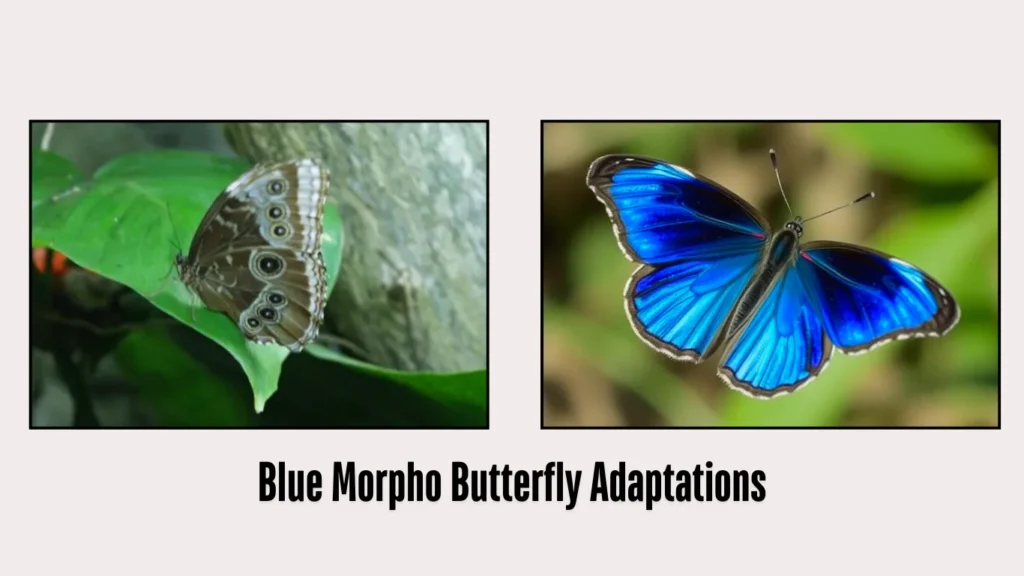
To survive in the wild, the Blue Morpho has developed several unique adaptations:
1. Camouflage Wings
While the top of its wings are bright blue, the underside is brown and patterned, helping it blend into tree bark or leaves when its wings are closed.
2. Flash and Fade Effect
Its blue wings flash when flying, then disappear when it folds them. This “flash and fade” effect confuses predators and helps the butterfly escape danger.
3. Eyespots for Defense
The underside of its wings has eyespots that mimic the eyes of larger animals. These can scare off predators like birds or small mammals.
4. Toxic Chemicals
Blue Morpho caterpillars feed on toxic plants, storing the chemicals in their bodies to make them less palatable to predators.
Blue Morpho Butterfly Meaning
In many cultures, the Blue Morpho Butterfly symbolizes change, healing, and transformation.
Spiritual Meaning:
- Hope and renewal – especially during difficult times
- Emotional healing – many believe seeing one brings peace and clarity
- Connection to the spirit world – in some traditions, it is seen as a spiritual messenger
Its dazzling blue color often represents truth, clarity, and inner peace.
Blue Morpho Butterfly Fun Facts
Here are some fun and surprising facts about the Blue Morpho Butterfly:
- 💠 Its blue wings aren’t actually blue. The color comes from the microscopic structure of the scales that reflect light, not from pigment.
- 🦋 It’s more active during the day. Especially the males, who are territorial and fly boldly through the canopy.
- 👅 They taste with their feet! Like many butterflies, Blue Morphos use their feet to sense chemicals in plants and flowers.
- 🌿 They drink fruit juice. Adults feed on the juices of fermenting fruit, not nectar.
- 📷 It’s a favorite of nature photographers due to its glowing, reflective wings.
Why the Blue Morpho is Considered the Most Beautiful Butterfly
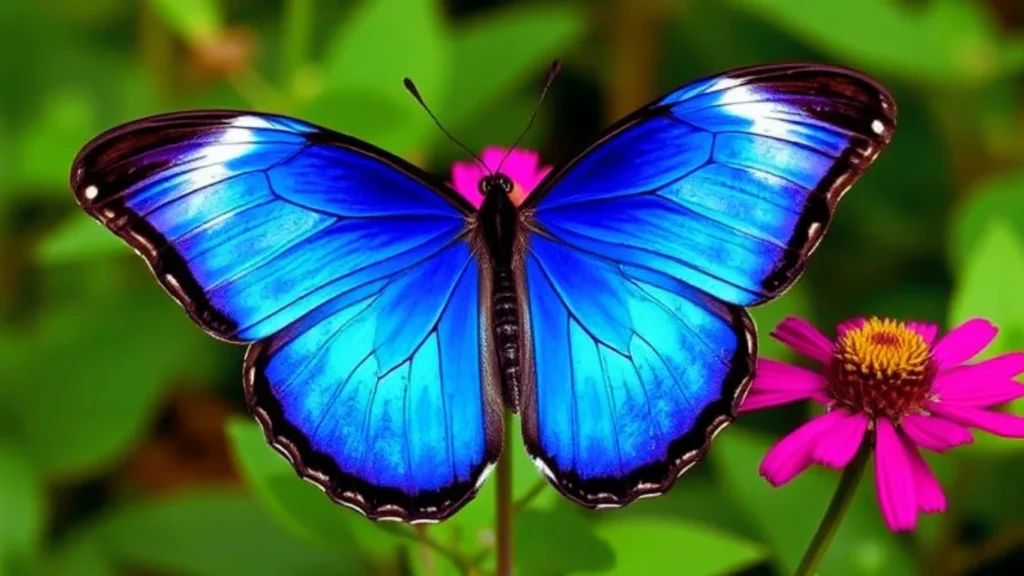
Many butterfly species are beautiful, but the Blue Morpho stands out for several reasons:
- Its wings shimmer with an iridescent blue that changes with the light.
- The contrast between its upper and lower wings creates a dramatic “disappear and reappear” effect.
- Its large size and graceful flight make it a standout in any rainforest.
- It has inspired art, stamps, jewelry, tattoos, and myths around the world.
For all these reasons, many people consider it the most beautiful butterfly on Earth.
Final Thoughts
The Blue Morpho Butterfly is more than just a pretty face. From its fascinating life cycle and smart survival tactics to its powerful symbolism, it truly earns the title of most beautiful butterfly.
Whether you’re watching one glide through a rainforest or admiring it in a butterfly conservatory, it’s an experience that sticks with you. By learning about this species, we gain a deeper appreciation for the incredible biodiversity of our planet—and the importance of protecting it.
