

Seeing a shiny blue bug that looks like a wasp can be surprising—and a little intimidating. Many people immediately assume it’s dangerous, especially because wasps are often associated with painful stings and aggressive behavior. However, not every insect that looks like a wasp is actually a threat.
In fact, many blue or black-and-blue wasp-like bugs are harmless and even beneficial to your garden or environment. Their striking metallic colors and sleek bodies often make them stand out, leading to curiosity and confusion.
This guide will help you understand what these insects are, how to identify them, and whether you should be concerned.
What Is a Blue Bug That Looks Like a Wasp?
This section explains why certain insects resemble wasps and what they actually are. Many of these bugs are either true solitary wasps or harmless mimics that evolved to look similar for protection.
A blue bug that resembles a wasp is usually either a type of solitary wasp or an insect that mimics wasps for defense. These insects often have slender bodies, long wings, and metallic blue or black coloring that shines in sunlight.
Unlike aggressive social wasps, most of these species are calm and rarely sting unless threatened.
Common Blue Wasp-Like Bugs
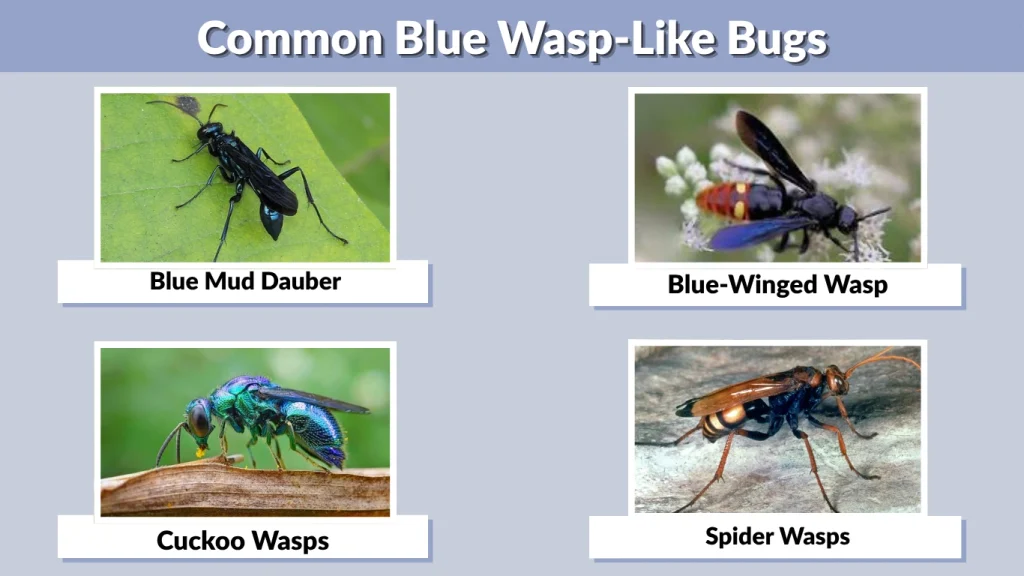
In this section, you’ll discover the most common insects that match the description of a blue wasp-looking bug. Each has unique traits that help with identification.
Blue Mud Dauber
One of the most frequently seen blue wasp-like insects is the blue mud dauber. It has a long, slender body with a metallic blue or black-blue shine.
This insect builds mud nests in sheltered areas like walls or ceilings. Despite its appearance, it is non-aggressive and helps control spider populations.
Blue-Winged Wasp
The blue-winged wasp typically has a dark body with bright blue wings and sometimes an orange abdomen.
It is often found flying over lawns and gardens. These wasps are beneficial because they target harmful grubs in the soil and rarely pose any threat to humans.
Cuckoo Wasps
Cuckoo wasps are smaller insects with a shiny metallic blue or green appearance that looks almost jewel-like.
They are parasitic insects that lay eggs in other nests, but they are completely harmless to humans and often go unnoticed due to their small size.
Spider Wasps (Blue/Black Variants)
Spider wasps are larger and more noticeable, often with dark blue or black bodies and long legs.
They hunt spiders and can look intimidating, but they are generally non-aggressive and avoid human interaction unless provoked.
Why Do These Bugs Look Like Wasps?
This section explores the reason behind their appearance. Many insects evolve to resemble wasps as a survival strategy.
These bugs use defensive mimicry, meaning they look like dangerous insects to scare off predators. Bright metallic colors act as warning signals, even if the insect itself is not harmful.
This adaptation helps them survive without needing to rely on aggression.
Are Blue Wasp-Looking Bugs Dangerous?
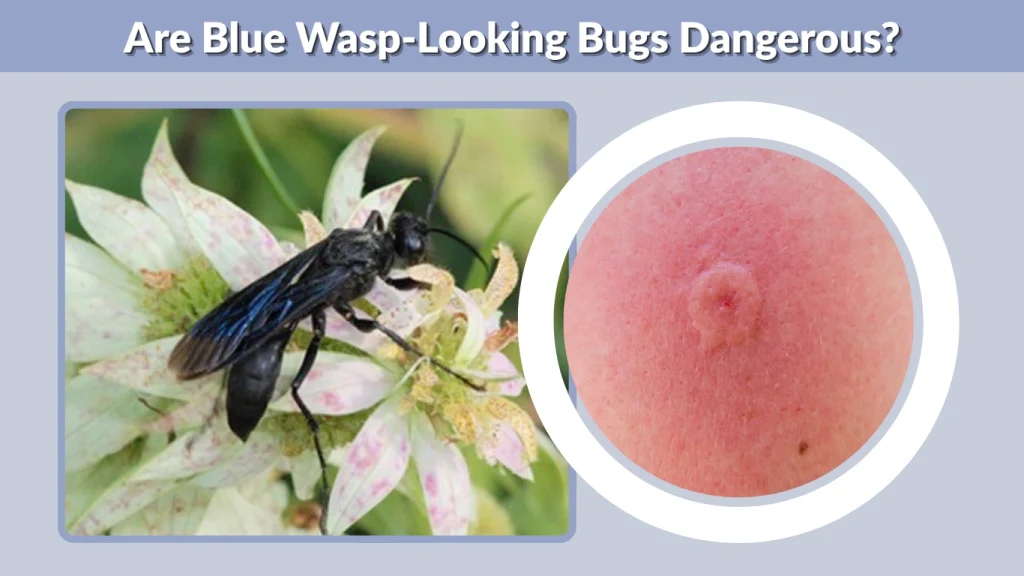
Here, we break down whether these insects are harmful, aggressive, or beneficial so you can better understand the risk level.
Do They Sting?
Some species can sting, but it usually happens only when they are threatened or handled.
They do not actively seek to sting humans like more aggressive wasp species.
Are They Aggressive?
Most blue wasp-like bugs are not aggressive. They are solitary and do not defend colonies, which makes them much calmer than social wasps.
Are They Beneficial?
These insects are highly beneficial because they help control pests such as spiders and grubs.
They play an important role in maintaining a healthy ecosystem.
How to Identify a Blue Wasp-Like Bug

This section provides simple ways to identify the insect based on visible features and behavior.
- Body shape: Slender or bulky depending on species
- Color pattern: Metallic blue, black-blue, or mixed colors
- Wing color: Blue, red, or transparent
- Size: Small (cuckoo wasps) or large (mud daubers, spider wasps)
- Behavior: Hunting, hovering, or nesting
Observing these details can help you determine exactly what type of insect you’re seeing.
Big Blue Wasp-Looking Bugs: What Are They?
This section focuses on larger species, which often cause the most concern due to their size and appearance.
Larger blue wasp-like insects are usually blue mud daubers or spider wasps. Some may also have reddish or orange wings, which can make them even more noticeable.
Despite their intimidating size, they are generally harmless and focused on hunting or nesting rather than interacting with humans.
Blue and Black Wasp-Like Bugs by Region
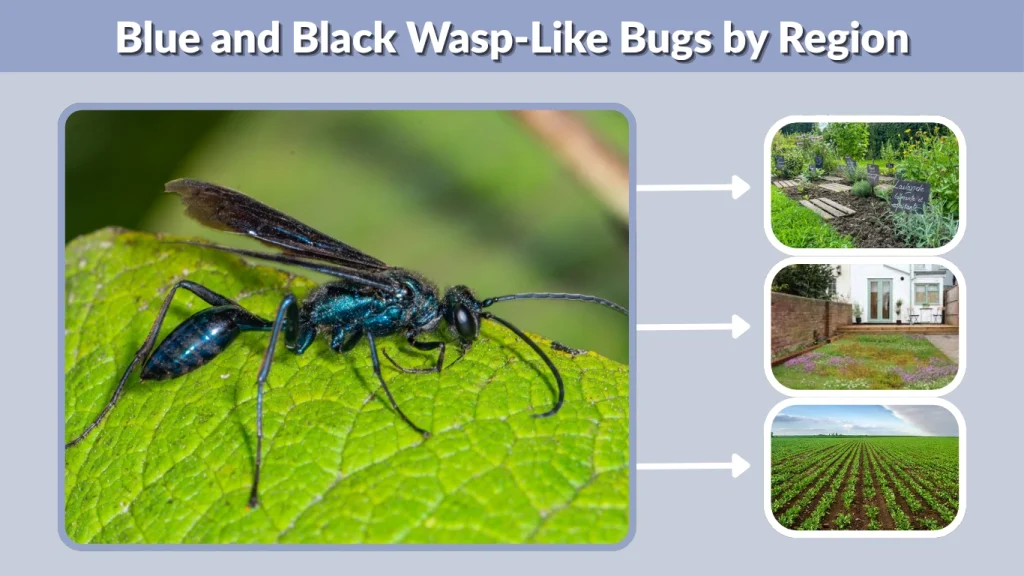
This section helps readers identify these insects based on location, since species can vary depending on where you live.
In Michigan & North America
In North America, especially in places like Michigan, several blue and black wasp-like insects are commonly reported.
The blue mud dauber is one of the most widespread species, often seen around homes and outdoor structures. The blue-winged wasp is also common in lawns and gardens, where it hunts soil pests. Another species, the great black wasp, may appear slightly bluish under sunlight and can be mistaken for a blue wasp.
These insects are generally harmless and beneficial.
In Other Regions
In warmer or tropical regions, you may find a wider variety of colorful wasp-like insects, including more vibrant metallic species.
Some regions have larger or more brightly colored variations, but the behavior is often similar—most are solitary, non-aggressive, and helpful in controlling other insect populations.
Location plays a key role in narrowing down the exact species.
What to Do If You See One
This section explains how to respond safely and calmly if you encounter a blue wasp-looking bug.
- Stay calm and avoid sudden movements
- Do not swat or attempt to kill the insect
- Observe from a safe distance if you’re curious
- Leave nests undisturbed, especially if they are not in high-traffic areas
In most cases, these insects will ignore you and continue their normal activity.
When Should You Be Concerned?
While these bugs are usually harmless, this section highlights situations where caution may be necessary.
- If insects are nesting near doors, windows, or frequently used spaces
- If you or someone nearby has a known allergy to insect stings
- If the insect shows repeated defensive or aggressive behavior
In such cases, it may be best to contact a pest control professional for safe removal.
Tips to Prevent Wasps Around Your Home
This section provides simple prevention methods to reduce the chances of wasps or similar insects settling near your home.
- Keep outdoor areas clean and free of food scraps
- Seal cracks, holes, and entry points around your home
- Remove unused items where insects might build nests
- Avoid disturbing existing nests unless necessary
These steps can help minimize unwanted encounters while still allowing beneficial insects to exist in the environment.
FAQs
What is a metallic blue wasp-looking bug?
Most metallic blue wasp-like bugs are either blue mud daubers or cuckoo wasps. These insects have a shiny, reflective appearance and are generally harmless to humans, often helping control pests like spiders and other small insects.
Is a blue wasp dangerous?
Blue wasps are typically not dangerous. While some species can sting, they rarely do unless threatened. Compared to aggressive wasps like yellowjackets, they are much calmer and prefer to avoid human interaction.
What is a big blue wasp-looking bug with red wings?
This is likely a blue-winged wasp or a similar species with contrasting body and wing colors. These insects are commonly found in gardens and grassy areas and are known for helping control soil-dwelling pests.
Are blue bugs that look like wasps actually wasps?
Some of them are true wasps, such as mud daubers, while others mimic wasps for protection. Identifying features like body shape, behavior, and coloration can help determine whether it is a real wasp or a lookalike.
Conclusion
Blue wasp-looking bugs may seem intimidating at first, but they are usually harmless and beneficial insects. Their metallic blue or black-and-blue appearance is often a natural defense mechanism rather than a sign of danger.
Most of these insects play an important role in controlling pests and maintaining ecological balance. Instead of fearing them, it’s better to observe from a distance and allow them to continue their natural behavior.
