

A big black wasp with blue wings can look intimidating, especially when it suddenly appears in your yard or garden. Many people describe it as a large black and blue wasp with wings that shimmer like a moth in sunlight. Despite its bold and slightly alarming appearance, this insect is usually harmless and even helpful. Understanding what it is and how it behaves can reduce fear. This guide will help you identify it, learn its habits, and decide whether you should be concerned.
What Is a Big Black Wasp With Blue Wings?
A big black wasp with blue wings is most commonly a blue-winged scoliid wasp or a closely related species. These wasps are solitary insects, meaning they do not live in colonies or attack in groups like hornets. Their dark body and metallic blue wings make them easy to recognize once you know what to look for. Although they may appear aggressive due to their size, they are generally calm and focused on feeding or reproduction rather than interacting with humans.
How to Identify a Big Black and Blue Wasp
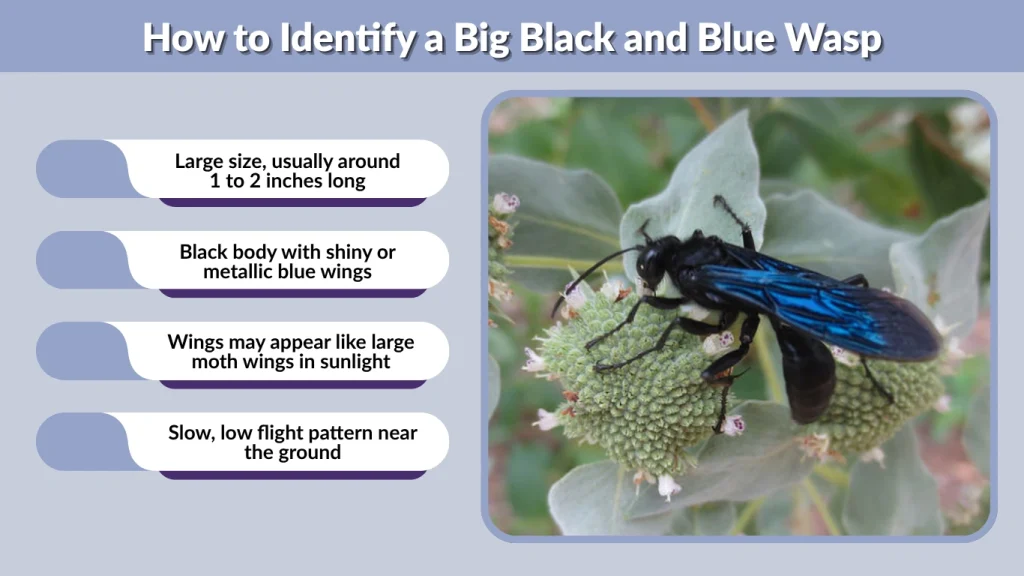
Correct identification is important because many large wasps look similar but behave very differently. The big black wasp with blue wings has several unique features that help distinguish it from more aggressive species. Its size, color, and flight pattern are the most noticeable traits. People often confuse it with other insects because of its striking appearance, but careful observation makes it easier to identify and understand its harmless nature.
- Large size, usually around 1 to 2 inches long
- Black body with shiny or metallic blue wings
- Wings may appear like large moth wings in sunlight
- Slow, low flight pattern near the ground
Why It Looks Like a Large Moth-Winged Wasp
Many people describe this insect as having wings like a moth, which can be confusing at first. This description comes from the way the wings reflect light and appear broader or softer than typical wasp wings. The metallic blue color creates an iridescent effect, making the wings look almost translucent or glowing in sunlight. This visual effect often leads people to think they are seeing a different type of insect altogether.
In reality, the wings are structured like any other wasp’s wings. The “moth-like” appearance is simply due to light reflection and movement, not a difference in anatomy or behavior.
Types of Big Black Wasps With Blue Wings
There are several species that match the description of a big black wasp with blue wings. While they may look similar, they can differ in size, behavior, and sting intensity. Knowing the common types helps you identify which one you are seeing and understand whether it poses any risk. Most of these species are non-aggressive, but some, like the tarantula hawk, are known for a stronger sting.
- Blue-winged scoliid wasp (Scolia dubia)
- Blue-winged digger wasp
- Thread-waisted wasp (slimmer body)
- Tarantula hawk (larger with a more painful sting)
Where These Wasps Are Commonly Found
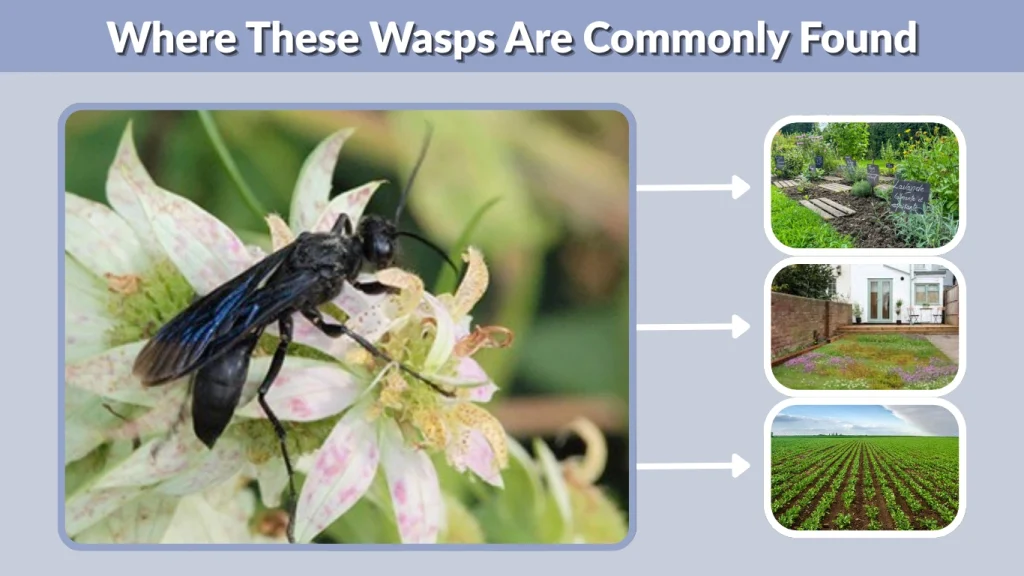
These wasps are widely found in warm and temperate regions where open spaces and suitable soil conditions exist. They are especially common in gardens, lawns, and fields where they can easily search for food and nesting spots. Their activity increases during warmer months, particularly in summer, when they are most visible. Because they rely on soil-dwelling insects, they are often seen flying low over grassy areas.
Behavior and Lifestyle of Black Wasps With Blue Wings
The behavior of these wasps is very different from that of aggressive social wasps. They are solitary and spend most of their time searching for food or suitable hosts for their larvae. They do not build large nests or defend territories in groups, which makes them much less threatening to humans. Observing their calm and focused behavior can help you understand why they are rarely a danger.
- Solitary and non-aggressive
- Do not swarm or attack in groups
- Spend most time near the ground
- Adults feed mainly on nectar
Do Big Black Blue-Winged Wasps Sting?
Stinging is one of the main concerns people have when they see a large wasp. These wasps can sting, but it is uncommon. Only female wasps have stingers, and they use them mainly for defense rather than attack. Most encounters with humans do not result in stings because the wasps prefer to avoid confrontation. As long as they are not disturbed or handled, they are unlikely to pose any threat.
Are Big Black Wasps With Blue Wings Dangerous?
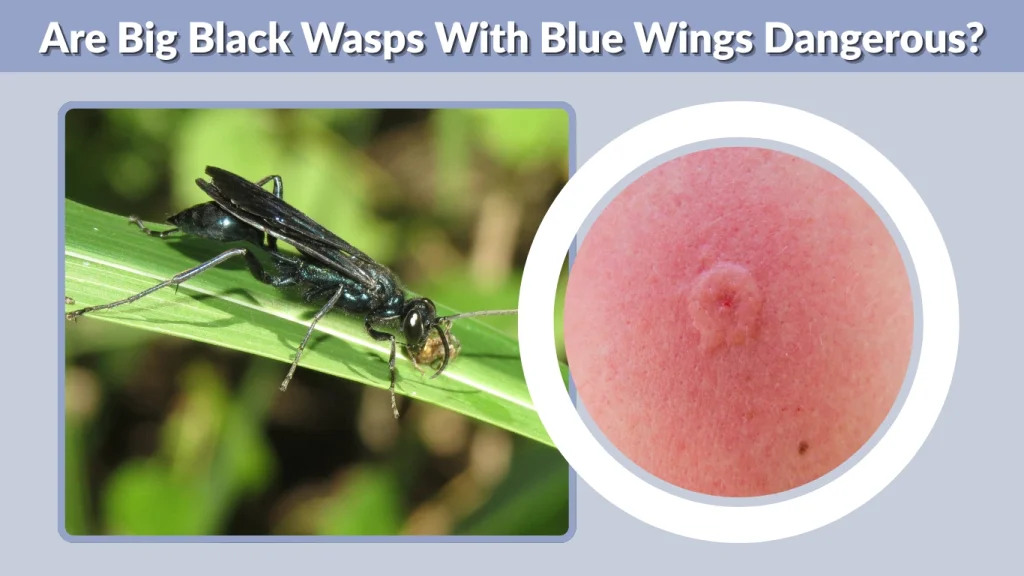
Despite their large size and bold appearance, big black wasps with blue wings are not considered dangerous in most situations. They are naturally non-aggressive and prefer to avoid humans rather than confront them. Unlike social wasps, they do not defend nests or attack in groups. Their main focus is finding food and reproducing. While they can sting if provoked, such incidents are rare. For most people, these wasps pose little to no risk and are actually beneficial to have around.
- Non-aggressive behavior toward humans
- Rarely sting unless disturbed
- Do not swarm or attack in groups
- Only a concern for those with allergies
Why You See Them in Your Yard
These wasps usually appear in your yard because it offers the ideal conditions for their survival. They are attracted to environments where food sources and nesting opportunities are available. Lawns with healthy soil and insect activity are especially appealing. Their presence often indicates that your yard has a balanced ecosystem, even though it may seem alarming at first.
They are commonly seen flying low over grass as they search for beetle larvae in the soil. Flowering plants also attract them because they provide nectar for adult wasps.
How to Manage or Reduce Their Presence
If you prefer not to have these wasps around, the best approach is to manage the conditions that attract them. Since they are beneficial insects, removing them completely is not always necessary. Instead, focus on reducing their food sources and making your yard less suitable for nesting. This approach is safer and more environmentally friendly than using chemical treatments.
- Reduce grub populations in your lawn
- Avoid excessive watering that softens soil
- Keep grass well-maintained
- Limit flowering weeds that attract nectar feeders
FAQs
What is a big black wasp with blue wings?
A big black wasp with blue wings is usually a blue-winged scoliid wasp or a similar solitary species. It is known for its shiny wings and dark body. These wasps are beneficial because they help control pests in the soil, making them useful for maintaining healthy lawns and gardens.
Are big black wasps with blue wings dangerous?
They are not dangerous in most cases. These wasps are calm and non-aggressive, and they rarely sting unless provoked. Their presence is generally harmless and often beneficial, as they help reduce harmful insect populations in your yard.
Why do they look like they have moth wings?
Their wings reflect light in a way that creates a soft, shimmering effect, making them appear larger and similar to moth wings. This is simply a visual illusion caused by their metallic blue coloration and does not indicate any difference in structure.
Do these wasps sting humans?
Yes, they can sting, but only females have stingers. Stings are very rare because these wasps avoid human interaction. They typically only sting if they feel threatened or are handled directly.
How do I get rid of big black wasps with blue wings?
The most effective way to reduce their presence is by removing what attracts them. Treating your lawn for grubs and maintaining proper lawn care can make your yard less appealing. Avoid using harsh chemicals, as these wasps are beneficial and help maintain a healthy ecosystem.
