
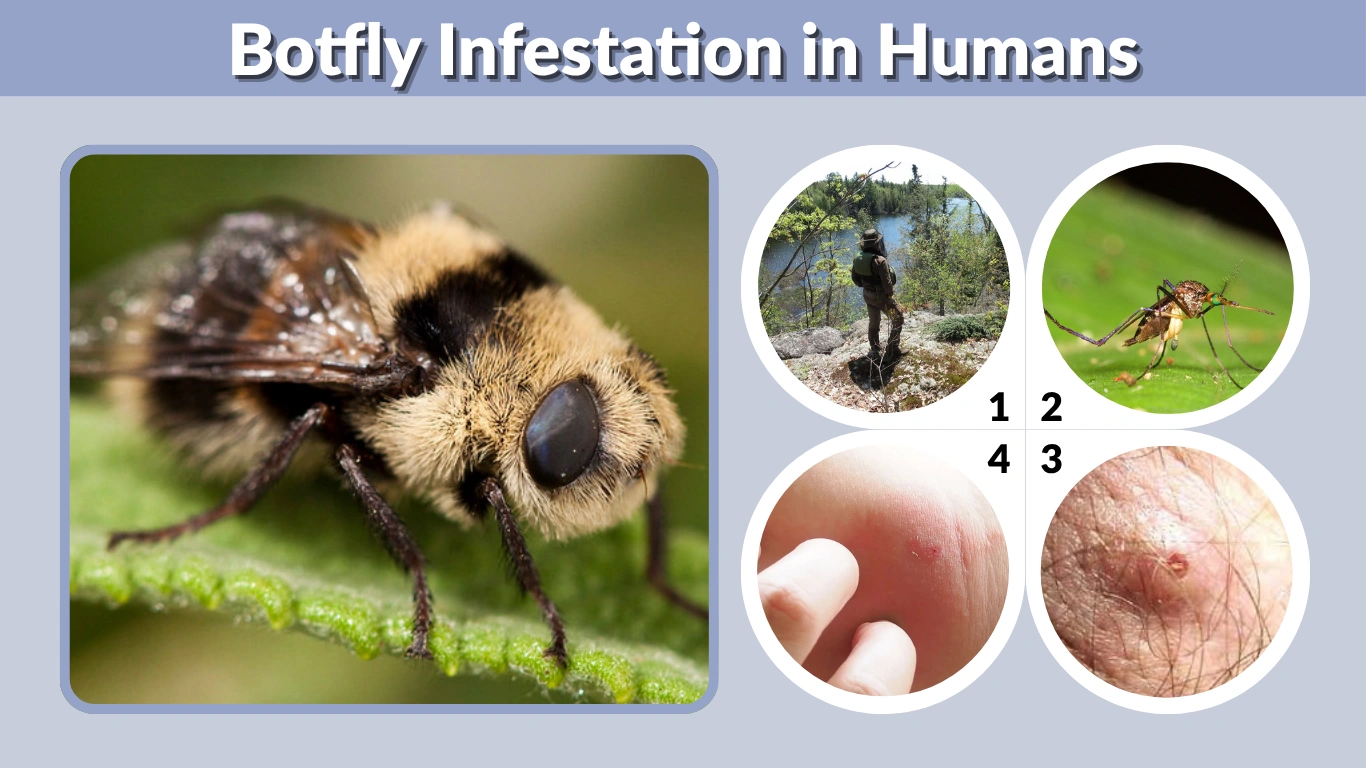
Botfly infestations in humans are rare, but when they occur, they can be alarming, uncomfortable, and deeply confusing. These parasitic flies deposit larvae that burrow beneath the skin, causing painful swelling and a creeping sensation many people describe as unforgettable. Although commonly associated with tropical regions, human botfly cases appear around the world, especially among travelers and outdoor explorers. Understanding how botflies infect humans, what symptoms to watch for, and how to treat or prevent an infestation is essential for early detection and proper care. This guide explains the full process from exposure to treatment.
What Is a Botfly Infestation in Humans?

A botfly infestation in humans, also known as myiasis, occurs when the larvae of Dermatobia hominis penetrate the skin and begin feeding on underlying tissue. Unlike mosquitoes, ticks, or other biting insects, botflies do not simply feed and leave; their larvae remain embedded until they fully mature. While botfly species typically target animals, the human botfly is uniquely adapted to use humans as hosts when the opportunity arises.
Botfly infestations often start with what looks like a normal insect bite. Over time, the small bump grows into a painful boil-like lesion, eventually revealing movement or a breathing hole—clear signs that a larva is present beneath the skin.
Understanding Botfly Behavior
Botflies have a fascinating life cycle. Adult botflies rarely come into direct contact with humans; instead, they rely on insect “carriers.” They attach their eggs to mosquitoes, ticks, or flies, which then transfer the eggs when they land on a host. The warmth of human skin triggers the eggs to hatch, allowing larvae to burrow inward. Once inside, the larvae feed on tissue until fully developed, eventually emerging to mature into adult flies.
This indirect method of reproduction is why many victims of botfly infestations have no idea how or when they encountered the insect.
How Do Humans Get Botflies? (Causes & Transmission)

Humans typically get botflies through accidental exposure. The botfly’s reproductive strategy makes infection more likely during outdoor activities, travel to tropical regions, or close contact with animals. Understanding how larvae enter the skin helps prevent unexpected infestations.
The Egg-Delivery Method
The most common transmission method is phoresy, where botflies use other insects as delivery vehicles. A mosquito or similar insect carries botfly eggs on its body. When it bites a human, the body heat causes the eggs to hatch. Newly hatched larvae then enter the skin through pores, hair follicles, or the bite wound itself.
Because this happens so quickly, victims rarely notice the moment they become hosts.
Direct Animal Transmission
Botflies also infect humans through contact with animals—especially dogs, cats, rabbits, and livestock. In these cases, larvae may already be present on an animal, and accidental skin contact can transfer them to humans. People who handle pets frequently, work with livestock, or visit rural areas may be at higher risk.
However, botflies do not spread from human to human, and infestations are not contagious.
Geographic Risk Zones
Botfly infestations are most common in:
- Central America
- South America
- Mexico
- Caribbean jungles
- Rural tropical forests
Travelers visiting these areas face a higher likelihood of encountering botfly-carrying insects. Outdoor enthusiasts, campers, and hikers are particularly vulnerable due to increased insect exposure.
Symptoms of Botfly Infestation in Humans

Botfly symptoms often start mild, resembling a mosquito bite. Over days or weeks, the lesion grows larger and more painful as the larva develops beneath the skin. One of the most recognizable signs is the breathing hole—a small opening that allows the larva to receive air.
Common symptoms include:
- A firm, raised bump resembling a boil
- Painful swelling and redness
- A wriggling or crawling sensation under the skin
- A white or yellow discharge
- A visible air hole at the center
- Sharp, stabbing pains when the larva moves
Botfly vs. Ordinary Insect Bite
Unlike a typical insect bite, a botfly lesion grows steadily and does not heal on its own. The area may become warm and overly sensitive, and the pain tends to worsen rather than fade. The presence of a breathing hole is the most distinctive difference. Ordinary bites itch; botfly infestations often throb or sting.
When to See a Doctor
Medical attention is recommended when:
- The swelling becomes severe
- The lesion produces foul-smelling discharge
- Pain increases rapidly
- Fever develops (rare but possible)
- You suspect movement beneath the skin
Early diagnosis helps prevent infection and ensures safe, complete removal of the larva.
Stages & Life Cycle of Botfly Larvae in Humans
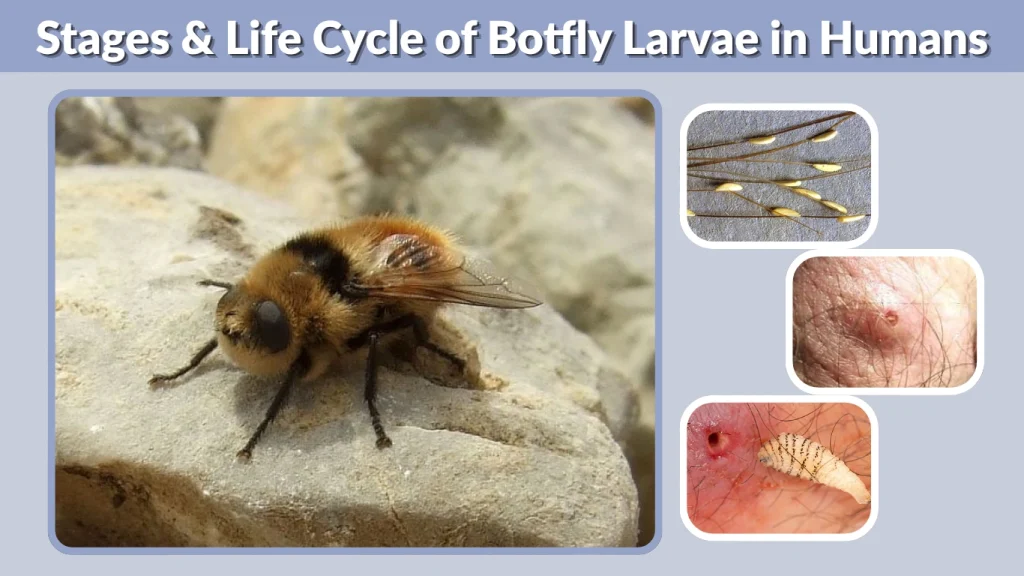
Botfly larvae follow a predictable development cycle once inside a human host. After entering the skin, they undergo several stages, gradually increasing in size and causing more noticeable symptoms.
They typically remain in the body for 6–12 weeks, feeding on tissue and expanding the lesion. Once matured, the larva exits the host and burrows into the ground to continue its transformation into an adult fly.
Diagnosis of Botfly Infection
Diagnosing a botfly infestation is often straightforward once symptoms become noticeable. Healthcare providers typically identify the issue through a visual examination of the lesion, especially if a breathing hole is present. This opening is a key indicator because few skin conditions produce a similar appearance. In some cases, doctors may gently press the swelling to observe movement beneath the skin, confirming the presence of a larva.
Common Misdiagnoses
Botfly infections are sometimes mistaken for more familiar skin issues. Ingrown hairs, cysts, boils, and even swollen lymph nodes can resemble early-stage myiasis. Individuals may treat these conditions incorrectly at home, allowing the larva to grow further. When the swelling worsens or unusual sensations occur, it becomes clear that the lesion is not a simple bite or pimple. Accurate diagnosis ensures proper removal and reduces the risk of leaving parts of the larva behind, which could lead to infection.
Treatment Options for Botfly in Humans
Treating a botfly infestation can involve several methods depending on the severity of the lesion and personal preference. Medical professionals often recommend controlled extraction to prevent complications. The safest method is to visit a healthcare provider, especially when the larva is large or deeply embedded.
Medical Removal
In clinical settings, the doctor may use sterile tools to enlarge the breathing hole slightly and carefully extract the larva in one piece. This prevents tearing the larva, which could cause infections or prolonged healing. Minor surgical removal is quick and effective, often completed in a few minutes with minimal discomfort.
Home Removal Methods (Use With Caution)
Some individuals attempt home treatment using occlusion techniques to deprive the larva of oxygen. Applying petroleum jelly, adhesive tape, or even bacon strips over the breathing hole forces the larva to emerge. Once it surfaces, tweezers are used for extraction. While widely known, these methods carry risks. Pulling too soon or too forcefully may break the larva, making the situation worse. Home removal should only be attempted when medical care is not immediately accessible.
Aftercare & Infection Prevention
After the larva is removed, proper wound care is essential. The area should be gently cleaned with antiseptic solutions and covered with sterile dressings. Some doctors prescribe antibiotics if the wound shows signs of infection. Healing usually progresses quickly, although larger lesions may take longer to completely close.
Prevention: How to Avoid Botfly Infestations

Preventing botfly infections requires awareness of where the insects thrive and how they reproduce. People who travel to tropical or subtropical regions should take extra precautions, as these environments are hotspots for botfly activity. Wearing long sleeves, using insect repellent, and avoiding heavily infested areas help lower exposure.
Traveler Tips for Botfly Regions
Those visiting jungles, rural areas, or tropical forests should inspect their skin daily for unusual bites or bumps. Staying in screened accommodations, using mosquito nets, and keeping pets close reduce the chances of encountering botfly carriers such as mosquitoes. Checking pets for larvae also protects both animals and humans from accidental transfer.
Are Botflies Dangerous to Humans?
For most people, botfly infestations are uncomfortable but not life-threatening. The larvae feed on tissue but rarely cause severe damage when removed properly. However, complications can arise from secondary infections, especially if the larva is partially removed or the wound is neglected. Individuals with weakened immune systems or chronic health conditions may face a slightly higher risk of complications.
Myth vs. Reality
Botflies often inspire fear, but many misconceptions exaggerate their danger. They do not multiply under the skin, spread from person to person, or eat muscle tissue. Their goal is simple: complete their development. Understanding these facts helps reduce panic and encourages proper treatment.
FAQs
Can humans get botflies from pets?
Yes, but it is not common. Pets such as dogs and cats can carry botfly larvae in warm climates or rural areas. Humans may encounter larvae through close contact, though the transfer typically occurs only when larvae or eggs are already present on the animal. Regular pet grooming reduces this risk significantly.
How long can botfly larvae live in humans?
Botfly larvae usually live in the human body for 6 to 12 weeks. During this time, they grow steadily, feeding on tissue beneath the skin. Once fully developed, the larva leaves the host on its own. Prompt treatment shortens this cycle and reduces discomfort.
Are botfly infestations common in humans?
They are relatively rare, especially outside tropical regions. Most cases involve travelers returning from Central or South America. Although infrequent, botfly infestations can occur anywhere that mosquitoes or carrier insects travel, making prevention important.
What does a botfly bite feel like?
At first, it feels like a mild insect bite. Over time, discomfort increases as the larva grows, leading to pressure, throbbing, or sharp pains. Some people report a crawling sensation beneath the skin, which is one of the most distinctive symptoms of botfly infections.
Can a botfly infestation be fatal?
Fatalities are extremely rare. Most cases resolve safely with proper treatment. Serious complications only arise if the wound becomes infected or medical removal is delayed for too long. With timely care, the prognosis is excellent.
