

Botflies are one of the most unusual and unsettling parasites in nature. Known for laying eggs that hatch into larvae capable of entering the skin of humans and animals, they are both biologically fascinating and medically important to understand. While botfly infections are relatively rare—especially in the United States—they can occur in people who travel, spend time outdoors, or have pets exposed to wildlife environments. Learning how botflies live, how they infect hosts, and how their larvae develop can help you recognize symptoms early and seek safe treatment.
What Is a Botfly?
Botflies belong to the family Oestridae and are known for their unique parasitic lifecycle. Unlike typical flies that feed on decaying matter or nectar, botflies rely on mammals as hosts for their larvae. The adult botfly itself does not bite or feed on blood—instead, it exists primarily to mate and lay eggs.
Botflies are highly specialized: they use other insects, like mosquitoes or flies, to deposit their eggs onto a host. When the eggs hatch, the larvae burrow beneath the skin and develop inside the tissue. Although the idea is alarming, most botfly infections are treatable and rarely life-threatening when handled properly.
What Is a Botfly Larva or Maggot?
The larval stage is the part of the lifecycle that causes skin infections (called myiasis). Botfly larvae look like thick, segmented maggots with small spines that help them anchor inside the skin. Over several weeks, the larva grows, feeds, and eventually emerges through a breathing hole it maintains at the skin’s surface.
While they rely on the host for warmth and nourishment, they do not eat flesh. Instead, they feed on tissue fluids. Their presence, however, can cause discomfort, swelling, and secondary infections if untreated.
What Does a Botfly Look Like?
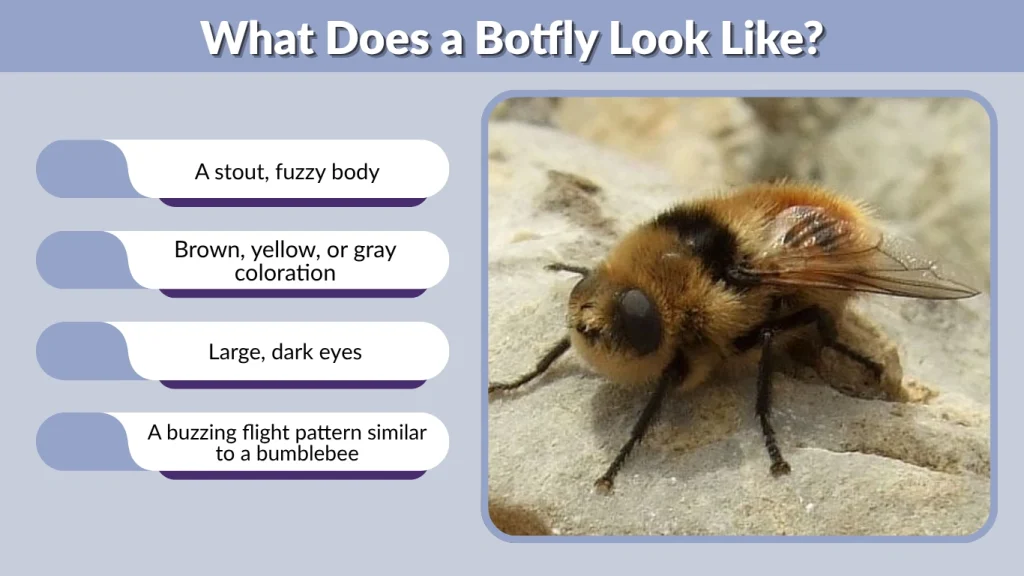
Botflies vary by species, but they generally resemble bumblebees or large houseflies. Their appearance often surprises people because most botflies look harmless in their adult form.
Adult Botfly Appearance
Adult botflies typically have:
- A stout, fuzzy body
- Brown, yellow, or gray coloration
- Large, dark eyes
- A buzzing flight pattern similar to a bumblebee
Despite their intimidating reputation, adult botflies do not bite, sting, or attack humans. Their only goal is to lay eggs before dying within a short lifespan.
What Botfly Larvae Look Like
Botfly larvae are far more distinctive. They appear as:
- Cream-colored or yellowish maggots
- Segmented bodies with backward-facing spines
- A tapered or rounded shape depending on age
- A tough exterior designed to anchor inside skin
As they grow, they can become quite large—up to an inch long—before emerging from the skin.
What a Botfly Bite Looks Like
A botfly bite—or more accurately, a botfly entry point—usually looks like:
- A raised red bump resembling a boil or pimple
- A central opening (breathing hole)
- Clear or yellowish fluid drainage
- Sensitivity, itching, or movement sensation under the skin
The breathing hole is the biggest giveaway. It allows the larva to survive while inside the host.
Where Are Botflies Found?
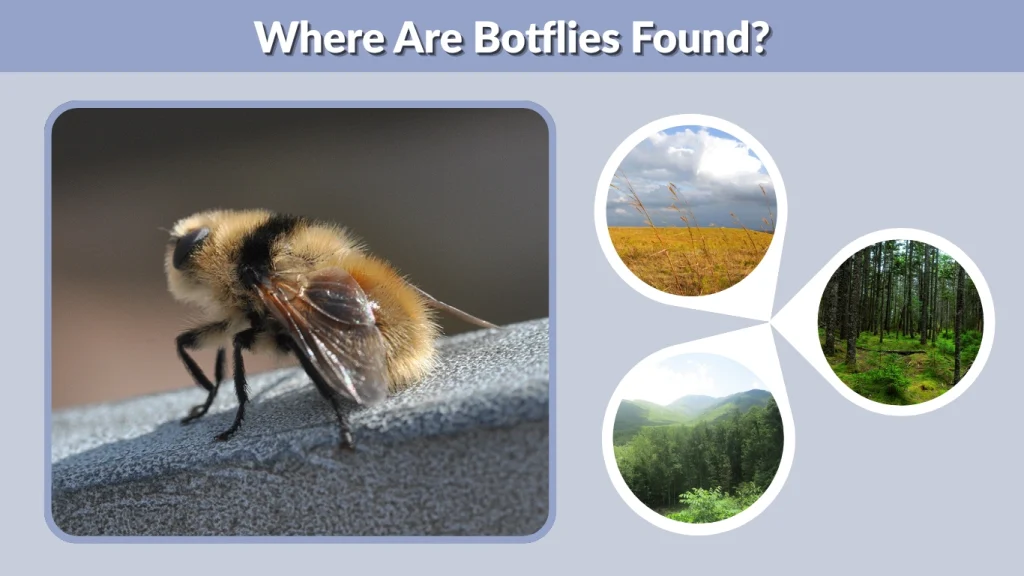
Botflies inhabit warm, humid regions where their life cycle is most successful.
Global Habitat
Most human botfly cases come from:
- Central America
- South America
- Mexico
- Tropical rainforests
- Rural regions with abundant wildlife
Travelers often acquire infections unknowingly while hiking, camping, or staying in rural environments.
Where Botflies Are Found in the United States
While human botfly infections are rare in the U.S., certain species of botflies do infect animals in:
- Florida
- Texas
- California
- Southern and central states
- Rural and mountainous regions
Most human cases in the U.S. are from travelers returning from tropical areas.
Where Botflies Live in Nature
Botflies thrive in outdoor environments such as:
- Rodent and rabbit burrows
- Tall grass
- Forested areas
- Shaded, humid regions
- Places with abundant insects (mosquitoes, flies)
These environments help botflies deposit eggs and find suitable hosts.
How Do Botflies Infect Humans and Animals?

Understanding how botflies infect their hosts makes it easier to prevent exposure.
How Humans Get Botflies
Humans typically become infected when a botfly uses another insect to deliver its eggs. The process works like this:
- A botfly catches a mosquito or fly mid-air.
- It glues its eggs onto the insect’s body.
- When that insect bites a person, the warmth triggers the eggs to hatch.
- The larva enters through the bite hole or hair follicle.
This method makes infections possible even if you never encountered a botfly directly.
How Botflies Enter the Skin
Larvae are tiny when they hatch, allowing them to:
- Slip into hair follicles
- Burrow into superficial layers of skin
- Create a small lesion that becomes a feeding site
Once inside, they form a breathing hole and begin growing.
How Dogs and Cats Get Botflies
Pets get botflies when:
- Sniffing or exploring rodent holes
- Rolling in grass
- Spending time outdoors near wildlife habitats
Small animals and young pets are especially vulnerable.
Signs & Symptoms of a Botfly Infection

Recognizing a botfly infection early can help prevent complications. While many symptoms start mild, they gradually intensify as the larva grows under the skin. Knowing what to look for can make it easier to identify the problem before it becomes painful.
Physical Symptoms
The most common symptoms include:
- A swollen, painful bump resembling a boil
- A small central opening that does not heal
- Oozing or clear discharge from the lesion
- Persistent itching or burning
- A sensation of movement beneath the skin
As the larva matures, the feeling of something shifting under the skin becomes more noticeable. This is often the sign that alerts most people something unusual is happening.
How to Tell if You Have a Botfly
A botfly infection is often mistaken for:
- A spider bite
- A pimple or cyst
- A staph infection
- An ingrown hair
However, the presence of a breathing hole is the key difference. If you can see a small, round opening at the center of the bump—and especially if it occasionally leaks fluid—a botfly may be present.
Medical professionals can confirm the diagnosis by examining the lesion, checking for movement, or using imaging tools like ultrasound if needed.
What Botflies Do Inside the Skin

Botfly larvae rely on the host for warmth and nutrients, but they do not consume flesh. Instead, they feed on tissue fluids while maintaining the breathing hole at the surface.
Inside the skin, the larva:
- Anchors itself using backward-facing spines
- Creates a protective chamber
- Feeds gradually over several weeks
- Grows from a tiny hatchling to a large larva ready to emerge
Although the process sounds alarming, botflies do not usually cause systemic illness. The primary risks are discomfort, infection, and scarring.
Are Botflies Dangerous?
Botfly infections are unpleasant, but rarely life-threatening when discovered early. The level of danger depends on the host—humans or pets—and the size of the larva.
Risks for Humans
In humans, dangers include:
- Secondary bacterial infections
- Intense pain from inflammation
- Scarring after removal
- Psychological distress
Most cases resolve safely when treated properly, but ignoring the infection increases the chance of complications.
Risks for Pets
Dogs and cats face greater risks because they often scratch or bite at the lesion, causing:
- Open wounds
- Abscesses
- Severe infections
- Tissue damage
While rare, complications can be serious—especially in very young, elderly, or immunocompromised pets. Prompt veterinary care is always recommended.
How to Remove a Botfly

Botfly removal must be done carefully to avoid leaving parts of the larva under the skin, which can lead to infection.
Professional Removal (Recommended)
The safest option is to have a medical professional remove the larva. Doctors typically use one of the following methods:
- Applying pressure around the wound
- Using sterile tools to extract the larva intact
- Enlarging the breathing hole slightly for safe removal
- Prescribing antibiotics if needed
Professionals can ensure the entire larva is removed without rupture.
Home Removal Methods (Often Searched but Risky)
Although many people search for DIY methods, removing a botfly at home is not recommended. However, for informational purposes, these are the methods commonly attempted:
- Occlusion method: Covering the breathing hole with petroleum jelly, tape, nail polish, or bacon fat to deprive the larva of oxygen.
- Tweezing: Attempting to pull the larva out once it comes to the surface.
These approaches can cause the larva to rupture, leading to infection or increased inflammation. They should only be considered if medical care is truly unavailable.
Botfly Removal in Pets
For dogs and cats, veterinary removal is essential. A veterinarian will:
- Sedate the animal if needed
- Extract the larva cleanly
- Clean and flush the wound
- Provide antibiotics or pain medication
Attempting removal at home can injure the pet or cause the larva to break apart.
How to Prevent Botfly Infections
Prevention depends on understanding where botflies live and how they spread.
Preventing Botflies in Humans
To reduce risk:
- Use insect repellent in warm, humid environments
- Wear long sleeves and pants when hiking
- Inspect skin after travel to tropical regions
- Avoid areas with heavy mosquito activity
Travelers to Central or South America should be especially cautious.
Preventing Botflies in Pets
Pet owners can protect animals by:
- Keeping pets away from rodent or rabbit burrows
- Grooming animals regularly
- Checking fur after outdoor play
- Using flea and tick preventative medications
Early detection is key for preventing complications in pets.
Where Botflies Come From (Origin & Lifecycle)
Botflies evolved to rely on mammals as hosts, and their lifecycle reflects a unique parasitic strategy. After mating, adult botflies lay eggs on mosquitoes, ticks, or other insects. When the host insect finds a warm-blooded animal, the eggs hatch and larvae enter the skin.
Once mature, larvae emerge, drop to the ground, and enter the soil to pupate. Adult botflies then emerge to begin the cycle again.
FAQs
How do you know if you have a botfly under your skin?
A botfly infection typically appears as a swollen, painful bump with a small breathing hole in the center. The lesion may ooze clear fluid and feel like something is moving beneath the skin. Unlike pimples or cysts, it does not heal and often becomes more irritated over time.
Are botflies dangerous to humans?
Botflies are usually not life-threatening, but they can cause significant pain, swelling, and infection if left untreated. The main dangers include secondary bacterial infections and scarring. With proper removal by a medical professional, complications are rare and recovery is quick.
How do dogs and cats get botflies?
Pets typically get botflies when they explore areas like rabbit or rodent burrows where botfly eggs or larvae are present. The larvae attach to their fur, then enter the skin. Outdoor animals—especially those who dig, sniff holes, or roam near wildlife—are at higher risk.
Can you remove a botfly at home?
DIY removal methods like smothering the breathing hole with petroleum jelly or tape are often searched, but they are not recommended. Removing the larva incorrectly can cause it to rupture, leading to infection. Professional medical or veterinary extraction is the safest option.
How can you prevent getting a botfly infection?
To prevent botfly infections, use insect repellent, wear protective clothing in tropical areas, and avoid mosquito-prone environments. Travelers should inspect their skin regularly after visiting Central or South America. For pets, avoid wildlife burrows and perform routine grooming checks after outdoor activity.
