
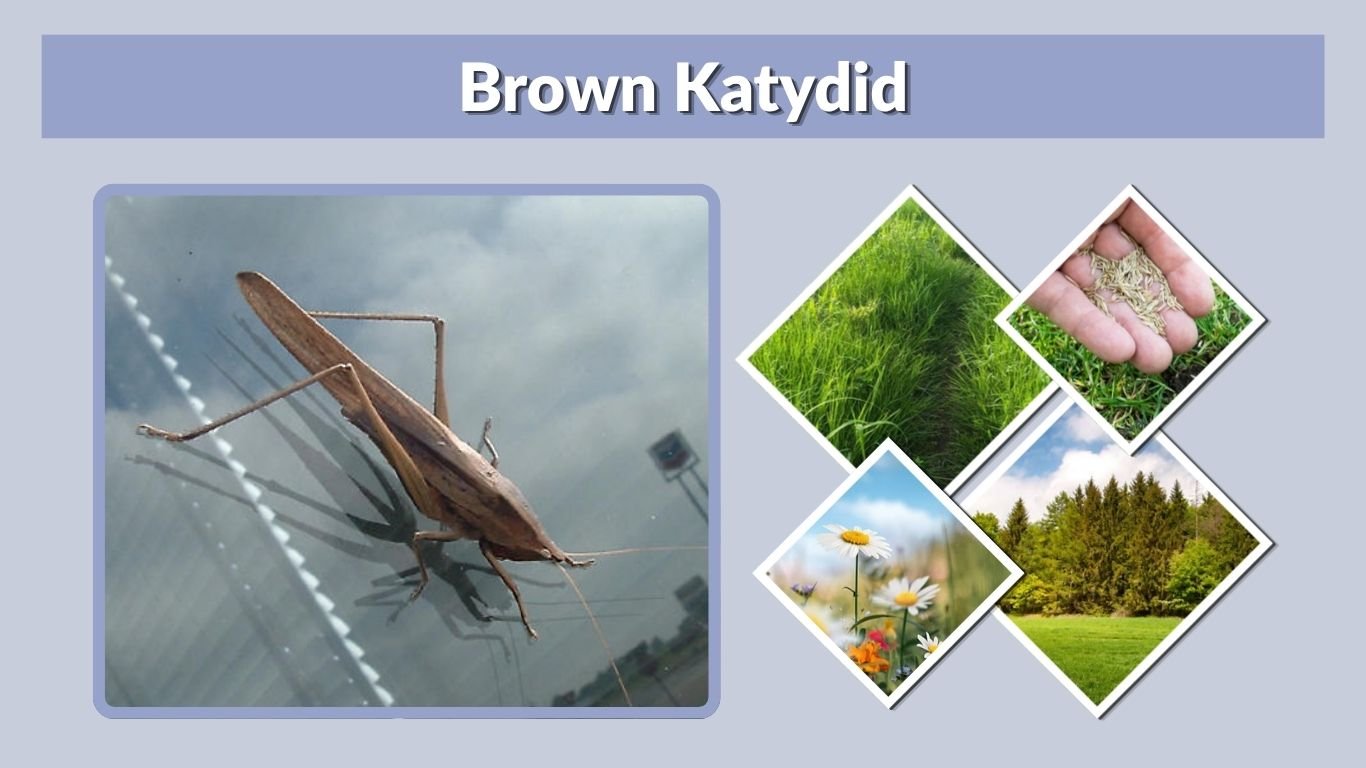
A brown katydid is usually not one particular species but a katydid displaying brown coloration. Many members of the katydid family, Tettigoniidae, occur in green, brown, or intermediate color forms that help them blend into leaves, grasses, bark, and dry vegetation. Brown conehead katydids are especially noticeable because of their elongated heads and extremely long antennae. These insects are generally harmless to people and spend much of their time feeding, hiding among vegetation, and producing distinctive nighttime calls.
What Is a Brown Katydid?
The name brown katydid describes several different katydids rather than a single recognized species. Katydids belong to the family Tettigoniidae within the order Orthoptera, alongside grasshoppers and crickets. Some katydid species naturally occur in both green and brown forms. The broad-tipped conehead, for example, can be either green or brown.
Brown Katydid Identification
A typical brown katydid may have:
- Brown, tan, or reddish-brown coloration
- Extremely long, threadlike antennae
- Large hind legs adapted for jumping
- Wings lying along the back in adults
- A relatively slender or leaf-shaped body
- Long legs compared with body size
- A pointed or cone-shaped head in conehead species
Color alone is not enough to identify a species because many unrelated katydids can develop brown coloration.
Brown Katydid Scientific Name
There is no single scientific name for a brown katydid. The family containing katydids is Tettigoniidae, but individual brown katydids belong to different genera and species.
For example, the broad-tipped conehead is Neoconocephalus triops. It is a large conehead that naturally occurs in both green and brown forms.
Brown Conehead Katydid
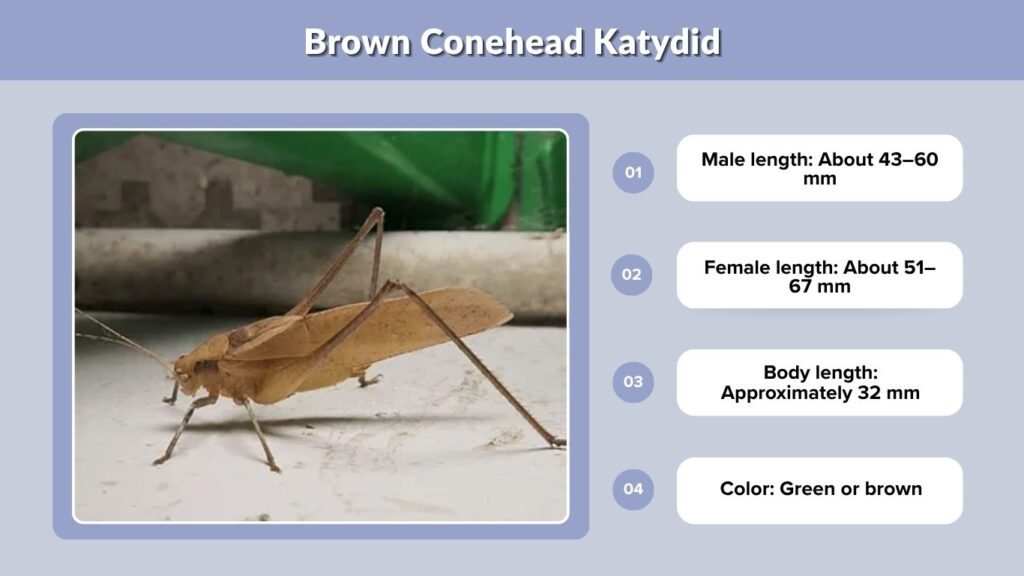
The brown conehead katydid is one of the insects most likely to match searches for a large brown katydid. Coneheads have an obvious projection at the front of the head that distinguishes them from many leaflike katydids.
One good example is the broad-tipped conehead, Neoconocephalus triops.
Broad-Tipped Conehead
The broad-tipped conehead is particularly distinctive because its cone is wider than it is long.
Adults can be surprisingly large:
- Male length: About 43–60 mm
- Female length: About 51–67 mm
- Body length: Approximately 32 mm
- Color: Green or brown
- Habitat: Grassy open areas, shrubs, and other vegetation
These measurements include the wings or abdomen rather than simply the main body.
Brown examples exceeding 2 inches have also been documented in Texas.
Why Do Some Conehead Katydids Turn Brown?
Brown coloration can simply be a normal color form rather than evidence that the insect is sick or dying.
In observations of Neoconocephalus triops, brown juveniles have often remained brown after becoming adults, although some individuals have changed toward green after molting.
The brown coloration may also improve camouflage in dry grasses, dead leaves, stems, and other brown vegetation.
How Big Is a Brown Katydid?
Brown katydid size varies dramatically because many different species can be brown. Some meadow katydids are only around half an inch long, while large coneheads may exceed 2 inches when measured from the head to the wing tips.
Big Brown Katydids
Large brown katydids commonly have:
- Long wings
- Long hind legs
- Extremely long antennae
- Bodies exceeding 1 inch
- Overall lengths approaching or exceeding 2 inches in some coneheads
The broad-tipped conehead is a particularly large example, with females measuring as much as 67 mm from the head to the tip of the wings or abdomen.
Short-Winged Brown Katydids
Not every brown katydid is large.
The short-winged meadow katydid, Conocephalus brevipennis, measures only about 12–16 mm. Its wings are normally slightly shorter than its body, and it occurs through much of eastern and central North America.
This demonstrates why body color and size should be considered together when identifying an unfamiliar katydid.
Brown Katydids in Florida
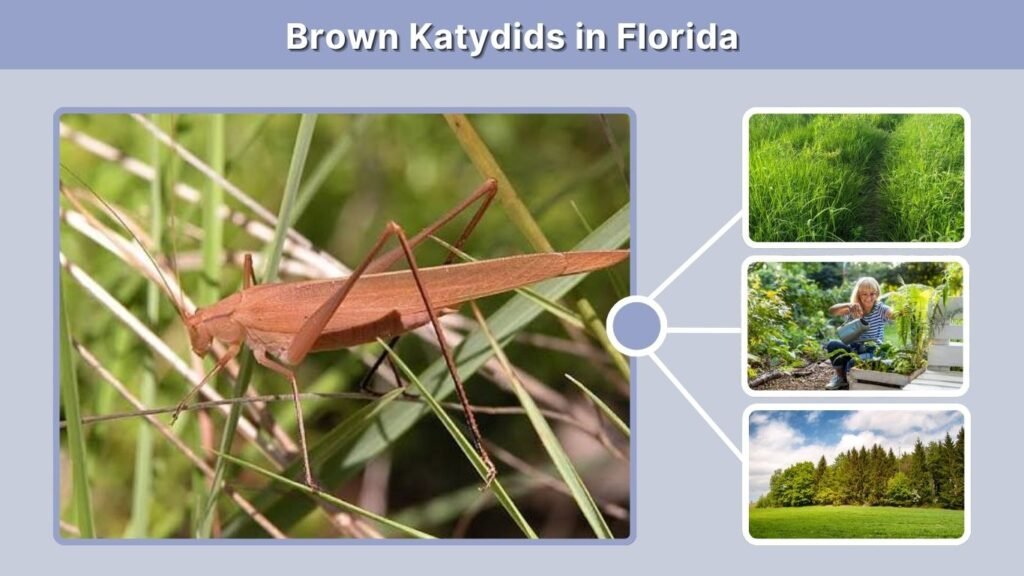
Finding a brown katydid in Florida is not unusual because the state supports numerous katydid species. The University of Florida’s checklist of katydids north of Mexico includes many species represented in the Florida State Collection of Arthropods.
Coneheads are among the prominent groups found in the state.
Florida Brown Coneheads
The broad-tipped conehead occurs southward through Florida and can appear in either brown or green coloration.
In Florida, males of this species may sing during multiple periods of the year, including February through May and again during July and August.
Another species, the cattail conehead (Bucrates malivolans), can also have a brown or green body and occurs in the southeastern United States, including Florida.
Where Do Brown Katydids Live in Florida?
Depending on species, they may occur in:
- Tall grasses
- Gardens
- Shrubs
- Forest edges
- Wetlands
- Marsh vegetation
- Roadside vegetation
- Suburban landscapes
Some species are attracted to outdoor lighting at night, which is one reason homeowners occasionally find large brown katydids around porches and windows.
Brown Katydids in Texas
Texas also supports many katydids, including large brown coneheads.
Brown Neoconocephalus triops individuals have been documented around Austin, while other members of Neoconocephalus have been recorded elsewhere in Texas.
Why Are Large Brown Katydids Seen Around Houses?
Katydids normally live outdoors, but adults may approach houses because artificial lights attract many nighttime insects.
A brown katydid sitting on a wall, door, or window screen is usually a temporary visitor rather than a household pest.
There is normally no reason to use insecticide for a single katydid indoors. It can simply be moved outside carefully.
What Do Brown Katydids Eat?
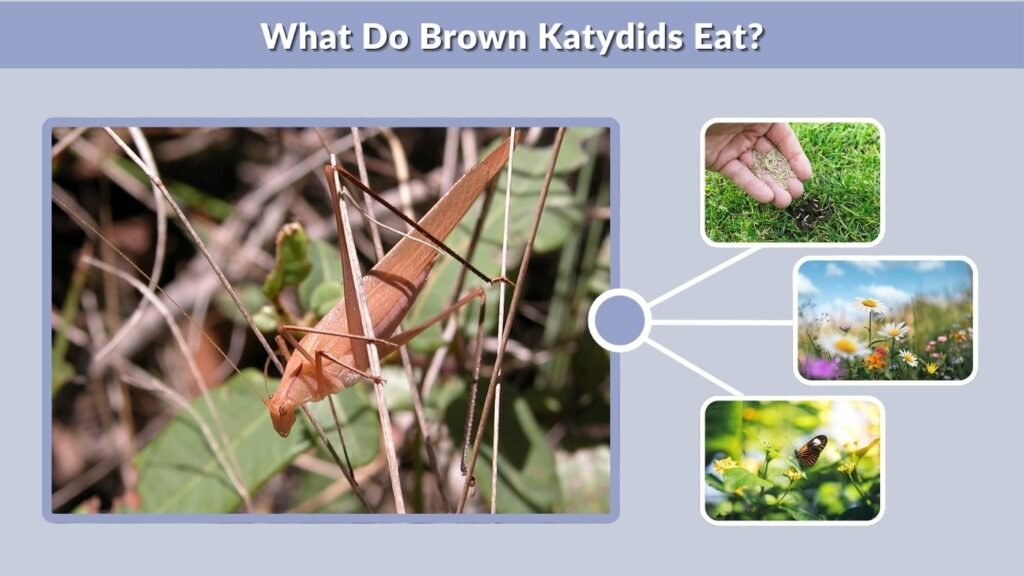
Diet varies among species. Many katydids consume plant material, while some supplement their diet with insects.
The broad-tipped conehead primarily feeds on grass seeds, although it may occasionally eat other insects.
Common Foods
Depending on the species, brown katydids may eat:
- Grass seeds
- Leaves
- Flowers
- Fruits
- Plant stems
- Pollen
- Small insects
- Other soft-bodied arthropods
Most individual katydids found in yards do not cause enough feeding damage to become serious garden pests.
What Does a Brown Katydid Sound Like?
Katydid sound is usually produced by males rubbing specialized parts of their wings together, a process called stridulation.
Different species produce very different songs, ranging from clicks and rasps to buzzing or repeated pulses.
Brown Conehead Katydid Sound
The broad-tipped conehead produces a distinctive buzzing song. Its call begins as a buzz interrupted at approximately one-second intervals and later changes into a more continuous buzz.
Males may call from grasses, low bushes, or higher vegetation.
Katydid songs are particularly noticeable at night and are an important way males advertise their presence to females.
Brown Katydid vs Grasshopper
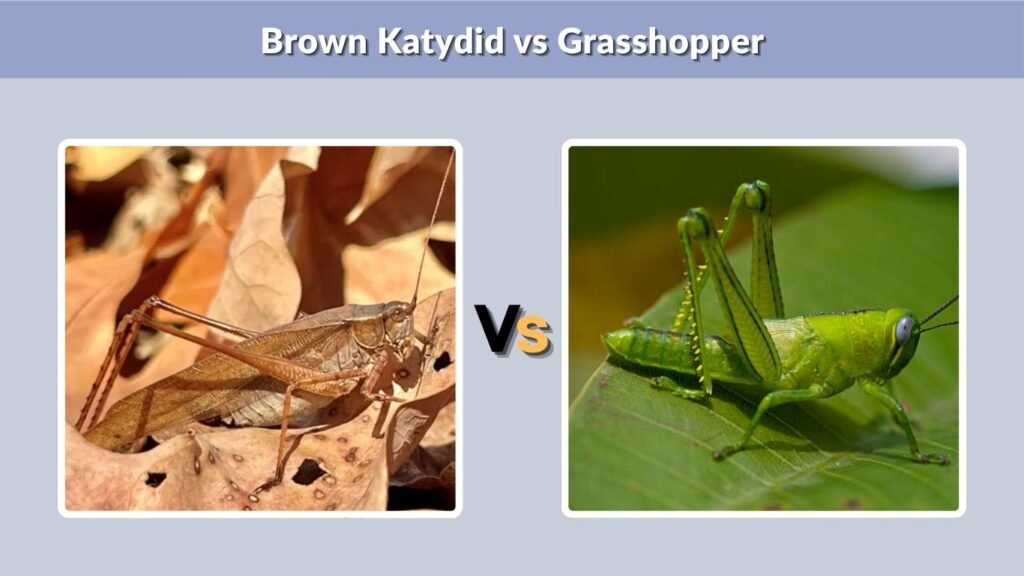
Brown katydids are sometimes mistaken for grasshoppers because both have powerful hind legs and belong to the order Orthoptera. The easiest difference is usually the antennae.
| Feature | Brown Katydid | Grasshopper |
| Antennae | Very long and thin | Usually relatively short |
| Activity | Often active at night | Commonly active during day |
| Body | Often leaflike or slender | Usually more robust |
| Sound | Commonly wing-produced songs | Often wing or leg sounds |
| Family | Tettigoniidae | Mainly Acrididae |
| Color | Green, brown, or patterned | Many colors |
Katydids typically have antennae at least about body length and often considerably longer, making this a useful identification feature.
Are Brown Katydids Dangerous?
Brown katydids are not considered dangerous to humans. They are neither aggressive insects nor significant household pests.
A large katydid can defend itself if grabbed, however, and its mouthparts may produce a small pinch.
Can Brown Katydids Bite?
Katydids have chewing mouthparts designed for feeding. A large individual may nip when restrained or handled roughly.
The easiest way to avoid this is simply not to squeeze or hold the insect tightly. If one enters a house, guide it into a container and release it outdoors.
Brown Spots on Green Katydids
A green katydid developing brown coloration does not necessarily represent a separate species. Color can vary naturally between individuals and developmental stages.
However, an insect that develops irregular dark areas while being kept in captivity may also be experiencing age, injury, molting problems, dehydration, or unsuitable environmental conditions.
Green Katydid With a Brown Ovipositor
Female katydids often have a noticeable ovipositor extending from the end of the abdomen. Depending on the species and developmental stage, it can appear brown even when much of the insect is green.
The ovipositor is used for placing eggs into plant tissue, soil, or other suitable locations. It should not be mistaken for a stinger.
FAQs
What is a brown katydid?
A brown katydid is usually a katydid displaying brown coloration rather than one specific species. Several katydids naturally occur in both brown and green forms.
What is the scientific name of a brown katydid?
There is no single scientific name. Katydids belong to the family Tettigoniidae. One common large brown example is the broad-tipped conehead, Neoconocephalus triops.
How big can a brown katydid get?
Size varies by species. Large broad-tipped coneheads can reach approximately 51–67 mm in females, while small meadow katydids may be only 12–16 mm long.
Are brown katydids dangerous?
No. Brown katydids are generally harmless to people. A large individual may give a defensive nip when handled, but they are not aggressive toward humans.
Why is my katydid brown instead of green?
Brown can be a completely normal color variation. Some species, including the broad-tipped conehead, naturally occur in both green and brown forms.
