
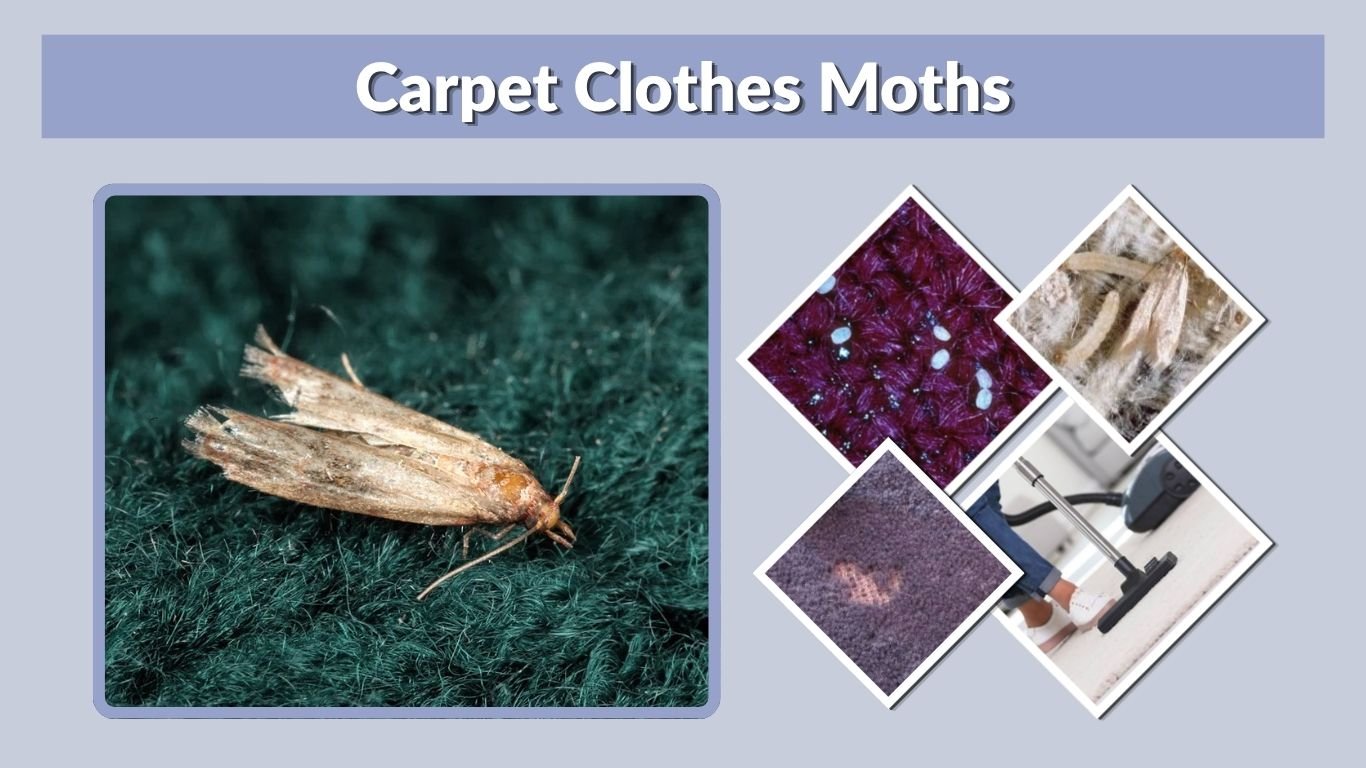
Carpet clothes moths are one of the most destructive household fabric pests. Although people often call them “carpet moths,” they are usually clothes moths that have infested wool carpets, rugs, clothing, upholstery, or other natural fibers. The adult moths do not damage fabrics—the real problem is the larvae, which feed on keratin found in wool, fur, feathers, silk, and similar materials. Knowing how to identify an infestation early can help prevent expensive carpet and clothing damage.
What Are Carpet Clothes Moths?
The term carpet clothes moths generally refers to common clothes moths (Tineola bisselliella) or case-bearing clothes moths (Tinea pellionella) that have infested carpets or rugs. The larvae feed on natural fibers and often hide in dark, undisturbed areas.
Unlike pantry moths that infest food, clothes moths target fabrics made from animal-based fibers.
Materials Clothes Moths Commonly Attack
- Wool carpets
- Wool rugs
- Wool clothing
- Cashmere
- Silk
- Fur
- Feathers
- Felt
- Animal hair
Synthetic materials such as nylon or polyester are usually not eaten unless they are soiled with body oils, food stains, or mixed with natural fibers.
Are Carpet Moths and Clothes Moths the Same?
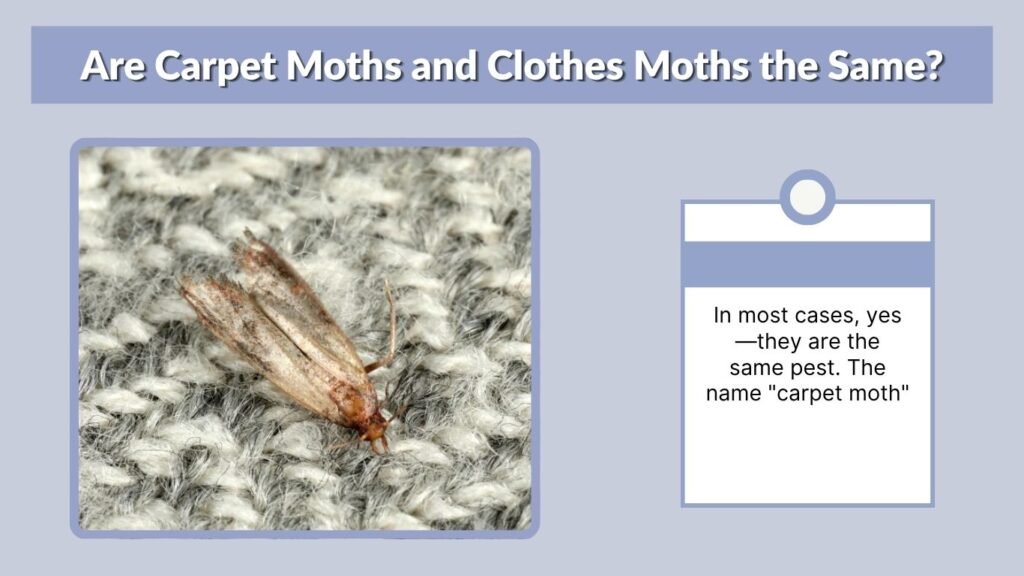
One of the most common questions is whether carpet moths and clothes moths are different.
In most cases, yes—they are the same pest. The name “carpet moth” is simply used when clothes moths infest carpets rather than clothing.
| Term | Meaning |
|---|---|
| Clothes moth | Moth that feeds on natural fabrics |
| Carpet moth | Clothes moth infesting carpets or rugs |
| Carpet clothes moth | Informal name for clothes moths found in carpets |
The insect itself does not change—only the location of the infestation changes.
Clothes Moth Larvae in Carpet
The larvae are responsible for all fabric damage. Adult moths do not eat clothing or carpets.
Female moths lay eggs in dark, protected places where larvae will have plenty of food after hatching. Wool carpets, especially under furniture, are ideal.
Signs of Clothes Moth Larvae
- Small creamy-white caterpillars
- Silken webbing
- Fine silk tubes
- Tiny cocoons
- Bare patches in carpet
- Loose carpet fibers
- Small holes in wool fabrics
Larvae avoid light, so infestations often begin beneath furniture, along baseboards, inside closets, or under rugs.
Clothes Moth Eggs in Carpet
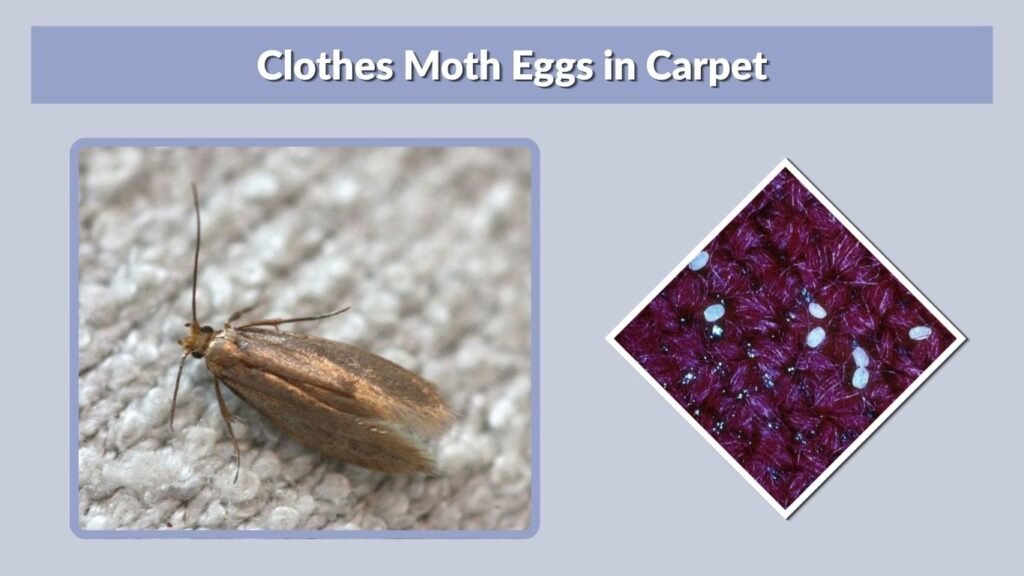
Female clothes moths lay tiny white eggs directly on natural fibers.
Where Eggs Are Commonly Found
- Under heavy furniture
- Along carpet edges
- Under area rugs
- Inside closets
- In wool blankets
- Beneath upholstered furniture
- Around stored clothing
The eggs are extremely difficult to see without magnification because they are only about 0.5 mm long.
Clothes Moth Carpet Damage
Carpet damage is usually caused slowly over weeks or months as larvae continue feeding.
Common Carpet Damage
- Small irregular holes
- Thinning wool fibers
- Bald patches
- Missing carpet pile
- Silk webbing
- Loose fibers
- Damaged rug edges
Damage is often concentrated in areas that are rarely vacuumed or disturbed.
Do Clothes Moths Eat Carpet?
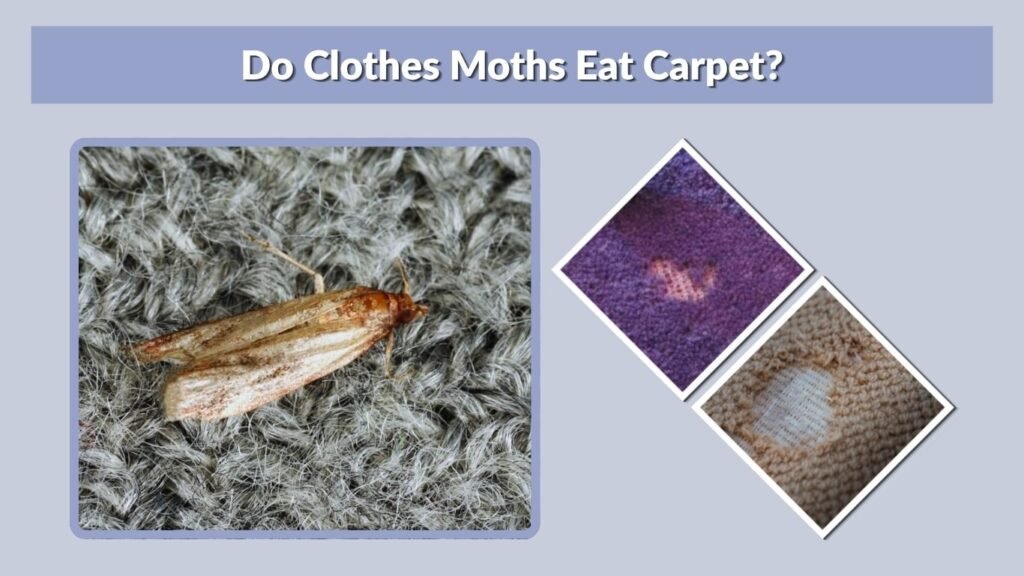
Yes—but only certain carpets.
Clothes moth larvae feed mainly on carpets made from natural animal fibers.
Carpets They Eat
- Wool carpets
- Wool rugs
- Wool-blend carpets
- Oriental rugs
- Persian rugs
Carpets They Usually Avoid
- Nylon
- Polyester
- Polypropylene
- Acrylic
However, larvae may still crawl across synthetic carpets or feed where natural fibers, hair, dust, or food residues are present.
Carpet Moth vs Clothes Moth
Many homeowners wonder whether carpet moths are different from clothes moths.
| Feature | Carpet Moth | Clothes Moth |
|---|---|---|
| Scientific difference | None | None |
| Main food | Wool carpets | Wool clothing and fabrics |
| Larvae | Damage carpets | Damage clothing and carpets |
| Adult moth | Small golden moth | Small golden moth |
| Habitat | Carpet infestation | Closets, carpets, rugs, fabrics |
The terms are used interchangeably in many countries.
Carpet Beetle vs Clothes Moth
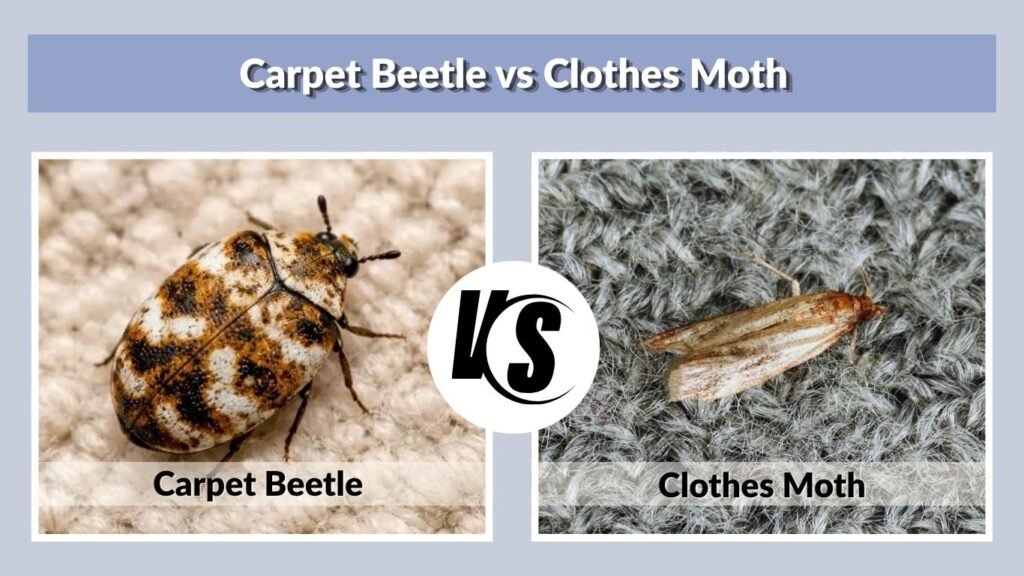
Carpet beetles are another common household fabric pest, but they are different from clothes moths.
| Feature | Clothes Moth | Carpet Beetle |
|---|---|---|
| Adult appearance | Small golden moth | Small oval beetle |
| Larva | Smooth creamy caterpillar with silk webbing | Brown hairy larva with bristles |
| Damage | Irregular holes with silk | Irregular holes without silk |
| Webbing | Present | Absent |
| Flying adult | Weak flyer, avoids light | Beetles often fly toward windows |
Hairy larvae usually indicate carpet beetles, while silky webbing points toward clothes moths.
Clothes Moth Larva vs Carpet Beetle Larva
Correct identification helps choose the right treatment.
Clothes Moth Larva
- Cream-colored
- Smooth body
- Brown head
- Spins silk webbing
- May live inside silk cases
Carpet Beetle Larva
- Brown
- Covered in hairs
- Carrot-shaped body
- No silk tunnels
- Leaves shed skins
If you see hairy larvae instead of smooth caterpillars, you probably have carpet beetles rather than clothes moths.
Signs of Clothes Moths in Carpet
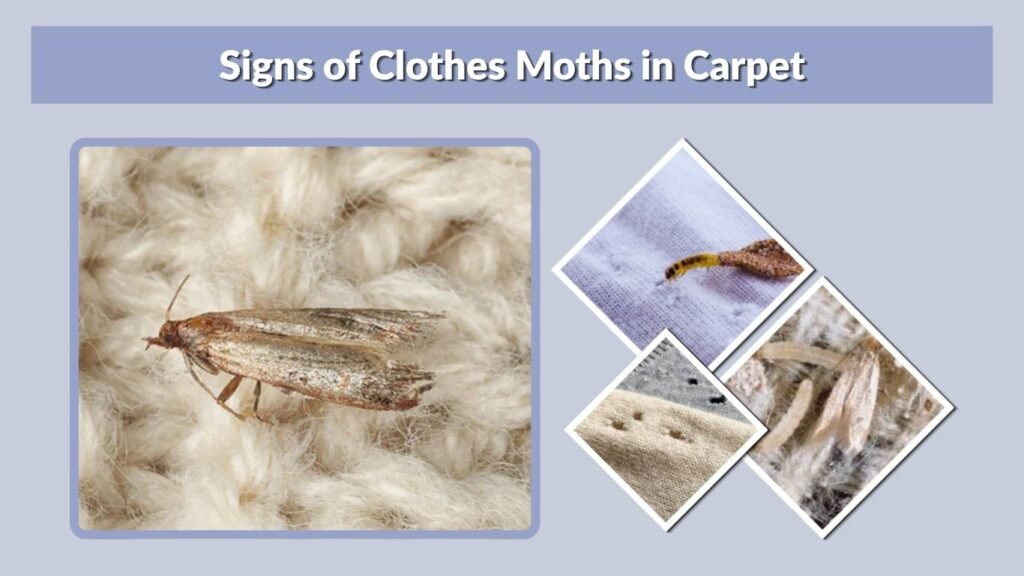
Early detection can prevent severe damage.
Common Warning Signs
- Small moths near carpets
- Silk webbing
- Tiny white larvae
- Small holes
- Bald patches
- Cocoons
- Loose fibers
- Adult moths hiding in dark rooms
Adult clothes moths usually avoid flying in bright light, so homeowners often notice larvae before adults.
How to Get Rid of Clothes Moths in Carpet
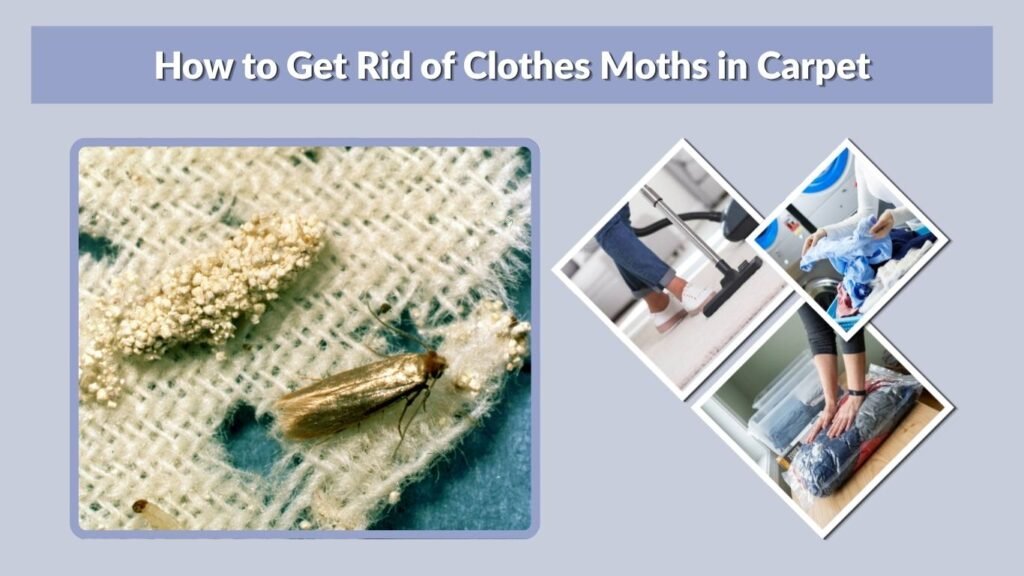
Successful treatment requires eliminating every life stage—eggs, larvae, pupae, and adults.
1. Vacuum Thoroughly
Vacuum:
- Carpet edges
- Under furniture
- Along baseboards
- Closets
- Area rugs
- Upholstery
Discard the vacuum bag immediately after cleaning.
2. Wash or Dry Clean Fabrics
Wash clothing, blankets, curtains, and other washable fabrics using the hottest temperature safe for the material. Dry-clean delicate wool or silk items.
3. Freeze Small Items
Items that cannot be washed may be sealed in plastic bags and frozen for at least 72 hours to kill eggs and larvae.
4. Steam Clean Wool Carpets
Steam cleaning helps destroy larvae hidden deep in carpet fibers.
5. Apply a Clothes Moth Carpet Spray
If needed, use an insecticide labeled specifically for clothes moths in carpets. Follow the product instructions carefully, especially if children or pets are present.
6. Monitor with Pheromone Traps
Pheromone traps help detect adult male clothes moths and monitor whether treatment is working. They are useful for monitoring but should not be relied on as the only control method.
Preventing Future Clothes Moth Infestations
Prevention is much easier than replacing damaged carpets or clothing.
Prevention Tips
- Vacuum weekly.
- Move furniture occasionally.
- Store wool clothing in sealed containers.
- Keep closets clean.
- Wash clothing before storage.
- Reduce lint and pet hair.
- Inspect wool rugs regularly.
- Use airtight storage bags for seasonal clothing.
Regular cleaning removes eggs before they hatch and reduces the food available to larvae.
When Should You Call a Pest Control Professional?
Professional treatment may be necessary if:
- Carpet damage keeps spreading.
- Larvae continue appearing after cleaning.
- Multiple rooms are affected.
- Valuable wool rugs are infested.
- You cannot locate the infestation source.
Professionals can inspect hidden areas, identify the pest correctly, and apply treatments that reach places homeowners often miss.
FAQs
Are carpet moths and clothes moths the same?
Yes. In most cases, “carpet moth” is simply another name for a clothes moth that has infested a wool carpet or rug. The insects are the same; only the location of the infestation differs.
Do clothes moths eat carpet?
Yes, clothes moth larvae eat carpets made from natural fibers such as wool. They usually do not feed on purely synthetic carpets unless those carpets contain natural fibers or are soiled with organic material.
How can I tell if I have clothes moth larvae in my carpet?
Look for silky webbing, small cream-colored larvae, cocoons, thinning carpet fibers, and irregular holes. Damage often appears under furniture or along carpet edges where the area is rarely disturbed.
What is the difference between carpet beetles and clothes moths?
Clothes moth larvae are smooth, cream-colored caterpillars that produce silk webbing. Carpet beetle larvae are brown, hairy, and leave shed skins rather than silk. Identifying the larvae correctly is important because treatment methods differ.
What is the fastest way to get rid of clothes moths in carpet?
The most effective approach combines thorough vacuuming, washing or freezing infested fabrics, steam cleaning wool carpets, using pheromone traps to monitor activity, and applying a clothes moth insecticide labeled for carpets when necessary. Treating all life stages gives the best chance of eliminating the infestation.
