
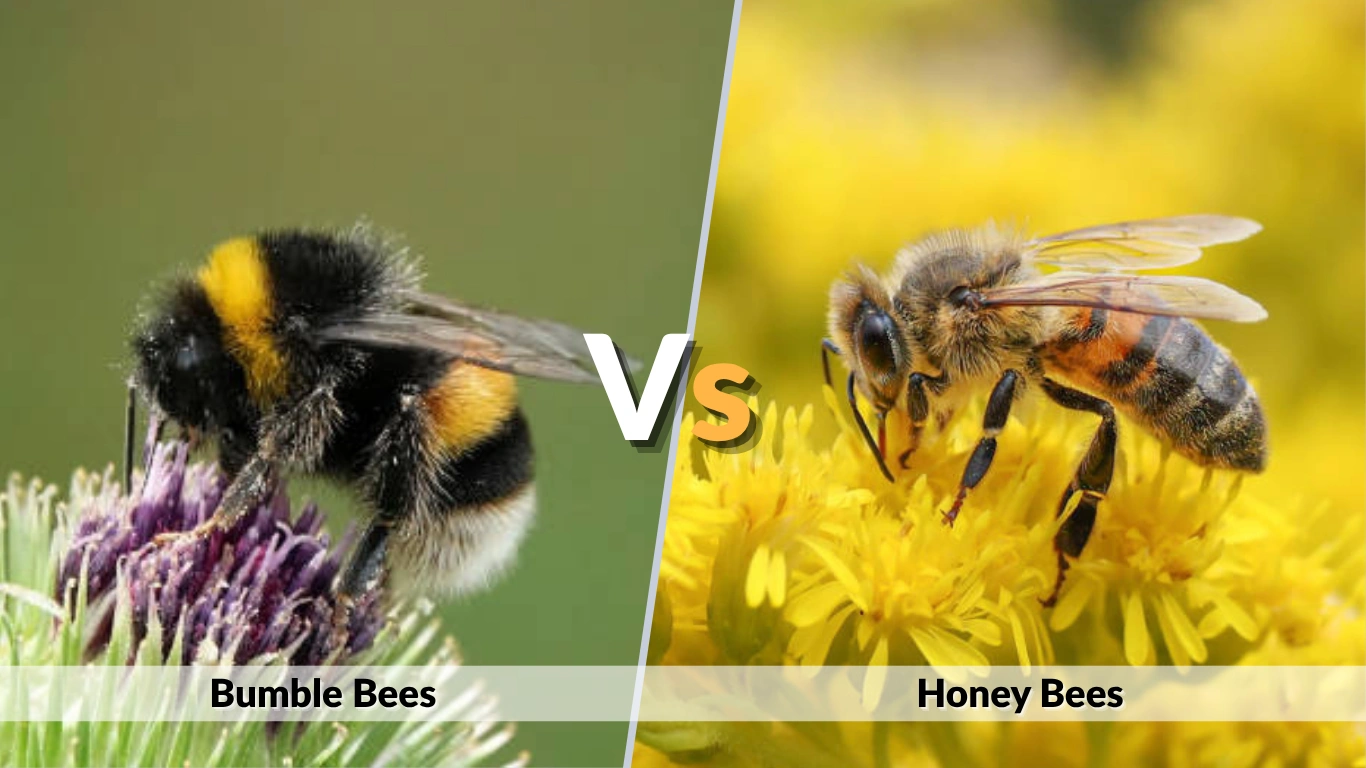
Bumble bees and honey bees are often mistaken for each other, yet they differ in size, behavior, social structure, and stinging ability. Both play a crucial role in pollination and ecosystem balance, making them essential to agriculture and biodiversity. Understanding their differences helps with proper identification and reduces unnecessary fear. This guide explores how bumble bees and honey bees compare in appearance, temperament, and ecological roles.
What Is a Bumble Bee vs Honey Bee?
Bumble bees and honey bees belong to different genera and exhibit distinct lifestyles. While both are social insects and important pollinators, their colonies, behaviors, and physical traits vary significantly. Knowing these basics helps set the foundation for deeper comparison and accurate identification in natural environments.
Bumble Bee Overview
- Belong to the genus Bombus
- Large, round bodies with dense hair
- Live in small, seasonal colonies
- Excellent pollinators, especially in cooler climates
Honey Bee Overview
- Belong to the species Apis mellifera
- Slimmer bodies with less hair
- Form large, permanent colonies
- Known for producing and storing honey
Bumble Bee vs Honey Bee Differences
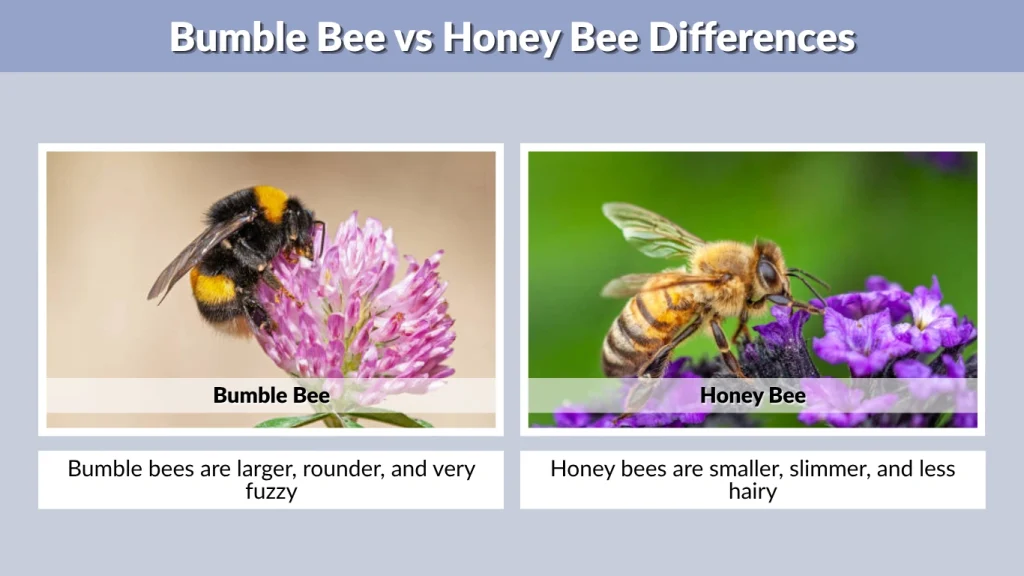
Although they may appear similar at a glance, several key differences set these bees apart. From body structure to behavior, each species has unique traits that influence how they interact with their environment and humans.
Physical Appearance
- Bumble bees are larger, rounder, and very fuzzy
- Honey bees are smaller, slimmer, and less hairy
- Bumble bees have bold black and yellow bands
- Honey bees show more golden-brown tones
Behavior and Temperament
- Bumble bees are generally calm and non-aggressive
- Honey bees can be defensive near their hive
- Bumble bees forage individually
- Honey bees work collectively in organized patterns
Flight and Sound
- Bumble bees fly slower with a loud buzzing sound
- Honey bees fly faster and quieter
- Bumble bees can fly in cooler temperatures
- Honey bees prefer warmer conditions
Honey Bee vs Bumble Bee Size Comparison
Size is one of the most noticeable differences between these two bees. However, perception can be misleading due to body structure and hair density. Understanding their actual size helps avoid confusion when identifying them outdoors.
Bumble bees typically measure between 15 to 25 millimeters, giving them a noticeably bulkier appearance. Their thick hair traps pollen and makes them look even larger than they are. In contrast, honey bees are smaller, usually ranging from 10 to 15 millimeters. Their slimmer bodies and smoother appearance contribute to a more compact look. This size difference is one of the easiest ways to distinguish the two species at a glance.
Bumble Bee vs Honey Bee Sting
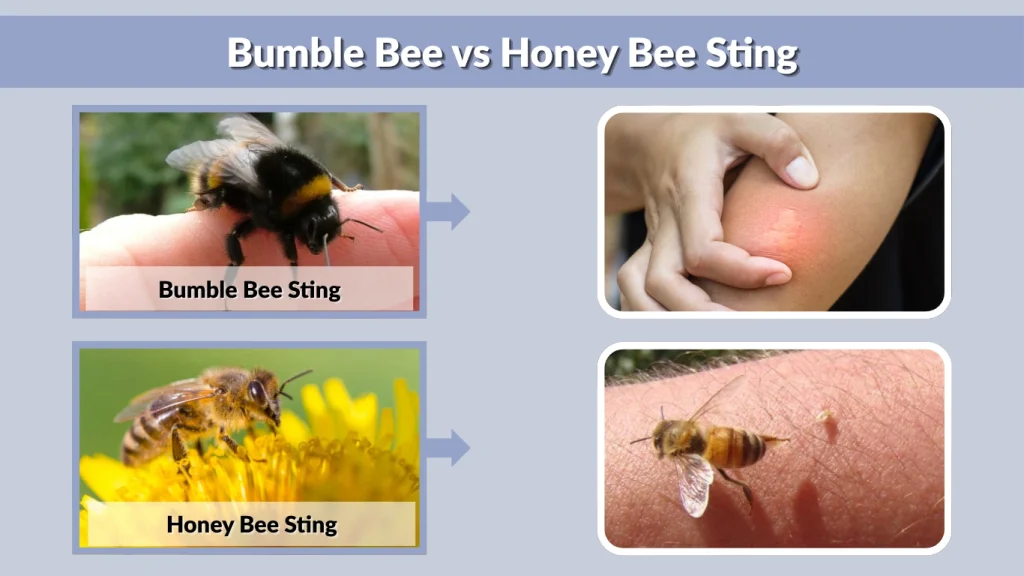
Stings are a major concern for many people, yet both bees behave differently when it comes to defense. Understanding their stinging habits can reduce fear and promote safer interactions.
Do Bumble Bees Sting?
Bumble bees can sting but are generally reluctant to do so. They usually sting only when directly threatened or handled. Their calm nature makes encounters with humans relatively safe.
Do Honey Bees Sting?
Honey bees are more likely to sting when defending their hive. Worker bees sacrifice themselves when they sting, as their stinger gets lodged in the skin, leading to their death.
Key Sting Differences
- Bumble bees can sting multiple times
- Honey bees sting only once
- Bumble bee stings are less frequent
- Honey bees are more defensive in groups
Honey Bee vs Bumble Bee Eusociality
Both bumble bees and honey bees are considered social insects, but their colony structures differ significantly. These differences influence how they survive, reproduce, and interact within their environments.
Honey Bee Colony Structure
Honey bees live in large colonies that can include tens of thousands of individuals. Each colony has a queen, worker bees, and drones, all performing specialized roles. The colony operates year-round, storing honey to survive during colder months and maintaining a highly organized social system.
Bumble Bee Colony Structure
Bumble bee colonies are much smaller, often consisting of a few hundred members. Their colonies are seasonal, forming in spring and dying off in autumn, leaving only the queen to overwinter. This simpler structure makes them less complex but highly adaptable.
Key Social Differences
- Honey bee colonies are permanent and large
- Bumble bee colonies are temporary and small
- Honey bees store honey for long-term survival
- Bumble bees focus on immediate resource use
Bumble Bees vs Honey Bees (Visual Identification Guide)
Identifying bumble bees and honey bees in the wild becomes easier when you focus on a few key visual traits. While both share similar colors, their body shape, texture, and movement patterns quickly reveal which is which.
Body Shape and Texture
- Bumble bees appear round and fluffy
- Honey bees look slender and smoother
- Bumble bees have dense hair covering the body
- Honey bees have finer, less noticeable hair
Color and Markings
- Bumble bees show bold black and yellow bands
- Honey bees display golden-brown tones
- Bumble bees often look more vibrant
- Honey bees appear slightly muted in color
Bumble Bee vs Carpenter Bee vs Honey Bee
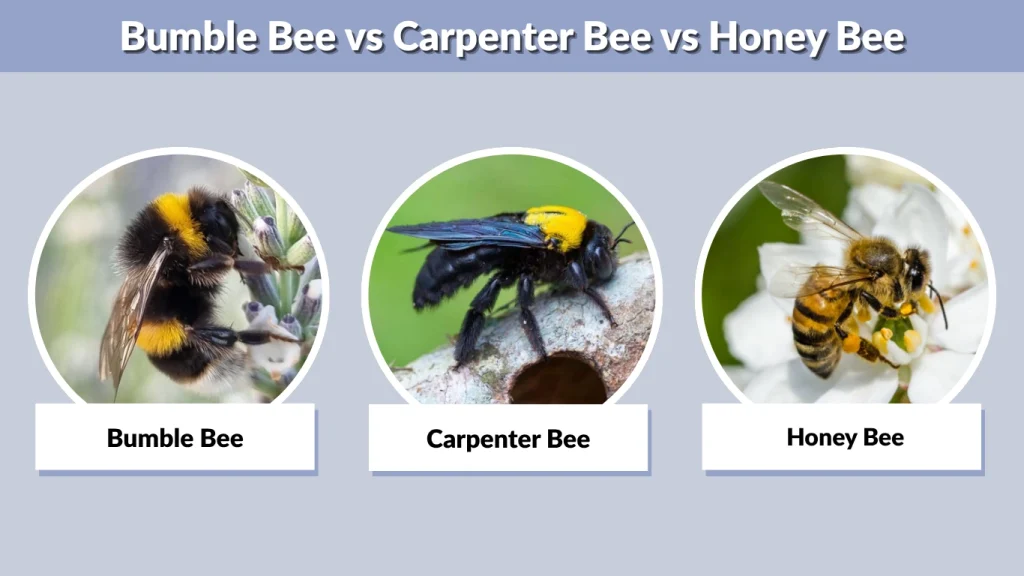
When comparing these three bees, differences in nesting, appearance, and behavior become clear. Carpenter bees are often confused with bumble bees due to their size, but their habits set them apart significantly.
What Is a Carpenter Bee?
- Large bee that drills into wood to create nests
- Shiny, hairless abdomen
- Often mistaken for bumble bees
Key Differences
- Carpenter bees nest in wood, not colonies
- Bumble bees nest underground or in grass
- Honey bees build wax hives in structured colonies
- Carpenter bees are less social than the others
Bumble Bee vs Honey Bee vs Wasp / Yellow Jacket
Bees and wasps are commonly confused, but they differ greatly in behavior and appearance. Understanding these differences helps avoid dangerous encounters and improves identification accuracy.
Bees vs Wasps
- Bees are hairy and collect pollen
- Wasps are smooth and more predatory
- Bees focus on flowers
- Wasps often scavenge human food
Aggression and Sting
- Wasps are more aggressive than bees
- Yellow jackets can sting multiple times
- Honey bees sting once and die
- Bumble bees sting only when threatened
Mason Bees vs Honey and Bumble Bees
Mason bees are another important pollinator but differ greatly from both honey bees and bumble bees. Unlike social bees, mason bees live alone and do not form colonies. They nest in small holes and use mud to seal their eggs.
Despite their solitary nature, mason bees are extremely efficient pollinators. They can pollinate more flowers in a single day compared to honey bees. However, they do not produce honey or defend a hive, making them far less aggressive and safer around humans.
Honey vs Bumble Bees: Pollination Efficiency
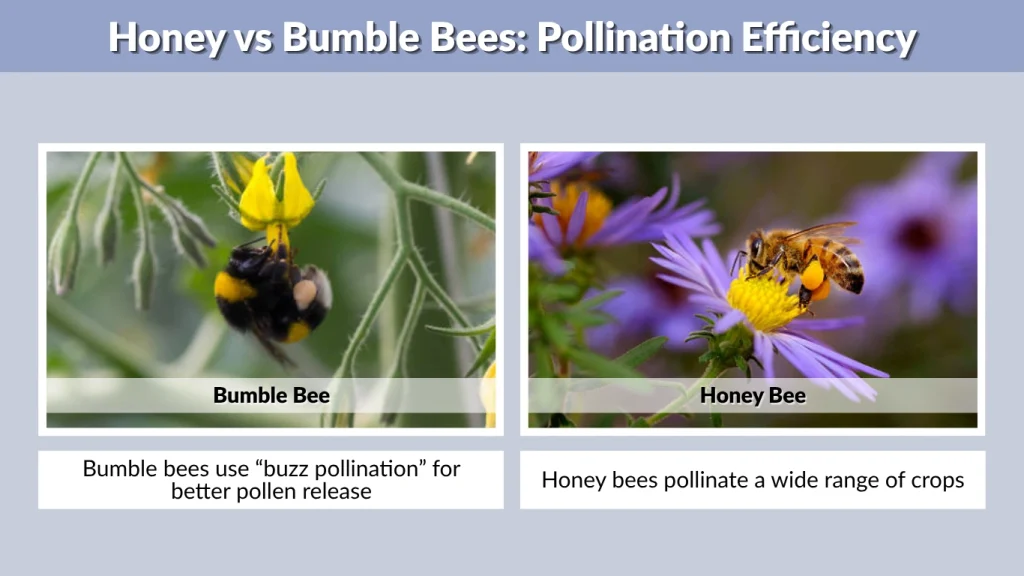
Pollination is one of the most important roles bees play in ecosystems and agriculture. While both species contribute significantly, they do so in different ways depending on their biology and behavior.
Pollination Strengths
- Bumble bees use “buzz pollination” for better pollen release
- Honey bees pollinate a wide range of crops
- Bumble bees work well in cooler weather
- Honey bees are more active in large numbers
Environmental Adaptability
- Bumble bees thrive in colder climates
- Honey bees prefer stable, warmer environments
- Bumble bees can forage earlier in the day
- Honey bees rely on colony coordination
Which Bees Need Saving?
Both bumble bees and honey bees face environmental challenges that threaten their populations. However, the level of concern differs depending on species and region. Conservation efforts are essential to protect pollination systems and maintain ecological balance.
Major Threats
- Pesticide exposure harming bee health
- Loss of natural habitats
- Climate change affecting flowering cycles
- Disease and parasites
Why Conservation Matters
- Bees support global food production
- They maintain biodiversity
- Declining bee populations impact ecosystems
- Protecting bees ensures agricultural stability
FAQs
What is the main difference between a bumble bee and a honey bee?
Bumble bees are larger, fuzzier, and live in small seasonal colonies, while honey bees are smaller and live in large, permanent colonies that produce honey. Their behavior, size, and social structure are the key differences.
Which sting is worse, bumble bee or honey bee?
Both stings can be painful, but honey bees sting only once and die, while bumble bees can sting multiple times. The intensity depends on personal sensitivity rather than the type of bee.
How can I identify a honey bee vs a bumble bee?
Bumble bees are rounder and very fuzzy, while honey bees are slimmer with less hair and a more golden appearance. Their size and body shape make identification easier in most situations.
Are wasps more dangerous than bees?
Yes, wasps are generally more aggressive and can sting multiple times without dying. They are also more likely to attack without provocation compared to bees, which usually sting only when threatened.
Do all bees make honey?
No, only honey bees produce and store honey in large quantities. Bumble bees make small amounts for their colony, while solitary bees like mason bees do not produce honey at all.
