
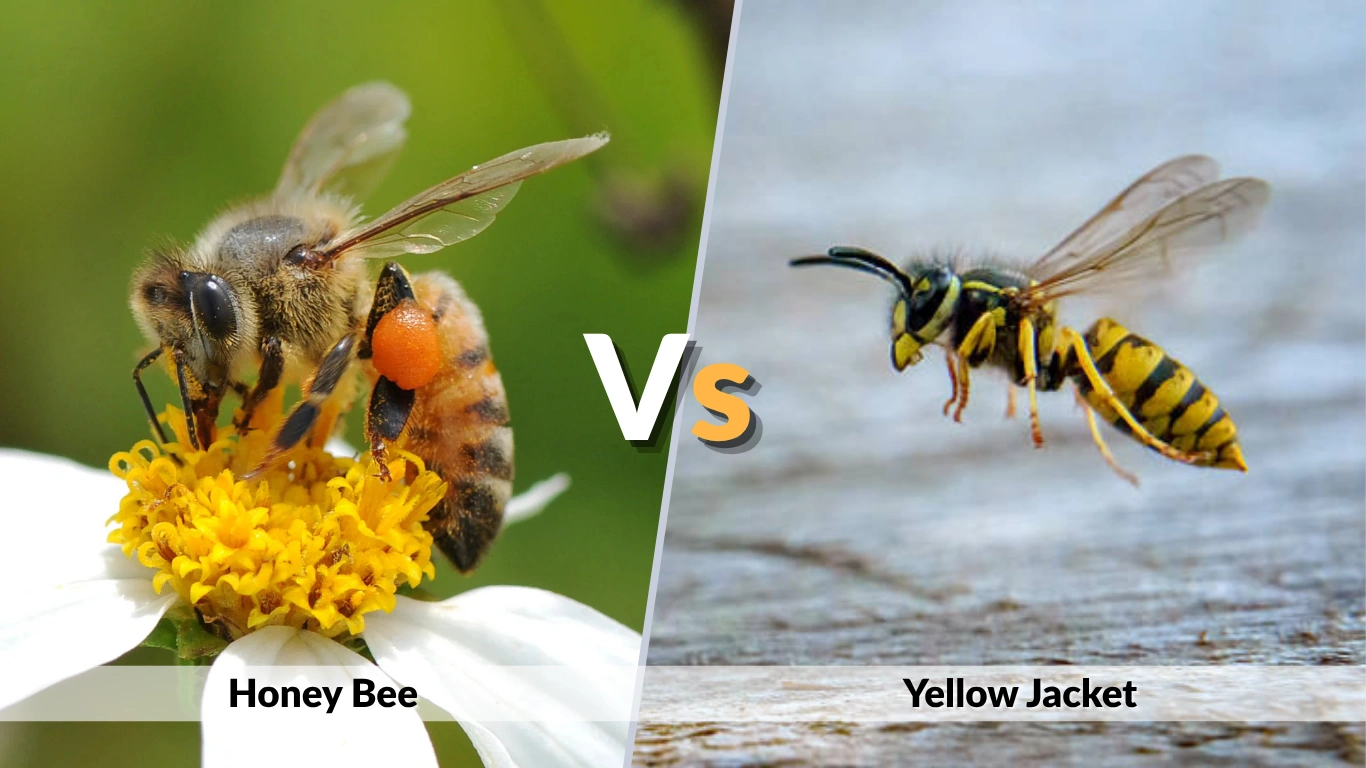
Honey bees and yellow jackets are often confused because of their similar yellow-and-black coloring, but they are very different insects. Honey bees are important pollinators that support ecosystems and agriculture, while yellow jackets are aggressive wasps known for scavenging food. Understanding their differences in appearance, behavior, stings, and nesting habits can help you identify them quickly and avoid unwanted encounters. This guide breaks down the key distinctions in a simple and practical way.
What Is a Honey Bee vs Yellow Jacket?
Honey bees and yellow jackets belong to entirely different insect groups. While both are common in gardens and outdoor spaces, their roles in nature and behavior toward humans vary significantly. Knowing what each one is helps prevent confusion and improves safety.
Honey Bee Overview
- A pollinating insect from the species Apis mellifera
- Feeds mainly on nectar and pollen
- Plays a vital role in crop production
- Lives in organized colonies that produce honey
Yellow Jacket Overview
- A type of wasp, not a bee
- Feeds on insects, meat, and sugary foods
- Known for aggressive behavior
- Often seen around trash, food, and drinks
Honey Bee vs Yellow Jacket Differences
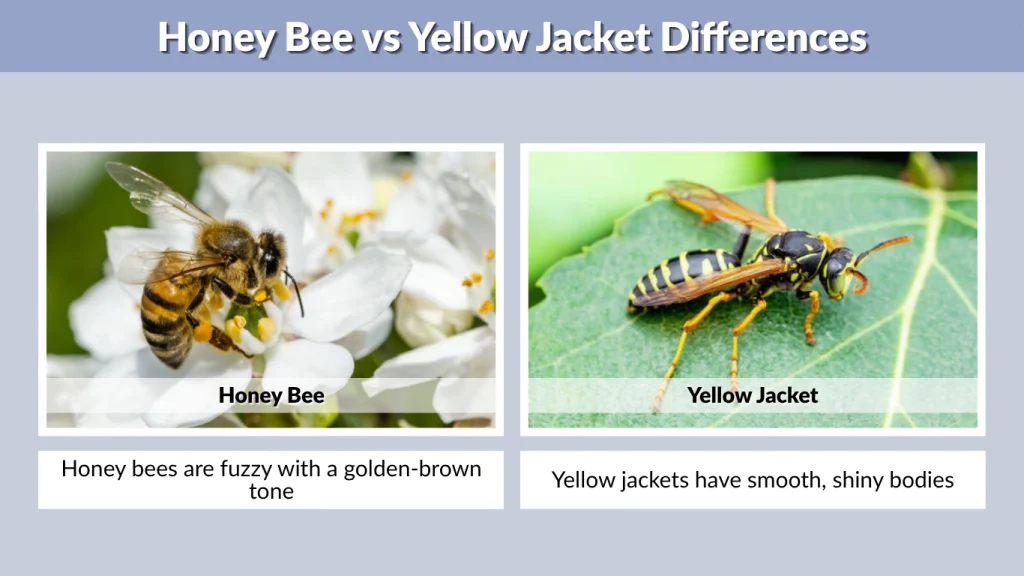
Although they share similar colors, their physical traits and behaviors make them easy to distinguish. These differences are important for both identification and safety.
Physical Appearance
- Honey bees are fuzzy with a golden-brown tone
- Yellow jackets have smooth, shiny bodies
- Honey bees appear thicker and rounder
- Yellow jackets look slim and sharply defined
Behavior and Temperament
- Honey bees are calm and focused on flowers
- Yellow jackets are aggressive, especially near food
- Honey bees sting mainly in defense
- Yellow jackets may sting without much provocation
Diet and Feeding Habits
- Honey bees consume nectar and pollen
- Yellow jackets eat insects and human food
- Honey bees help pollinate plants
- Yellow jackets act as scavengers and predators
Yellow Jacket vs Honey Bee Size Comparison
Size differences between these insects are subtle but noticeable when observed closely. Their body shape often affects how large or small they appear in real life.
Honey bees typically measure around 10 to 15 millimeters in length. Their fuzzy bodies make them appear slightly larger than they actually are. Yellow jackets are similar in size but look smaller because of their smooth and narrow bodies. Their sleek shape gives them a more compact and agile appearance. While size alone may not always be a reliable identifier, combining it with body texture and behavior makes identification easier.
Honey Bee vs Yellow Jacket Sting
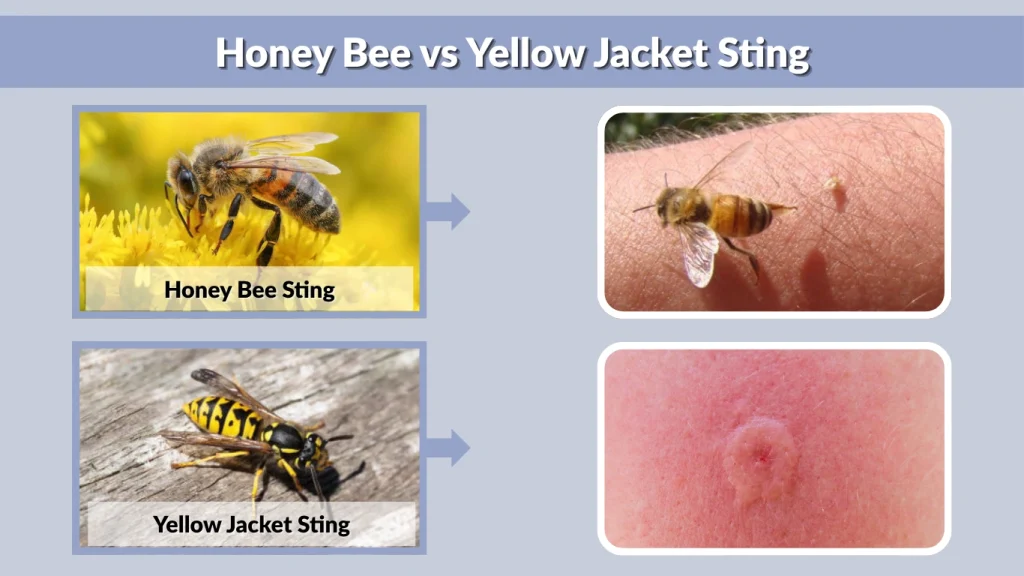
Stings are one of the biggest concerns when comparing these insects. Their stinging behavior differs greatly and plays a major role in how dangerous they are to humans.
Honey Bee Sting
- Stings only once due to barbed stinger
- Dies after stinging
- Usually stings when threatened
Yellow Jacket Sting
- Can sting multiple times
- Does not die after stinging
- More likely to attack in groups
Key Sting Differences
- Yellow jackets are more aggressive
- Honey bees are defensive, not offensive
- Yellow jacket stings are more frequent
- Honey bee stings are less common
Honey Bee Nest vs Yellow Jacket Nest
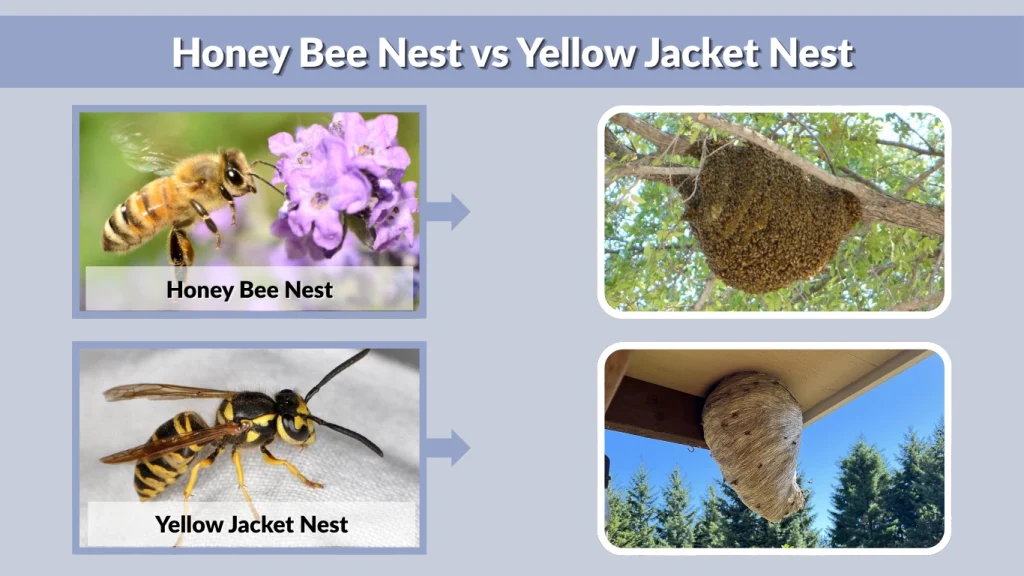
The nesting habits of honey bees and yellow jackets are very different and can help you identify which insect is nearby. Their nests also reflect their social structure and survival strategies.
Honey Bee Nest (Hive)
- Made of wax combs
- Located in trees or man-made boxes
- Houses thousands of bees
- Used for long-term survival
Yellow Jacket Nest
- Made of paper-like material
- Found underground or inside walls
- Seasonal and temporary
- Often hidden from view
Nest Differences
- Honey bee hives are visible and structured
- Yellow jacket nests are hidden and enclosed
- Honey bees reuse hives
- Yellow jackets build new nests each season
Honey Bee vs Yellow Jacket Sting Comparison
While both insects can sting, the experience and impact can feel very different. This section focuses on how their stings affect humans and what to expect.
Pain Level and Reaction
Honey bee stings are sharp but usually occur once, making them easier to manage. Yellow jacket stings can feel more intense because they may happen multiple times in quick succession. The repeated stings often cause more discomfort and irritation.
Venom and Effects
Honey bee venom is designed for defense and is released in a single sting. Yellow jackets inject venom multiple times, which increases the overall impact. For most people, both stings cause temporary pain and swelling, but allergic reactions can make either sting dangerous.
Honey Bee vs Yellow Jacket Venom
Venom plays a key role in how stings feel and affect the body. While both insects use venom for defense, their chemical composition and delivery methods differ, which changes the overall experience of being stung.
Venom Composition
- Honey bee venom is released once with a barbed stinger
- Yellow jacket venom is injected multiple times
- Honey bee venom contains compounds that trigger localized pain
- Yellow jacket venom spreads faster due to repeated stings
Impact on Humans
- Honey bee stings usually cause mild swelling
- Yellow jacket stings often cause sharper, longer-lasting pain
- Multiple stings increase irritation and risk
- Allergic reactions can occur with both
Honey Bee vs Yellow Jacket Pictures (Identification Guide)
Visual identification is one of the easiest ways to tell these insects apart. By focusing on body texture, color, and behavior, you can quickly determine whether you’re dealing with a bee or a wasp.
Key Visual Differences
- Honey bees are fuzzy and duller in color
- Yellow jackets are smooth and brightly colored
- Honey bees appear rounder
- Yellow jackets look thin and pointed
Behavior Clues
- Honey bees stay around flowers
- Yellow jackets hover around food and trash
- Honey bees move calmly
- Yellow jackets move quickly and aggressively
Honey Bee vs Yellow Jacket vs Wasp vs Hornet
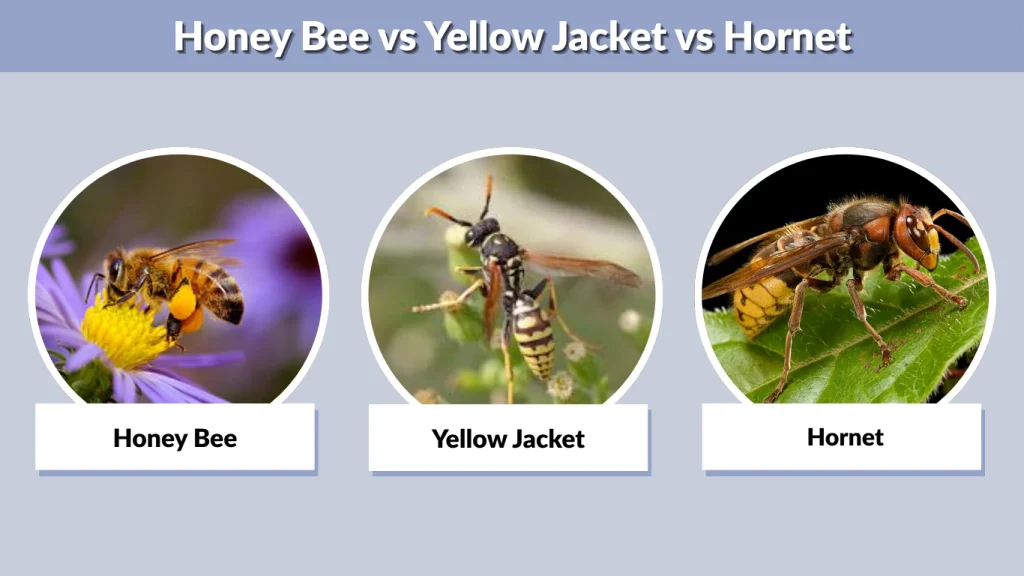
These insects are often grouped together, but they have distinct characteristics. Understanding the broader comparison helps clarify why yellow jackets are considered more aggressive than bees.
Bees, including honey bees, are primarily pollinators and play a crucial role in ecosystems. Wasps and hornets, including yellow jackets, are predators and scavengers. They are more territorial and defensive, especially when their nests are disturbed. Hornets are generally larger and build aerial nests, while yellow jackets often nest underground. This behavioral difference is why wasps are more likely to interact negatively with humans.
Identify Honey Bee vs Yellow Jacket (Quick Guide)
Quick identification can help you avoid unnecessary risk. By observing a few simple traits, you can tell the difference even from a short distance.
Fast Identification Tips
- Look for hair: bees are fuzzy, yellow jackets are smooth
- Check behavior: bees focus on flowers, yellow jackets on food
- Observe movement: bees are calm, yellow jackets are fast
- Notice location: bees stay near plants, yellow jackets near human activity
Honey Bees vs Yellow Jackets: Which Is More Dangerous?
When comparing danger levels, behavior matters more than appearance. Honey bees are generally not aggressive and will sting only when threatened. Yellow jackets, on the other hand, are more likely to attack, especially in groups or when food is nearby.
Because yellow jackets can sting multiple times and often act aggressively, they pose a greater immediate risk in everyday situations. However, both insects can be dangerous for people with allergies. In most cases, avoiding sudden movements and staying calm reduces the chance of being stung.
FAQs
What is the difference between a honey bee and a yellow jacket?
Honey bees are fuzzy pollinators that collect nectar and pollen, while yellow jackets are smooth-bodied wasps that are more aggressive and feed on insects and human food. Their behavior and role in nature are very different.
Which sting is worse, honey bee or yellow jacket?
Yellow jacket stings are generally worse because they can sting multiple times and tend to be more aggressive. Honey bees sting only once, which usually makes their impact less severe in comparison.
How can I identify a honey bee vs a yellow jacket?
You can identify them by appearance and behavior. Honey bees are fuzzy and stay around flowers, while yellow jackets are smooth, bright, and often hover near food or garbage.
Are yellow jackets bees or wasps?
Yellow jackets are a type of wasp, not a bee. They belong to a different insect group and have distinct behaviors, including higher aggression and different feeding habits.
Do honey bees and yellow jackets build the same nests?
No, honey bees build wax hives that last long-term, while yellow jackets create paper-like nests that are usually temporary and often hidden underground or inside structures.
