
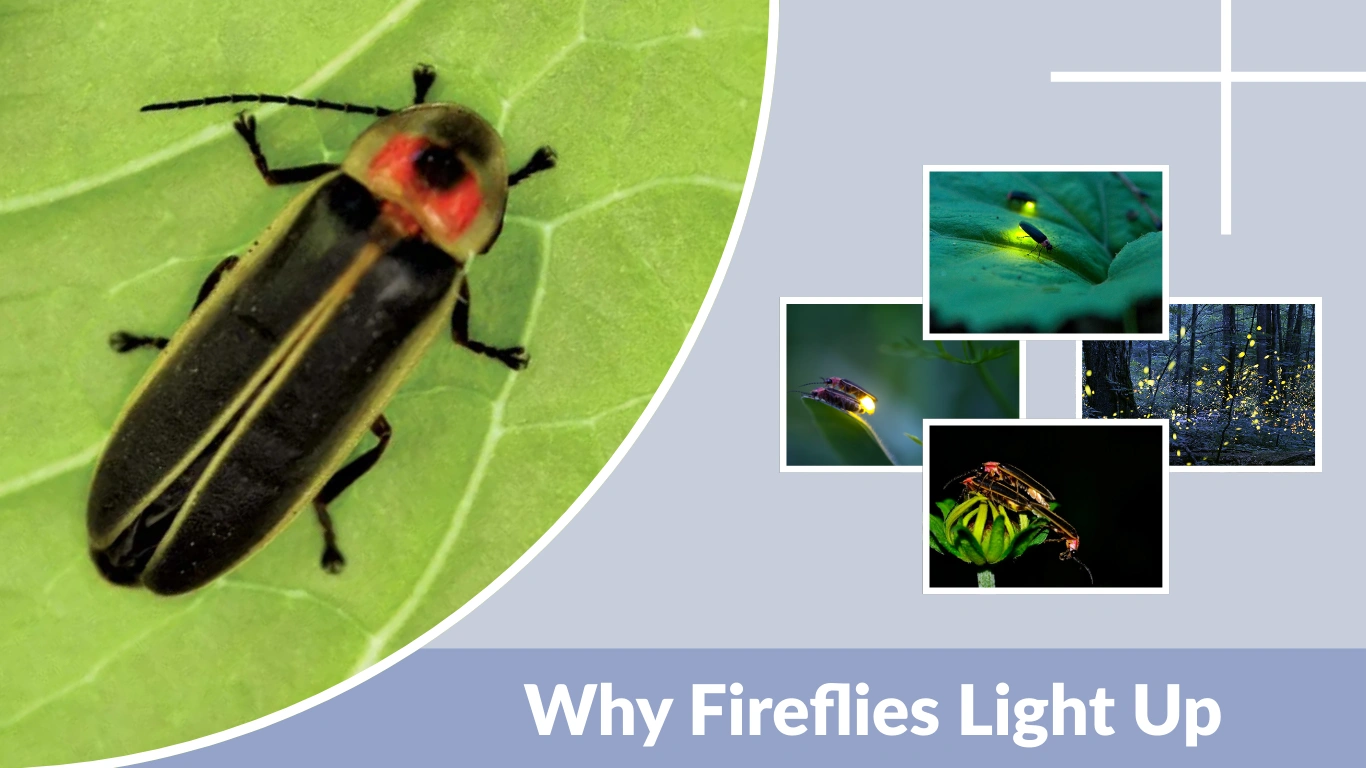
Fireflies are among the most magical insects in nature, fascinating people of all ages with their gentle, glowing lights. Their sparkling appearance on warm summer nights raises many questions: Why do fireflies light up? How does the glow work? Why do they glow at night, at dusk, or in the dark? Why do some glow in jars while others stop glowing entirely? And do all fireflies even light up?
This article explores the science, purpose, timing, and myths behind firefly bioluminescence.
What Causes Fireflies to Light Up?
Fireflies glow because of a natural process known as bioluminescence, a unique ability that very few land animals possess. This glow is produced inside special light organs located in the lower abdomen of the insect. Unlike artificial lights, the firefly’s glow is incredibly efficient and creates almost no heat.
The Chemical Reaction Behind the Glow
The glowing process begins with a molecule called luciferin, stored inside the light-producing cells. When oxygen enters the cells, it reacts with luciferin in the presence of an enzyme called luciferase. This reaction uses ATP, the insect’s energy molecule, to produce a bright, cool light.
The remarkable part of this reaction is that nearly all the energy becomes visible light rather than heat—a rare achievement even compared to modern LED technology.
Why Fireflies Produce “Cold Light”
Human-made lights waste energy as heat, which is why bulbs get hot. Fireflies, however, evolved to create cold light so they can glow without overheating. Producing light without heat helps them conserve energy and survive warm summer nights without damaging their bodies.
Why Do Fireflies Light Up? (Main Purpose)

Fireflies light up for several important biological reasons, and while mating is the most well-known explanation, it’s not the only one.
The Primary Purpose — Mating Signals
The most common reason fireflies glow is for communication during courtship. Each species develops a unique flash pattern—like a coded language—that helps males and females recognize each other.
Males typically fly and flash in distinct rhythms, while females wait in vegetation and respond with their own timed flashes. These luminous conversations help fireflies locate compatible partners in the dark.
Beyond Mating — Warning Signals
Fireflies contain a defensive chemical called lucibufagins, which makes them taste unpleasant or even toxic to predators. Their glow acts as a warning, signaling, “Don’t eat me.”
Some predatory firefly species even mimic the flash patterns of others to lure unsuspecting males before consuming them. While this sounds dramatic, these interactions occur only between fireflies—never involving humans or pets.
Communication & Navigation
Other than mating and defense, fireflies also use their glow for basic communication and sometimes for orientation. These flashes help them stay aware of their surroundings, identify other insects of the same species, and interact socially in low-light environments.
Simple Explanation for Kids
For young learners, a simple way to explain the glow is:
“Fireflies light up to talk to each other.”
This child-friendly description captures the essence of firefly communication without diving into complex science.
Why Do Fireflies Light Up at Night, Dusk, or Twilight?

Fireflies do most of their glowing when the world gets dark, which is why people notice them most at night or during dusk.
Active Period — Crepuscular Behavior
Fireflies are crepuscular, meaning they are most active at dawn and dusk. These twilight hours offer the perfect balance:
- Enough darkness for flashes to be visible
- Enough light for safe flying
- Cooler temperatures
- Higher humidity in many regions
Dusk provides the ideal backdrop for their bioluminescent signals.
Light Pollution Effects
In bright, heavily lit areas, fireflies flash less often or their signals become harder to see. Artificial lighting confuses males and females, making it difficult for them to find each other. This is one reason firefly populations may decline in urban environments—excessive light disrupts their natural communication.
Why They Glow Only in the Dark
Fireflies may glow during the day, but bright surroundings make their light nearly invisible. Nighttime darkness amplifies their flashes, making communication far more efficient. In the wild, glowing at night increases survival and reproductive success.
Why Do Some Fireflies Glow in the Day?

While less common, a few situations cause fireflies to glow during daylight:
- Cloudy or shaded environments reduce sunlight, making the glow noticeable.
- Larvae glow regardless of time of day as a built-in defense signal.
- Some species emit very faint daytime flashes as part of their natural rhythm.
Though they are most famous for their nighttime glow, not every species follows the same schedule.
Why Do Firefly “Butts” Light Up?
Location of Light Organs
Firefly light organs are located in the abdomen, which is why people often say their “butts” light up. This location allows for maximum visibility during flight while keeping their wings and body unobstructed.
Visual Advantage
A rear-positioned light is easier for other fireflies to see from multiple directions. During flight, it becomes a noticeable beacon, improving communication and mating success.
Why Fireflies Glow in a Jar (Or Not Glow in a Jar)

Many people catch fireflies in jars during summer nights, but the glowing behavior inside the container can vary. Sometimes they continue flashing brightly; other times they go completely dark. Both reactions have scientific explanations.
Why They Do Glow in a Jar
When fireflies still glow inside a jar, it’s usually because their natural communication rhythm continues temporarily. They may be:
- Reacting to other fireflies nearby
- Following their internal biological clock
- Signaling for mates
- Responding to movement or shadows
Because the light-organ chemistry is automatic once triggered, they can still glow for a short time in captivity.
Why They Sometimes Stop Glowing
If fireflies don’t glow in a jar, it is usually due to stress or environmental disruption. Several factors can stop their light completely:
- Low oxygen levels: Bioluminescence requires oxygen; a sealed jar limits it.
- Stress or fear: Fireflies suppress glowing when threatened.
- Dry air: They thrive in humid conditions, and jars can dry out quickly.
- Artificial light exposure: Flashing stops when surrounded by bright light.
- Temperature fluctuation: Too warm or too cold environments interfere with signaling.
These conditions mimic danger, causing the insect’s body to shut down the glow instinctively.
Ethical Reminder
Fireflies are fragile, and keeping them in jars can shorten their lifespan dramatically. For educational or observational fun, it’s best to release them within a minute or two. Catch-and-release ensures that fireflies can continue mating and helping local ecosystems thrive.
How Do Fireflies Control Their Light?

Fireflies don’t glow constantly—they blink in specific patterns. This ability comes from an advanced internal system that controls when oxygen reaches the light organ.
Oxygen Gating Mechanism
At rest, oxygen is limited inside the light cells. When the firefly wants to flash, its nervous system opens “gates” that allow oxygen to flood the light organ. This sudden oxygen surge triggers the luciferin reaction and produces a flash.
This oxygen control allows fireflies to:
- Turn their light on and off rapidly
- Create rhythmic mating patterns
- Communicate across long distances
- Avoid wasting energy
Insights From Science (Scientific American / EarthSky)
Science publications like Scientific American and EarthSky explain that fireflies evolved this oxygen-gating method as a high-precision communication tool. Research also shows:
- Their flashes synchronize with nerve impulses
- The reaction is near 100% efficient
- Each species evolves its own flash “language”
- Environmental cues adjust timing and intensity
These insights confirm that fireflies use bioluminescence as their primary method of visible communication.
Why Do Only Some Fireflies Light Up?

Not all fireflies glow, and some glow differently depending on species, sex, and stage of life.
Species Differences
There are over 2,000 firefly species worldwide. Some glow brightly, some glow faintly, and some rely on chemical pheromones instead of light. These non-glowing species are typically found in regions with dense vegetation or older evolutionary lineages.
Life Stage Differences
- Larvae (glowworms): Larvae glow continuously as a warning signal to predators.
- Adults: Some adults glow only during mating seasons.
- Females: In certain species, adult females may glow weakly or not at all.
The ability to glow depends on evolutionary purpose and necessity.
Environmental Limitations
Fireflies may not glow when:
- Temperatures drop suddenly
- They are dehydrated
- They are in danger or stressed
- Their energy reserves are low
Environmental conditions strongly affect their lighting behavior.
Firefly Flash Patterns & Social Behavior

Fireflies use light to interact socially, not just romantically. Their communication system is highly developed and surprisingly complex.
Species-Specific Flash Codes
Each species has unique patterns that vary by:
- Duration
- Brightness
- Interval timing
- Height of flight
- Number of pulses
These patterns reduce cross-species mating and help fireflies identify compatible mates instantly.
“Conversation” Between Males and Females
Males usually signal first with patterned flashes. Females then respond with subtle, delayed flashes from lower vegetation. This flash-and-response rhythm continues until the male locates the female. Without these visual signals, mating would be nearly impossible.
Synchronized Fireflies
Some species—especially in Southeast Asia and parts of the U.S.—flash in perfect unison. This rare phenomenon is triggered by:
- High population density
- Moist forest conditions
- Social coordination
- Evolutionary mating advantages
Synchronized flashing creates one of the world’s most impressive natural light shows.
Evolutionary Purpose of Firefly Bioluminescence
Survival & Predator Avoidance
The glow serves as a warning to predators: “I am toxic.” Firefly toxins protect them from birds, frogs, lizards, and spiders. Predators that try to eat a firefly often learn quickly to avoid glowing insects thereafter.
Species Continuation
Bioluminescence plays a vital role in reproduction:
- Better visibility equals higher mating success
- Unique signals prevent crossbreeding
- Stronger, selective mating improves genetic traits
Over millions of years, glowing behavior has ensured the survival and diversity of the Lampyridae family.
Firefly Glow Myths & Misunderstandings
Many misconceptions exist about why fireflies glow:
- Myth: Fireflies glow only to find mates.
Fact: They glow for communication and warning too. - Myth: Fireflies glow because they are hot.
Fact: Their light is nearly heat-free. - Myth: All fireflies glow.
Fact: Many species rely on pheromones or weak glows. - Myth: Fireflies always glow in jars.
Fact: Stress can stop their light completely.
Myths arise from limited human observation and from confusing fireflies with other luminous insects like glowworms.
Fireflies in Culture & Education
Kids’ Educational Explanation
For children, fireflies are nature’s way of showing how insects “talk” at night. Their glowing bodies make science accessible, inspiring curiosity about biology, energy, and ecosystems.
Cultural Significance Worldwide
In many Eastern cultures, fireflies symbolize love, spirits, and fleeting beauty. In North America and Europe, they evoke nostalgia, childhood memories, and summer traditions. Their glow has inspired poetry, literature, songs, and storytelling for centuries.
FAQs
Why do fireflies light up?
Fireflies light up because of bioluminescence, a chemical reaction involving luciferin, oxygen, and the enzyme luciferase. They use this glow mainly to attract mates, warn predators that they’re toxic, and communicate with other fireflies. Their flashing patterns act like a visual language in the dark.
Why do fireflies glow only at night or dusk?
Fireflies glow most at night or dusk because their light is easier to see in darkness, which helps them find mates efficiently. Bright daytime light reduces the visibility of their signals. Cooler temperatures and higher humidity during dusk also support their natural flashing behavior.
Why don’t fireflies glow in a jar?
Fireflies may stop glowing in a jar due to stress, lack of oxygen, dryness, or exposure to artificial light. Their bioluminescence requires proper environmental conditions, and confinement disrupts their natural flashing rhythm. Jars can interfere with breathing, humidity, and comfort, which suppresses their ability to glow.
Do all fireflies glow?
No, not all fireflies glow. While many species use bright flashes for communication, others rely on pheromones instead of light. Some adults glow faintly or not at all, while larvae (glowworms) often glow continuously. The degree of glowing depends on species, life stage, and environmental conditions.
How do fireflies produce their light?
Fireflies create light through a biochemical reaction in their abdomen. When oxygen combines with luciferin in the presence of luciferase and ATP, it produces a bright, cool light with almost no heat. Fireflies control their flashes by regulating oxygen flow, allowing rapid on-and-off signaling.
