
Sweat bees are small pollinators that often attract attention because they may land on sweaty skin during warm weather. This behavior leads many people to wonder, do sweat bees bite? In most cases, they do not bite people. Female sweat bees can sting if they are trapped against the skin, swatted, or handled, but they are generally not aggressive. Their stings are usually mild, causing temporary pain, redness, itching, or swelling. Knowing how to identify and treat a sweat bee sting can make outdoor encounters less concerning.
Do Sweat Bees Bite Humans?
Sweat bees belong to the family Halictidae, a diverse group containing many small, solitary or partly social bees. They are called sweat bees because some species are attracted to the salts and moisture in human perspiration. They may land on arms, legs, or other exposed skin to drink sweat, especially during hot weather.
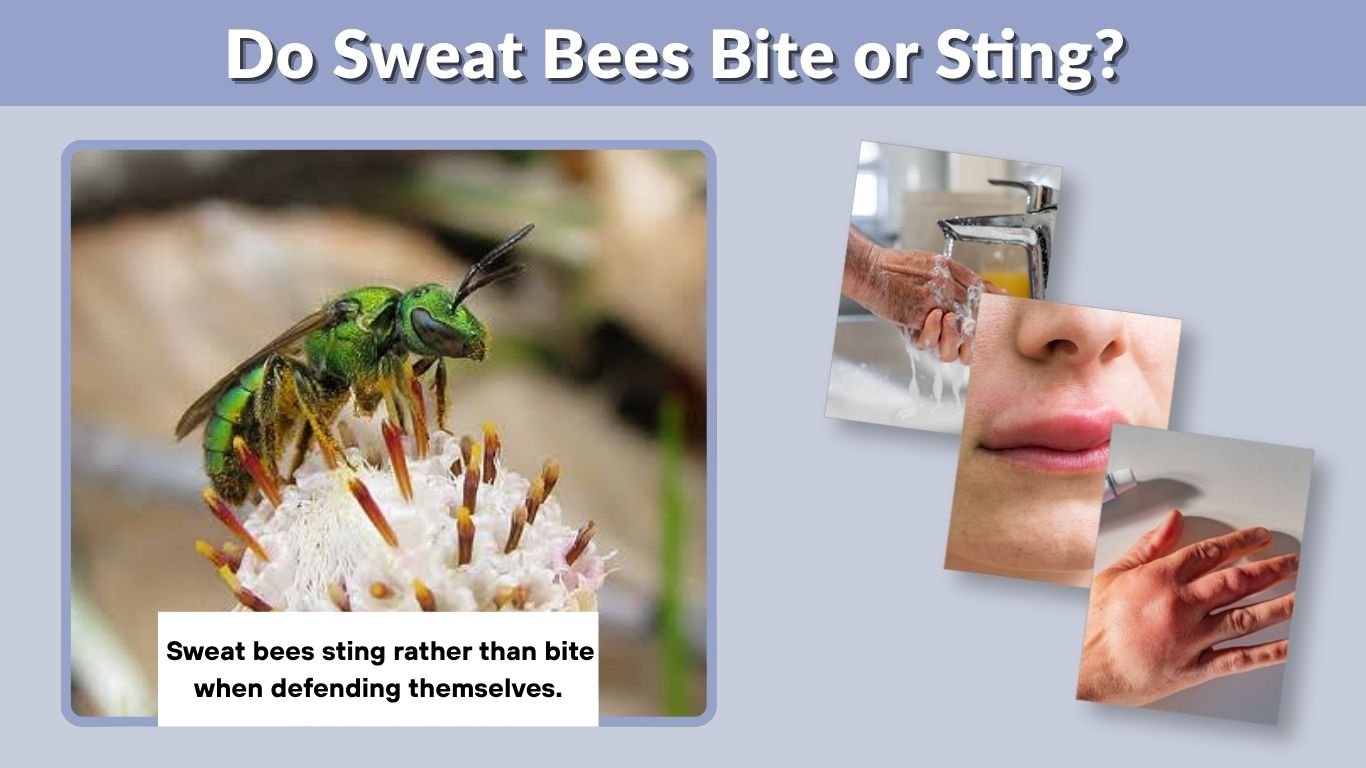
Do Sweat Bees Bite or Sting?
Sweat bees sting rather than bite when defending themselves. Female bees possess stingers and may use them when squeezed, trapped, swatted, or otherwise threatened.
Their habit of landing on people sometimes creates the impression that they are trying to bite. In reality, a sweat bee sitting on your skin may simply be gathering moisture and salts.
Penn State Extension notes that sweat bees may sting when trapped in places such as an elbow crease, armpit, or between the fingers, but their stings are usually mild.
Why Do Sweat Bees Land on You?
Human sweat contains moisture and minerals that can attract some sweat bee species.
They may be particularly noticeable when you are:
- Exercising outdoors
- Gardening on hot days
- Working in humid weather
- Sweating heavily
- Wearing short sleeves or shorts
- Spending time near flowering plants
Landing on you is not normally an aggressive act. Staying calm and allowing the bee to move away can reduce the risk of a sting.
What Does a Sweat Bee Sting Look Like?
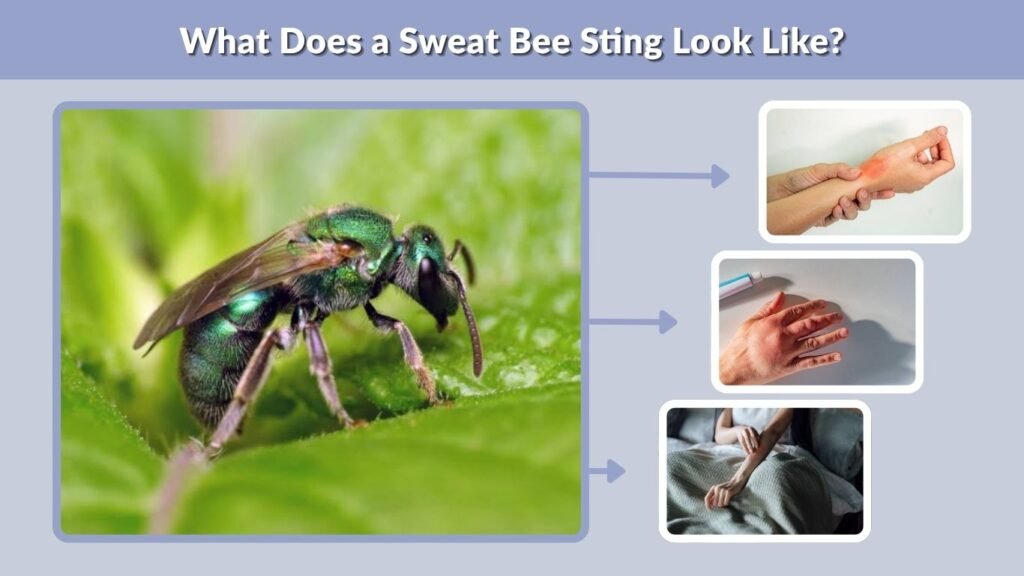
A sweat bee sting can resemble many other minor bee or insect stings. Because these bees are small and their venom usually causes only a localized reaction, the mark may not be dramatic.
The exact appearance depends on how sensitive the person is to insect venom.
Common Sweat Bee Sting Symptoms
A mild reaction may include:
- Sharp or burning pain
- Small red welt
- Localized redness
- Slight swelling
- Tenderness
- Itching
- Warmth around the sting site
For most minor bee stings, pain and swelling improve within hours. Some people experience a stronger local response in which redness, itching, or swelling increases during the following day or two.
Do Sweat Bee Stings Itch?
Yes, a sweat bee sting may itch as the local inflammatory reaction develops.
Some people notice mostly pain at first, followed by itching and mild swelling. Avoid scratching the area because damaged skin can increase the chance of infection. A cold compress and appropriate anti-itch treatment can help control discomfort.
Are Sweat Bee Stings Dangerous?
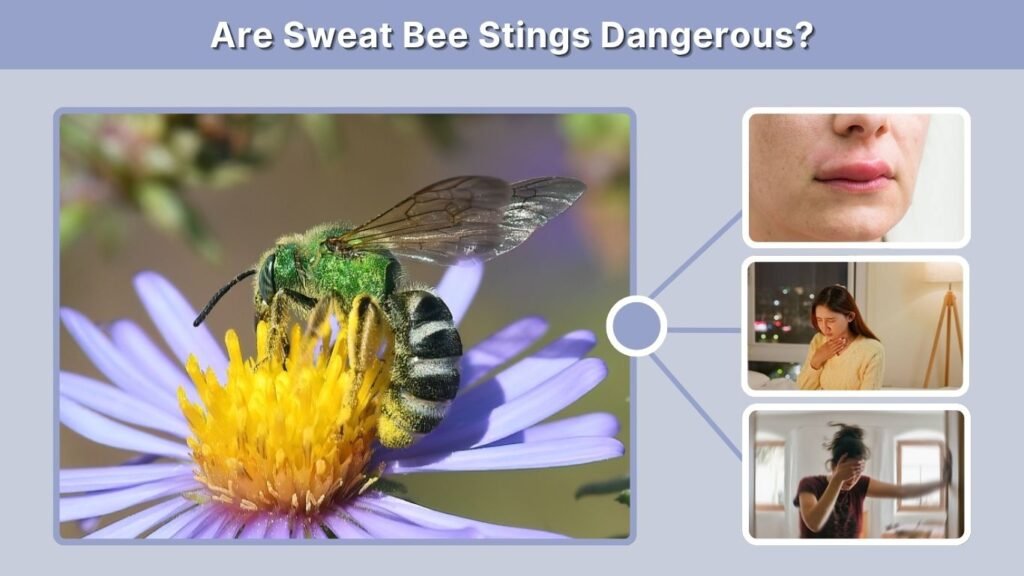
Sweat bees are generally considered relatively mild stinging insects. Many species are solitary and have little reason to defend an area aggressively. Colorado State University Extension describes their stings as momentarily and mildly painful, with problems occurring mainly when people attempt to brush away bees visiting sweat.
Normal Local Reaction
A typical mild reaction remains close to the sting site. You may notice a small swollen red area and some temporary discomfort.
These symptoms usually improve naturally. A larger local reaction can produce more extensive swelling that develops over the next day or two, but this is different from a severe whole-body allergic reaction.
Severe Allergic Reaction
Any bee venom can potentially cause a serious allergic reaction in a susceptible person, even when the insect itself usually causes mild stings.
Seek emergency medical help immediately if symptoms include:
- Trouble breathing
- Swelling of the lips, face, tongue, or throat
- Widespread hives
- Difficulty swallowing
- Dizziness or fainting
- Weak, rapid pulse
- Severe nausea, vomiting, or diarrhea
These can indicate anaphylaxis, a potentially life-threatening allergic reaction requiring urgent treatment. Someone prescribed an epinephrine autoinjector should use it as directed and seek emergency care.
How to Treat a Sweat Bee Sting
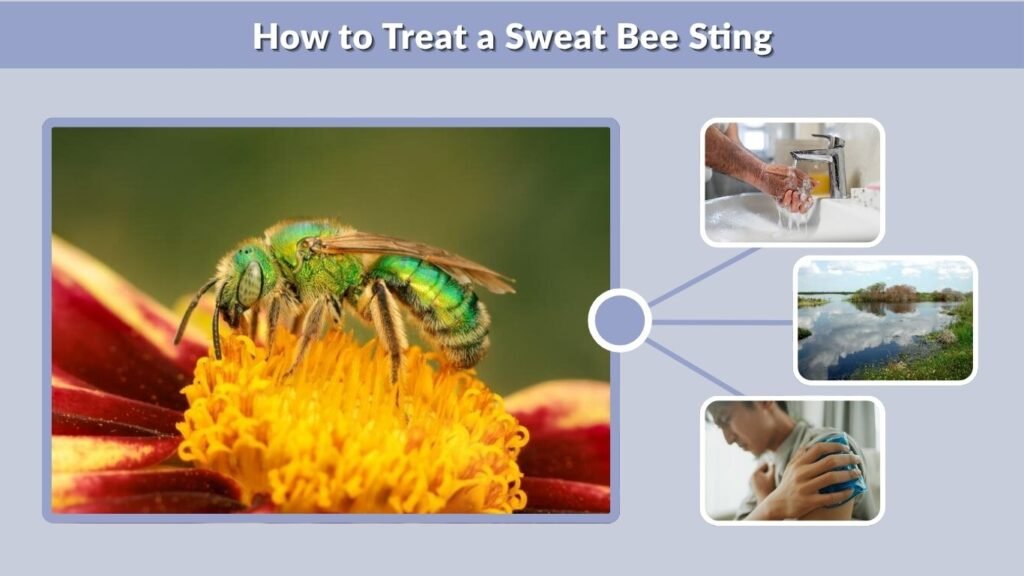
Most mild sweat bee stings can be managed with simple first aid at home. The main goals are to clean the skin, reduce swelling, and control pain or itching while watching for signs of an allergic reaction.
Sweat Bee Sting Treatment
For a mild reaction:
- Move away from the area to avoid another sting.
- Wash the skin gently with soap and water.
- Apply a cold, damp cloth or wrapped ice pack for about 10–20 minutes.
- Elevate the affected arm or leg if swelling develops.
- Consider calamine lotion or 0.5–1% hydrocortisone cream for itching.
- An appropriate over-the-counter antihistamine may help with itching.
- An over-the-counter pain reliever may help if the area remains painful.
Always follow medicine labels and consider medical advice if you have health conditions, take other medications, or are treating a young child.
What Not to Do
Avoid repeatedly scratching or rubbing the sting. Scratching can make inflammation worse and potentially damage the skin.
Heat is generally not recommended for routine bee-sting first aid. Cold treatment is more useful for decreasing pain and swelling.
Sweat Bee vs. Other Small Flying Insects
A small insect landing on sweaty skin is not automatically a sweat bee. Several small bees, wasps, flies, and hoverflies can look similar from a distance.
Sweat bees vary considerably in appearance, which can make identification challenging.
What Do Sweat Bees Look Like?
Depending on species, sweat bees may be:
- Metallic green or blue
- Shiny black
- Brownish
- Dark with pale abdominal bands
- Only a few millimeters long
- Slender compared with many honey bees
For example, Halictus sweat bees can range from about 4.5 to 14 mm and frequently have light bands across the abdomen, while some other sweat bees are brilliant metallic green.
Hoverfly vs. Sweat Bee
Hoverflies are flies that often imitate bees in coloration, but they cannot sting. They have one functional pair of wings, while bees have two pairs.
If an insect truly stung you, a harmless hoverfly was not responsible. Visual identification can still be difficult, so behavior, body shape, wings, and close-up features may all be needed.
Why Sweat Bees Sting
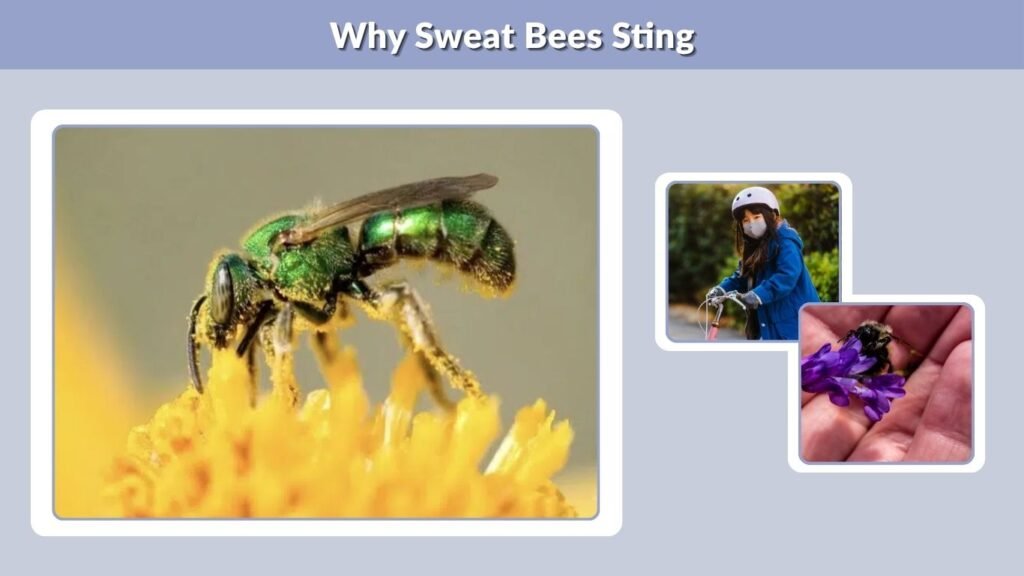
Sweat bees normally have little interest in attacking people. Their defensive behavior is more likely to occur when they feel physically threatened.
Many sweet bees are solitary, meaning individual females manage their own nests rather than defending a large colony like social wasps or honey bees. Consequently, they are generally less defensive around nest sites.
How to Avoid Sweat Bee Stings
You can reduce encounters by:
- Avoiding swatting bees on your skin
- Moving slowly when one lands on you
- Wiping away heavy perspiration
- Wearing more covering clothing when practical
- Being careful around flowers where bees are feeding
- Avoiding squeezing a bee between your skin and clothing
If a sweat bee lands on you, staying calm gives it an opportunity to leave without becoming trapped.
Are Sweat Bees Beneficial?
Although sweat bees can occasionally sting, they are important pollinators. They visit flowering plants to collect nectar and pollen and contribute to pollination in gardens, farms, and natural ecosystems.
Penn State Extension lists multiple sweat bee genera among important wild pollinators and notes that their social behavior ranges from solitary nesting to cooperative colonies depending on the species.
Should You Kill Sweat Bees?
Usually, no. A few sweat bees visiting flowers or occasionally landing on sweaty skin do not constitute an infestation.
Because they contribute to pollination and are generally non-aggressive, avoiding unnecessary control is preferable. If nesting bees are creating a genuine safety concern near a heavily used area, proper identification should come before deciding how to manage them.
FAQs
Do sweat bees bite you?
Sweat bees generally do not bite humans. Female sweat bees can sting when trapped, squeezed, handled, or swatted.
Why do sweat bees sting people?
They usually sting defensively. Because some species land on people to collect salty perspiration, they can become trapped against the skin or clothing and sting in response.
What does a sweat bee sting look like?
A typical sting may produce a small red welt, mild swelling, burning pain, and itching. Reactions vary from person to person.
How long does a sweat bee sting hurt?
The sharp pain from a mild sweat bee sting may subside fairly quickly, while redness, tenderness, or itching can persist longer. Larger local reactions can worsen over the first day or two before improving.
How do you treat a sweat bee sting?
Wash the area with soap and water and apply a cold compress for 10–20 minutes. Hydrocortisone, calamine, an appropriate antihistamine, or a pain reliever may help minor symptoms. Seek emergency care for breathing problems, facial or throat swelling, widespread hives, fainting, or other signs of anaphylaxis.
