
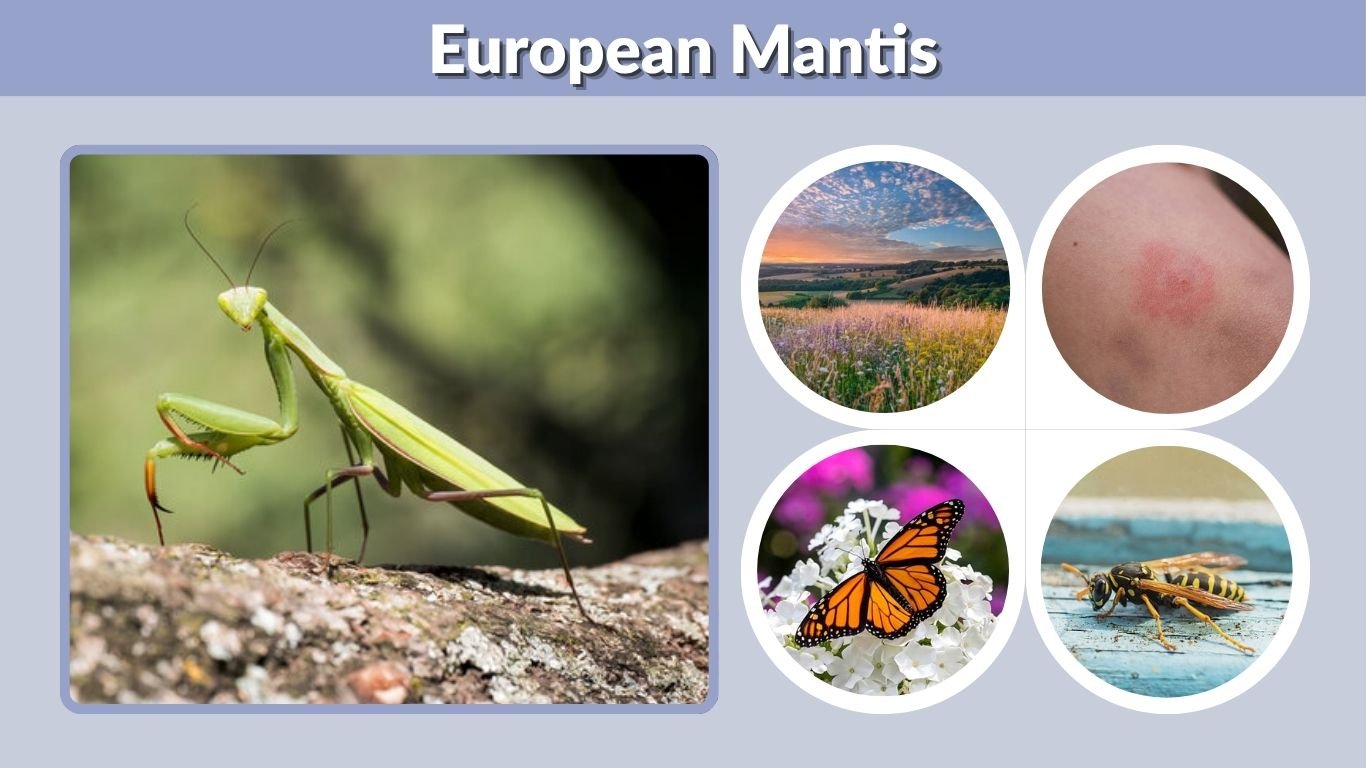
The European mantis is a distinctive predatory insect recognized by its triangular head, folded front legs, and patient hunting behavior. Scientifically known as Mantis religiosa, it is native to parts of Europe, Asia, and Africa but has also become established in North America. European mantises may be green, brown, or tan, allowing them to disappear easily among vegetation. From their diet and habitat to their egg cases, lifespan, and differences between males and females, this species has many fascinating characteristics.
What Is a European Mantis?
The European mantis is a medium-to-large praying mantis belonging to the family Mantidae. Like other mantises, it is an ambush predator that spends much of its time waiting motionlessly for insects to come within striking distance. Its powerful front legs can snap forward quickly to capture prey.
European Mantis Identification
Common characteristics include:
- Scientific name: Mantis religiosa
- Triangular, highly movable head
- Large compound eyes
- Long, narrow thorax
- Spiny raptorial front legs
- Green, brown, or tan coloration
- Two pairs of wings in adults
- Distinctive dark or eye-like markings inside the front legs
- Females generally larger and heavier than males
The markings on the inner front legs are especially useful when distinguishing this species from similar mantises.
European Mantis Size
Adult European mantises generally reach around 2 to 3 inches long, although females can grow somewhat larger than males.
Females have broader abdomens that become especially noticeable when carrying eggs. Males are usually thinner, lighter, and better adapted for flight.
Green vs Brown European Mantis
European mantises can occur in both green and brown forms. Brown individuals are not a separate species.
Their coloration provides camouflage among leaves, grasses, flowers, and dried vegetation. Environmental conditions during development may influence the final adult color.
European Mantis Habitat and Range
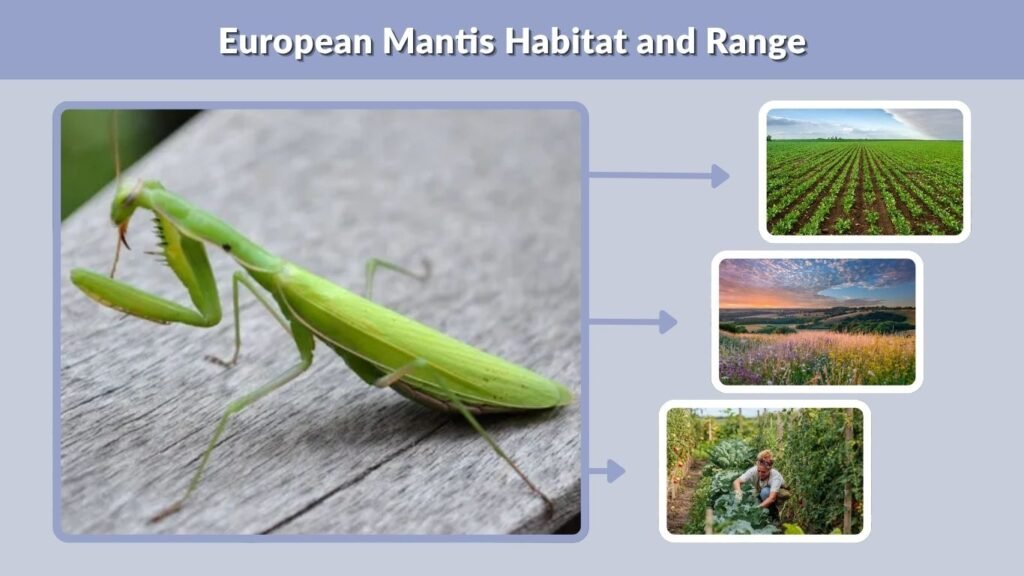
European mantises prefer warm environments containing plenty of vegetation and insect prey. They are frequently found in sunny, relatively open habitats where they can hide among grasses and flowering plants while waiting for insects.
Where Do European Mantises Live?
Typical habitats include:
- Meadows
- Grasslands
- Gardens
- Agricultural fields
- Forest edges
- Shrublands
- Roadsides
- Open woodland
Their camouflage makes them surprisingly difficult to notice despite their relatively large size.
European Mantis Range
The natural range of the European mantis includes much of Europe as well as portions of Asia and Africa.
The species has also been introduced into North America and is established in parts of the United States and Canada.
Are European Mantises Invasive?
The European mantis is non-native to North America. Whether it is officially classified as invasive depends on the region and definition being used.
Because introduced mantises can compete with native predatory insects and consume native species, deliberately releasing non-native mantises into the environment is generally not recommended.
What Do European Mantises Eat?
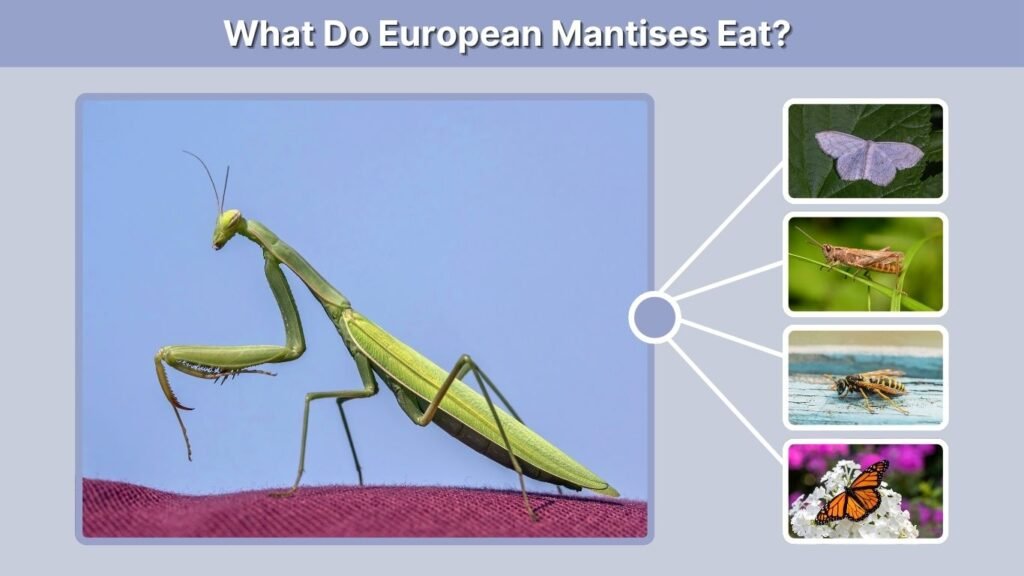
European mantises are strict carnivores and primarily feed on other arthropods. They do not chew leaves or rely on plants for nutrition.
Instead, they use vegetation as camouflage and as a hunting platform.
European Mantis Diet
Common prey may include:
- Flies
- Moths
- Butterflies
- Crickets
- Grasshoppers
- Beetles
- Bees
- Wasps
- Caterpillars
- Small spiders
- Other mantises
The exact diet depends heavily on prey availability.
How Does a European Mantis Hunt?
European mantises are primarily ambush hunters.
A mantis may remain motionless on a plant with its front legs folded beneath its body. When prey approaches, it rapidly extends the legs and traps the victim between rows of sharp spines.
Its ability to rotate its head also helps it visually track moving prey without moving the rest of its body.
European Mantis Life Cycle
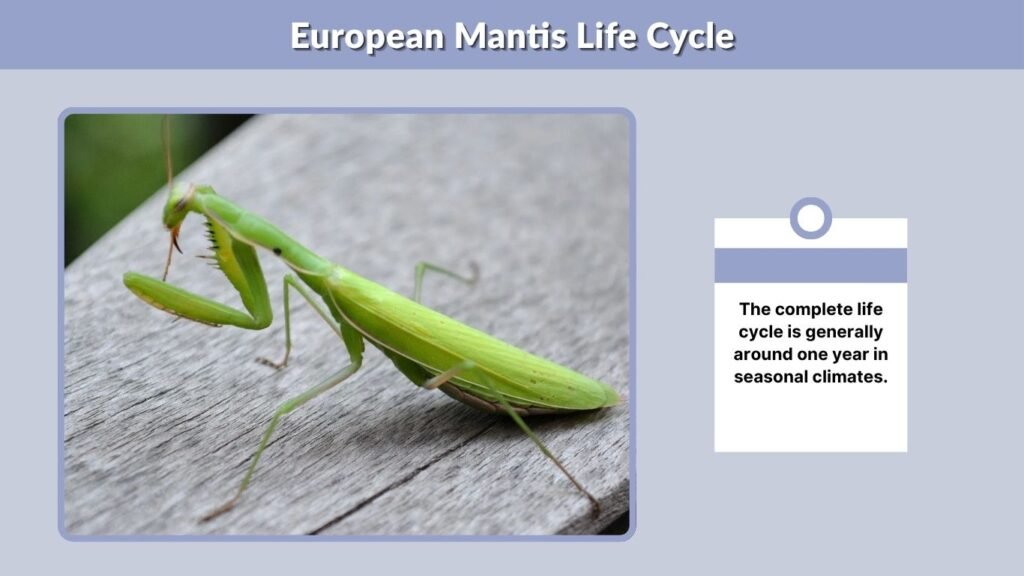
European mantises normally complete one generation each year in temperate regions. Adults mate during the warmer months, after which females produce protective egg cases.
The eggs survive unfavorable winter conditions before young mantises emerge the following spring.
European Mantis Egg Case
A mantis egg case is called an ootheca.
Female European mantises produce a foamy substance around their eggs. This material hardens into a protective structure that may be attached to stems, branches, stones, fences, and other firm surfaces.
The ootheca protects the developing eggs from weather and physical damage.
European Mantis Nymph
Baby European mantises are called nymphs.
When they hatch, they resemble miniature adults but lack fully developed wings. Young mantises begin hunting tiny insects shortly after emerging.
As they grow, they repeatedly shed their exoskeleton in a process called molting.
European Mantis Lifespan
The complete life cycle is generally around one year in seasonal climates.
Individual adults normally survive only several months. Cold weather eventually kills most adults, while the next generation remains protected inside egg cases until suitable conditions return.
European Mantis Male vs Female
Male and female European mantises share the same basic appearance, but mature individuals can usually be distinguished by body size, abdomen shape, and behavior.
Female European Mantis
Females are typically:
- Larger
- Heavier
- Broader through the abdomen
- Less agile in flight
- Capable of producing multiple egg cases
Their abdomens often become particularly swollen when eggs are developing.
Male European Mantis
Adult males usually have slimmer abdomens and lighter bodies.
Their lighter weight makes them stronger and more frequent flyers. During the breeding season, males may fly while searching for females.
Males also tend to appear more delicate than mature females.
European Mantis Reproduction
Reproduction usually occurs when adults reach maturity toward the later part of the warm season.
Males locate females, mate with them, and females later deposit eggs inside protective oothecae.
Does the Female Eat the Male?
Female mantises are famous for sexual cannibalism, but the female does not always eat the male.
Cannibalism can occur, particularly when a female is hungry or when the male remains within striking distance. However, many mating events end without the male being eaten.
Do European Mantises Bite?
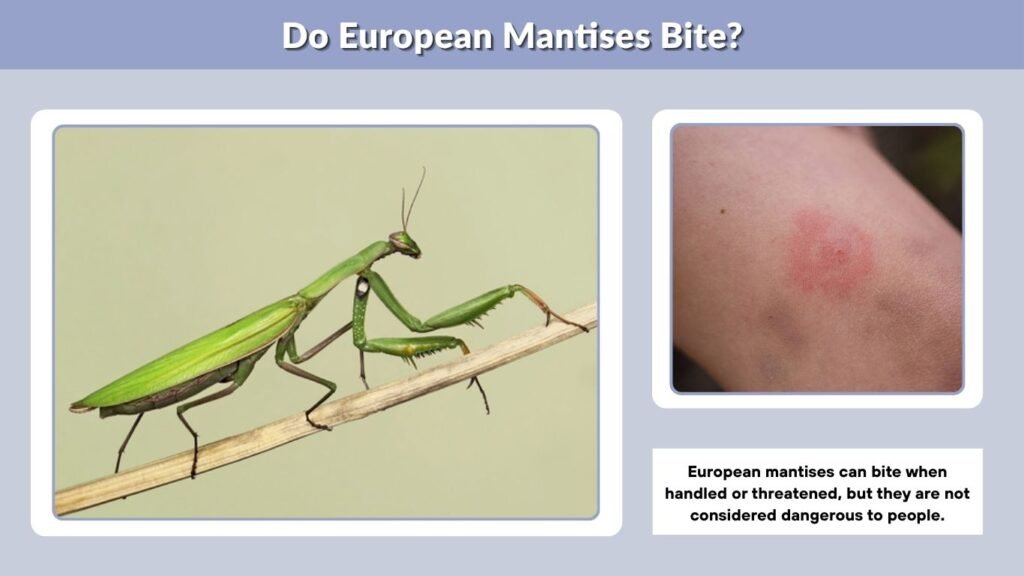
European mantises can bite when handled or threatened, but they are not considered dangerous to people.
They normally prefer escape or defensive posturing rather than attacking humans.
Are European Mantises Dangerous?
European mantises:
- Are not venomous
- Do not have stingers
- Do not feed on human blood
- Rarely bite people
- May grab skin with their spiny front legs
A defensive bite from a large adult may be uncomfortable, but serious injury is unlikely.
Handling them gently—or simply observing them without touching—is usually best.
European Mantis vs Chinese Mantis
European and Chinese mantises are frequently confused because both may appear green or brown and have similar body shapes.
However, several characteristics can separate them.
Size Differences
The Chinese mantis is generally larger.
Chinese mantises may approach 4 to 5 inches long, whereas European mantises typically remain around 2 to 3 inches.
The Chinese mantis also usually has a noticeably longer and more slender overall body.
Identification Differences
European mantises often have distinctive dark markings on the inside of their front legs.
Chinese mantises lack the same characteristic markings and usually have longer bodies and wings.
Size, leg markings, body proportions, and geographic location should all be considered when making an identification.
Carolina Mantis vs European Mantis
The Carolina mantis is another species that may overlap with the European mantis in North America.
The Carolina mantis is native to North America, whereas the European mantis was introduced.
How to Tell Them Apart
Carolina mantises tend to have somewhat broader bodies and greater variation in gray, brown, and mottled coloration.
European mantises often have a more classic elongated appearance and recognizable markings on the inner front legs.
Adult wing proportions and overall body structure can provide additional identification clues.
European Mantis Care
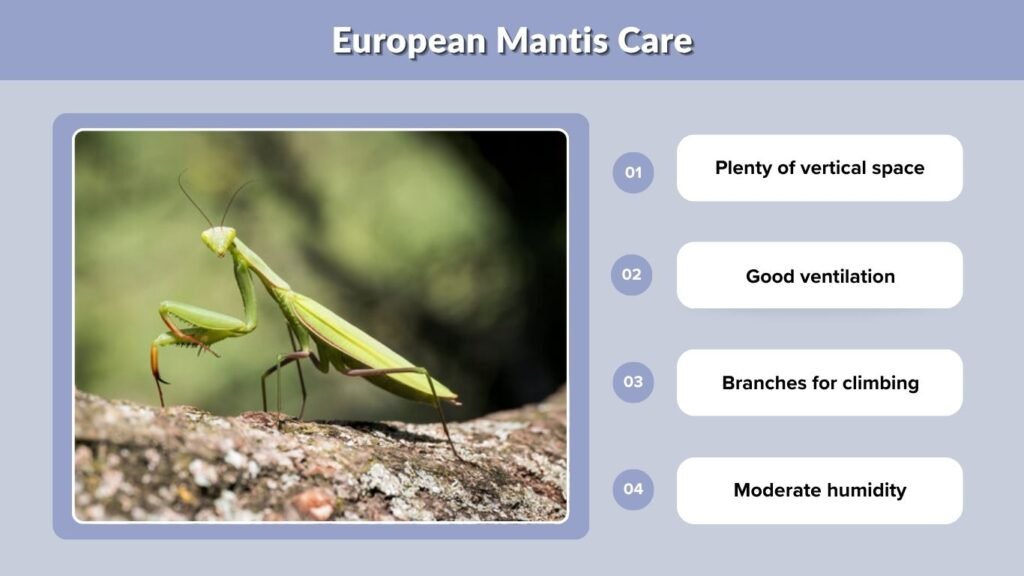
European mantises can be kept in captivity where legally permitted. Proper enclosure size, ventilation, humidity, and live prey are important for successful care.
Enclosure Requirements
A suitable enclosure should provide:
- Plenty of vertical space
- Good ventilation
- Branches for climbing
- Secure mesh or surfaces for hanging
- Moderate humidity
- Space for successful molting
Vertical height is particularly important because a mantis must hang upside down when shedding its old exoskeleton.
Feeding a European Mantis
European mantises require live prey.
Small nymphs can eat tiny flies and similar insects, while larger individuals can handle appropriately sized crickets, roaches, moths, and flies.
Prey should not be excessively large, especially immediately before or during molting.
Water and Humidity
Mantises generally drink water droplets from surfaces rather than using an open water bowl.
Light misting can provide drinking water and help maintain humidity. However, the enclosure should not remain constantly wet because excessive moisture and poor ventilation may encourage mold.
FAQs
How big do European mantises get?
European mantises usually reach about 2 to 3 inches long. Females are typically larger and heavier than males.
How long do European mantises live?
Their complete life cycle generally lasts around one year, while adults typically survive for only several months.
What does a European mantis eat?
European mantises eat live prey such as flies, moths, grasshoppers, crickets, beetles, bees, wasps, caterpillars, and other small arthropods.
Can European mantises fly?
Yes. Adult European mantises have wings. Males usually fly more effectively because their bodies are lighter, while heavier females may fly less frequently.
Are European mantises dangerous to humans?
No. European mantises are not venomous or aggressive toward people. They may bite or grab defensively if handled roughly, but they generally pose little danger.
