
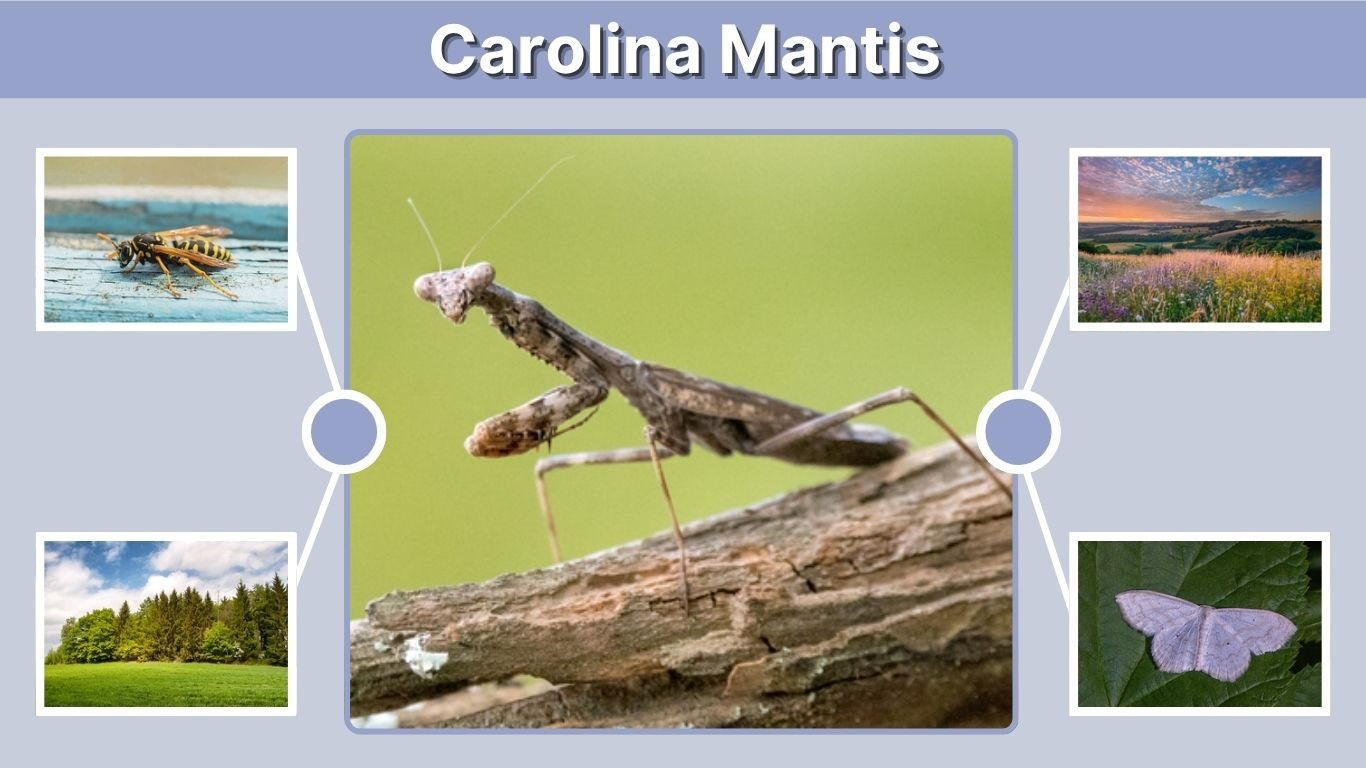
The Carolina mantis is a native North American praying mantis known for its excellent camouflage, powerful hunting legs, and wide range of brown, gray, and green colors. Scientifically called Stagmomantis carolina, this medium-sized predator is commonly found in gardens, grasslands, woodland edges, and other vegetated habitats. Although it is often confused with larger introduced species, several features can help identify it. Here is everything you need to know about its size, diet, habitat, lifespan, egg cases, and behavior.
What Is a Carolina Mantis?
The Carolina mantis is a species of praying mantis native to North America. Like other mantises, it is an ambush predator that remains motionless until an insect moves within striking distance. Its folded front legs give it the characteristic “praying” appearance associated with mantises.
Carolina Mantis Identification
Common identification features include:
- Scientific name: Stagmomantis carolina
- Medium-sized body
- Triangular, movable head
- Large compound eyes
- Powerful spiny front legs
- Brown, gray, tan, or green coloration
- Broad abdomen, especially in females
- Wings present in adults
- Excellent camouflage among vegetation
Color alone should not be used for identification because individual Carolina mantises can vary considerably.
Carolina Mantis Size
Adult Carolina mantises generally reach around 2 to 3 inches long.
Females are usually larger and heavier than males. Mature females often appear broader through the abdomen, while males have slimmer bodies and longer-looking wings.
Their moderate size is one of the easiest ways to distinguish them from the much larger Chinese mantis.
Green, Brown and Gray Carolina Mantises
Carolina mantises can appear green, brown, tan, or gray. Some individuals have mottled coloration that closely resembles bark, dead leaves, or dried vegetation.
These color variations help the mantis remain hidden from both predators and prey.
Carolina Mantis Habitat and Range
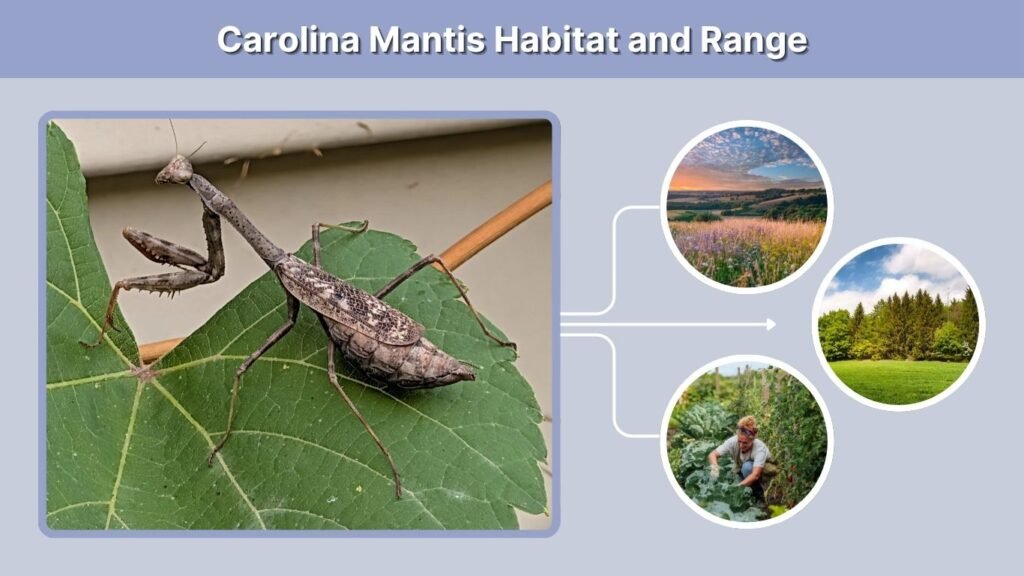
Carolina mantises prefer areas that provide vegetation for camouflage and plenty of insects to hunt. They can survive in natural habitats as well as gardens and agricultural landscapes.
Where Do Carolina Mantises Live?
Common habitats include:
- Meadows
- Grasslands
- Gardens
- Shrublands
- Forest edges
- Agricultural fields
- Roadsides
- Open woodland
They often sit on flowers, branches, tall grass, or shrubs where flying insects are likely to pass nearby.
Carolina Mantis Range
The Carolina mantis occurs across a large portion of the United States, particularly in eastern, central, and southern regions.
Despite its name, the species is not limited to North or South Carolina.
Is the Carolina Mantis Native?
Yes. The Carolina mantis is native to North America.
This is an important difference between the Carolina mantis and introduced species such as the Chinese mantis and European mantis.
Is the Carolina Mantis Invasive?
No. Because it naturally occurs in North America, the Carolina mantis is not considered an invasive species within its native range.
It is part of local ecosystems and feeds on many different insects.
What Do Carolina Mantises Eat?
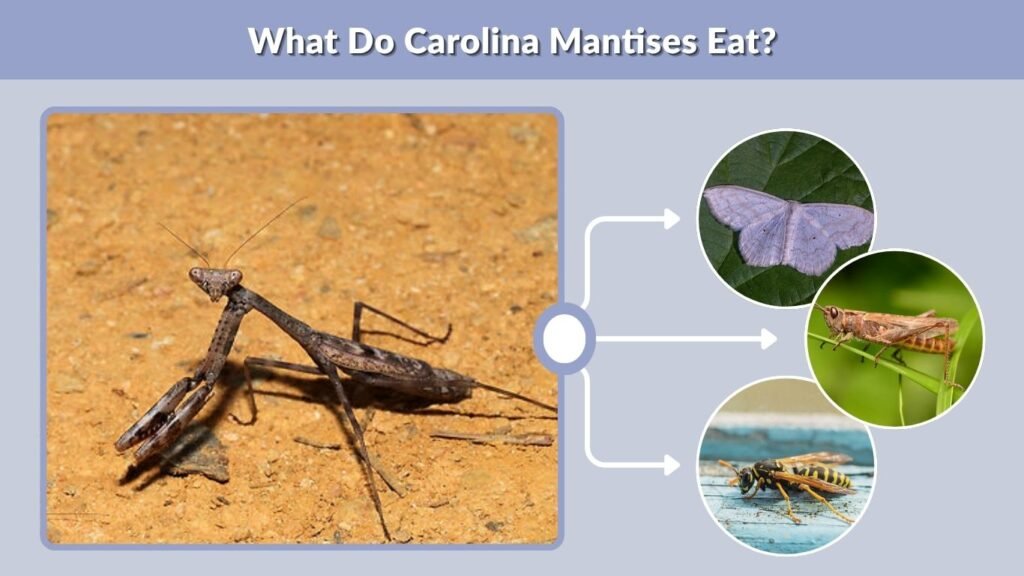
Carolina mantises are carnivorous predators. Their diet consists almost entirely of live insects and other small arthropods.
They do not eat leaves or depend on plants for nutrition.
Carolina Mantis Diet
Common prey includes:
- Flies
- Moths
- Crickets
- Grasshoppers
- Beetles
- Caterpillars
- Bees
- Wasps
- Small spiders
- Other mantises
Larger adults can tackle surprisingly large insects, although they generally choose prey that can be controlled with their front legs.
How Do Carolina Mantises Hunt?
Carolina mantises are ambush predators.
They remain motionless among vegetation and visually track nearby insects. When prey moves close enough, the mantis rapidly extends its raptorial front legs and traps the insect between sharp spines.
Their camouflage allows them to approach prey without being noticed.
Carolina Mantis Life Cycle
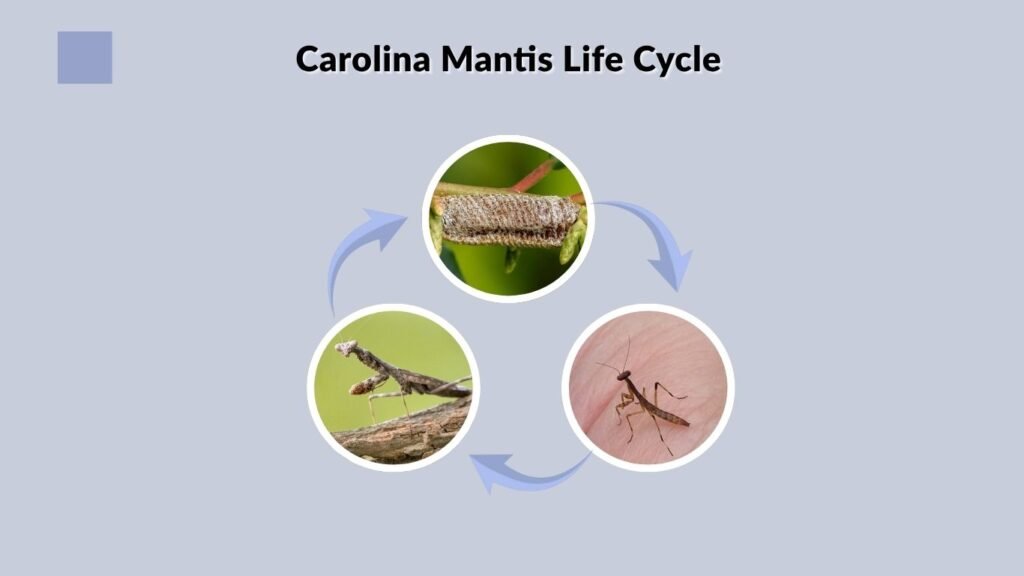
The Carolina mantis generally completes one generation per year in areas with seasonal winters.
Adults reproduce during the warmer months, and females deposit eggs inside protective cases that survive until the following spring.
Carolina Mantis Egg Case
A mantis egg case is called an ootheca.
Female Carolina mantises produce a foamy material around their eggs. The material hardens and creates a protective structure that may be attached to twigs, stems, fences, bark, or other surfaces.
Carolina mantis egg cases are usually relatively flat and elongated compared with the larger, rounder egg cases produced by Chinese mantises.
Carolina Mantis Nymph
Young Carolina mantises are called nymphs.
They hatch looking like tiny wingless versions of adults and begin hunting small insects shortly afterward.
As a nymph grows, it molts several times. Wings gradually develop until the insect reaches adulthood.
Carolina Mantis Lifespan
The complete life cycle generally lasts about one year.
Adults usually live for only several months. In colder areas, adults die during late fall or winter while eggs remain protected inside the ootheca until warmer weather returns.
Carolina Mantis Male vs Female
Male and female Carolina mantises can be distinguished by several physical features after reaching maturity.
Female Carolina Mantis
Females are generally:
- Larger and heavier
- Broader through the abdomen
- More robust in appearance
- Less capable flyers than males
- Responsible for producing egg cases
A mature female carrying eggs may develop a noticeably swollen abdomen.
Male Carolina Mantis
Males usually have slender bodies and narrower abdomens.
Their lighter build allows them to fly more easily. During mating season, males may travel while searching for receptive females.
Can Carolina Mantises Fly?
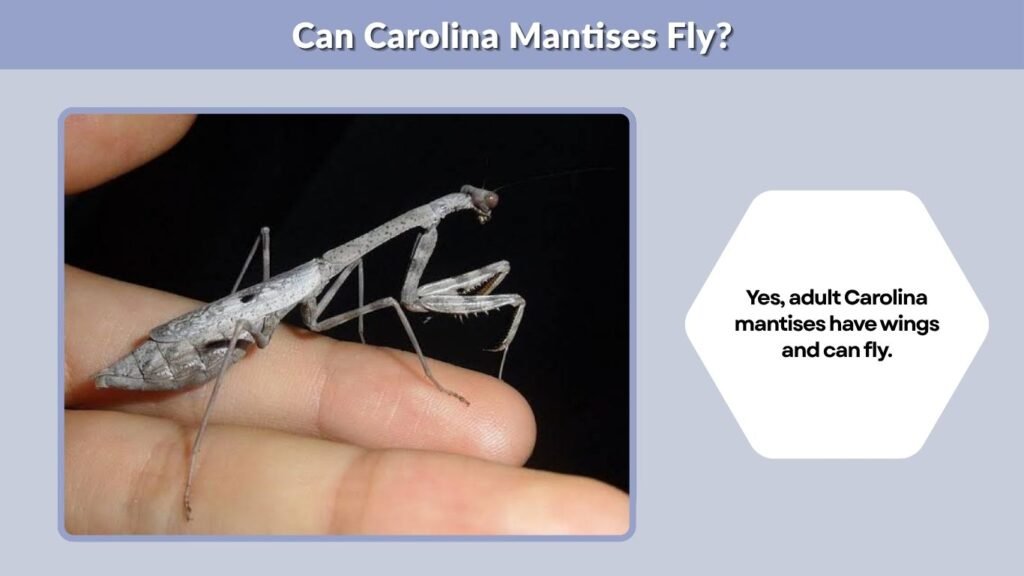
Yes, adult Carolina mantises have wings and can fly.
However, flying ability differs significantly between males and females.
Male Flight
Males are relatively lightweight and often fly well. Flight helps them move through their habitat and search for females.
Female Flight
Females are heavier and may fly less frequently or only for relatively short distances.
Nymphs cannot fly because their wings are not fully developed.
Carolina Mantis vs Chinese Mantis
The Carolina mantis and Chinese mantis are commonly confused in areas where both occur.
The easiest differences involve size, body shape, and egg cases.
Main Differences
Carolina mantises usually reach around 2 to 3 inches, while Chinese mantises can grow close to 4 or 5 inches.
Chinese mantises are generally longer and more slender. Carolina mantises tend to be shorter and broader.
Their egg cases also differ. Carolina mantis oothecae are typically flatter and more elongated, while Chinese mantis egg cases are usually larger and rounder.
Another major difference is origin: the Carolina mantis is native to North America, while the Chinese mantis was introduced from Asia.
Carolina Mantis vs European Mantis
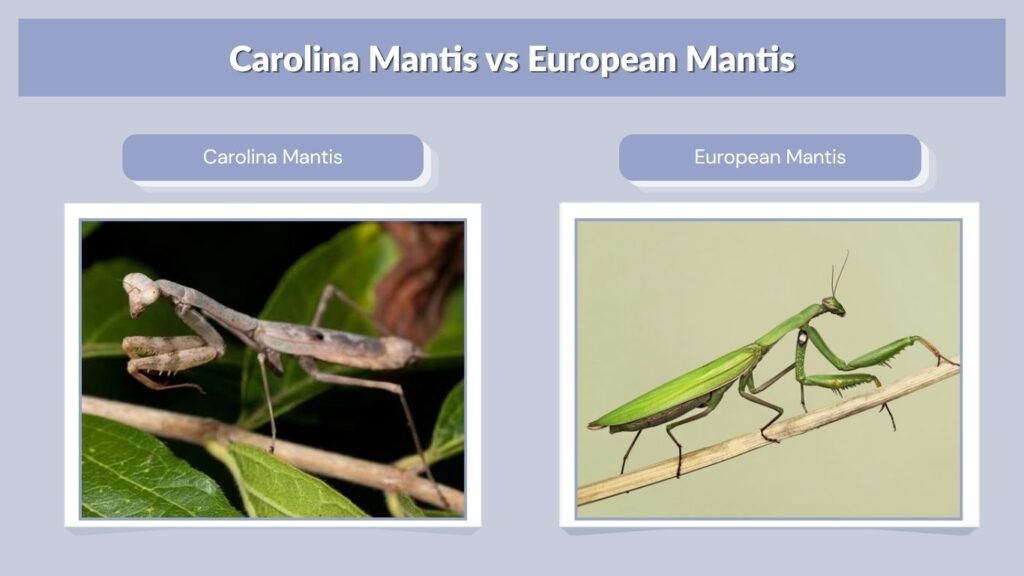
The European mantis is another introduced species that may resemble the Carolina mantis.
How to Tell Them Apart
European mantises often have noticeable dark markings on the inner surfaces of their front legs.
Carolina mantises generally lack the same distinctive marking and may have a broader, more mottled appearance.
Both species can be green or brown, so coloration by itself is not enough for reliable identification.
Do Carolina Mantises Bite?
Carolina mantises can bite defensively, especially if they are handled roughly, but they are not considered dangerous to people.
Are Carolina Mantises Dangerous?
Carolina mantises:
- Are not venomous
- Are not poisonous to touch
- Do not have stingers
- Rarely bite humans
- May grab skin with their spiny legs
A defensive bite may feel uncomfortable but generally does not cause serious injury.
The easiest way to avoid a bite is simply to observe the mantis without restraining it.
Carolina Mantis Care
Carolina mantises can sometimes be kept temporarily for observation or as pets where local regulations allow.
They require appropriate space, live prey, ventilation, and surfaces for climbing.
Enclosure Requirements
A suitable enclosure should provide:
- Good airflow
- Plenty of vertical space
- Branches or mesh for climbing
- Secure ventilation
- Moderate humidity
- Room to hang upside down while molting
Molting space is especially important because a mantis can be injured if it cannot hang freely.
Feeding
Nymphs should receive very small live insects, while adults can eat larger prey such as flies, moths, crickets, or roaches.
Food should be appropriately sized, and uneaten prey should be removed when the mantis is preparing to molt.
FAQs
How big do Carolina mantises get?
Adult Carolina mantises typically reach around 2 to 3 inches long, with females usually growing larger than males.
How long do Carolina mantises live?
Their complete life cycle generally lasts about one year, although the adult stage usually lasts only several months.
Are Carolina mantises native to the United States?
Yes. The Carolina mantis is a native North American species and occurs across many parts of the United States.
What do Carolina mantises eat?
They eat live prey such as flies, moths, grasshoppers, crickets, beetles, caterpillars, bees, wasps, and other small arthropods.
Can Carolina mantises hurt humans?
They pose little danger to people. They may bite or grab defensively when handled, but they are not venomous and do not have stingers.
