
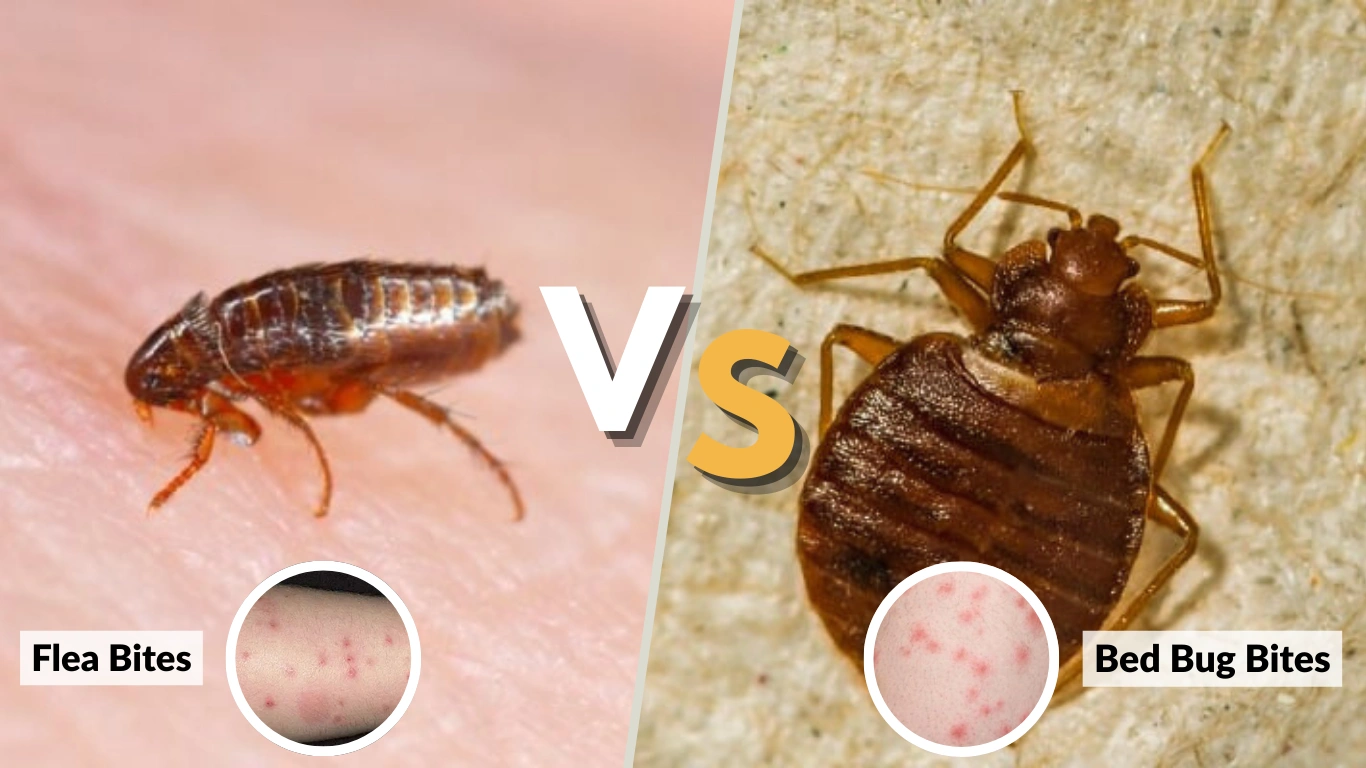
Flea bites and bed bug bites are two of the most common skin irritations caused by household pests. Since both insects feed on human blood, their bites look similar at first glance—red, itchy bumps that can easily be mistaken for each other. However, their bite patterns, locations, and healing time differ significantly. Understanding these differences helps in identifying the source of infestation and choosing the right treatment.
Overview of Flea and Bed Bug Bites
Fleas are tiny, jumping insects that typically live on pets, carpets, and upholstery. They thrive in warm, humid environments and quickly spread indoors. Bed bugs, on the other hand, are flat, oval insects that hide in mattresses, bed frames, and furniture. They usually come out at night to feed while humans sleep.
Both flea and bed bug bites cause discomfort, but the insects’ habits and the bite symptoms they leave behind make them distinguishable if observed carefully.
Symptoms of Flea Bites vs Bed Bug Bites

While both bites lead to itching and irritation, flea bites tend to be more immediately noticeable and painful. Bed bug bites often take longer to appear but may cause swelling and redness that lasts longer. The location of the bites also provides important clues: fleas usually bite the lower body, while bed bugs prefer exposed skin such as arms, neck, and face.
Comparison Between Flea Bites and Bed Bug Bites
| Feature | Flea Bites | Bed Bug Bites |
| Appearance | Small red bumps, often with halo | Red welts, sometimes in clusters/lines |
| Itch Level | Intense itching, may burn or sting | Moderate itching, delayed reaction |
| Location | Ankles, legs, waist, armpits | Exposed skin: arms, face, neck, back |
| Onset | Immediate itching after bite | May appear hours later |
| Duration | 2–3 days (longer if scratched) | 1–2 weeks without scratching |
Visual Differences in Bite Patterns
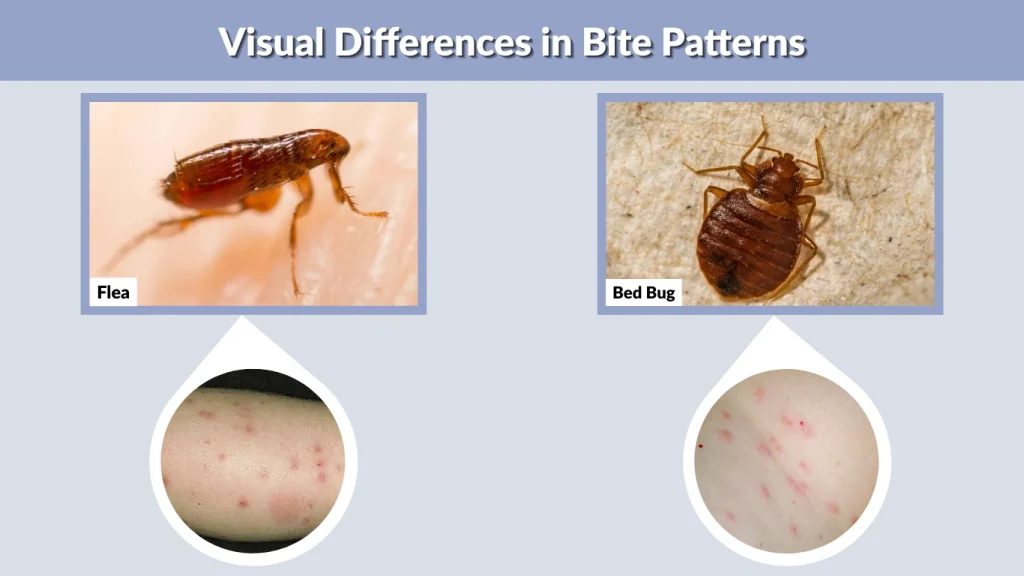
A major distinction lies in the bite formation. Flea bites are often clustered randomly in small groups, especially near socks, waistlines, or areas where clothing is tight. Bed bug bites, however, appear in straight lines or zig-zag patterns, typically on skin exposed during sleep.
Flea bites may also develop a reddish halo around the bump, while bed bug bites usually appear as raised welts that can swell when scratched. This difference in patterns and distribution is one of the easiest ways to tell them apart.
Visual Bite Pattern Differences
| Insect | Bite Pattern | Typical Photos Show |
| Flea | Random clusters, mostly lower body | Small scattered bumps with halos |
| Bed Bug | Linear or zig-zag rows on exposed areas | Larger welts in lines or groups |
Identifying the Source of Infestation
Correctly identifying whether you are dealing with fleas or bed bugs depends not only on the bites but also on the home environment. Fleas are strongly associated with pets. If you have cats or dogs scratching excessively, finding flea dirt (tiny black specks) in their fur or around carpets is a telltale sign.
Bed bugs leave behind different evidence: rusty or dark stains on mattresses, tiny white eggs, and shed skins in furniture crevices. Unlike fleas, bed bugs are not usually linked to pets but spread through luggage, second-hand furniture, or close living conditions.
Treatment and Relief

Both flea and bed bug bites cause itching, irritation, and sometimes allergic reactions. While most bites heal without medical treatment, managing the symptoms helps prevent infection from scratching.
- Flea Bite Treatment
Clean the area with soap and water, then apply an antiseptic cream. Cold compresses and calamine lotion help soothe itching. Oral antihistamines may be used for allergic reactions. - Bed Bug Bite Treatment
Wash bites gently and apply a mild corticosteroid or antihistamine cream. Since bed bug bites can linger for up to two weeks, consistent care reduces discomfort. If swelling or infection develops, seek medical advice.
Prevention and Pest Control
Treating bites alone is not enough—eliminating the source of infestation is essential. Fleas and bed bugs require different control methods.
- Preventing Fleas
Regularly treat pets with veterinarian-approved flea medication. Vacuum carpets, wash bedding in hot water, and use flea sprays or powders in heavily infested areas. - Preventing Bed Bugs
Wash and dry bedding at high heat, use mattress encasements, and reduce clutter around beds. Bed bug infestations usually require professional extermination with heat treatments or insecticides, as they are difficult to eliminate on your own.
FAQs
What is the main difference between flea and bed bug bites?
Flea bites are small, itchy red bumps that usually cluster on the lower body. Bed bug bites form red welts often arranged in a straight line or zig-zag on exposed skin such as arms, neck, and face.
Do flea bites or bed bug bites itch more?
Flea bites usually cause more intense, immediate itching and may burn slightly. Bed bug bites tend to itch moderately, with irritation often appearing several hours after the bite.
How long do flea and bed bug bites last?
Flea bites typically fade within 2–3 days, especially with proper care. Bed bug bites can last up to two weeks, depending on the person’s skin sensitivity and scratching.
Can flea bites and bed bug bites spread disease?
Fleas can transmit diseases like typhus and tapeworms. Bed bugs do not spread diseases, but scratching their bites can cause secondary skin infections.
How do I know if my home has fleas or bed bugs?
Look for signs: fleas leave flea dirt on pets and carpets, while bed bugs leave dark stains on mattresses and furniture. Pets scratching heavily usually signal fleas, while unexplained welts at night may point to bed bugs.
Final Thoughts
Flea bites and bed bug bites may look similar, but their appearance, location, and source of infestation make them distinguishable. Fleas tend to attack lower body areas and are linked to pets, while bed bugs bite exposed skin during sleep and hide in furniture. Correctly identifying the pest is essential for effective treatment and long-term prevention.
