
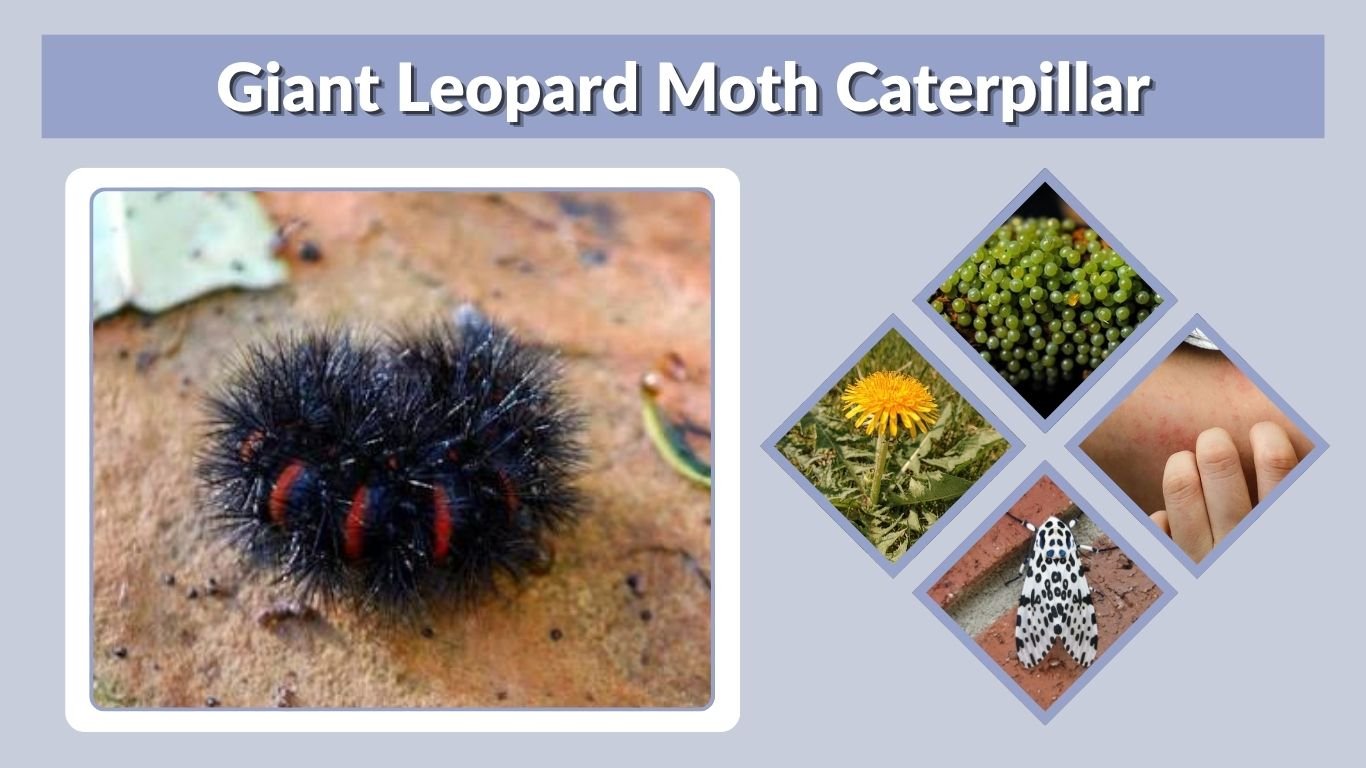
The giant leopard moth caterpillar is a black fuzzy caterpillar that later becomes the beautiful giant leopard moth, Hypercompe scribonia. It is also called the great leopard moth caterpillar or a type of woolly bear. This caterpillar often surprises people because it looks like a dangerous black hairy larva, but it is not considered venomous or truly stinging. When it curls into a ball, bright red or orange bands show between its body segments, making it one of the easiest black caterpillars to recognize.
What Is a Giant Leopard Moth Caterpillar?
The giant leopard moth caterpillar is the larval stage of the giant leopard moth. The adult moth is white with black ring-like spots and has a metallic blue abdomen with orange markings. Texas A&M describes the adult as having about a 3-inch wingspan, while the caterpillars are fuzzy black with red to orange body color underneath.
This caterpillar belongs to the tiger moth group. It is often seen crawling across sidewalks, roads, lawns, and gardens, especially in fall when it searches for a sheltered place to overwinter.
Giant Leopard Moth Caterpillar Identification
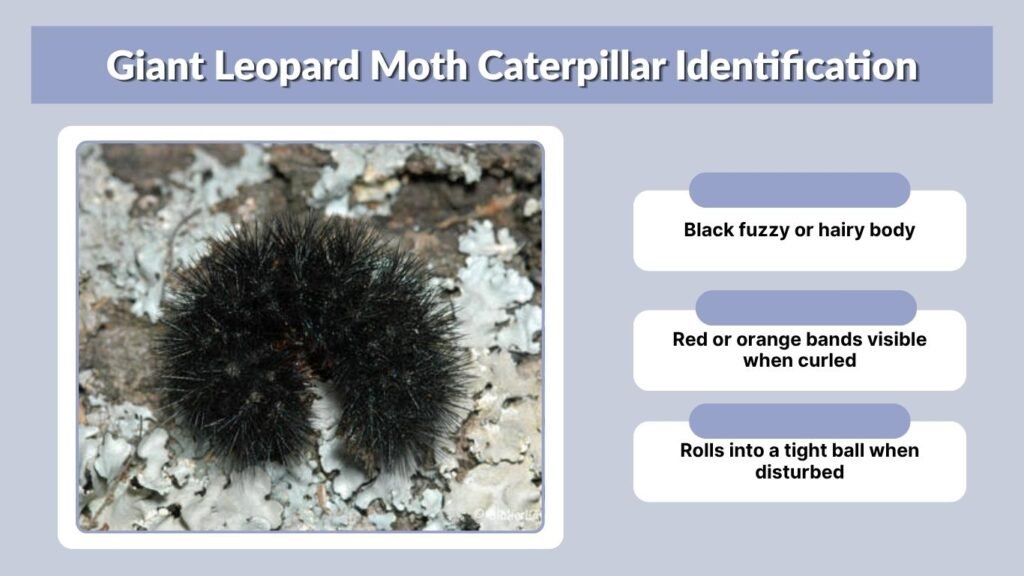
The caterpillar is usually black and covered with stiff-looking hairs. The most important identification clue appears when it curls up. Unlike some black woolly bears, the giant leopard moth caterpillar shows red, orange, or reddish bands between the body segments.
Identification Features
- Black fuzzy or hairy body
- Red or orange bands visible when curled
- Rolls into a tight ball when disturbed
- No obvious tail horn
- Often seen walking on the ground in fall
- Adult moth is white with black leopard-like spots
- Larger and more dramatic than many common woolly bears
| Feature | Giant Leopard Moth Caterpillar |
| Scientific name | Hypercompe scribonia |
| Adult form | Giant leopard moth |
| Body color | Black with hidden red/orange bands |
| Texture | Hairy or woolly |
| Defense behavior | Curls into a ball |
| Sting risk | Not a true stinging caterpillar |
Is the Giant Leopard Moth Caterpillar Poisonous?
The giant leopard moth caterpillar is not considered poisonous or venomous to people. It does not have the painful venomous spines found on flannel moth caterpillars or buck moth caterpillars.
However, “safe” does not mean you should handle it roughly. The stiff hairs may bother sensitive skin, especially in people who react to caterpillar hairs. If you want to move one, use a leaf, paper, or gloves.
Safety Notes
- It does not sting like a puss caterpillar.
- It does not inject venom.
- It is not considered dangerous to humans.
- Hairs may irritate sensitive skin.
- Children should observe it gently.
- Pets should not be encouraged to eat it.
Does the Giant Leopard Moth Caterpillar Sting or Bite?
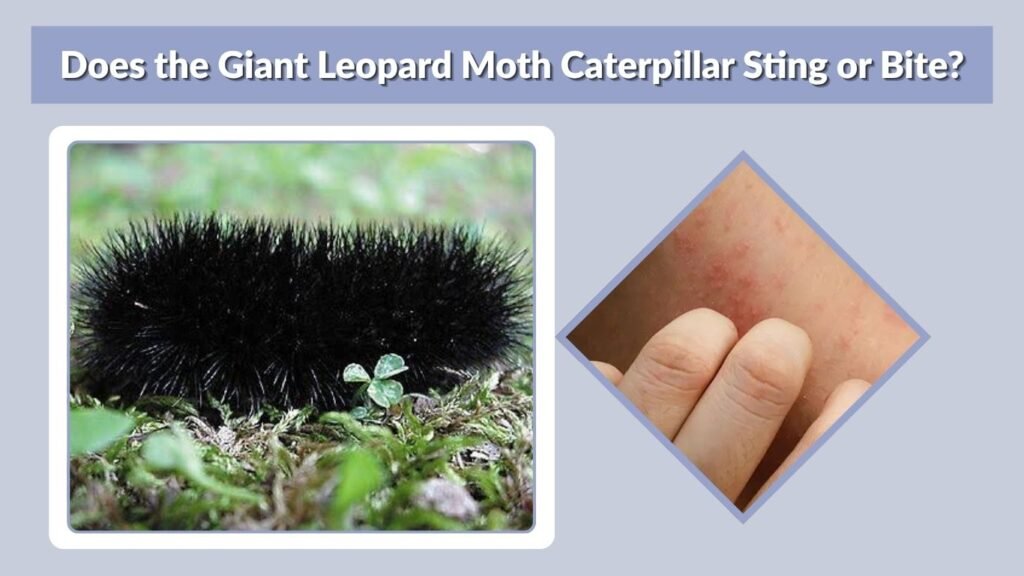
The giant leopard moth caterpillar does not truly sting. It also does not bite people in a harmful way. The defensive behavior is curling into a ball and showing the red or orange warning colors between its segments.
If your skin feels itchy after contact, it is more likely from irritation by the hairs, not a venomous sting. Wash the area with soap and water and avoid rubbing your eyes after handling any caterpillar.
Is the Giant Leopard Moth Caterpillar Dangerous to Dogs or Cats?
The giant leopard moth caterpillar is not known as a highly poisonous caterpillar for dogs or cats. Still, pets should not be allowed to chew or eat caterpillars. The hairs may irritate the mouth, and some pets may vomit after eating insects.
If a dog or cat drools, paws at the mouth, vomits repeatedly, or acts distressed after eating a caterpillar, contact a veterinarian.
Giant Leopard Moth Caterpillar Diet
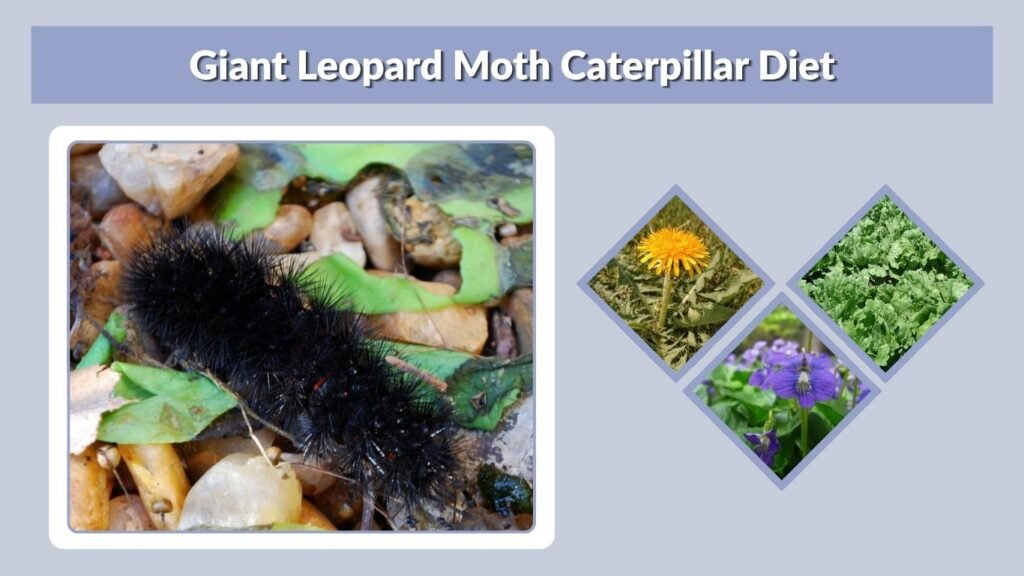
The giant leopard moth caterpillar is a generalist feeder, meaning it can eat many kinds of plants. It commonly feeds on low-growing weeds, broadleaf plants, and garden plants.
Reported food plants include plantain, dandelion, violets, cabbage, lettuce, willow, maple, sunflower, citrus, mulberry, basil, honeysuckle, and many others.
Common Food Plants
- Dandelion
- Plantain
- Violet
- Lettuce
- Cabbage
- Sunflower
- Willow
- Maple
- Mulberry
- Honeysuckle
- Citrus
- Basil
- Magnolia
- Lilac
Because it eats many plants, it is often found in gardens, lawns, fields, roadsides, and weedy areas.
What Does a Giant Leopard Moth Caterpillar Eat in the Wild?
In the wild, it usually feeds at night on leaves of weeds, herbs, shrubs, and some trees. During the day, it may hide under leaves, bark, logs, or garden debris. UF/IFAS notes that giant leopard moth caterpillars are mostly nocturnal and are often seen crossing roads in fall while looking for overwintering sites.
This is why many people find them wandering instead of actually feeding on a plant.
Giant Leopard Moth Caterpillar Host Plants
Since this caterpillar can feed on many plants, it does not rely on one exact host plant like monarch caterpillars rely on milkweed. The best “host plant” is often the plant it was already eating when you found it.
If you are raising one temporarily, collect leaves from the same plant or area where the caterpillar was found. Do not suddenly switch it to random leaves if it refuses to eat.
Giant Leopard Moth Caterpillar vs Woolly Bear
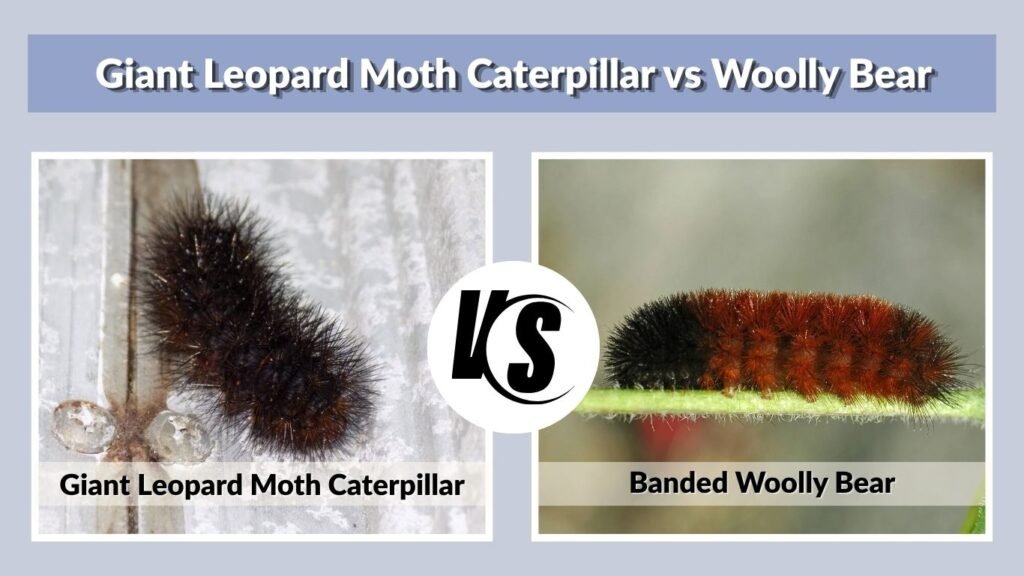
The giant leopard moth caterpillar is a type of woolly bear, but it is not the same as the banded woolly bear that becomes the Isabella tiger moth.
| Feature | Giant Leopard Moth Caterpillar | Banded Woolly Bear |
| Main color | Black | Black ends with brown middle |
| Hidden color | Red/orange bands when curled | Brown band visible normally |
| Adult moth | White with black spots | Yellow-orange Isabella tiger moth |
| Defense | Curls into a ball | Curls into a ball |
| Sting? | No true sting | No true sting |
The easiest difference is the red or orange bands on the giant leopard moth caterpillar when it curls up.
Giant Leopard Moth Caterpillar Life Cycle
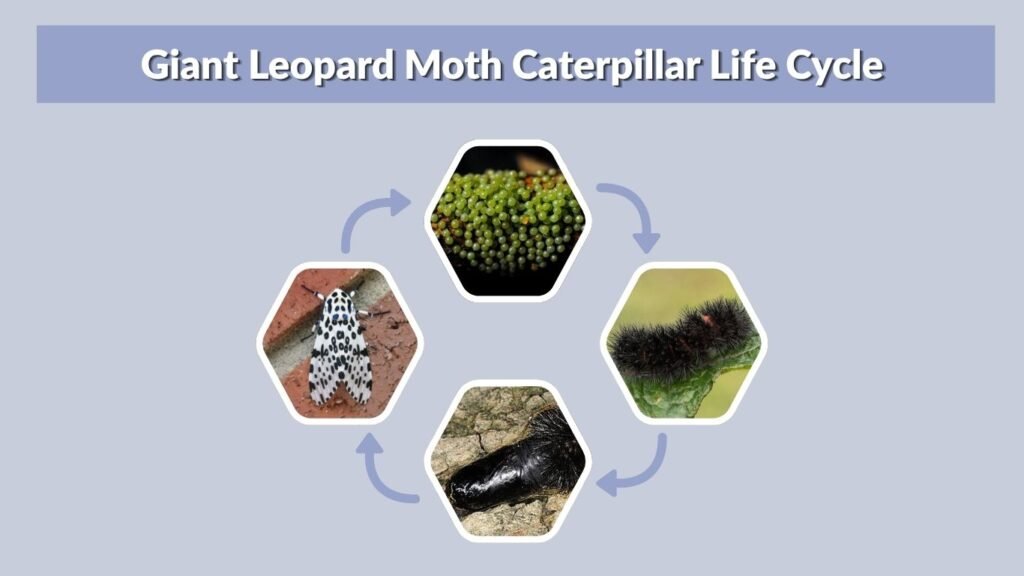
The giant leopard moth has a complete life cycle: egg, caterpillar, pupa, and adult moth. The caterpillar stage is the one people notice most often.
| Life Stage | What Happens |
| Egg | Female moth lays eggs on host plants |
| Caterpillar | Black woolly larva feeds and grows |
| Winter stage | Caterpillar overwinters in shelter |
| Cocoon/Pupa | Caterpillar pupates before becoming a moth |
| Adult moth | White spotted moth emerges and mates |
Hibernation and Winter
The giant leopard moth overwinters as a caterpillar. It may shelter under leaves, bark, wood piles, or other protected places. UF/IFAS notes that people often find them under leaves or in wood piles during spring and fall.
If you find one in winter, it may look inactive or “not moving.” That does not always mean it is dead. It may simply be cold and dormant.
Giant Leopard Moth Caterpillar Cocoon
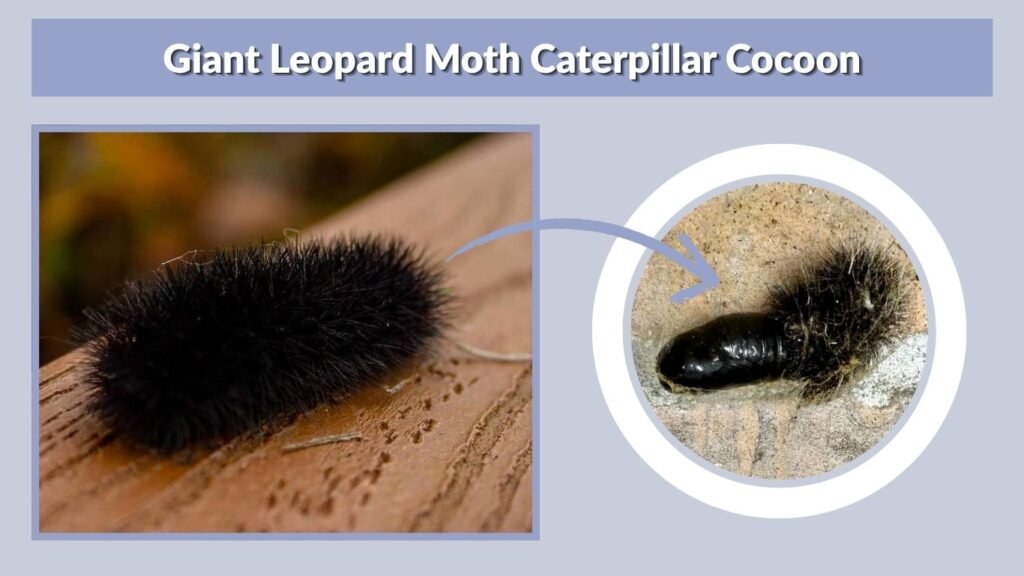
When ready to transform, the caterpillar forms a cocoon and pupates. Like many tiger moth caterpillars, it may use silk and some body hairs in the cocoon. After pupation, the adult giant leopard moth emerges.
The adult moth is striking: white wings with black spots and a colorful blue-and-orange abdomen. It is harmless and active mainly at night.
Giant Leopard Moth Caterpillar Size
Giant leopard moth caterpillars can grow fairly large compared with many common woolly bears. Texas A&M states that the caterpillars grow to about 2 inches long. Some sources describe larger individuals, but size depends on age, food, and development stage.
Giant Leopard Moth Caterpillar Care
It is best to leave wild caterpillars outside, but short-term observation is possible. Keep the setup simple and close to nature.
Basic Care Tips
- Use a ventilated container.
- Add leaves from the plant where you found it.
- Replace wilted food daily.
- Include dry leaves or bark for hiding.
- Keep the container out of direct sun.
- Avoid overhandling.
- If found in fall, keep it cool so winter dormancy is not disrupted.
- Release it near the original area when possible.
Do not keep it in a warm indoor room all winter unless you are prepared for it to pupate or emerge at the wrong time.
Giant Leopard Moth Caterpillar in Florida, Ohio, and California
The giant leopard moth is found across much of eastern and southern North America. It occurs from southern Ontario through the eastern and southern United States and farther south into Mexico and Colombia.
It is commonly reported in places such as Florida and Ohio. In California, sightings may involve confusion with other woolly bear or tiger moth caterpillars, so careful identification is important.
Giant Leopard Moth vs Giant Silk Moth Caterpillars
Many people confuse “giant leopard moth caterpillar” with “giant silk moth caterpillar.” They are different groups.
Giant silk moth caterpillars include luna moths, cecropia moths, imperial moths, atlas moths, and polyphemus moths. Many of those larvae are large and green, while giant leopard moth caterpillars are black and fuzzy with red or orange bands when curled.
FAQs
Is the giant leopard moth caterpillar poisonous?
No, the giant leopard moth caterpillar is not considered poisonous or venomous to humans. It does not have true stinging spines. However, its hairs may irritate sensitive skin, so it is best to avoid rough handling.
Can you touch a giant leopard moth caterpillar?
You can usually move it gently with a leaf or paper, but bare-hand handling is not recommended. Even non-venomous hairy caterpillars can irritate sensitive skin. If you touch one, wash your hands afterward.
What does a giant leopard moth caterpillar eat?
It eats many broadleaf plants, including dandelion, plantain, violets, lettuce, cabbage, sunflower, willow, maple, mulberry, honeysuckle, citrus, basil, and other garden or wild plants. It is a generalist feeder.
Does the giant leopard moth caterpillar sting?
No, it does not truly sting. It lacks the painful venomous spines found on flannel moth or buck moth caterpillars. Its hairs may feel prickly, but the main defense is curling into a ball and showing red-orange bands.
What does the giant leopard moth caterpillar turn into?
It turns into the giant leopard moth, a beautiful white moth with black spots and a metallic blue abdomen with orange markings. The adult moth is nocturnal and harmless.
