
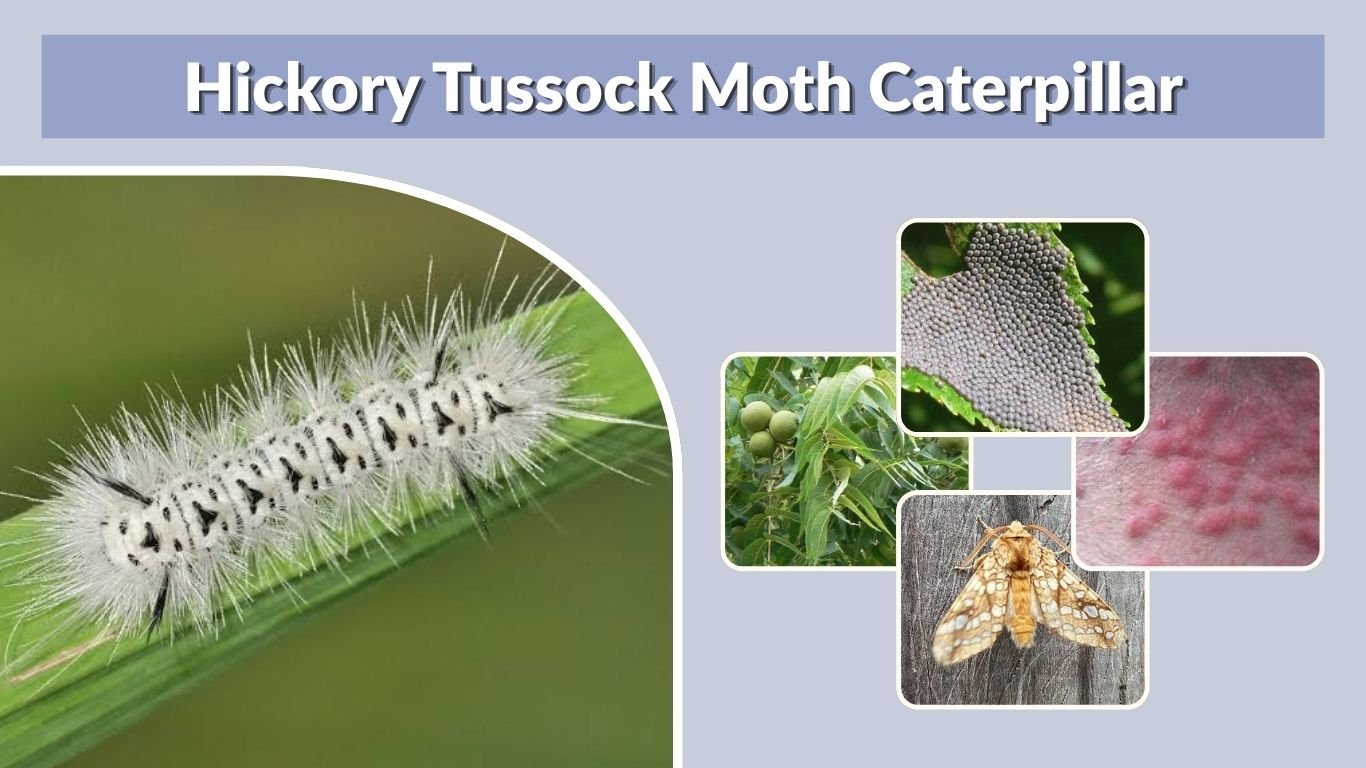
The hickory tussock moth caterpillar is a white, fuzzy caterpillar with black markings and long hair tufts. It is the larval stage of the hickory tussock moth, Lophocampa caryae, also called the hickory tiger moth. Although it looks soft, this caterpillar should not be handled with bare hands. Its hairs can cause itchy rashes, skin irritation, and allergic reactions in some people. It commonly feeds on hickory, walnut, pecan, oak, ash, elm, willow, maple, and related trees.
What Is a Hickory Tussock Moth Caterpillar?
The hickory tussock moth caterpillar is a hairy caterpillar found in the eastern half of North America. It belongs to the tiger moth group and is best known for its white body, black tufts, and irritating hairs.
It is not a butterfly caterpillar. It becomes a moth, usually called the hickory tussock moth or hickory tiger moth. The adult moth is less noticeable than the caterpillar and is not the main safety concern.
Hickory Tussock Moth Caterpillar Identification
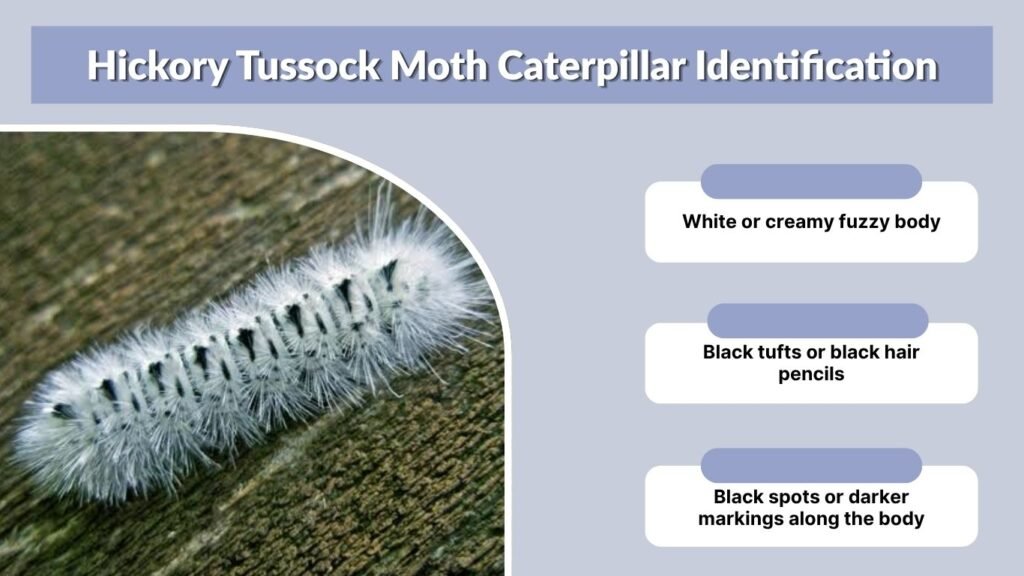
This caterpillar is usually white or whitish with black markings. Many have black hair pencils or longer black tufts near the front and back. The exact pattern can vary, so use several features together for identification.
Identification Features
- White or creamy fuzzy body
- Black tufts or black hair pencils
- Black spots or darker markings along the body
- Long hairs sticking out from the sides
- Often found on tree leaves or crawling on the ground
- May curl or drop when disturbed
- Usually appears in late summer or fall
| Feature | Hickory Tussock Moth Caterpillar |
| Scientific name | Lophocampa caryae |
| Other name | Hickory tiger moth caterpillar |
| Main color | White with black markings |
| Main concern | Irritating hairs and rash |
| Adult form | Hickory tussock moth |
| Safe to touch? | No, avoid bare-hand handling |
Is the Hickory Tussock Moth Caterpillar Poisonous?
The hickory tussock moth caterpillar is often called poisonous, but the main problem is its irritating hairs. Penn State Extension explains that exposure to the caterpillar’s hairs generally causes a localized rash and itching.
It does not sting like a flannel moth caterpillar or inject venom with large spines. However, the hairs can break off in the skin and cause irritation. Some people may react more strongly than others.
Safety Notes
- Do not handle it with bare hands.
- The hairs may cause itchy rash.
- Sensitive people may have stronger reactions.
- Keep children from touching it.
- Keep pets from chewing or eating it.
- Wash exposed skin after contact.
Hickory Tussock Moth Caterpillar Sting or Bite
People often search for “hickory tussock moth caterpillar sting” or “bite,” but this caterpillar does not truly bite or sting like a wasp. The reaction usually comes from contact with irritating hairs.
The hairs can stick into the skin and cause itching, redness, or a rash. This can feel like a mild sting, but it is different from venom injection by flannel moth caterpillars.
Hickory Tussock Moth Caterpillar Rash
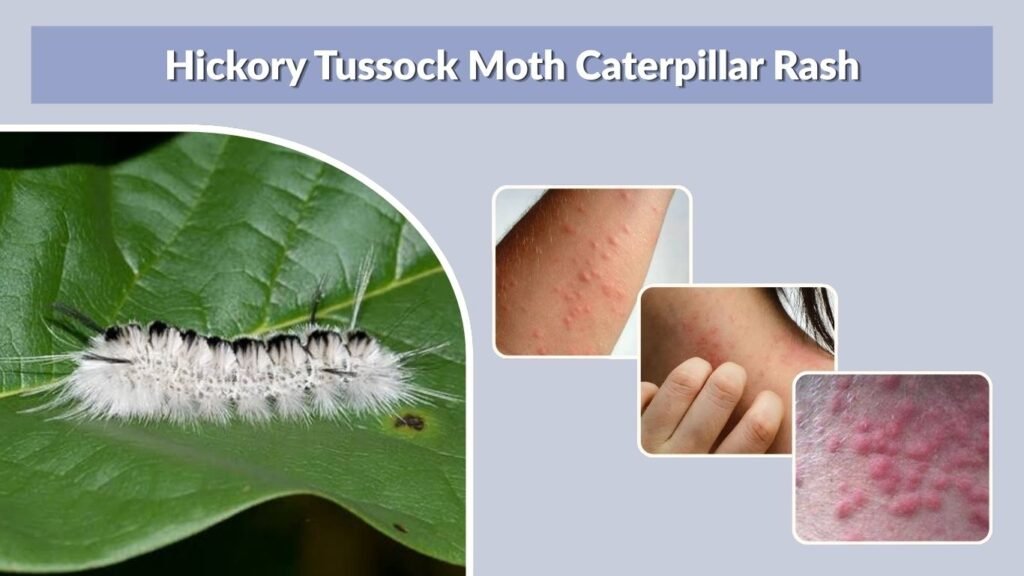
A rash from hickory tussock moth caterpillar contact may appear after touching the caterpillar or after hairs get on skin, clothing, or surfaces. University of Maine Extension notes that hairs from many tussock caterpillars can cause an itchy rash.
Rash Symptoms
- Itching
- Red bumps
- Mild swelling
- Burning or prickly feeling
- Irritated patches of skin
- Rash where the caterpillar touched
- Stronger reaction in sensitive people
The rash is usually localized, but severe allergic symptoms should be taken seriously.
Hickory Tussock Moth Caterpillar Rash Treatment
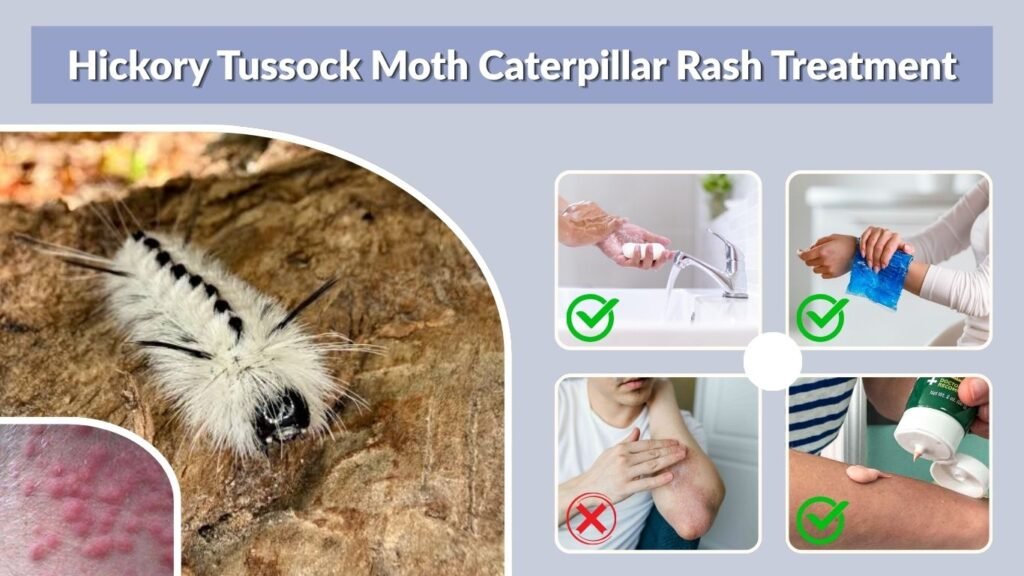
Most mild reactions can be managed by removing hairs and calming the skin. Cleveland Clinic advises washing the area, using tape to remove leftover hairs, applying ice, and using treatments such as calamine lotion, baking soda paste, hydrocortisone cream, or oral antihistamines if symptoms worsen.
Basic Treatment Steps
- Do not scratch the rash.
- Wash the area with soap and cool water.
- Use tape gently to lift off hairs.
- Apply a cold compress or ice pack.
- Use calamine lotion or hydrocortisone cream for itching.
- Wash clothing that may contain hairs.
- Get medical help for eye exposure, breathing symptoms, swelling of the face, or severe reaction.
This is general first-aid information, not a medical diagnosis.
Hickory Tussock Moth Caterpillar and Dogs
The caterpillar is not a good snack for dogs or cats. Pets may get irritating hairs in the mouth or carry hairs on their fur. If a dog eats one, it may drool, paw at the mouth, vomit, or act uncomfortable.
Pet Safety Tips
- Keep pets away from fuzzy white caterpillars.
- Wipe paws and fur after walks in infested areas.
- Do not let dogs chew caterpillars.
- Wash pet bedding if hairs may be present.
- Call a vet if your pet shows strong mouth irritation, vomiting, or distress.
What Does a Hickory Tussock Moth Caterpillar Eat?
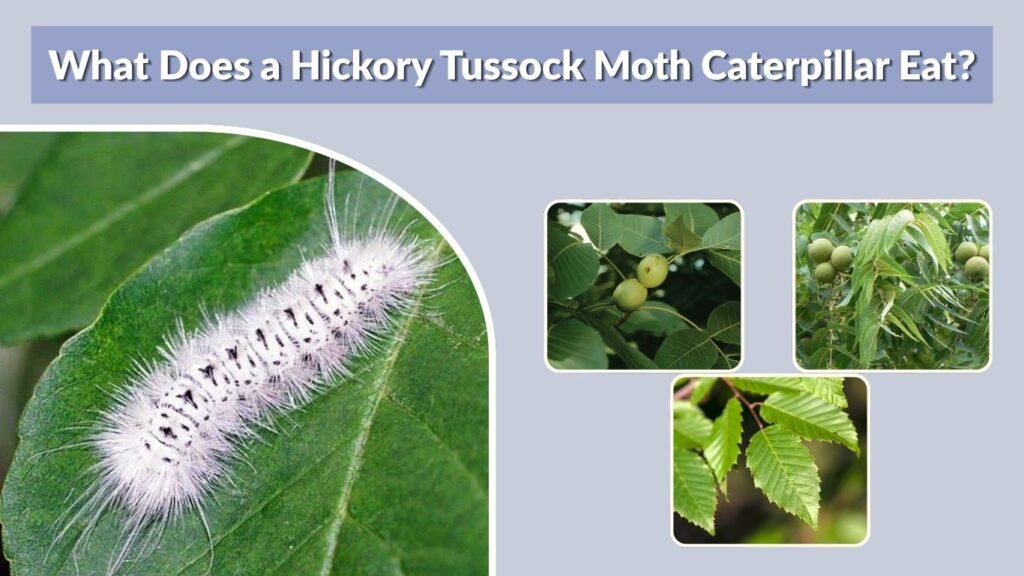
The hickory tussock moth caterpillar feeds on leaves of hardwood trees. Preferred hosts include hickory, walnut, pecan, and American hornbeam. Other reported hosts include ash, elm, oak, willow, and maple.
Common Food Plants
- Hickory
- Walnut
- Pecan
- American hornbeam
- Ash
- Elm
- Oak
- Willow
- Maple
It may feed in small groups when young and spread out more as it grows. In most yards, small numbers do not cause serious tree damage.
Where Do Hickory Tussock Moth Caterpillars Live?
The hickory tussock moth is widely distributed in the eastern half of North America. It is commonly reported in places such as Maine, Ontario, New York, Ohio, Michigan, New Hampshire, and other eastern or northeastern areas.
It is usually found where host trees grow, especially wooded areas, yards, parks, and forest edges.
Common Habitats
- Deciduous forests
- Yards with hardwood trees
- Parks
- Woodland edges
- Orchards
- Tree-lined streets
- Areas with hickory, walnut, oak, maple, or willow
Hickory Tussock Moth Caterpillar Life Cycle
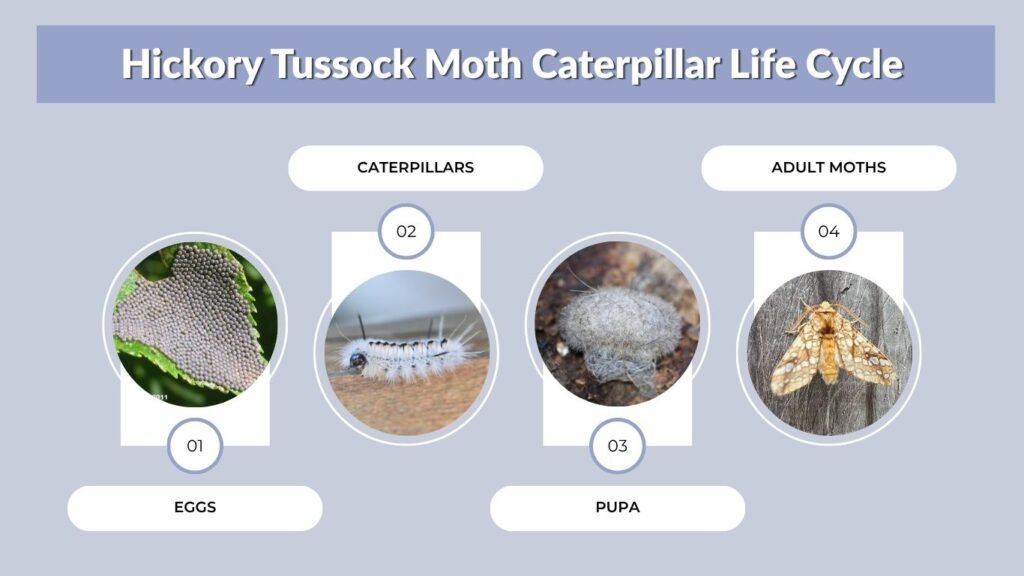
The hickory tussock moth has a complete life cycle: egg, caterpillar, cocoon, pupa, and adult moth. The caterpillar stage is the stage people most often notice.
| Life Stage | What Happens |
| Egg | Female moth lays eggs on host trees |
| Caterpillar | Larva feeds on leaves and grows |
| Cocoon | Mature caterpillar spins a protective cocoon |
| Pupa | It changes inside the cocoon |
| Adult moth | Moth emerges, mates, and lays eggs |
Cocoon Stage
When mature, the caterpillar makes a cocoon in a protected place. Like many hairy caterpillars, it may include some body hairs in the cocoon. Avoid touching cocoons bare-handed because irritating hairs may still be present.
What Does a Hickory Tussock Moth Caterpillar Turn Into?
It turns into the hickory tussock moth, also called the hickory tiger moth. The adult moth is not as commonly noticed as the caterpillar. It is usually light-colored with patterned wings and belongs to the tiger moth group.
This caterpillar does not turn into a butterfly and is not the same as the hickory horned devil.
Hickory Tussock Moth Caterpillar vs Hickory Horned Devil
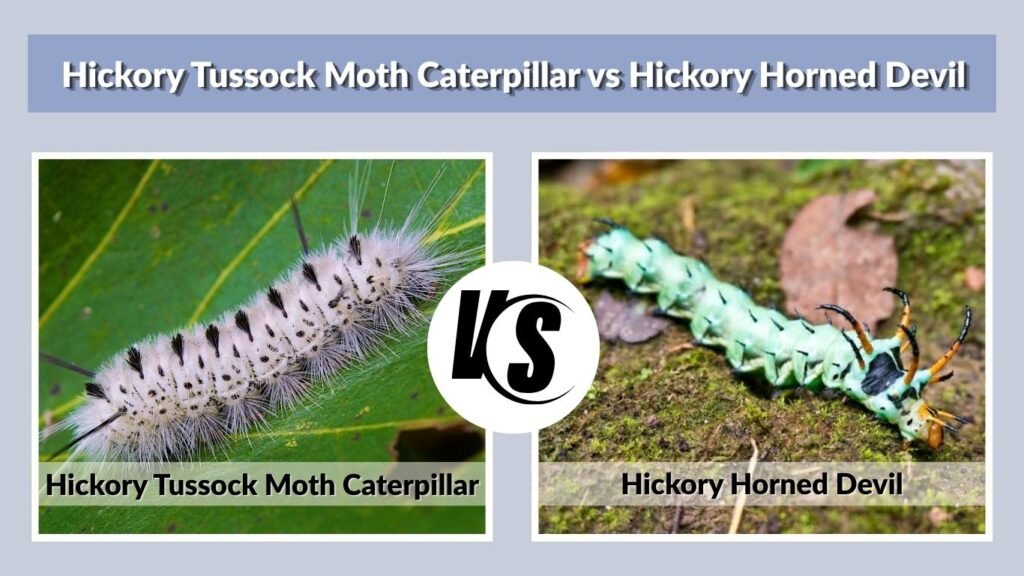
The hickory tussock moth caterpillar is often confused with the hickory horned devil, but they are completely different caterpillars.
| Feature | Hickory Tussock Moth Caterpillar | Hickory Horned Devil |
| Adult form | Hickory tussock moth | Regal moth |
| Body | White and fuzzy with black tufts | Large green body with orange horns |
| Main concern | Irritating hairs and rash | Looks scary but usually harmless |
| Family | Tiger moth group | Giant silk moth group |
| Texture | Hairy | Smooth/spiny-looking |
Is the Hickory Tussock Moth Caterpillar Invasive?
The hickory tussock moth caterpillar is native to North America and is not usually considered invasive in its normal range. It may become locally noticeable in some years, but it is part of the natural ecosystem.
It provides food for some predators and parasitoids, though many birds avoid hairy caterpillars because the hairs can be irritating or distasteful.
Hickory Tussock Moth Caterpillar Control
Control is usually not needed unless many caterpillars are causing noticeable tree damage or creating a contact risk around homes, schools, or walkways.
Control Tips
- Do not touch caterpillars bare-handed.
- Wear gloves and long sleeves.
- Move single caterpillars with paper, cardboard, or a stick.
- Remove them from high-contact areas.
- Avoid unnecessary pesticide spraying.
- Wash hands, tools, and clothing after contact.
- Contact a local extension office for heavy outbreaks.
Spiritual Meaning of Hickory Tussock Moth Caterpillar
Some people connect white caterpillars with change, patience, transformation, or warning. Scientifically, the hickory tussock moth caterpillar is simply the larval stage of a moth. Its strongest “message” in a practical sense is to observe nature carefully and avoid touching unknown fuzzy caterpillars.
FAQs
Is the hickory tussock moth caterpillar poisonous?
It is often called poisonous, but the main issue is its irritating hairs. These hairs can cause itching, redness, and rash in some people. It is best not to touch the caterpillar with bare hands.
Can you touch a hickory tussock moth caterpillar?
No, you should avoid touching it. The hairs can break off and irritate skin. If you need to move one, use gloves, paper, cardboard, or a stick, then wash your hands and any exposed skin.
What does a hickory tussock moth caterpillar eat?
It eats leaves from hardwood trees, especially hickory, walnut, pecan, and American hornbeam. It may also feed on ash, elm, oak, willow, and maple. Small numbers usually do not cause serious tree damage.
How long does hickory tussock moth caterpillar rash last?
A mild rash may improve within a few days, but duration varies by person and exposure level. Wash the area, remove hairs with tape, and use cold compresses or anti-itch treatments. Seek medical advice for severe or spreading symptoms.
What does a hickory tussock moth caterpillar turn into?
It turns into the hickory tussock moth, also called the hickory tiger moth. It does not become a butterfly. The adult moth is part of the tiger moth group and is usually less noticeable than the caterpillar.
