

When it comes to colorful and eye-catching insects, the Garden Tiger Moth (Arctia caja) stands out as one of the most beautiful moths in the world. Known for its bright, bold patterns and striking caterpillar form, this species is admired by naturalists, gardeners, and even artists. However, it is not just its looks that make it fascinating. The Garden Tiger Moth has an intriguing life cycle, unique defense mechanisms, and an important role in maintaining ecological balance.
For centuries, these moths have been part of folklore and nature studies in Europe and North America. Today, they are not as common as they once were, which makes spotting one a special experience. Let’s explore everything about this moth, from its caterpillar stage to its adult life.
Scientific Classification and Name
The Garden Tiger Moth belongs to the family Erebidae, within the subfamily Arctiinae (commonly called tiger moths). Its scientific name is Arctia caja, and it is closely related to other colorful tiger moths such as the Scarlet Tiger Moth (Callimorpha dominula) and the Jersey Tiger Moth (Euplagia quadripunctaria).
The genus name Arctia is derived from the Greek word arktos, meaning “bear,” which refers to the hairy appearance of its caterpillars, often nicknamed “woolly bears.” The species name caja has uncertain origins but has been linked to old Latin texts describing spotted animals.
Physical Appearance
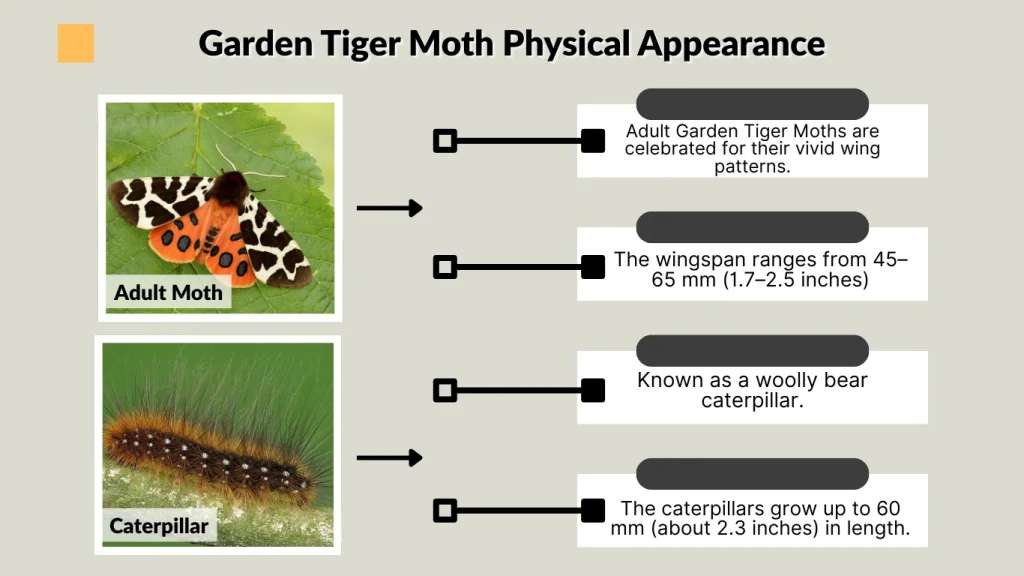
Adult Moth
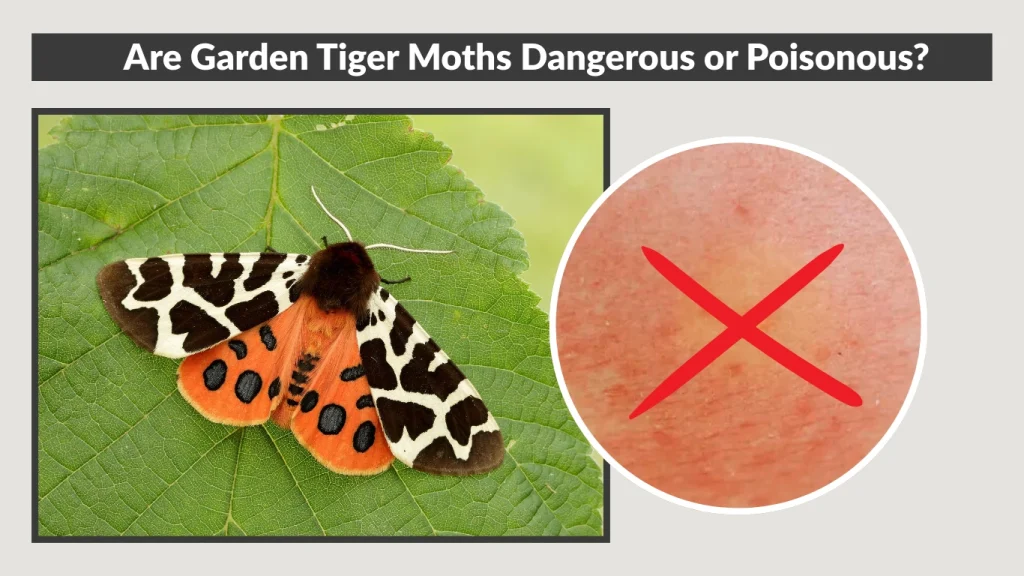
Adult Garden Tiger Moths are celebrated for their vivid wing patterns. The forewings are a deep brown with bold cream-colored patches, while the hindwings are a brilliant orange or red with striking black or blue spots. This bold coloration is not just for beauty — it acts as a warning signal (aposematism) to predators that the moth is toxic or unpalatable.
The wingspan ranges from 45–65 mm (1.7–2.5 inches), making it a medium-to-large moth. When resting, the moth often folds its forewings over the bright hindwings, hiding its colors. If threatened, it suddenly flashes the orange hindwings to startle predators.
Caterpillar (Woolly Bear)
The Garden Tiger Moth caterpillar is one of the most recognizable in Europe and the UK. Known as a woolly bear caterpillar, it is covered with dense bristly hairs, usually a mix of brown, orange, and black. These hairs serve as both insulation and protection. When disturbed, the caterpillar curls into a tight ball, exposing only its spiky coat to predators.
The caterpillars grow up to 60 mm (about 2.3 inches) in length. Their bristles can cause mild skin irritation in humans, which is why they are often described as “irritating” or “slightly dangerous.”
Habitat and Distribution
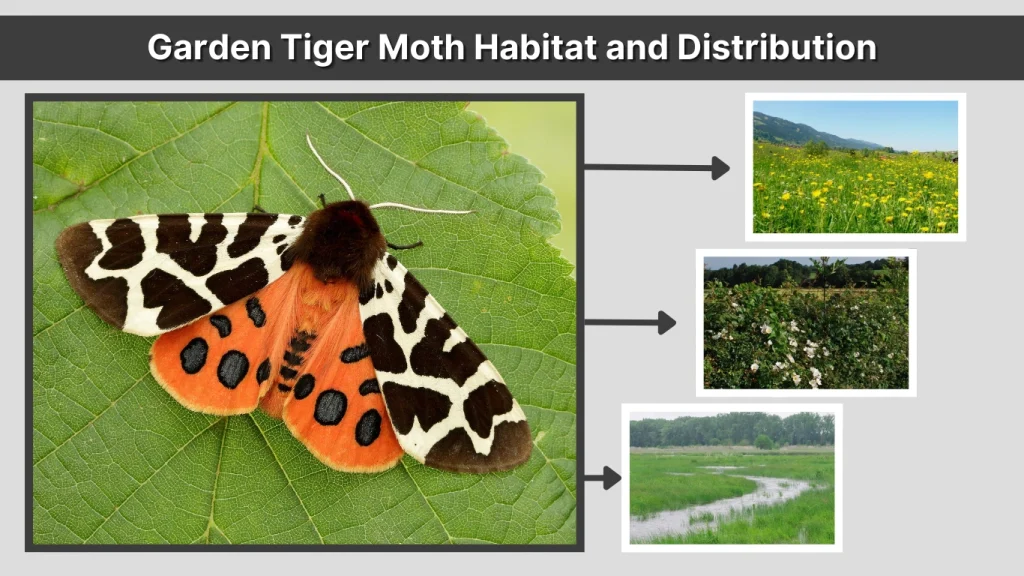
The Garden Tiger Moth is found in Europe, North America, and parts of Asia. In the UK, it has long been considered a common garden visitor, though populations have declined in recent decades.
Preferred habitats include:
- Meadows and grasslands
- Gardens and hedgerows
- Wetlands and marshy areas
- Woodland edges
Adults are most active in July and August, flying mainly at night and often attracted to artificial lights. Caterpillars are more visible in spring and autumn, crawling across paths and fields in search of food plants.
Garden Tiger Moth Caterpillar
Identification
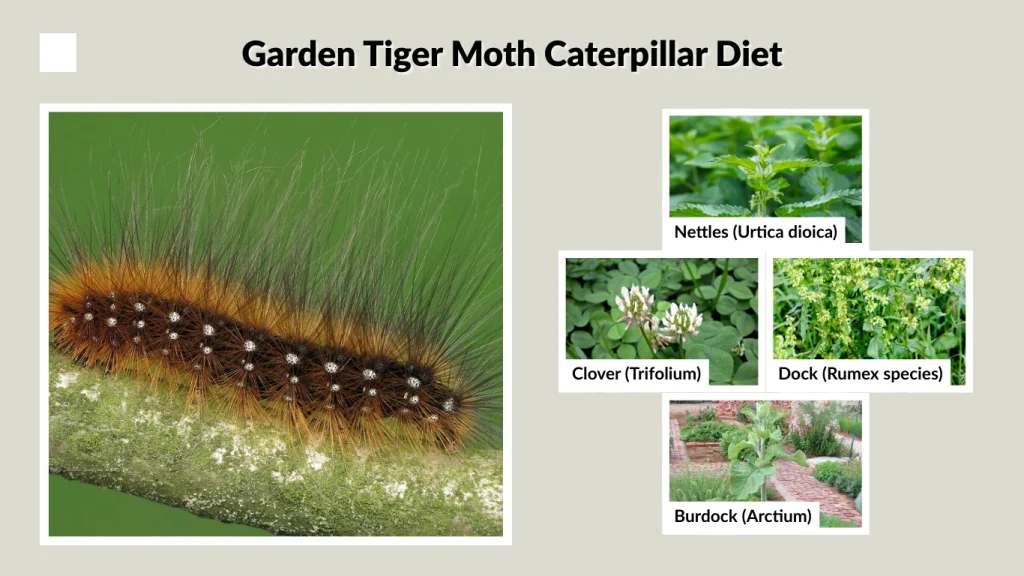
The woolly bear caterpillar is instantly recognizable because of its dense, spiny coat. It has alternating bands of orange-brown and black hairs, giving it a bristly, fiery appearance. When threatened, it rolls into a defensive ball, much like a hedgehog, making it difficult for predators to bite or swallow.
Caterpillar Food and Diet
Garden Tiger Moth caterpillars are generalist feeders, meaning they eat a wide range of plants. Some of their favorites include:
- Nettles (Urtica dioica)
- Dock (Rumex species)
- Burdock (Arctium)
- Clover (Trifolium)
- Plantains (Plantago)
This wide diet helps them survive in many habitats. Unlike some caterpillars that specialize in one plant, the woolly bear’s adaptability makes it more resilient.
Caterpillar in the UK
In the UK, the woolly bear caterpillar is a familiar sight, often spotted crossing paths or roads during spring and autumn. Many people recognize them from childhood, as they frequently wander into gardens. Their presence has even inspired cultural references, including the idea that their coat predicts the severity of winter — darker bands supposedly meant harsher weather.
Diet of the Garden Tiger Moth
Like many moths, the diet changes dramatically between the caterpillar and adult stages:
- Caterpillar Diet: As herbivores, they consume a variety of low-growing plants. Their hairy coat allows them to eat plants that are toxic to other insects, as their body stores chemical defenses from these plants.
- Adult Diet: Adult moths feed on flower nectar. While doing so, they help with pollination, transferring pollen from one flower to another as they search for food.
This shift in diet reflects the different needs of each life stage: caterpillars focus on growth and survival, while adults focus on reproduction and sustaining energy for flight.
Life Cycle of the Garden Tiger Moth
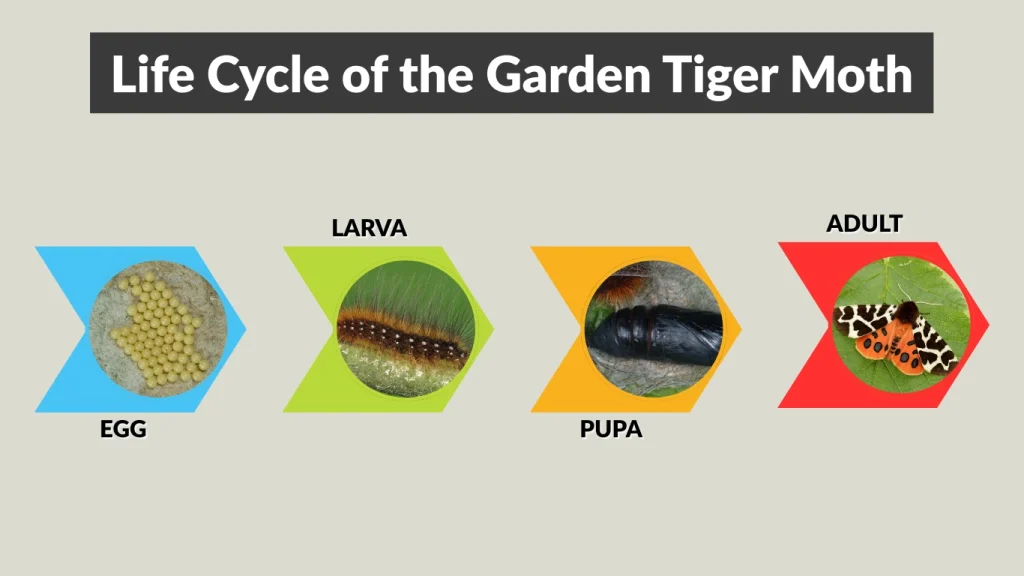
Like all moths, the Garden Tiger Moth undergoes a complete metamorphosis with four distinct stages:
Eggs
After mating in summer, the female lays clusters of eggs on the underside of leaves, usually on low-growing plants such as nettles or docks. Each female can lay several hundred eggs. The eggs are tiny, round, and pale in color. They hatch in about 10–14 days, depending on temperature.
Caterpillar Stage
The newly hatched caterpillars begin feeding immediately. As they grow, they molt several times, shedding their outer skin to allow for further development. This stage is the longest in the life cycle, lasting several months. The caterpillars feed heavily to store energy for pupation and also enter overwintering mode, surviving the cold months curled up in leaf litter or under debris.
Pupa
In late spring, the caterpillar spins a silken cocoon that incorporates its own hairs for extra protection. Inside, it transforms into a pupa (chrysalis). This stage lasts several weeks as the insect undergoes metamorphosis.
Adult Moth
The adult emerges in July or August, with its striking patterned wings fully developed. Its main purpose is reproduction, as adults live only 2–4 weeks. During this time, they feed on nectar, mate, and continue the cycle.
Are Garden Tiger Moths Dangerous or Poisonous?
To Humans
Garden Tiger Moths are not harmful in the same way as stinging insects. However, their caterpillars are covered in bristly hairs that can cause skin irritation, itching, or mild rashes in sensitive individuals. This reaction is similar to contact with nettles. Most people experience no lasting harm.
The adult moths are completely harmless — they do not bite, sting, or cause any danger to humans.
Toxic Defense
Both caterpillars and adults contain toxic alkaloid compounds absorbed from the plants they eat. These chemicals make them taste unpleasant to predators such as birds. Their bold colors act as a warning signal (aposematism), advertising that they are not good to eat.
To Pets and Other Animals
Cats, dogs, or other pets may experience mild irritation if they try to bite or eat a woolly bear caterpillar. Most predators, however, instinctively avoid them.
Scarlet Tiger Moth vs Garden Tiger Moth

The Scarlet Tiger Moth (Callimorpha dominula) is another colorful member of the same subfamily. While both are striking, there are clear differences:
- Garden Tiger Moth: Brown forewings with cream patches; orange hindwings with black spots.
- Scarlet Tiger Moth: Metallic black-green forewings with white patches; red hindwings with black spots.
- Distribution: Scarlet Tiger is more common in southern England, while Garden Tiger is widespread across Europe.
- Behavior: Both are nocturnal, though scarlet tigers may fly during the day.
Jersey Tiger Moth vs Garden Tiger Moth

The Jersey Tiger Moth (Euplagia quadripunctaria) is another close relative:
- Garden Tiger Moth: Bold spotted forewings; bright orange hindwings.
- Jersey Tiger Moth: Cream-striped forewings with orange or red hindwings.
- Habitat: Jersey Tiger is mainly found in southern England and Europe, often in urban gardens.
- Activity: More likely to fly by day compared to the Garden Tiger Moth.
These comparisons show how diverse and colorful the tiger moth family is, with each species evolving unique patterns for protection.
Eggs and Reproduction
Garden Tiger Moths are prolific breeders. Females lay hundreds of eggs in midsummer, often on plants that provide immediate food for the hatching larvae. This reproductive strategy increases the chances of survival despite high predation rates.
The eggs themselves are vulnerable to predators such as ants, spiders, and parasitic wasps, which explains why such large numbers are laid. Only a small proportion survive to adulthood.
Ecological Importance
The Garden Tiger Moth plays several roles in nature:
- Pollination – Adults visit flowers for nectar, transferring pollen in the process.
- Prey Control – Caterpillars consume weedy plants like nettles and docks, helping control their spread.
- Food Web Contribution – Though toxic, some specialized predators can still consume them, making them part of a balanced ecosystem.
- Indicator Species – Their population changes reflect shifts in biodiversity and climate health.
Conservation Status
In the past, the Garden Tiger Moth was common across Europe and North America, but its numbers have declined significantly in recent decades. In the UK alone, populations have dropped by more than 80% since the 1970s.
Reasons for Decline
- Habitat Loss: Intensive farming, pesticides, and reduced wildflower meadows.
- Light Pollution: Artificial lights disrupt nocturnal behavior and mating.
- Climate Change: Milder winters affect overwintering caterpillars.
Conservation Efforts
- Planting wildflowers and avoiding pesticides in gardens.
- Protecting meadows, wetlands, and woodland edges.
- Recording sightings through moth surveys to monitor populations.
FAQs
What is the scientific name of the Garden Tiger Moth?
The scientific name of the Garden Tiger Moth is Arctia caja. It belongs to the family Erebidae, subfamily Arctiinae, which includes many other colorful tiger moths. This classification highlights its close relation to species such as the Scarlet and Jersey Tiger Moths, both of which share similar warning colorations.
Are Garden Tiger Moth caterpillars poisonous or dangerous?
Garden Tiger Moth caterpillars are not deadly but can cause mild irritation or rashes if touched, due to their bristly hairs. These hairs are a defense mechanism to deter predators. While safe to observe, it’s best not to handle them with bare hands to avoid skin reactions, especially for sensitive individuals.
What do Garden Tiger Moth caterpillars eat?
The caterpillars are generalist feeders, meaning they can eat a wide variety of plants. Their diet includes nettles, dock leaves, burdock, clover, and plantains. This adaptability helps them survive in gardens, meadows, and woodland edges. Their ability to consume toxic plants also makes them unpalatable to many predators.
Where can I find Garden Tiger Moths in the UK?
Garden Tiger Moths are found across the UK, although their numbers have declined. They thrive in gardens, wetlands, and meadows. Adults are most active in July and August, often drawn to lights at night. Caterpillars, known as woolly bears, are more visible in spring and autumn, wandering across open areas.
How long does a Garden Tiger Moth live?
The full life cycle of a Garden Tiger Moth lasts about one year, though the adult stage is short. After overwintering as a caterpillar, they pupate in spring and emerge as adults in summer. Adults live only 2–4 weeks, focusing on mating and egg-laying to continue the species
