
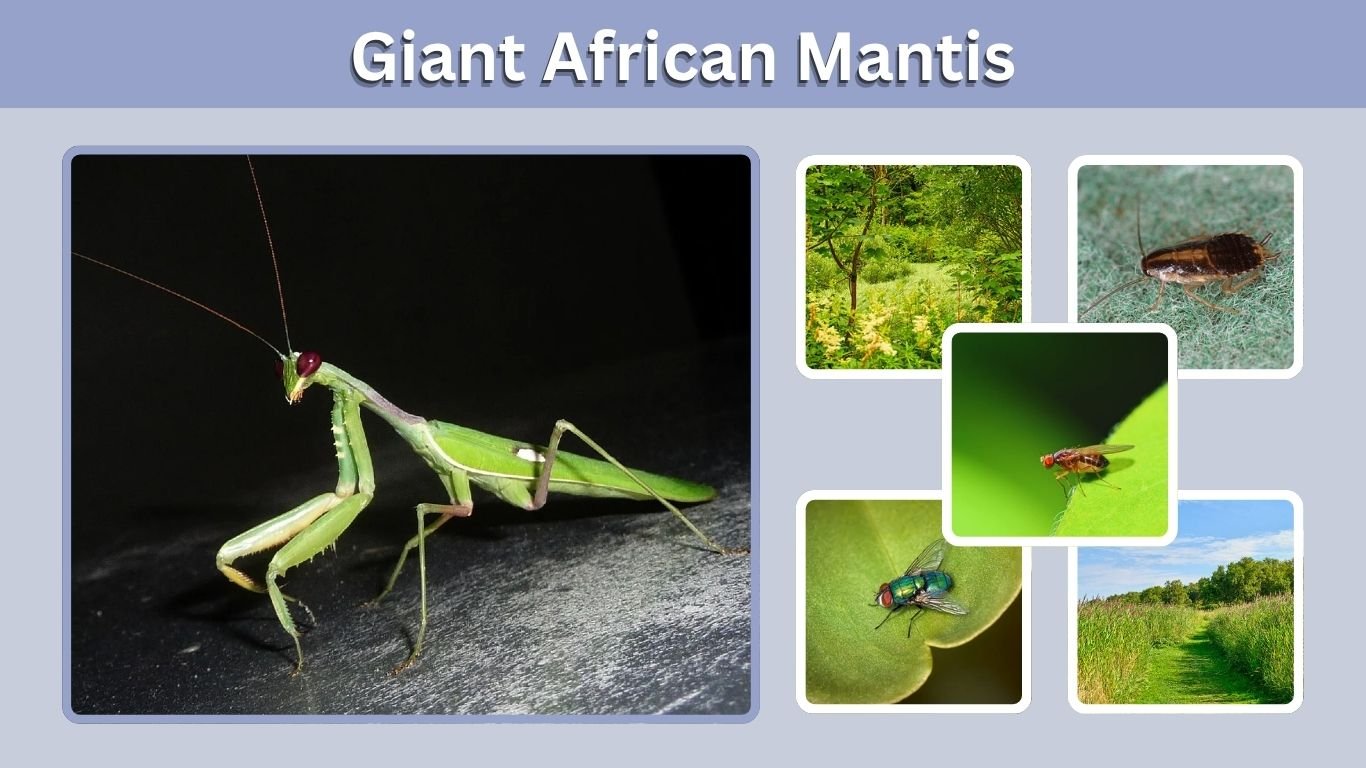
The giant African mantis is a large, powerful praying mantis known for its green or brown coloration, impressive hunting ability, and relatively straightforward captive care. The name is commonly used for several large African Sphodromantis species found across tropical and subtropical regions of Africa. These mantises are popular among insect keepers because they grow to an impressive size and readily accept live prey. Understanding their identification, habitat, diet, enclosure, temperature, lifespan, molting, and behavior makes appreciating or keeping these remarkable predators much easier.
What Is a Giant African Mantis?
“Giant African mantis” is a common rather than perfectly precise scientific name. In the pet trade, it may be applied to large members of the genus Sphodromantis, including species sold as African lined or African giant mantises. Although exact appearance varies between species, these mantises share a robust body, powerful forelegs, excellent vision, and an active predatory lifestyle.
Giant African Mantis Identification
Common characteristics include:
- Large, strongly built body
- Green, brown, or tan coloration
- Broad triangular head
- Large compound eyes
- Long, spiny raptorial front legs
- Long wings in adults
- Strong, muscular abdomen
- Excellent ability to turn the head
- Rapid striking movement when hunting
Green individuals blend into living vegetation, while brown forms are well camouflaged among dry leaves, stems, and bark.
African Mantis Species
Africa is home to many praying mantises, so not every “African mantis” belongs to the same species.
Mantises frequently associated with African searches include giant African mantises, African lined mantises, ghost mantises, African twig mantises, flower mantises, and devil’s flower mantises. Their care needs, adult size, and appearance can differ significantly.
For pet owners, obtaining the correct scientific name from a breeder is useful because it allows more precise care.
Giant African Mantis Size and Appearance
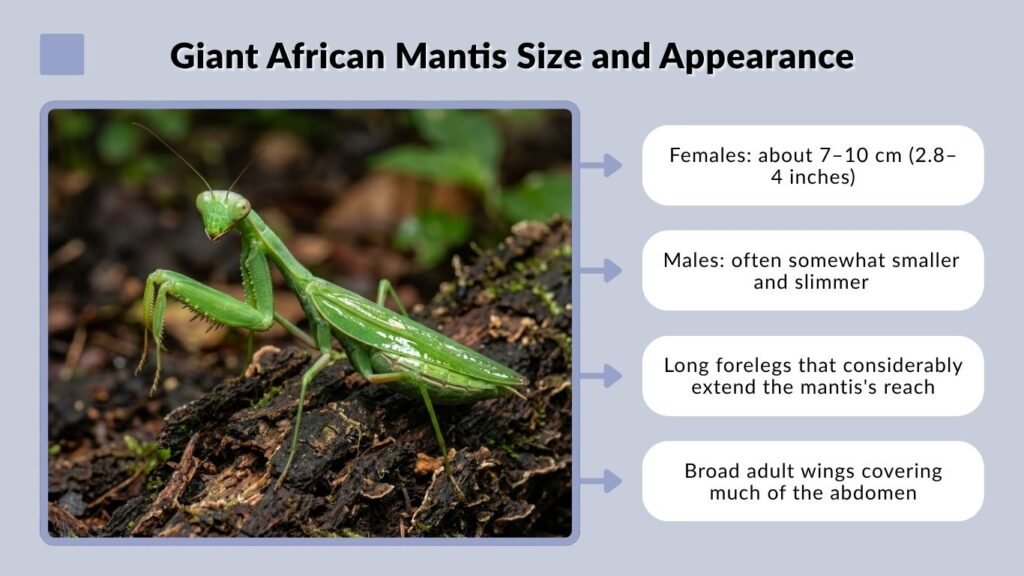
The giant African mantis earns its name from its relatively large adult size. Females usually become heavier and broader than males, while males are slimmer and more mobile. Their long front legs are equipped with rows of spines that lock around prey during a strike. Adults also develop wings, although flight ability differs noticeably between males and females.
How Big Does a Giant African Mantis Get?
Depending on the exact species and sex, adults commonly reach approximately:
- Females: about 7–10 cm (2.8–4 inches)
- Males: often somewhat smaller and slimmer
- Long forelegs that considerably extend the mantis’s reach
- Broad adult wings covering much of the abdomen
A full-size giant African mantis can therefore look considerably larger when its legs are fully extended.
Male vs Female Giant African Mantis
Females generally have broader, heavier abdomens and sturdier bodies. Their larger body mass supports egg production.
Males tend to be thinner and have proportionally longer wings. Adult males are normally better flyers and may become more active when searching for females.
Sexing young nymphs can require examination of abdominal segments, while differences become much easier to see as the mantises approach adulthood.
Giant African Mantis Habitat
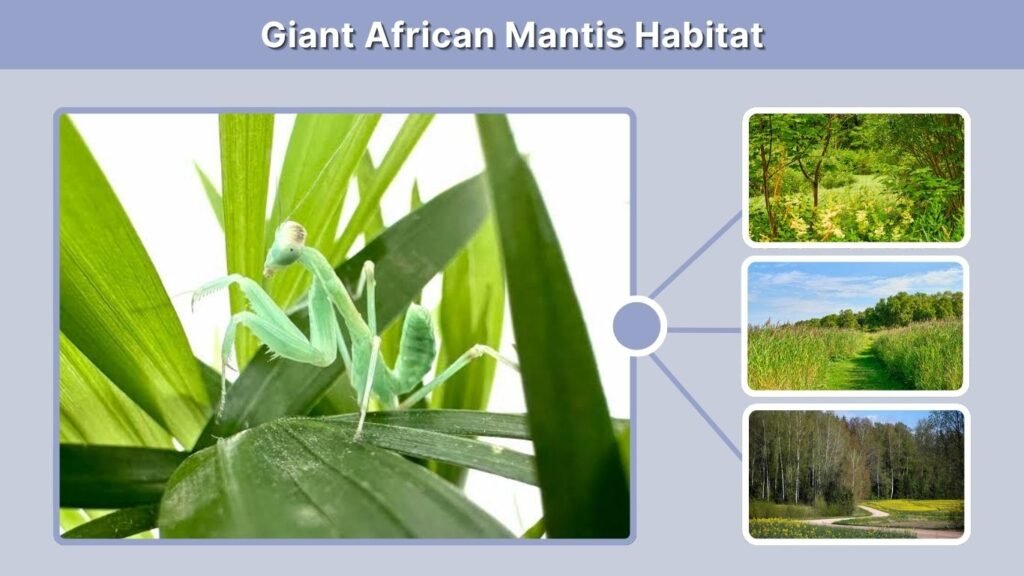
Large African mantises occupy environments where vegetation provides both camouflage and abundant insect prey. Depending on the species, they may occur around shrubs, grasslands, woodland edges, gardens, and warm forested regions. Rather than constructing nests, they use branches, leaves, and stems as elevated hunting positions from which they watch for movement.
Natural Environment
Suitable natural environments may contain:
- Shrubs and small trees
- Tall grasses
- Leafy vegetation
- Woodland edges
- Warm open forests
- Gardens and disturbed vegetation
- Large populations of insects
Their green and brown colors help them remain difficult to detect while waiting for prey.
How African Mantises Hunt
A giant African praying mantis usually hunts from an elevated perch.
Its head can move independently, allowing it to visually track insects without repositioning the entire body. Once prey reaches the correct distance, the mantis launches its front legs forward extremely quickly.
Spines along those legs prevent prey from escaping while the mantis begins feeding.
Giant African Mantis Care
The giant African mantis is often considered a manageable species for people beginning to keep praying mantises. However, proper enclosure height is essential because mantises must hang upside down when molting. Appropriate warmth, ventilation, humidity, live food, and climbing surfaces are also necessary throughout development.
Giant African Mantis Enclosure
A suitable enclosure should include:
- Height at least three times the mantis’s body length
- Width at least twice its body length
- Mesh or another safe gripping surface at the top
- Branches or artificial plants
- Good ventilation
- Open vertical space for molting
- Secure doors or lids
- Simple substrate for moisture control
Avoid overcrowding the enclosure with decorations. The mantis needs clear hanging space beneath its preferred molting point.
Temperature and Humidity
Many commonly kept African Sphodromantis species do well under warm conditions of approximately 72–82°F (22–28°C).
Moderate humidity generally works well. Occasional light misting provides drinking droplets and helps maintain suitable moisture.
Good airflow remains important. An enclosure that stays permanently wet can encourage mold and bacterial growth, so moisture should be balanced with adequate ventilation.
Handling
Giant African mantises can sometimes walk calmly across a person’s hand, but they should be treated as observation animals rather than frequently handled pets.
Allow the mantis to step onto your hand instead of grabbing it.
Handling should be avoided immediately before, during, and after molting because the new exoskeleton is soft and particularly vulnerable to damage.
Giant African Mantis Diet and Feeding
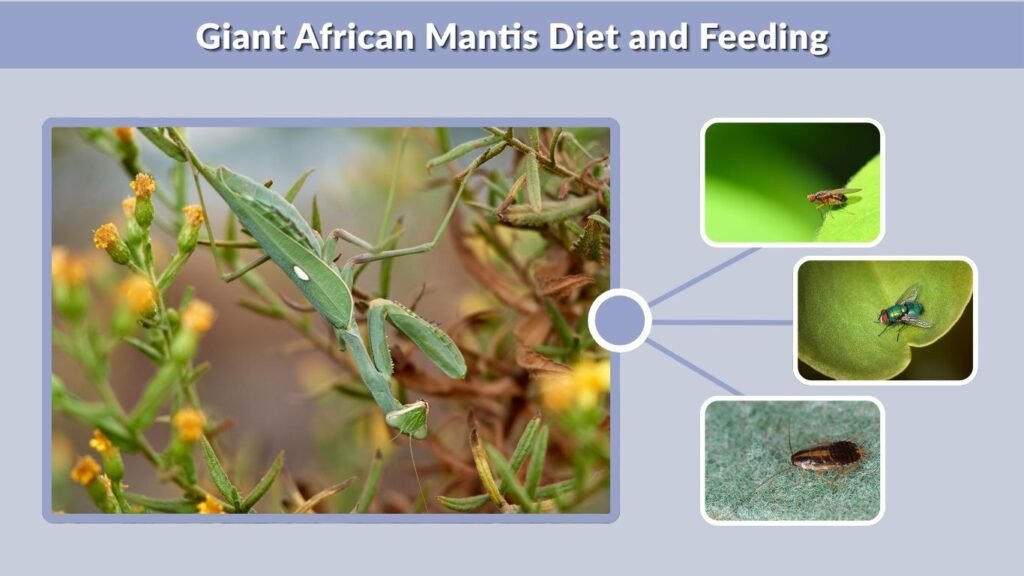
African mantises are carnivorous predators and require live insects. They respond strongly to movement and may attempt to capture surprisingly large prey. However, feeding oversized or aggressive insects is unnecessary and can expose the mantis to injury. Prey should therefore be appropriately sized for the mantis’s current developmental stage.
What Does a Giant African Mantis Eat?
Suitable captive foods include:
- Fruit flies for very small nymphs
- Houseflies
- Bluebottle flies
- Greenbottle flies
- Small roaches
- Moths
- Crickets used carefully
- Other captive-raised feeder insects
Variety can help provide a more balanced diet.
Wild-caught insects should be avoided when pesticide exposure is possible.
Feeding Frequency
Young nymphs usually eat more frequently because they are actively growing. Larger juveniles and adults can consume larger prey and may require feeding less often.
The abdomen provides a useful indication of condition. A noticeably thin mantis may be ready to feed, while a very full abdomen suggests that another large meal is unnecessary.
Mantises commonly refuse food shortly before molting.
Giant African Mantis Molting and Life Cycle
Like all praying mantises, giant African mantises grow through incomplete metamorphosis. A young nymph resembles a miniature wingless adult and becomes larger through successive molts. There is no caterpillar or pupal stage. Each molt is a vulnerable event, making sufficient height and secure hanging surfaces among the most important parts of captive care.
Signs a Mantis Is About to Molt
Possible pre-molt signs include:
- Refusing food
- Reduced activity
- Spending more time hanging upside down
- A fuller-looking body
- Remaining in one location for extended periods
- Less interest in nearby prey
Remove uneaten feeder insects if a molt appears close because they may disturb the mantis while it is vulnerable.
After molting, allow time for the new exoskeleton to harden before feeding or handling.
From Nymph to Adult
A mantis passes through multiple developmental stages known as instars.
After every successful molt, the body becomes larger. Wing buds become increasingly visible during later stages.
During the final molt, the mantis develops full adult wings. Once adulthood is reached, it will not molt again.
Giant African Mantis Lifespan
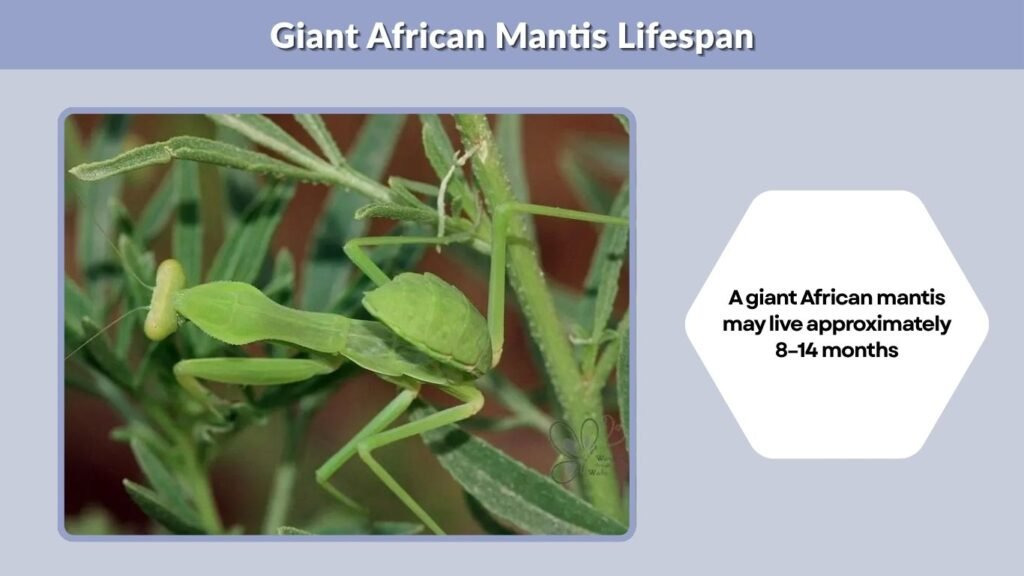
Lifespan depends on the particular species, sex, temperature, food availability, and general care. Females commonly live longer than males because males mature sooner and generally have shorter adult lives. Cooler but appropriate conditions can sometimes slow development, whereas consistently high temperatures may accelerate growth and shorten the overall life cycle.
How Long Do Giant African Mantises Live?
A giant African mantis may live approximately 8–14 months, although individual lifespans vary considerably.
Females frequently survive toward the longer end of the range. Males may mature faster and die earlier.
Good nutrition and successful molts are particularly important because injuries or failed molts can dramatically shorten an otherwise healthy mantis’s life.
Giant African Mantis as a Pet
A giant African mantis can be an appealing pet for someone interested in observing predatory insects. Its large body makes feeding and behavior easy to watch, while its enclosure requires relatively little room compared with conventional pets. It still needs live prey, regular observation, proper environmental conditions, and responsible individual housing.
Is a Giant African Mantis a Good Pet?
Advantages include:
- Impressive adult size
- Interesting hunting behavior
- Relatively simple enclosure
- Attractive green or brown coloration
- Minimal space requirements
- No noise
- Limited enclosure odor when properly maintained
However, owners must be comfortable providing live feeder insects.
Giant African mantises should normally be housed individually because they are opportunistic predators and may attack other mantises.
Giant African Mantis vs Giant Asian Mantis
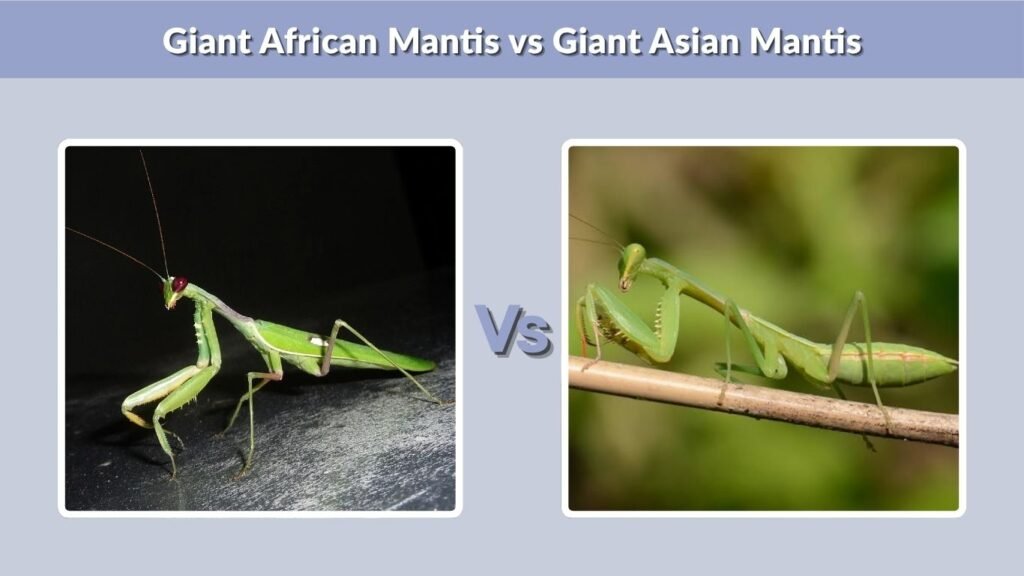
Giant African and giant Asian mantises can look superficially similar because both are large, green-to-brown predators. However, they represent different groups with different geographic origins. Exact comparisons depend on which species are being discussed, making scientific identification important.
Main Differences
African giant mantises commonly sold as Sphodromantis originate from Africa, while giant Asian mantises generally belong to species native to Asia.
Both are active ambush predators and may become several inches long.
Their precise adult size, body proportions, temperature preferences, coloration, and reproductive behavior vary by species rather than simply by continent.
Giant African Mantis for Sale
Giant African mantises may be available through specialist insect breeders as young nymphs, adults, or occasionally egg cases. Buyers should identify the actual species before purchasing because common names are used inconsistently. Preparing the enclosure and obtaining appropriate live feeder insects before the mantis arrives makes its transition much easier.
What to Check Before Buying
Before purchasing, check:
- Scientific species name
- Captive-bred origin
- Current instar or age
- Sex if known
- Recent feeding history
- Date of the last molt
- Condition of legs and antennae
- Local exotic-insect regulations
- Availability of suitable feeder insects
A healthy, correctly identified specimen from a knowledgeable breeder is generally a better choice than selecting one based only on size or unusual coloration.
FAQs
Are giant African mantises dangerous?
No. Giant African mantises are not considered dangerous to humans. They may defensively grab or nip when stressed, but their hunting equipment is intended for insects.
Are African mantises poisonous?
Praying mantises are not poisonous and do not possess medically significant venom. They physically capture prey using their spiny front legs.
Can giant African mantises fly?
Adults have wings. Males are usually better and more frequent flyers because they have lighter bodies. Heavy adult females may fly only short distances or rarely fly.
Can two giant African mantises live together?
It is not recommended. They are opportunistic predators, and cannibalism can occur. Separate enclosures are safer.
What is the scientific name of the giant African mantis?
The common name can refer to more than one large African mantis, particularly species within the genus Sphodromantis. For accurate identification, the scientific name supplied by the breeder or specialist should be used.
