
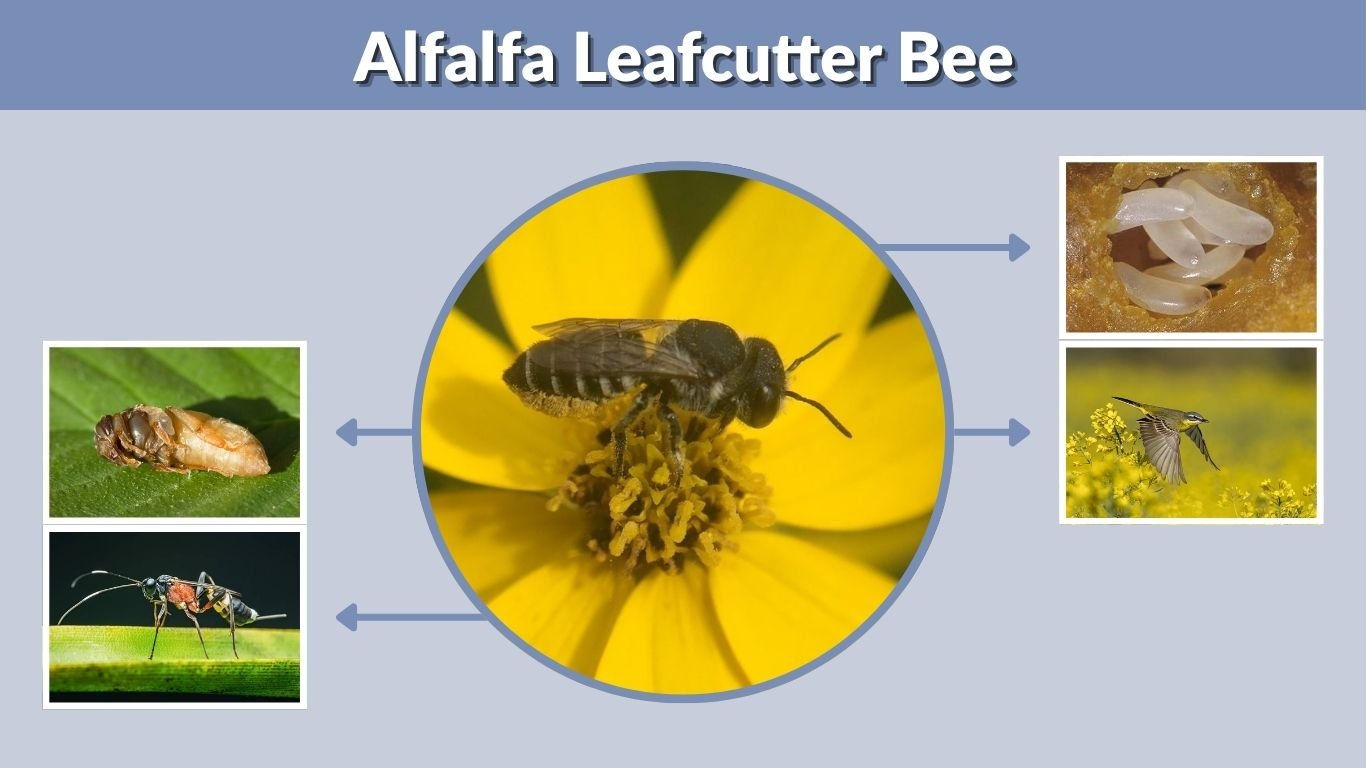
The alfalfa leafcutter bee is an important solitary pollinator widely used in commercial alfalfa seed production. Unlike honey bees, these bees do not live in large colonies or produce honey. Instead, females build individual nests inside small cavities and use neatly cut pieces of leaves to construct brood cells. Their efficient pollination behavior makes them especially valuable to farmers in North America, particularly in western Canada and the United States. Understanding their life cycle, nesting habits, incubation, management, and health can help explain why they are such productive agricultural pollinators.
What Is an Alfalfa Leafcutter Bee?
The alfalfa leafcutter bee, Megachile rotundata, is a small solitary bee belonging to the family Megachilidae. It is especially famous for pollinating alfalfa flowers. Females carry pollen on specialized hairs underneath the abdomen rather than on their hind legs, making them easy to distinguish from many other common bees.
Alfalfa Leafcutter Bee Identification
Common identifying features include:
- Small, dark-colored body
- Approximately 7–9 mm long
- Pale bands of hair across the abdomen
- Broad head and strong jaws
- Pollen-carrying hairs underneath the abdomen
- Females often covered with yellow pollen while foraging
- Fast, direct flight between flowers and nesting areas
Females use their strong mandibles to cut circular or oval sections from leaves.
Are Alfalfa Leafcutter Bees Solitary?
Yes. Each female creates and provisions her own nest rather than relying on workers.
However, large numbers may nest close together when suitable nesting boards or shelters are available. This can make managed populations appear colony-like even though individual females remain responsible for their own brood.
Why Are Alfalfa Leafcutter Bees Important?
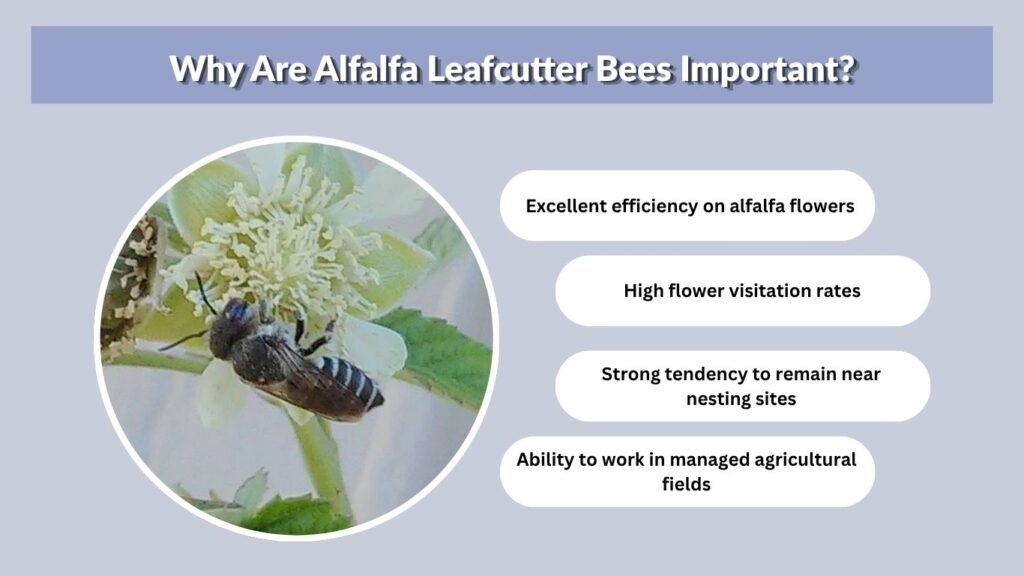
Alfalfa flowers have a specialized mechanism that releases reproductive structures when a pollinator pushes against them. Honey bees sometimes avoid triggering this mechanism because it can strike them on the head. Leafcutter bees generally tolerate it and repeatedly trip flowers, making them extremely effective alfalfa pollinators.
Benefits for Alfalfa Pollination
Alfalfa leafcutter bees offer several advantages:
- Excellent efficiency on alfalfa flowers
- High flower visitation rates
- Strong tendency to remain near nesting sites
- Ability to work in managed agricultural fields
- Effective pollen transfer between plants
- Easier population management than many wild pollinators
- Valuable contribution to seed production
Commercial growers may release thousands of bees near flowering fields.
How They Pollinate Alfalfa
When a female lands on an alfalfa blossom, she pushes into the flower to collect nectar and pollen.
This action activates the flower’s tripping mechanism, causing the reproductive column to move upward. Pollen is transferred onto the bee and later carried to another flower.
Because females must collect large amounts of pollen for their offspring, they visit many flowers during each nesting cycle.
Alfalfa Leafcutter Bee Nest and House
In nature, these bees use existing holes rather than digging large nests themselves. Commercial operations provide specially designed nesting boards filled with thousands of narrow cavities. Females line these cavities with pieces of leaves, creating individual chambers for eggs and stored food.
What Does an Alfalfa Leafcutter Bee Nest Look Like?
A typical nest contains:
- A narrow tunnel or cavity
- Multiple leaf-lined brood cells
- A ball of pollen and nectar in each cell
- One egg placed on each food provision
- Leaf partitions between cells
- A thicker leaf plug sealing the entrance
The female builds cells progressively from the back of the tunnel toward the entrance.
Alfalfa Leafcutter Bee Houses and Huts
Commercial bee shelters help protect nesting boards from rain, wind, overheating, and predators.
A good bee house usually provides shade, ventilation, dry nesting material, and clear visual landmarks that help females locate their individual nests.
Large agricultural operations may use portable shelters positioned strategically throughout alfalfa fields.
Why Do They Cut Leaves?
Female bees cut leaf sections to build durable brood cells.
They usually select relatively soft leaves from plants such as roses, lilacs, legumes, and other broadleaf species. The cuts may look alarming on ornamental plants, but they rarely cause serious plant damage.
Alfalfa Leafcutter Bee Life Cycle
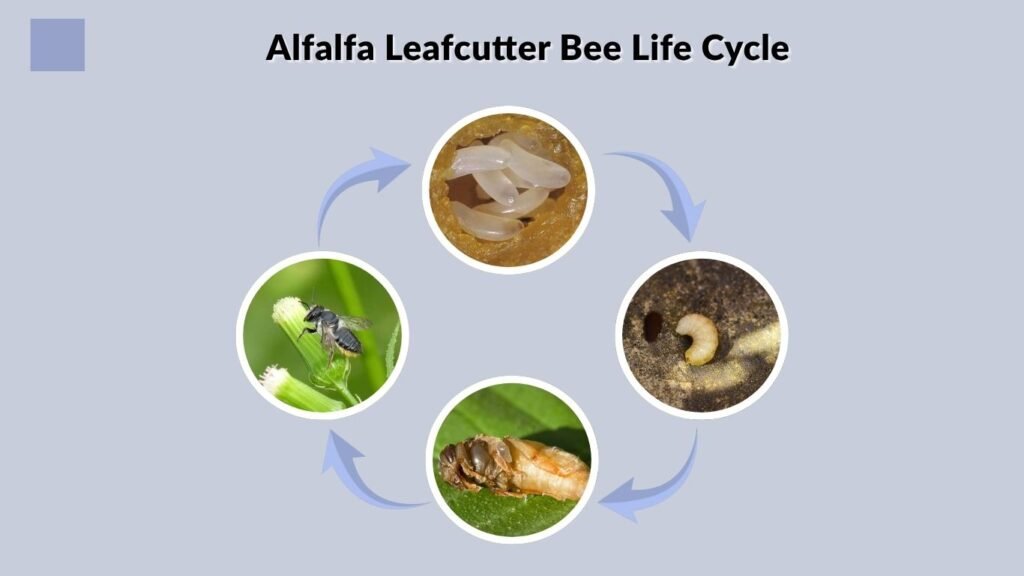
The life cycle begins when adult bees emerge during warm weather and mate. Females then locate nesting cavities, gather leaf material, collect pollen, and lay eggs. Their offspring develop within sealed leaf cells before entering a resting stage that allows them to survive unfavorable seasons.
Main Stages of the Life Cycle
The developmental stages include:
- Egg: The female places an egg on a pollen and nectar provision.
- Larva: The young bee consumes the stored food.
- Prepupa: The mature larva becomes inactive inside the cell.
- Pupa: Development toward adulthood occurs.
- Adult: The mature bee emerges from the nest.
Timing varies with temperature and management conditions.
Male and Female Development
Females can control the sex of their offspring.
Fertilized eggs generally develop into females, while unfertilized eggs develop into males. Females often place male offspring closer to the entrance of the nesting tunnel, where they may emerge first.
Seasonal Development
In regions with cold winters, many larvae remain dormant as prepupae.
Commercial producers collect brood cells and store them under controlled conditions until incubation begins before the next pollination season.
Alfalfa Leafcutter Bee Incubation
Incubation is an important part of commercial management because growers need adults to emerge close to the beginning of alfalfa flowering. Temperature is carefully controlled to stimulate development from the overwintering stage into pupae and adults.
How Incubation Works
The general process includes:
- Brood cells are stored cool during dormancy.
- Cells are moved into controlled incubation conditions before bloom.
- Warm temperatures stimulate development.
- Emergence is monitored closely.
- Adults are transferred or allowed to emerge near field shelters.
Incubation schedules depend on bee development, local climate, and expected crop bloom.
Why Timing Matters
If bees emerge too early, they may have insufficient alfalfa flowers available.
If they emerge too late, the crop may already have passed the most productive pollination period.
Successful growers therefore coordinate incubation with field development and weather forecasts.
Managing Alfalfa Leafcutter Bees
Commercial management involves far more than simply placing nesting boards beside a field. Healthy bee populations require clean nesting materials, correct incubation, adequate flowers, protection from extreme weather, and monitoring for parasites and diseases.
Key Management Practices
Important practices include:
- Using clean nesting boards
- Providing weather-protected shelters
- Replacing contaminated nesting materials
- Managing incubation temperatures carefully
- Monitoring adult emergence
- Checking brood for parasites
- Reducing moisture buildup
- Positioning bee shelters near flowering alfalfa
- Avoiding insecticide exposure during activity periods
Good sanitation is particularly important when bees are managed at high densities.
Nesting Boards
Commercial nesting boards contain large numbers of narrow holes or removable tunnels.
Reusable systems allow brood cells to be extracted after the season. Removing cells makes it easier to clean equipment, separate healthy brood, and prepare bees for controlled storage.
Cell Breakers
A cell breaker is equipment used to separate individual leafcutter bee brood cells from nesting material.
Commercial operators may process large numbers of nests, making mechanical separation much faster than removing every cell by hand.
Separated cells can then be cleaned, inspected, stored, and prepared for incubation.
Diseases, Parasites, and Bee Health
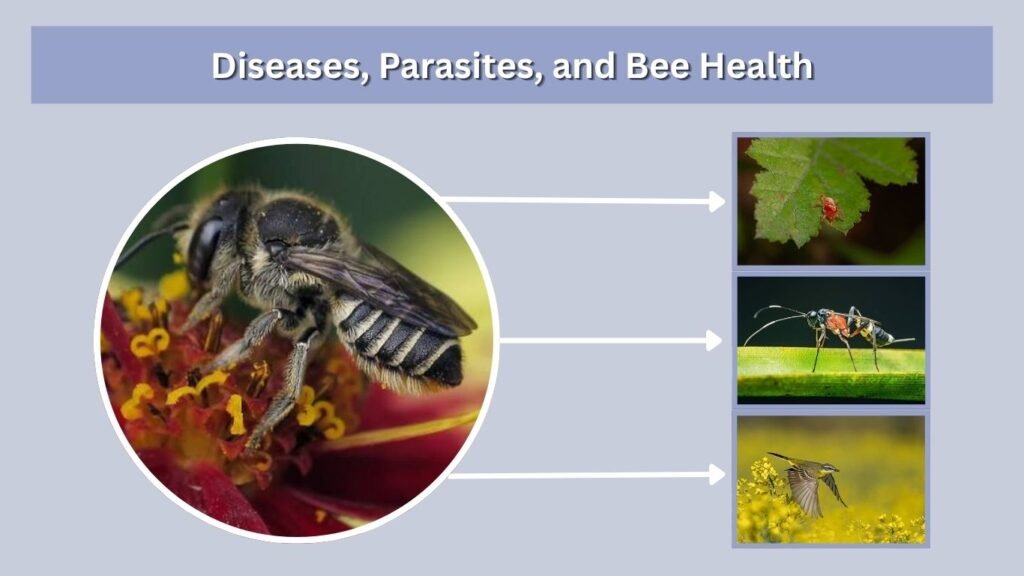
Managed leafcutter bees can experience health problems, especially when large numbers nest close together. Parasites, fungal diseases, predators, and poor storage conditions can reduce survival and pollination performance.
Common Problems
Potential threats include:
- Chalkbrood disease
- Parasitic wasps
- Mites
- Nest beetles
- Mold and excessive moisture
- Birds and insect predators
- Poor incubation conditions
- Pesticide exposure
Chalkbrood is one of the better-known diseases affecting managed leafcutter bee populations.
Signs of an Unhealthy Bee Population
Growers may notice poor emergence, dead larvae, abnormal brood cells, increased parasites, or reduced nesting activity.
Regular inspection allows contaminated nesting materials to be removed before problems become more widespread.
Protecting Bees From Pesticides
Chemical applications should be planned carefully when managed bees are present.
Whenever possible, growers avoid spraying insecticides while bees are actively foraging and select products and timing that minimize pollinator exposure.
Alfalfa Leafcutter Bee vs Honey Bee
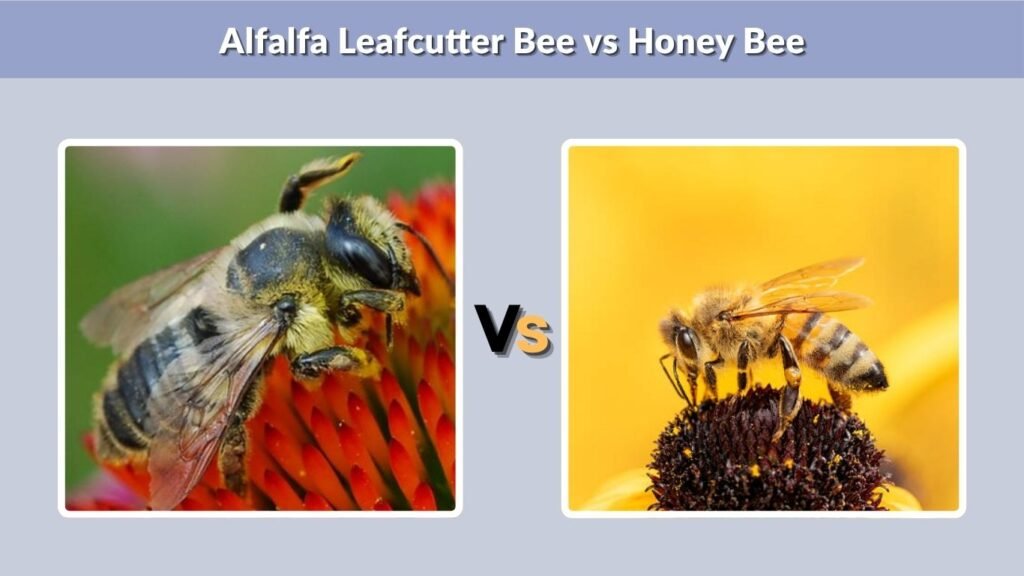
Both can pollinate crops, but their behavior is very different. Honey bees live in social colonies with queens and workers, while leafcutter bees are solitary. Leafcutter bees also gather pollen differently and are often more willing to trigger the specialized flowers of alfalfa.
Major Differences
- Leafcutter bees are solitary; honey bees are social.
- Leafcutter bees carry pollen under the abdomen.
- Honey bees carry pollen mainly on their hind legs.
- Leafcutter bees build nests with pieces of leaves.
- Honey bees construct wax combs.
- Leafcutter bees do not produce harvestable honey.
- Leafcutter bees are particularly efficient alfalfa pollinators.
Both groups can be valuable depending on the crop being grown.
FAQs
1. Do alfalfa leafcutter bees sting?
Females are capable of stinging, but they are generally nonaggressive and rarely sting unless handled or trapped. Males cannot sting.
2. What do alfalfa leafcutter bees eat?
Adults feed on nectar, while females also collect pollen and nectar to create food provisions for developing larvae.
3. Where do alfalfa leafcutter bees nest?
They nest inside existing narrow cavities. Commercial populations commonly use specially designed nesting boards placed inside protective bee shelters.
4. Why are leafcutter bees used for alfalfa?
They readily trigger alfalfa flowers while collecting pollen, resulting in highly effective pollen transfer and improved seed production.
5. How long do alfalfa leafcutter bees live?
Adult lifespan is relatively short, often several weeks during the active season. Most of the annual life cycle is spent developing or overwintering inside protected brood cells.
