
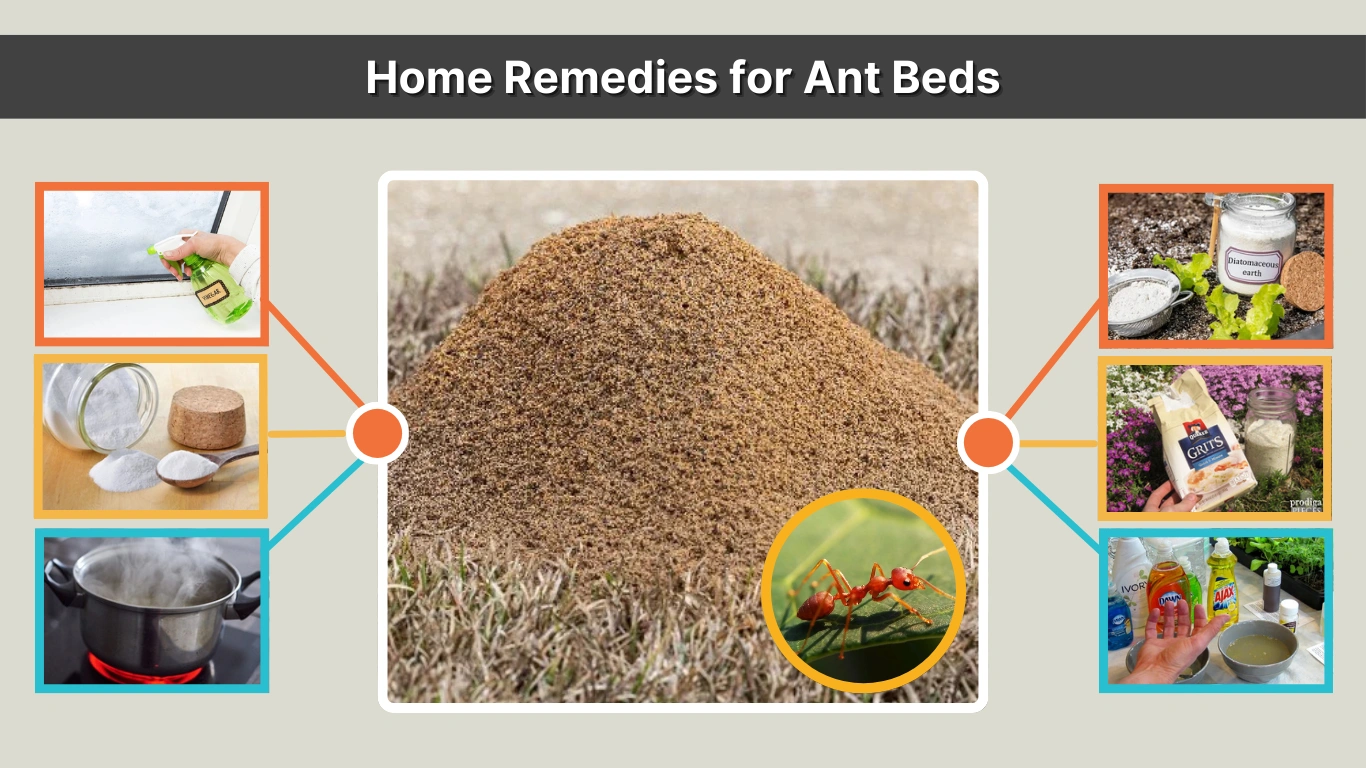
Ant beds can quickly take over your yard, garden, or even areas near your home. While many people turn to chemical sprays, there are safer and more natural solutions that can effectively manage ants without harming your family, pets, or the environment. Let’s explore tried and tested home remedies that work well for different types of ant infestations.
Understanding Ant Beds

Ant beds, also known as ant mounds, are colonies built by ants in soil, grass, or cracks near human dwellings. These structures can host thousands of ants and a single queen.
- Fire ants create dome-shaped beds and are aggressive when disturbed.
- Sugar ants and red ants form smaller nests often near food sources.
- Carpenter ants prefer damp wood and can damage furniture or structures.
Knowing the type of ant bed helps in choosing the right remedy.
Vinegar Solutions for Ant Beds

Vinegar is one of the most effective and accessible home remedies. Its strong smell disrupts ants’ scent trails and its acidic nature kills ants on contact.
How to Apply Vinegar
- Direct Pour: Mix equal parts of vinegar and water and pour directly into the ant bed. This kills ants instantly and weakens the mound.
- Spray Bottle Method: Fill a spray bottle with undiluted vinegar and spray around entry points and trails leading to the nest.
- Indoor Use: Safe for kitchens, vinegar can also double as a surface cleaner to remove food residues that attract ants.
Baking Soda and Sugar Method
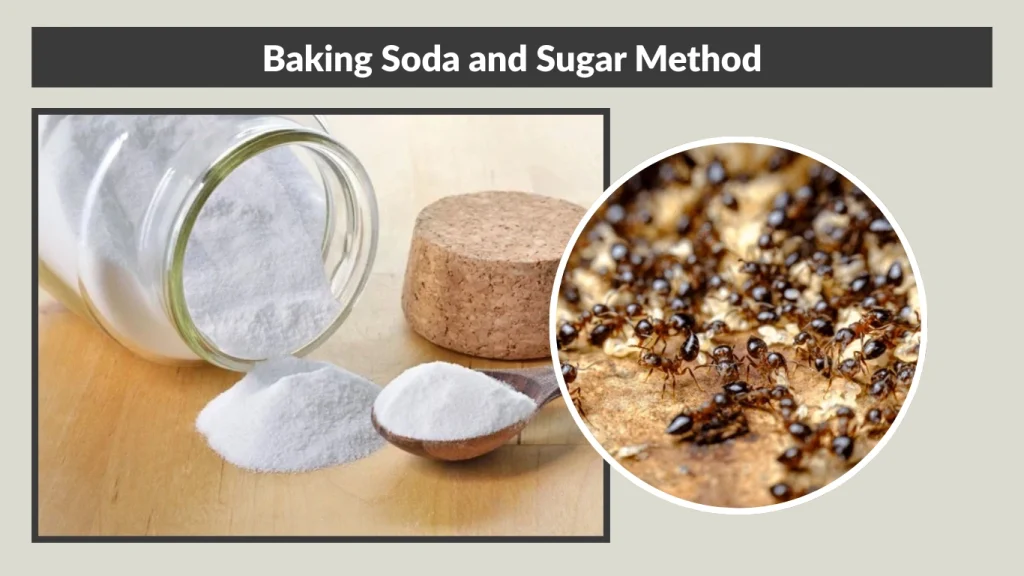
Ants are naturally drawn to sweet foods. When sugar is mixed with baking soda, they consume it and carry it back to the colony. Baking soda reacts with the ants’ digestive system and kills them.
Step-by-Step Application
- Mix 1 part baking soda with 1 part sugar.
- Place the mixture in shallow lids or directly around the ant bed.
- Monitor and reapply every few days until the activity decreases.
Tip: Keep away from children and pets, as sugar may attract them.
Boiling Water Treatment
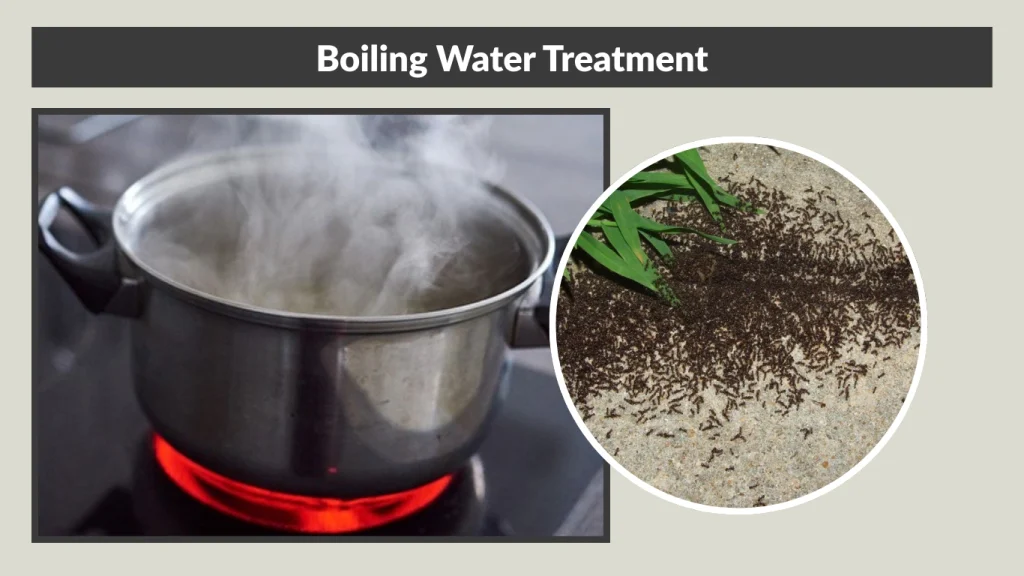
A simple and quick way to eliminate an ant bed is by pouring boiling water directly onto it. The extreme heat penetrates deep into the mound, killing ants and sometimes even reaching the queen.
How to Use Safely
- Boil 2–3 liters of water.
- Slowly pour it into the center of the mound.
- Repeat for a few days if ant activity continues.
- Be cautious to avoid burns and do not pour boiling water near delicate plants or grass.
Diatomaceous Earth for Ant Beds

Diatomaceous earth (DE) is a natural, non-toxic powder made from fossilized algae. It works by dehydrating ants when they come into contact with it, damaging their exoskeletons.
How to Apply DE
- Use food-grade diatomaceous earth (not pool-grade).
- Sprinkle around and directly onto the ant bed.
- Apply along ant trails and around house perimeters.
- Reapply after rain or watering, as DE loses effectiveness when wet.
This method is especially useful for treating ant beds in gardens, as it does not harm plants or pets when applied properly.
Essential Oils to Repel Ants

Essential oils such as peppermint, tea tree, eucalyptus, and lemon are natural ant repellents. Their strong scents mask ant trails and irritate insects on contact.
DIY Oil Spray
- Mix 10–15 drops of essential oil with one cup of water.
- Add a teaspoon of vinegar or witch hazel for extra strength.
- Spray directly on ant beds, around windows, doors, and baseboards.
- Reapply every few days for lasting results.
Cornmeal or Grits as Natural Ant Killers
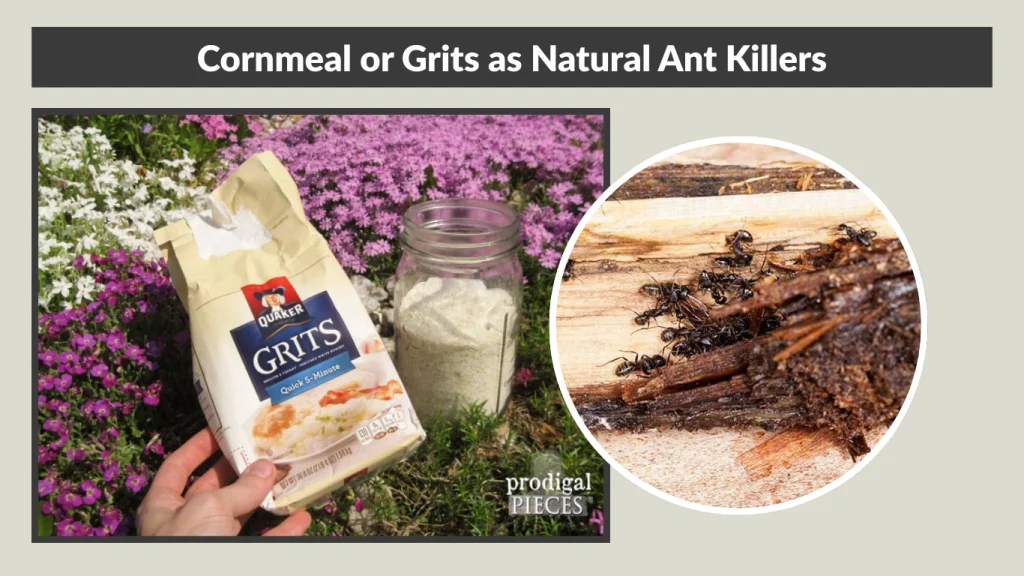
Cornmeal and grits act as slow-acting natural killers because ants cannot digest them. Workers carry these back to the colony, where it eventually leads to colony decline.
Application
- Sprinkle a generous amount around and on top of the ant bed.
- Safe to use near pets and children.
- Works best for sugar ants and smaller colonies.
Soap and Water Solution
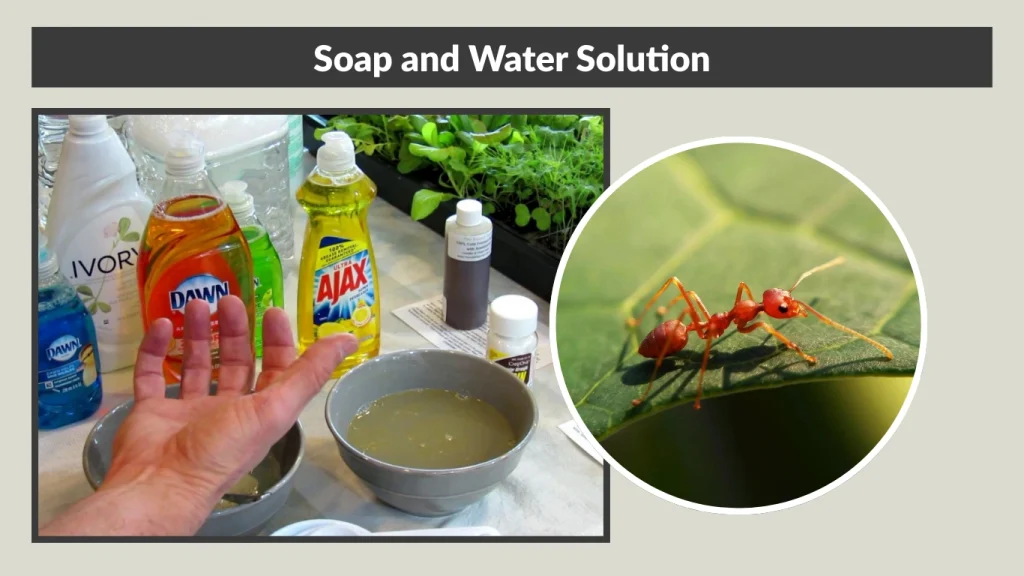
Dish soap disrupts ants’ protective layer, causing them to dehydrate and die.
Preparation
- Mix 2 tablespoons of liquid dish soap with a liter of warm water.
- Pour the mixture directly into the mound or spray on trails.
- Effective for both indoor and outdoor infestations.
Natural Home Remedies for Fire Ant Beds
Fire ants are among the most dangerous because of their painful stings. Natural remedies can reduce colonies without harsh chemicals.
Specific Treatments
- Vinegar + Essential Oil Mix: Combine vinegar, water, and peppermint oil, then pour directly into the mound.
- Boiling Water + Dish Soap: Increases effectiveness by breaking down soil barriers.
- Always wear protective clothing and gloves when treating fire ant beds.
Remedies for Carpenter Ant Beds
Carpenter ants live in wood and can cause structural damage over time.
Natural Approaches
- Boric Acid + Sugar Bait: Mix 1 part boric acid with 2 parts sugar, place in small containers near nests.
- Essential Oils: Peppermint or tea tree oil works well around damp wood areas.
- Moisture Control: Repair leaks and keep wood dry to discourage nesting.
Remedies for Sugar and Red Ant Beds
These ants are smaller but multiply quickly, especially in kitchens or gardens.
Natural Control
- Baking Soda + Sugar Bait: Targets colonies effectively.
- Vinegar + Lemon Juice Spray: Breaks scent trails and kills ants on contact.
- Good Sanitation: Keep food sealed and clean up spills immediately.
Keeping Ants Away After Treatment
Once you’ve destroyed an ant bed, preventing re-infestation is key.
- Seal cracks and entry points in walls or foundations.
- Wipe surfaces with vinegar or lemon solution to remove trails.
- Use natural repellents like cinnamon, cloves, coffee grounds, or citrus peels around common ant areas.
Home Remedies for Ant Bites
Ant bites can cause itching, swelling, and discomfort. Fire ant stings, in particular, can be painful.
- Aloe Vera Gel: Soothes burning and itching.
- Baking Soda Paste: Mix with water and apply for swelling.
- Honey or Turmeric: Natural anti-inflammatory options.
- Ice Pack: Reduces pain and inflammation immediately.
Precautions When Using Home Remedies
- Always handle boiling water carefully to avoid burns.
- Keep essential oils and boric acid out of children’s and pets’ reach.
- Reapply remedies consistently for stubborn infestations.
- Call professional pest control if ant beds continue to spread or if carpenter ants cause structural damage.
FAQs
What is the most effective home remedy for destroying ant beds?
Boiling water poured directly onto the mound is the fastest method to kill ants and collapse their nest. However, it often requires repeated applications for larger colonies. Pairing this with natural repellents like vinegar or essential oils can ensure the ants don’t rebuild in the same spot.
Can vinegar alone eliminate ant colonies?
Vinegar kills ants it touches and removes their scent trails, making it harder for them to navigate. While it can reduce activity around entry points, vinegar alone may not wipe out a deep nest. For long-term control, it’s best combined with other remedies like baking soda or diatomaceous earth.
How do I naturally treat fire ant beds?
Fire ant beds respond best to boiling water mixed with dish soap or vinegar solutions poured directly into the mound. Essential oils like peppermint also repel them. Since fire ants can be aggressive, it’s important to wear gloves and boots when applying treatments to avoid painful stings during the process.
Are home remedies safe for children and pets?
Most home remedies, like cornmeal, vinegar, and food-grade diatomaceous earth, are safe around children and pets. However, boric acid and essential oils should be kept out of reach because ingestion may cause irritation or stomach issues. Always apply remedies carefully and monitor the treated area to ensure safety for your household.
How can I prevent ants from returning after treatment?
Once ant beds are destroyed, prevention involves sealing entry points, removing food crumbs, and cleaning with vinegar solutions. Natural repellents like cinnamon, coffee grounds, or citrus peels can be sprinkled in problem areas. Consistently maintaining a clean environment indoors and outdoors discourages ants from forming new nests around your home.
