

Sugar ants are one of the most common household pests, often invading kitchens, pantries, and even bathrooms. These tiny ants are attracted to sweets, grease, and moisture, which makes homes an ideal place for them to thrive. While sugar ants are generally not dangerous, their large numbers and constant presence can be frustrating and unsanitary. Understanding how to identify them, remove them effectively, and prevent reinfestation is essential for keeping your home clean and ant-free.
What Are Sugar Ants?
Sugar ants are a common name for several small ant species that are particularly attracted to sweet foods. They are typically light to dark brown, with slender bodies and long antennae, and are active foragers that travel in search of food both indoors and outdoors. These ants are highly social and live in colonies that can expand quickly when conditions are favorable.
Although they are not considered aggressive, sugar ants can become a nuisance due to their sheer numbers. They often form long, winding trails along walls, counters, and baseboards, guiding other ants to food sources. Their ability to locate crumbs and spilled liquids makes kitchens especially vulnerable. Outdoor colonies can thrive under mulch, soil, or rocks, sometimes forming large satellite nests that contribute to persistent infestations.
Sugar ants can reproduce rapidly. A single colony may contain thousands of worker ants, along with one or more queens responsible for laying eggs. Their life cycle allows them to quickly bounce back even after partial elimination, making consistent management crucial.
How to Identify Sugar Ants

Physical Identification
- Small size, usually 2–4 mm in length
- Light brown to dark brown coloration
- Slender body with a narrow waist
- Long, segmented antennae
- Smooth, shiny exoskeleton
Behavior and Trail Patterns
Sugar ants are known for forming visible trails that lead to food and water sources. Unlike carpenter ants, which tend to move slowly and deliberately, sugar ants move quickly in erratic paths. They are most active during warmer months but can remain active indoors year-round, especially in heated kitchens or near plumbing leaks.
Sugar Ants vs Other Household Ants
Sugar ants can be confused with other small ants, such as little black ants or pavement ants. Key differences include their preference for sweets over proteins, erratic movement patterns, and the visible trails they create along surfaces. Little black ants are slower and more organized, while pavement ants are slightly larger and more aggressive in behavior.
What Attracts Sugar Ants to Homes
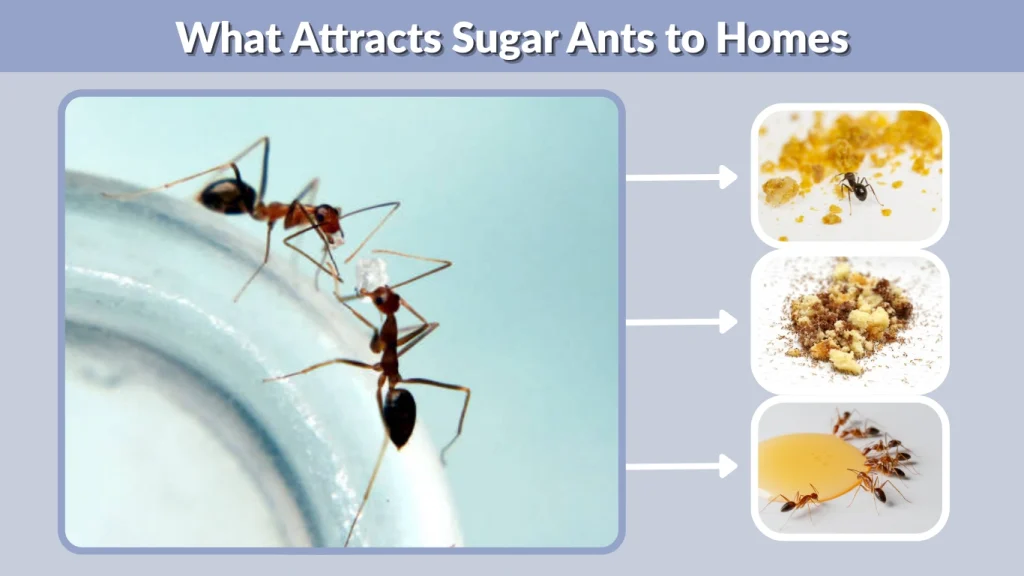
Sugar ants are opportunistic feeders, meaning they will exploit any easily accessible food source. The primary attractants include:
- Sweet foods like sugar, syrup, and baked goods
- Grease, meat scraps, and pet food
- Spilled drinks and crumbs on counters or floors
- Moisture from sinks, leaky pipes, or standing water
- Entry points such as cracks in walls, windows, and doorframes
They are highly sensitive to food smells and can detect even small traces of sugar or grease. Once a scout ant locates a food source, it leaves a pheromone trail for others in the colony, quickly turning a small food spill into a full-blown infestation.
Signs of a Sugar Ant Infestation
Indoor Signs
- Visible ant trails along counters, walls, and baseboards
- Ants inside pantry shelves, cabinets, or drawers
- Activity near sinks, garbage bins, and pet feeding areas
- Reappearance of ants even after cleaning
Outdoor Signs
- Ants foraging around garden plants, mulch, or soil
- Small mounds of soil or tiny holes near foundations
- Ants entering through cracks, vents, or doors
Early detection is crucial. A minor ant trail can rapidly escalate into a widespread infestation if not addressed promptly.
Do Sugar Ants Bite or Cause Harm?
Sugar ants are generally harmless to humans. Unlike fire ants or some larger ant species, they rarely bite and their bites are usually mild, causing little to no irritation. However, their presence can still be problematic. Large infestations can contaminate food, utensils, and surfaces, making them a hygiene concern, especially in kitchens and pantries.
For pets, sugar ants are mostly a nuisance. They may crawl into pet food bowls or bedding, which can irritate animals or encourage other pests. Additionally, sugar ants can indirectly damage property by nesting in wall voids, under floors, or around foundations, though they do not chew wood like carpenter ants.
How to Get Rid of Sugar Ants

Immediate Control Steps
- Remove food sources: Keep counters, floors, and tables clean. Store sugary foods and pet food in airtight containers.
- Clean ant trails: Wipe surfaces with soapy water or vinegar to remove pheromone trails, preventing more ants from following.
- Use ant baits: Place commercial sugar ant baits along trails or near entry points. Worker ants carry poison back to the colony, targeting the queens.
- Seal entry points: Caulk cracks in walls, gaps around windows and doors, and openings near plumbing or vents.
Natural Home Remedies
Some household solutions can deter or kill sugar ants:
- Vinegar or lemon juice: Wiping surfaces with these removes scent trails and repels ants.
- Essential oils: Peppermint, tea tree, or eucalyptus oils sprayed along trails can discourage ants.
- Diatomaceous earth: Sprinkled near nests or entry points, it damages their exoskeletons.
- Baking soda and sugar bait: Mixed in small amounts, ants consume it, which can reduce populations over time.
Store-Bought Treatments
- Non-repellent insecticides: These allow ants to carry poison to the colony without detecting danger.
- Liquid or gel baits: Effective for both indoor and outdoor control, targeting multiple nests.
- Sprays: Useful for immediate elimination of visible ants, but less effective for colony control.
- Safety considerations: Always read labels and keep products away from pets and children.
Long-Term Sugar Ant Management
Consistent management is key to preventing reinfestation:
- Rotate baits: Using different types of baits over time prevents ants from developing resistance.
- Reduce outdoor nesting: Keep mulch, leaves, and debris away from the home foundation.
- Maintain dryness: Fix leaks and reduce moisture sources indoors and outdoors.
- Monitor activity: Check common entry points regularly for signs of returning ants.
How to Prevent Sugar Ants from Coming Back
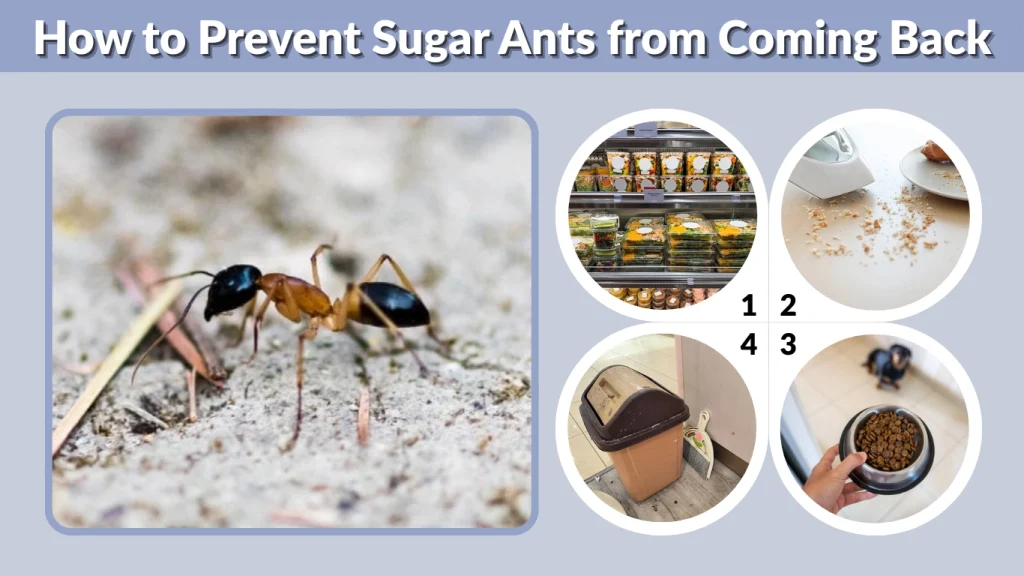
Kitchen and Pantry Practices
- Store all food in sealed containers
- Clean up spills and crumbs immediately
- Empty trash cans daily
- Avoid leaving pet food out for long periods
Home Maintenance
- Seal cracks and gaps in walls, doors, and windows
- Repair leaks under sinks and in plumbing
- Keep appliances and electrical outlets clean and dry
Outdoor Prevention
- Trim vegetation away from walls and doors
- Remove mulch, leaves, and other debris near the house
- Control plant pests like aphids that produce honeydew
When to Call a Professional
Sometimes DIY methods are not enough. Consider professional pest control if:
- Ants are widespread throughout the home
- Nests are inside walls, under floors, or near electrical systems
- Infestations persist despite repeated home treatments
Professional pest control specialists use integrated pest management techniques, including targeted baits, inspections, and treatments designed to eliminate the colony and prevent return.
FAQs
What is the fastest way to get rid of sugar ants?
Using ant baits combined with cleaning up food and moisture sources is the fastest method. Baits allow worker ants to carry poison back to the colony, which targets the queens and larvae for more permanent control.
Why do sugar ants keep coming back?
Sugar ants return because colonies have multiple nests and queens. Even if some ants are eliminated, others may remain and rebuild the colony unless consistent control measures are applied.
Are natural remedies effective against sugar ants?
Natural remedies like vinegar, essential oils, and diatomaceous earth can reduce activity and repel ants but are usually slower than commercial baits and insecticides. They work best combined with proper sanitation.
Can sugar ants damage my home?
While they do not chew wood like carpenter ants, sugar ants can contaminate food and create hygiene issues. Large infestations indoors may also nest in wall voids or appliances, causing minor equipment problems.
How do I stop sugar ants from returning permanently?
Preventing return requires a combination of cleaning, sealing entry points, reducing moisture, managing outdoor nesting areas, and regularly monitoring for new ant activity.
