

Black crazy ants are fast-moving, invasive insects that have become a serious problem in many parts of the world. They get their name from their erratic, unpredictable movements, which make them easy to notice when they invade homes, gardens, and commercial spaces. Unlike common household ants, black crazy ants form massive colonies with multiple queens, allowing their populations to explode rapidly. Understanding how to identify them, where they live, and how they behave is the first step toward controlling an infestation and preventing long-term damage.
What Are Black Crazy Ants?
Black crazy ants are a group of invasive ants most commonly associated with species in the genus Nylanderia. They are known for their rapid spread, aggressive foraging behavior, and ability to dominate environments once they become established. These ants are native to tropical and subtropical regions but have expanded widely through global trade and human movement.
One of the most distinctive features of black crazy ants is their tendency to form supercolonies. Instead of a single nest, they create networks of interconnected nests with many queens. This allows them to relocate quickly, recover from disturbances, and overwhelm native ant populations. As a result, black crazy ants are considered a serious ecological threat in many regions.
Their adaptability makes them particularly successful invaders. They can survive in forests, urban neighborhoods, agricultural land, and coastal areas. Indoors, they take advantage of warmth, moisture, and constant food sources, making homes and businesses ideal environments for rapid colony growth.
How to Identify Black Crazy Ants

- Small size, usually about 2–3 mm long
- Dark brown to black body color
- Long, slender legs and antennae
- Very fast, erratic, “crazy” running movement
- Do not follow straight, organized trails
- Often seen on walls, ceilings, and electrical lines
- Frequently invade electronics and wall voids
- Appear suddenly in large numbers
Habitat and Nesting Sites
Black crazy ants thrive in a wide range of environments, which is one reason they are so difficult to control. Outdoors, they commonly nest under rocks, in leaf litter, beneath logs, around plant roots, and inside loose soil. They are especially attracted to moist, shaded areas that provide protection and steady food access.
Indoors, black crazy ants take advantage of wall voids, insulation, potted plants, bathrooms, kitchens, and electrical outlets. They are notorious for nesting in electronic devices, circuit boxes, and appliances, where warmth and shelter create ideal conditions. This behavior not only makes them hard to detect but can also lead to equipment malfunctions.
Their colonies are not fixed in one location. Black crazy ants frequently move nests in response to weather changes, flooding, pesticide exposure, or food availability. Instead of a single central nest, they maintain many satellite nests connected by foraging trails. This flexible nesting system allows them to survive disturbances that would eliminate other ant species.
Colony Structure and Life Cycle

Colony Organization
Black crazy ant colonies are highly complex. Unlike many ants that rely on a single queen, these ants often have multiple reproductive queens within the same colony network. This leads to extremely rapid population growth and makes full eradication difficult.
Workers move freely between nests, sharing food and caring for young across the entire colony system. Because there is little aggression between nests, black crazy ants can dominate large territories and displace native insects. This cooperative structure is a major reason they are so successful as invasive pests.
Life Cycle Stages
The life cycle of black crazy ants follows the typical ant pattern: egg, larva, pupa, and adult. Queens lay large numbers of eggs, which develop into larvae that are fed by worker ants. The larvae then enter the pupal stage before emerging as adults.
Under warm, favorable conditions, development can occur quickly, allowing colonies to expand continuously throughout the year. Populations often surge during warm, wet seasons, which is when infestations become most noticeable in homes and outdoor spaces.
Diet and Feeding Habits
Black crazy ants are omnivorous and extremely opportunistic. In natural environments, they feed on small insects, plant material, seeds, and nectar. A major part of their diet comes from honeydew, a sugary substance produced by aphids and other sap-feeding insects.
This preference for sweets draws them to kitchens, garbage areas, pet food bowls, and spilled drinks. They also consume proteins and fats, making meat scraps and greasy residues strong attractants. Their broad diet allows them to survive in almost any environment where humans live.
Their close relationship with aphids and scale insects can cause serious damage to gardens and crops. By protecting these pests from predators in exchange for honeydew, black crazy ants indirectly increase plant infestations, weakening vegetation and disrupting ecosystems.
Signs of a Black Crazy Ant Infestation

Indoor Signs
One of the earliest warning signs is the sudden appearance of large numbers of fast-moving ants inside the home. Black crazy ants often travel along walls, ceilings, plumbing lines, and electrical cords rather than staying only on floors. Homeowners may notice them emerging from outlets, light switches, or behind appliances.
Another strong indicator is their attraction to electronics. These ants are well known for invading computers, televisions, circuit boxes, and other devices, sometimes causing short circuits or equipment failure. Repeated ant activity even after cleaning usually suggests that multiple nests are established nearby.
Outdoor Signs
Outside, heavy ant traffic on tree trunks, garden plants, fences, and building foundations often points to black crazy ant activity. They are frequently seen tending aphids and scale insects, which may result in sticky plant surfaces and declining plant health.
Large populations moving under leaf litter, mulch, stones, or logs are also common. Because their nests are shallow and scattered, obvious mounds may be absent, making infestations harder to detect until numbers become overwhelming.
Do Black Crazy Ants Bite or Cause Harm?
Black crazy ants are not aggressive biters like fire ants, but they can bite when trapped against skin. Their bites are usually mild, causing minor irritation or redness rather than severe pain. However, in heavy infestations, frequent contact can become uncomfortable, especially for children, elderly individuals, or people with sensitive skin.
Pets and small animals may experience stress or skin irritation when large numbers of ants invade food bowls, bedding, or enclosures. Wildlife can also be affected, as black crazy ants often displace native insect species and disrupt local food chains.
One of their biggest risks is not physical harm, but environmental and economic damage. Their habit of nesting in electrical equipment has led to numerous reports of power failures and appliance damage. In outdoor ecosystems, they reduce biodiversity by overwhelming native ants and invertebrates, altering natural balances.
Black Crazy Ants vs Similar Species

Black Crazy Ants vs Carpenter Ants
Carpenter ants are much larger and are known for tunneling into wood, which can cause structural damage. Black crazy ants, on the other hand, are smaller, faster, and do not excavate wood. They prefer soil, debris, and man-made voids. Their erratic movement is a key difference from the slower, more organized trails of carpenter ants.
Black Crazy Ants vs Argentine Ants
Both species form massive colonies and are highly invasive. Argentine ants usually move in orderly trails and strongly prefer sugary foods. Black crazy ants are more chaotic in movement and more flexible in nesting locations, often invading electronics and wall voids.
Black Crazy Ants vs Little Black Ants
Little black ants are slower, form tighter trails, and typically establish more stable nests. Black crazy ants spread rapidly, relocate nests frequently, and tend to appear suddenly in overwhelming numbers.
How to Get Rid of Black Crazy Ants
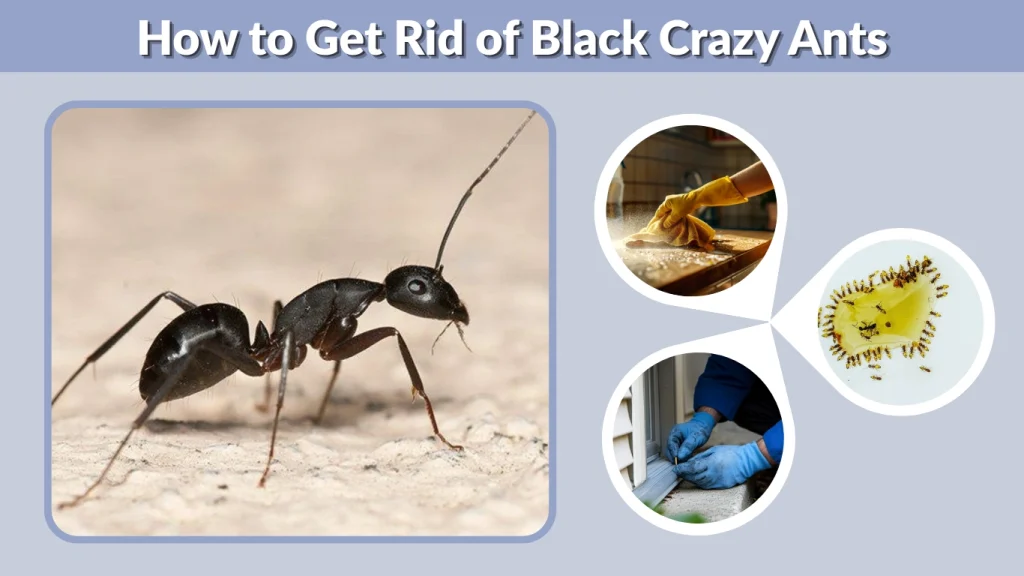
Immediate Control Methods
Effective control begins with removing what attracts them. Food crumbs, open containers, grease residue, and standing water should be eliminated. Kitchens and pet feeding areas need daily cleaning, and garbage should be sealed tightly.
Non-repellent ant baits are generally more effective than sprays. These baits allow worker ants to carry poison back to the colony, slowly affecting queens and larvae. Spraying visible ants may kill individuals, but it rarely eliminates the colony network.
Sealing entry points such as cracks, pipe openings, and window gaps helps reduce indoor invasions. Outdoors, reducing mulch depth, removing debris, and trimming vegetation away from buildings can limit nesting opportunities.
Long-Term Control Strategies
Because black crazy ants maintain many nests, long-term management is usually necessary. Baiting programs often need to continue for weeks or months, with bait types rotated between sweet and protein-based formulas.
Treating outdoor nesting zones is critical. This may include applying perimeter treatments, managing aphid populations on plants, and reducing moisture around foundations. Monitoring activity patterns helps locate satellite nests before populations rebuild.
Professional Pest Control
Severe infestations often require professional pest control. Specialists use integrated pest management programs that combine targeted baiting, habitat modification, and long-term monitoring. Professional services are especially important when ants are invading electrical systems, large properties, or sensitive facilities.
Prevention and Long-Term Management
Preventing black crazy ants depends on making environments less attractive to them. Indoors, consistent sanitation is essential. Food should be stored in sealed containers, spills cleaned immediately, and plumbing leaks repaired. Dehumidifiers and proper ventilation can reduce moisture that supports nesting.
Outdoor management plays an equally important role. Keeping vegetation trimmed, removing leaf litter, and minimizing mulch near structures limits nesting sites. Managing aphids and other plant pests reduces honeydew, one of the ants’ main food sources.
Regular inspections around foundations, utility lines, and entry points help catch infestations early. Because black crazy ants spread rapidly, early detection and prompt response are the most effective long-term defenses.
FAQs
What are black crazy ants?
Black crazy ants are small, invasive ants known for their fast, erratic movement and massive multi-nest colonies. They spread rapidly, dominate ecosystems, and frequently invade homes, where they nest in walls, soil, and even electrical equipment.
Are black crazy ants dangerous to humans?
They are not considered highly dangerous, as their bites are mild. However, large infestations can cause discomfort, stress, and potential equipment damage. Their greatest impact is ecological disruption and persistent household infestations.
Why are black crazy ants so hard to eliminate?
Their colonies contain multiple queens and many interconnected nests. Killing visible ants rarely affects the entire colony, allowing populations to rebound quickly unless baiting and habitat management are used together.
What is the most effective way to control black crazy ants?
Long-term baiting combined with sanitation, moisture control, and outdoor habitat management is most effective. Severe infestations usually require professional pest control for full elimination.
How can I prevent black crazy ants from returning?
Maintain cleanliness, reduce moisture, seal entry points, manage plant pests, and regularly inspect your property. Consistent prevention is key because black crazy ants quickly recolonize favorable environments.
