
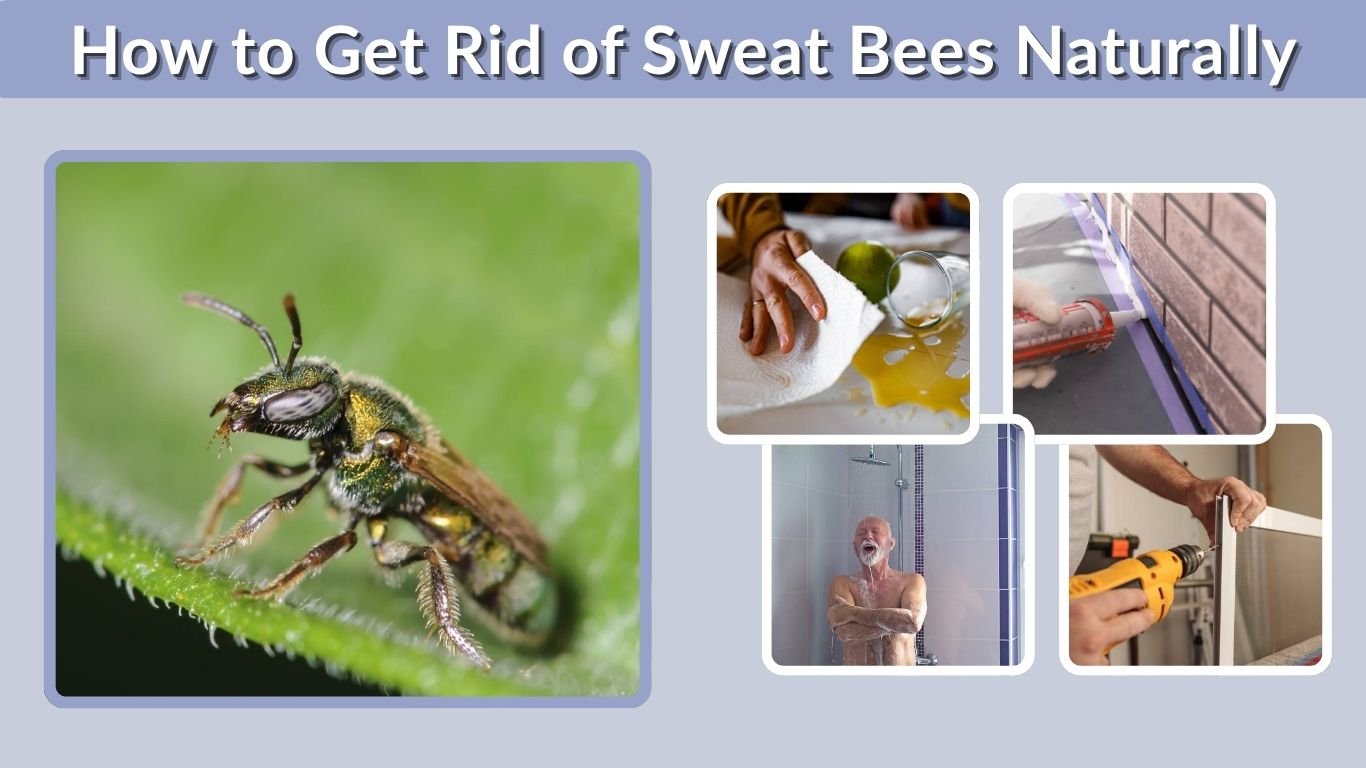
Sweat bees can become annoying when tiny bees repeatedly land on your arms, legs, or face during hot weather. They are attracted to the salts in human perspiration, which explains their common name. Most sweat bees belong to the family Halictidae and are valuable pollinators rather than aggressive pests. Many nest in small tunnels in bare or lightly vegetated soil. The best way to get rid of sweat bees is usually to reduce what attracts them, modify unwanted nesting areas, and prevent close contact rather than spraying or destroying beneficial bees.
What Are Sweat Bees?
Sweat bees are a diverse group of small bees. Some are dark brown or black, while others have beautiful metallic green bodies. Depending on the species, adults may be roughly 1/4–1/2 inch long, although the family includes smaller and larger species.
They primarily feed on nectar and pollen. Certain species also land on people to obtain salts from perspiration.
Most are relatively docile. A sweat bee may sting if it becomes trapped against your skin, such as between your fingers or in the bend of an arm, but their stings are generally considered mild.
How to Get Rid of Sweat Bees Fast
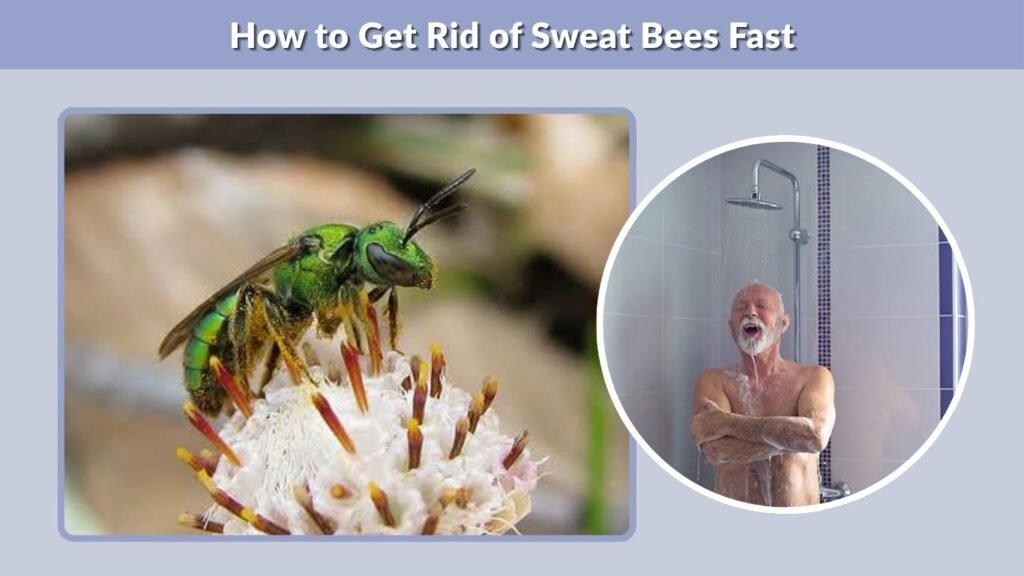
When sweat bees are bothering you personally, removing their attraction to your skin is usually faster than trying to eliminate bees from the entire yard.
Wash or shower after heavy sweating, particularly before sitting outside. Dry yourself thoroughly after swimming and change out of sweaty clothing when practical.
During extremely hot weather, reducing outdoor activity during the hottest period of the day can also decrease encounters because you produce less perspiration. Penn State specifically recommends minimizing sweating when sweat bees are creating a nuisance.
Avoid swatting a bee that lands on you. Gently brushing it away or moving indoors reduces the chance of accidentally trapping it against your skin and triggering a sting.
How to Get Rid of Sweat Bees Outside
If numerous sweat bees are consistently present in one section of your property, first determine whether they are simply visiting flowers or actually nesting there.
Many sweat bees are ground nesters. Small holes surrounded by tiny piles of excavated soil may indicate nesting activity.
Reduce Unwanted Nesting Areas
Sweat bees frequently use sunny areas containing exposed or lightly covered, well-drained soil.
If they are nesting in a high-traffic location such as beside a walkway, patio, playground, or entrance, landscaping can make that particular area less attractive in future seasons.
Options include establishing:
- Dense turf
- Ground-cover plants
- Appropriate landscaping
- Other permanent soil coverage
Utah State University recommends renovating bare soil with turf or other cover where ground-nesting bees create a conflict.
Do this preferably after the active nesting period rather than immediately destroying occupied nests.
How to Get Rid of Sweat Bees Naturally
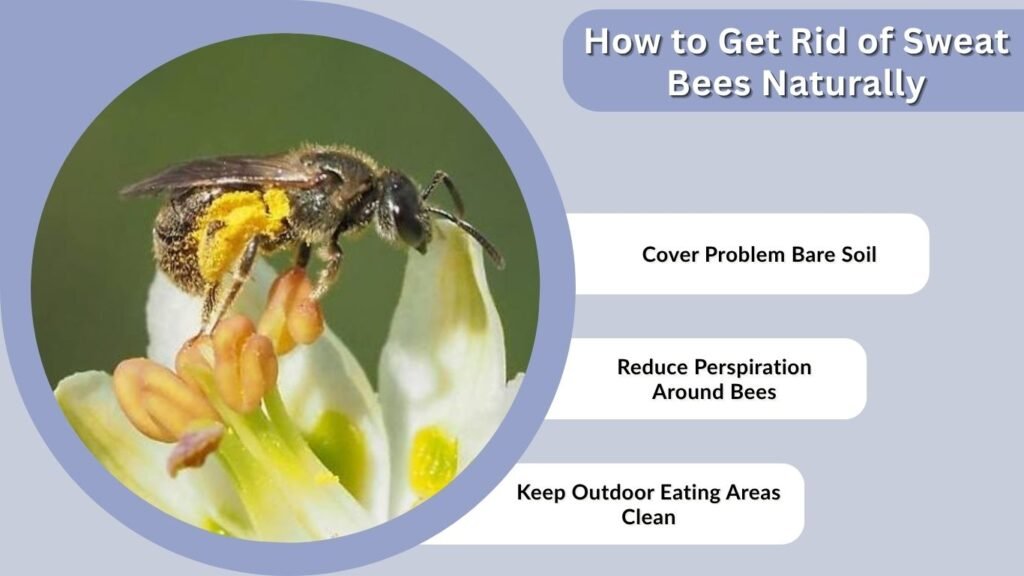
Natural control should focus on habitat modification and avoidance rather than homemade insecticides.
Cover Problem Bare Soil
If bees repeatedly nest beside your patio or another inconvenient location, establish vegetation over the exposed soil after nesting activity has ended.
Reduce Perspiration Around Bees
Shower or rinse sweat from your skin, wear breathable clothing, and spend less time outside during extremely hot periods if the bees are continually landing on you.
Keep Outdoor Eating Areas Clean
Remove food scraps and immediately clean sweet drink spills. Although sweat bees primarily seek pollen, nectar, and sometimes perspiration, reducing other insect attractants makes outdoor areas generally less appealing to nuisance insects.
Use Physical Barriers
Screens on windows and doors prevent wandering bees from entering the house. Closing gaps around windows and door frames also reduces accidental indoor visitors.
Leave Non-Problem Nests Alone
If sweat bees are nesting at the far end of a garden where nobody is being bothered, removal is usually unnecessary.
They provide valuable pollination and generally pose little health risk.
How to Get Rid of Sweat Bees Around a Pool
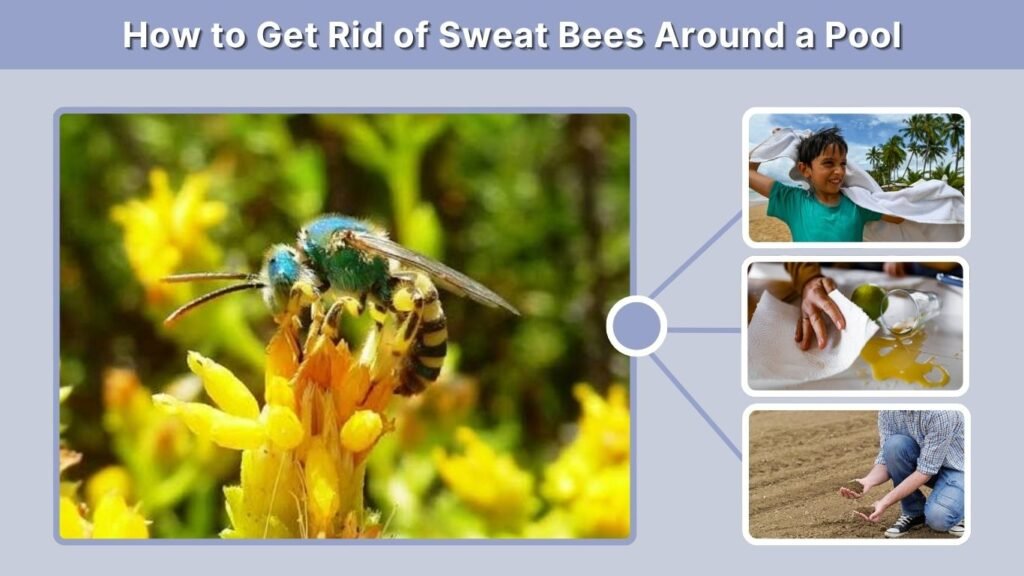
Pools combine two things that may lead to frequent encounters: people producing salty perspiration and an available source of water.
The goal should be to make the immediate sitting area less attractive without spraying insecticides around swimmers.
Reduce Sweat Attraction
Rinse off before relaxing beside the pool and towel yourself dry after swimming. If sweat bees continually land on exposed skin, move temporarily to a shaded or indoor area.
Keep Drinks Covered
Cover sweet beverages and clean spilled drinks around tables, lounge chairs, and pool decking.
Remove Bees From the Water
Use a pool skimmer to remove bees that fall into the water rather than trying to crush or spray them.
Check Nearby Soil
If dozens of bees consistently appear from the same patch beside the pool, inspect nearby exposed soil for small nest entrances.
Once seasonal nesting is finished, converting the problem area to turf or another ground cover can reduce future nesting opportunities. Ground-nesting sweat bees frequently favor exposed, well-drained locations.
How to Get Rid of Sweat Bees in the Yard
A yard full of flowering plants will naturally attract sweat bees because adults feed on pollen and nectar.
Completely removing them would mean reducing beneficial pollinator activity throughout the property, which is usually unnecessary.
Instead, separate pollinator areas from high-traffic areas.
Allow flowering gardens and harmless nesting locations farther from patios and doors while making soil immediately around heavily used areas less suitable for nesting.
This approach reduces conflict without eliminating useful native bees.
How to Get Rid of Sweat Bees on a Porch or Deck
Sweat bees seen on decks and porches are often foragers rather than bees nesting inside the structure.
Watch where they fly before assuming there is a nest.
If they simply visit people sitting outside, controlling perspiration and keeping beverages covered may be enough.
If bees repeatedly disappear into soil beside the porch, inspect the area for ground nests.
Screens can also help if the porch is enclosed. Check torn mesh and gaps around doors where small bees can enter.
How to Get Rid of Sweat Bees in the House
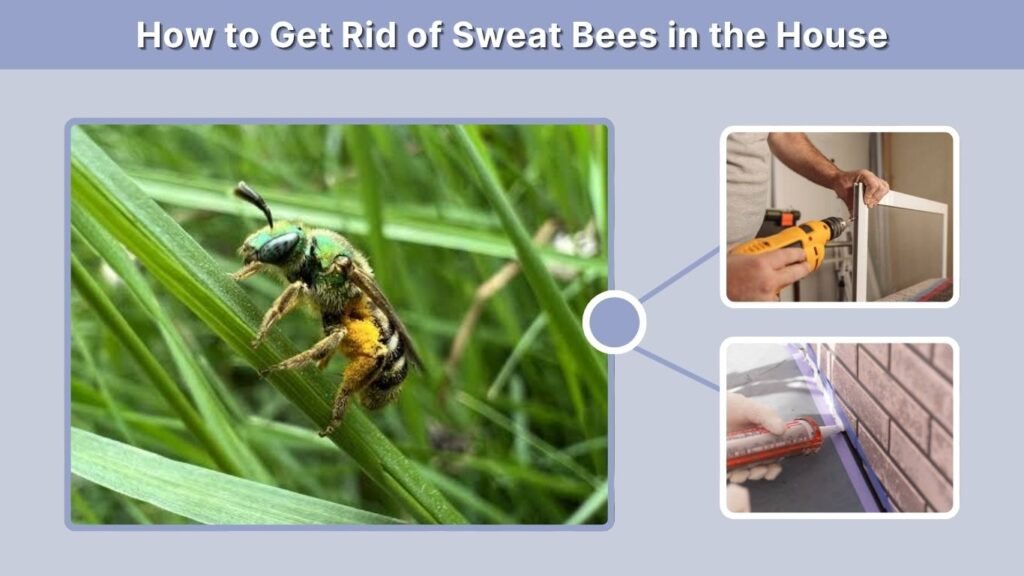
Sweat bees generally do not establish large honey-bee-style colonies inside houses.
An occasional bee indoors may simply have entered through an open door or window.
For a single bee, place a transparent container over it, slide a piece of stiff paper underneath, and release it outside.
To prevent additional visitors:
- Repair window screens
- Keep doors closed when possible
- Seal obvious exterior gaps
- Check flowering houseplants near open windows
- Inspect the exterior if many bees repeatedly appear indoors
Repeated indoor activity may justify professional identification before any treatment is attempted.
How to Get Rid of a Sweat Bee Nest
First confirm that the holes actually belong to sweat bees.
Many unrelated insects make small holes in soil, and even sweat bee nesting behavior varies considerably. Some species are solitary, while others nest close together or display various levels of social behavior.
If the nest is not creating a safety problem, leave it until the bees complete their seasonal activity.
Utah State University recommends temporarily restricting access around troublesome aggregations and renovating the nesting area after it becomes inactive.
For a large aggregation directly beside an entrance, playground, or another unavoidable location—particularly where someone has a serious sting allergy—consult a qualified pest-management professional rather than attempting to dig up or spray the nests yourself.
Do Home Remedies Kill Sweat Bees?
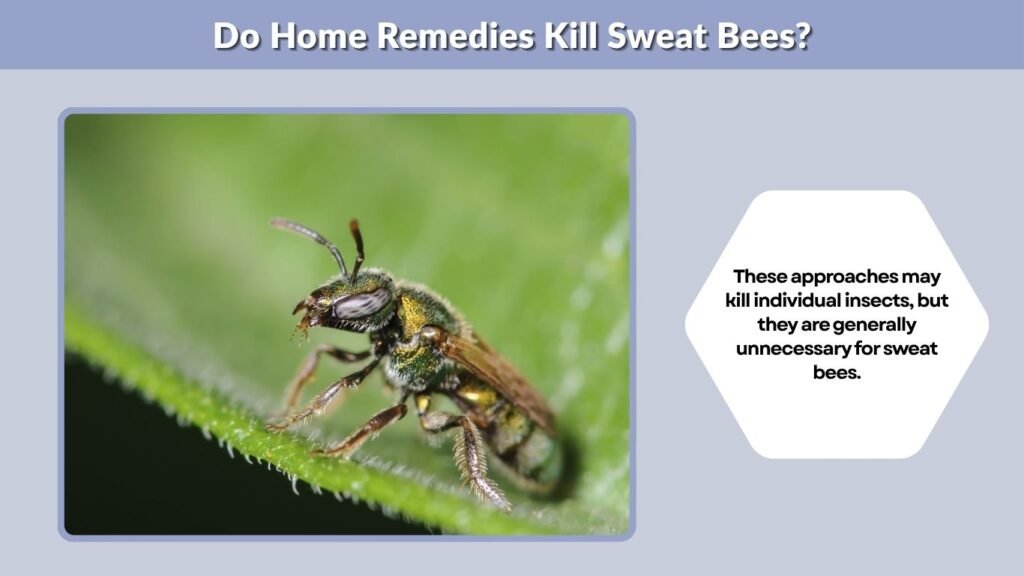
Many online remedies recommend vinegar, dish soap, essential oils, homemade traps, or other mixtures.
These approaches may kill individual insects, but they are generally unnecessary for sweat bees and can also harm other beneficial pollinators.
Habitat modification provides a better long-term solution when ground nesting is the actual problem.
Avoid flooding active nests simply to destroy them. Ground-nesting native bees are important pollinators, and unnecessary nest destruction provides little benefit when the same site remains attractive the following season.
How to Keep Sweat Bees Away Long Term
Long-term control starts by identifying why the bees are present.
If they are landing on people, reduce sweat-related attraction. If they are visiting flowers, their presence is normal pollinator activity. If they are nesting beside walkways or patios, change the ground conditions in that specific location after nesting ends.
Sweat bees commonly favor patches of suitable exposed ground, so converting problem areas into dense turf or vegetation can discourage future nesting while leaving less-used sections of the property available for pollinators.
The goal is not necessarily to eliminate every sweat bee. It is to prevent them from becoming a nuisance where people regularly walk, swim, eat, or relax.
FAQs
Why are sweat bees attracted to me?
Some sweat bee species are attracted to salts in human perspiration. This is why they frequently land on sweaty skin during hot summer weather.
What is the fastest way to keep sweat bees off you?
Rinse sweat from your skin, dry yourself, avoid crushing bees against your body, and reduce strenuous outdoor activity during very hot conditions when they are especially bothersome.
Do sweat bees sting?
Yes, females can sting, particularly if trapped or squeezed against the skin. However, sweat bees are generally docile and their stings are usually mild.
Why are sweat bees around my pool?
People around pools may be sweating, and bees may also investigate available moisture. If many bees originate from one nearby patch of ground, check for a nesting aggregation.
Should I kill sweet bees?
Usually not. Sweat bees are important native pollinators and normally pose little risk. Control is most appropriate when nesting occurs in a high-traffic location or creates a genuine safety concern. Habitat modification and physical separation are preferable to unnecessary insecticide use.
