
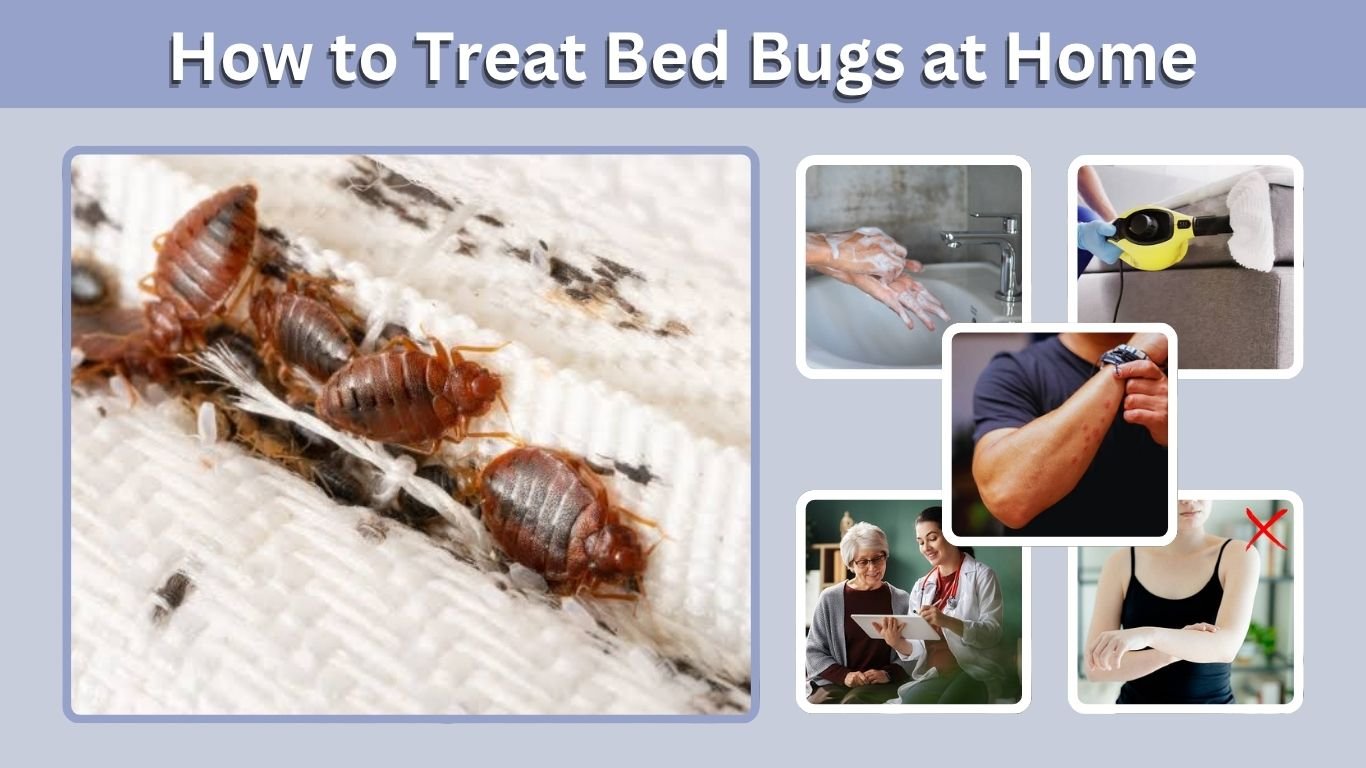
Learning how to treat bed bugs requires more than spraying the insects you can see. Bed bugs hide in mattresses, bed frames, furniture, clothing, cracks, and other protected spaces, while their eggs can survive some treatments. The most effective approach combines inspection, heat, cleaning, encasements, monitoring, and carefully selected pesticides when necessary. This guide explains how to treat bed bugs at home, including mattresses, bedding, clothes, furniture, heat treatment, bites, and situations where professional pest control is the better option.
How to Treat Bed Bugs at Home
Bed bug treatment works best as an integrated process rather than a single application. The EPA recommends integrated pest management, combining physical removal, heat, monitoring, preparation, and properly labeled pesticides when needed. Bed bugs reproduce quickly, and eggs can be harder to eliminate than mobile bugs, so follow-up inspection is essential even when the first treatment appears successful.
Step-by-Step Home Treatment
Start with these steps:
- Confirm that the insects are actually bed bugs.
- Inspect mattresses, box springs, frames, headboards, sofas, and nearby cracks.
- Reduce clutter around sleeping areas.
- Vacuum visible bugs, eggs, seams, and crevices.
- Immediately seal and discard vacuum contents outdoors.
- Heat-dry washable bedding and clothing.
- Encase mattresses and box springs.
- Place bed bug interceptors beneath bed legs.
- Seal cracks and crevices where practical.
- Monitor the room regularly after treatment.
- Use only pesticides specifically labeled for bed bugs and the intended indoor location.
Avoid moving untreated belongings into another room because this may spread the infestation.
How to Treat Bed Bugs in a Bed and Mattress
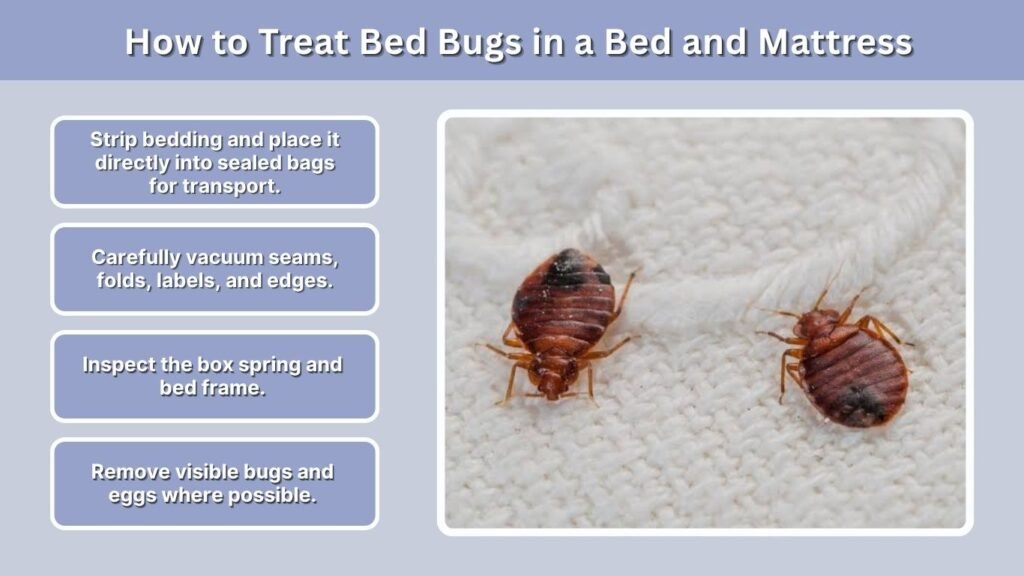
Beds receive special attention because infestations commonly concentrate close to where people sleep. Bed bugs can hide in mattress seams, box springs, screw holes, headboards, frames, and nearby furniture. A mattress usually does not have to be thrown away simply because bed bugs are present. Instead, inspection, cleaning, encasement, and isolation can form part of a broader treatment plan.
How to Treat a Mattress for Bed Bugs
For the bed and mattress:
- Strip bedding and place it directly into sealed bags for transport.
- Carefully vacuum seams, folds, labels, and edges.
- Inspect the box spring and bed frame.
- Remove visible bugs and eggs where possible.
- Use an appropriate bed-bug-proof mattress encasement.
- Encase the box spring as well.
- Move the bed about six inches from the wall.
- Keep sheets and blankets from touching the floor.
- Place interceptors beneath each bed leg.
- Leave a durable encasement in place for the recommended period.
EPA guidance recommends sturdy encasements that close completely and can remain intact for about a year.
How to Treat a Couch and Furniture
Inspect upholstered furniture carefully along seams, beneath cushions, around staples, inside folds, and near frame joints. Vacuuming can remove some bugs and eggs, while appropriately applied steam may reach crevices and fabric areas that are difficult to access.
Do not automatically discard furniture. If disposal becomes necessary, wrap or mark infested items so another person does not unknowingly take them home. Treatment should also include nearby baseboards and hiding areas, not just the visible couch surface.
How to Treat Clothes, Bedding, and Belongings
Clothing and bedding can transport bed bugs between rooms, apartments, hotels, and homes. Laundry therefore plays an important role in treatment. Washing alone may not reliably kill every life stage, while sustained dryer heat is much more dependable. Treated belongings should also be protected from reinfestation until the surrounding room has been successfully controlled.
Treating Clothes and Bedding
Follow these precautions:
- Carry infested laundry in sealed bags.
- Place dryer-safe items in a dryer on high heat for about 30 minutes.
- Do not depend on washing alone.
- Transfer clean items into fresh sealed bags or containers.
- Clean laundry hampers that may have contained infested items.
- Inspect shoes, luggage, bags, and stored belongings.
- Do not put heat-sensitive items into a hot dryer.
- Keep treated and untreated possessions separated.
For electronics, books, and delicate belongings, avoid improvised pesticide or heating methods. Ask an experienced pest professional how to handle items that cannot safely be laundered or heated.
Heat, Steam, and Pesticide Treatment
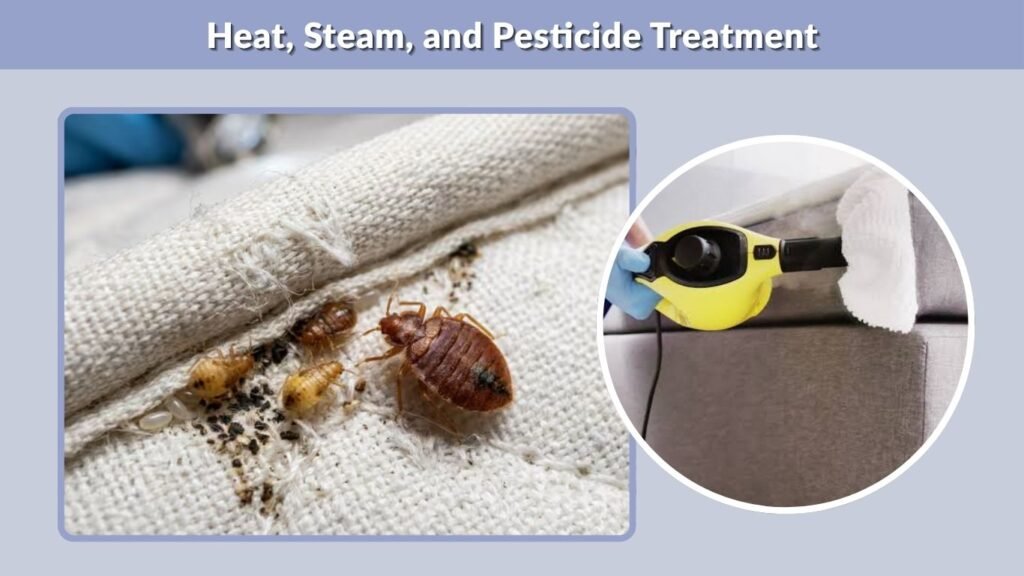
Heat can kill bed bugs at all life stages when the required temperature reaches the insects for long enough. However, treating individual dryer-safe belongings is very different from heating an entire room or house. Improvised whole-room heating can create serious fire hazards. Pesticides can also be useful, but they should complement rather than replace cleaning, heat, and monitoring.
Can You Heat Treat Bed Bugs Yourself?
A household clothes dryer is one of the simplest heat tools for clothing and bedding. Steam can also be useful on carpets, baseboards, bed frames, and some furniture when applied correctly.
Do not attempt to heat an entire room using space heaters, fireplaces, or by turning up the thermostat. The EPA warns that these approaches can fail to heat hiding places adequately and have caused house fires. Professional whole-room heat treatment uses specialized equipment and monitoring.
Using Bed Bug Pesticides Safely
Choose only a pesticide registered for bed bugs and approved for the exact location where you intend to apply it. Follow the label for dosage, placement, reentry times, and repeat applications.
Foggers or “bug bombs” should not be relied upon as the only bed bug treatment. Repeatedly spraying random surfaces can also increase exposure without eliminating bugs hidden deep in cracks.
When Professional Bed Bug Treatment Is Needed
DIY treatment can work in some situations, but bed bugs are difficult to eliminate because they hide well, reproduce quickly, and may survive incomplete applications. A professional experienced specifically in bed bug management can inspect the extent of the infestation and combine appropriate treatments. Apartments and other multi-unit buildings often require coordinated action because bed bugs may move between neighboring units.
Professional Treatment and Cost
Consider professional help when bed bugs occur in multiple rooms, DIY treatments repeatedly fail, neighboring apartments may be affected, or the infestation is extensive.
Professional treatment may include insecticides, steam, monitoring, targeted dusts, or whole-room heat depending on the situation. Cost varies substantially with property size, infestation severity, geographic area, number of treatments, and treatment method. A thorough inspection and written treatment plan are more useful than choosing a company solely on the lowest price.
How to Treat Bed Bug Bites
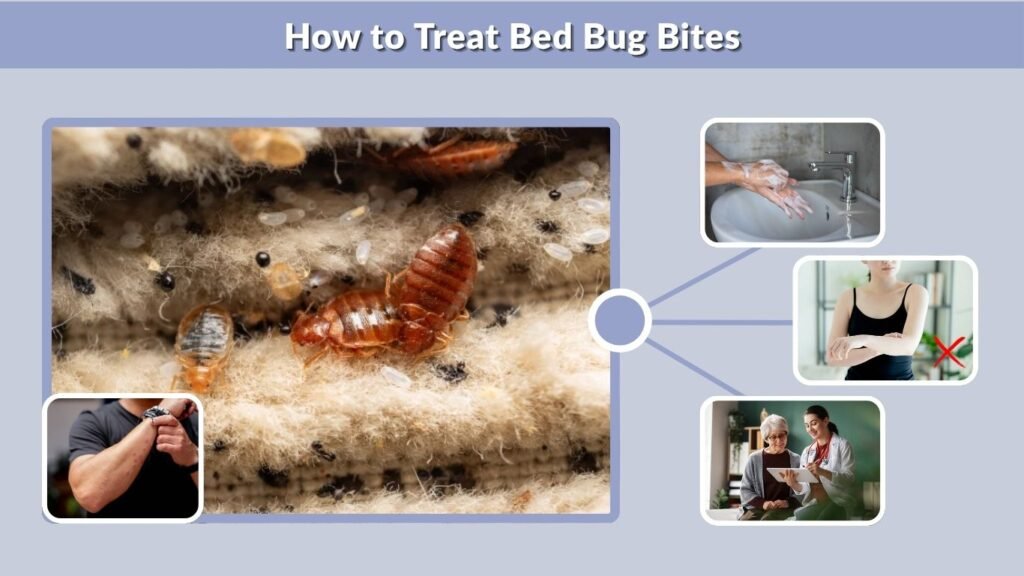
Treating the infestation and treating the bites are separate issues. Bed bug bites usually heal without specific medical treatment and bed bugs are not known to transmit disease to people. The biggest concern with ordinary bites is itching and skin damage caused by scratching. More severe reactions or secondary infections may require evaluation by a healthcare professional.
Bed Bug Bite Treatment
For uncomplicated bites:
- Wash the affected skin gently.
- Avoid scratching the bites.
- Keep the area clean.
- Use an appropriate anti-itch treatment if needed.
- Ask a pharmacist or healthcare professional about an antihistamine for significant itching.
- Seek medical care for signs of infection.
- Get urgent medical help for difficulty breathing or a serious allergic reaction.
CDC guidance notes that stronger inflammatory reactions may sometimes benefit from topical corticosteroids, while secondary bacterial infections may require medical treatment.
FAQs
Successful bed bug treatment requires patience because killing visible adults does not necessarily mean every egg or hidden nymph has been eliminated. Continued monitoring after treatment is therefore important. The following questions cover common concerns about mattresses, laundry, heat, treatment duration, and whether bed bugs can be eliminated without automatically throwing away beds or other furniture.
1. What is the best way to treat bed bugs at home?
Use several methods together: inspect carefully, vacuum, reduce clutter, heat-dry suitable belongings, encase mattresses, use interceptors, and apply only properly labeled bed bug pesticides when necessary. This integrated approach is more dependable than relying on one spray.
2. Do I need to throw away my mattress?
Usually not. A mattress that remains usable can often be vacuumed, inspected, and placed inside a durable bed-bug-proof encasement as part of a complete treatment program.
3. How long should clothes be dried for bed bugs?
The EPA recommends placing bedding and clothing in a dryer on high heat for about 30 minutes. Washing alone generally does not reliably eliminate bed bugs.
4. Can I heat treat my whole house myself?
DIY whole-room heating with space heaters, fireplaces, or the home thermostat is unsafe and unreliable. Whole-home or room heat treatment is better handled with specialized professional equipment.
5. How long does it take to get rid of bed bugs?
There is no universal timeline. Treatment duration depends on infestation size, preparation, treatment method, resistance, and whether every life stage is reached. Follow-up monitoring and sometimes repeat treatment are necessary before an infestation can confidently be considered eliminated.
