
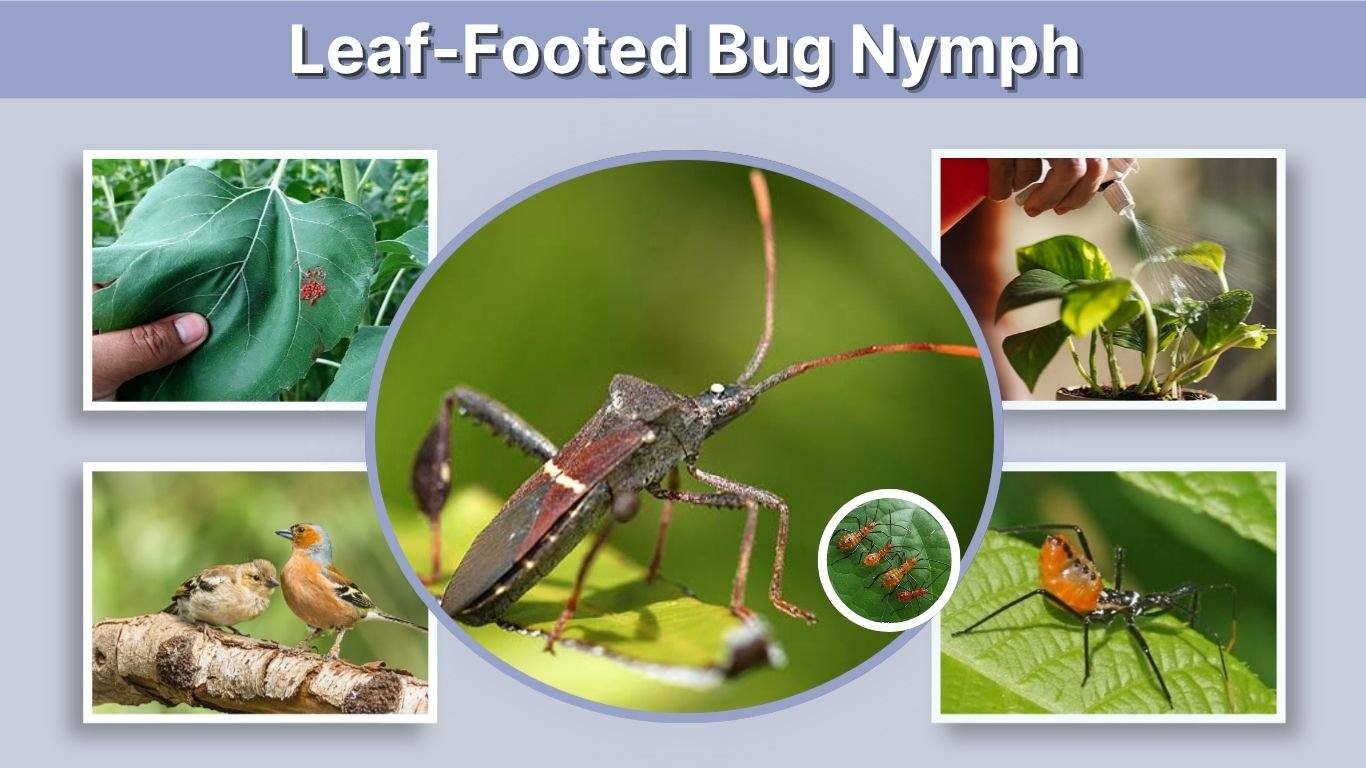
A leaf-footed bug nymph is the immature stage of a leaf-footed bug, a plant-feeding insect in the family Coreidae. These young bugs often appear bright red, orange, black, green, or occasionally bluish, making them easy to mistake for assassin bug nymphs. They commonly gather on tomatoes, cucumbers, zucchini, pomegranates, and other garden plants, where they pierce developing fruits and seeds. Learning how to identify leaf-footed bug nymphs, recognize their life stages, distinguish them from beneficial insects, and control them early can prevent serious garden damage.
What Does a Leaf-Footed Bug Nymph Look Like?
Young leaf-footed bugs look surprisingly different from adults. They do not yet have fully developed wings or the distinctive flattened hind legs that give adult leaf-footed bugs their name. Early nymphs are often brightly colored and may gather together in noticeable groups. As they mature through several molts, their bodies become larger, darker, and increasingly similar to the adult form.
Leaf-Footed Bug Nymph Identification
Common identification features include:
- Body color: Red, orange, reddish-black, green, brown, or occasionally bluish
- Body shape: Narrow and elongated
- Legs: Long and slender
- Antennae: Long and clearly segmented
- Wings: Absent in young nymphs; wing pads develop later
- Hind legs: Leaf-like expansions are not fully developed
- Behavior: Often found clustered together when young
- Location: Commonly seen on fruits, stems, leaves, and seed heads
Older nymphs become darker and begin developing wing pads before reaching adulthood.
Leaf-Footed Bug Nymph Stages
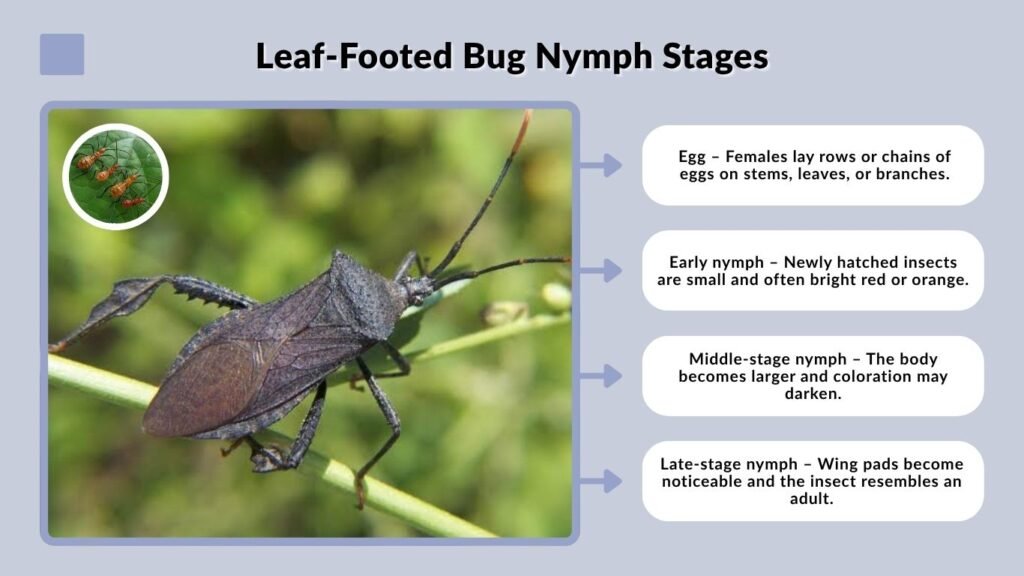
Leaf-footed bugs undergo incomplete metamorphosis, meaning they do not have a caterpillar-like larval stage or pupal stage. Instead, they hatch as small versions of the adult form and progress through several nymph stages known as instars. Each time a nymph molts, it grows larger and gradually develops adult characteristics, including darker coloration, wings, and expanded hind legs.
From Egg to Adult
The basic life cycle includes:
- Egg – Females lay rows or chains of eggs on stems, leaves, or branches.
- Early nymph – Newly hatched insects are small and often bright red or orange.
- Middle-stage nymph – The body becomes larger and coloration may darken.
- Late-stage nymph – Wing pads become noticeable and the insect resembles an adult.
- Adult – Fully developed wings and characteristic hind legs appear.
The amount of time required to reach adulthood varies with temperature, species, and food availability.
Leaf-Footed Bug Nymph Eggs and Hatchlings
Leaf-footed bug eggs are often one of the easiest signs of an upcoming infestation. Females commonly arrange eggs in straight or slightly curved rows along stems or leaf veins. The eggs may be brown, bronze, golden, or dark in color. Once they hatch, the baby leaf-footed bug nymphs frequently remain together near the egg row before dispersing across the plant.
How to Recognize Eggs and New Nymphs
Look for:
- Rows of small brown or bronze eggs
- Eggs attached directly to stems or leaves
- Groups of tiny red or orange nymphs
- Long black or dark legs
- Nymphs feeding close together
- Clusters near young fruit or developing seed pods
Removing egg rows before they hatch is one of the simplest ways to reduce leaf-footed bug populations.
Red, Orange, Blue, and Green Leaf-Footed Bug Nymphs
Color can vary considerably among leaf-footed bug species and developmental stages. Bright red and orange nymphs are especially common, but some may appear darker, greenish, black-and-red, or even bluish under certain lighting conditions. Color alone should therefore not be used to identify a nymph. Body shape, antennae, behavior, host plant, and development stage provide more reliable clues.
Red and Orange Leaf-Footed Bug Nymph
Red leaf-footed bug nymphs are among the most frequently encountered forms. Newly hatched individuals may have vivid reddish-orange bodies with dark legs and antennae.
As they mature, the bright coloration may become less noticeable and darker areas can develop across the abdomen and thorax.
Blue or Green Leaf-Footed Bug Nymph
A blue leaf-footed bug nymph may appear metallic blue, blue-black, or dark gray depending on the species and light. Greenish nymphs can also occur.
Unusual coloration does not necessarily indicate a different insect family, so other physical characteristics should always be examined.
Leaf-Footed Bug Nymph vs Assassin Bug Nymph
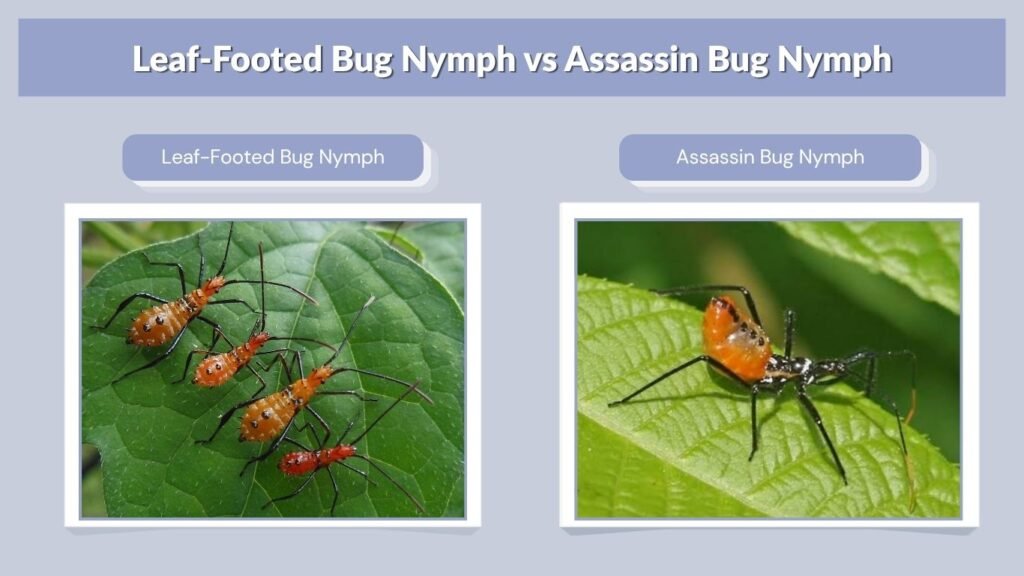
A leaf-footed bug nymph vs assassin bug nymph comparison is important because young individuals can look remarkably similar. Both may have red or orange bodies, black legs, long antennae, and narrow shapes. However, leaf-footed bugs are plant feeders, while assassin bugs are predators that can actually benefit gardens by eating pest insects.
Key Differences
- Leaf-footed bug nymphs: Usually feed directly on plants, fruits, and seeds.
- Assassin bug nymphs: Hunt caterpillars, flies, beetles, and other insects.
- Grouping: Young leaf-footed bugs frequently cluster together.
- Behavior: Assassin bugs are more often seen moving individually while hunting.
- Mouthparts: Assassin bugs have a strong curved piercing beak for attacking prey.
- Plant damage: Leaf-footed bugs may leave feeding marks on fruits and vegetables.
Avoid automatically killing a red nymph until you are reasonably sure it is a leaf-footed bug rather than a beneficial assassin bug.
Leaf-Footed Bug Nymph on Tomato Plants
Tomatoes are a common target for leaf-footed bug nymphs. Both adults and nymphs use piercing-sucking mouthparts to penetrate the fruit and remove plant fluids. Young tomatoes are especially vulnerable because feeding can interfere with normal development and cause cosmetic or internal damage as the fruit matures.
Damage to Tomatoes
Leaf-footed bug nymph feeding may cause:
- Tiny puncture marks
- Yellow or pale spots
- Sunken areas
- Hard sections beneath the skin
- Misshapen tomatoes
- Damaged seeds
- Poor fruit development
- Premature fruit drop
The insects may also attack cucumbers, zucchini, peppers, citrus, pomegranates, beans, squash, and many seed-producing plants.
Does a Leaf-Footed Bug Nymph Bite?
A leaf-footed bug nymph bite is uncommon because these insects are adapted to feeding on plants rather than humans or animals. Their piercing mouthparts are used to penetrate fruits, stems, and seeds.
However, a nymph that is squeezed, trapped against the skin, or handled roughly could potentially probe the skin defensively.
Is the Bite Dangerous?
A defensive puncture may cause temporary discomfort, redness, or mild irritation, but leaf-footed bug nymphs are not blood-feeding insects.
They should not be confused with kissing bugs, which belong to a different insect family and have different feeding behavior.
Because identification can sometimes be difficult, it is better to avoid handling unknown true bugs with bare hands.
How to Get Rid of Leaf-Footed Bug Nymphs
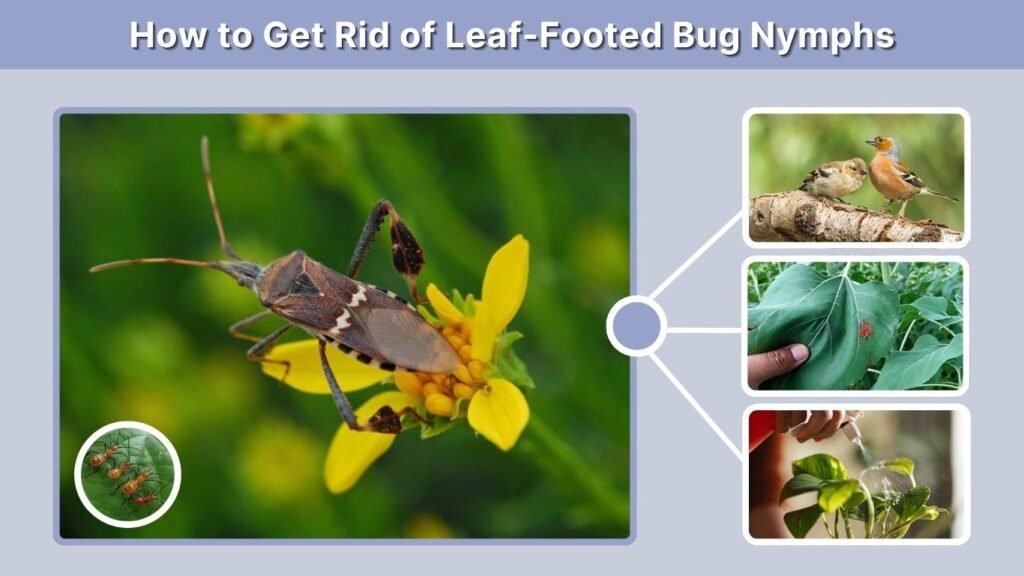
Controlling leaf-footed bugs during the nymph stage is usually easier than trying to eliminate fully grown adults. Young nymphs often remain clustered together and are less mobile, making them easier to locate and remove. Regular inspection of plants during warm months can help you spot eggs and early nymph colonies before they spread throughout the garden.
Leaf-Footed Bug Nymph Control
Effective control methods include:
- Remove egg rows: Crush or remove eggs before they hatch.
- Hand-pick nymphs: Wear gloves and drop them into soapy water.
- Spray with water: A strong stream may dislodge small nymphs.
- Remove weeds: Reduce alternate host plants near the garden.
- Use row covers: Protect young crops before pests arrive.
- Check tomatoes frequently: Inspect stems, fruit clusters, and leaf undersides.
- Encourage natural enemies: Predatory insects, spiders, birds, and parasitoids can help.
Organic Control
For an organic approach, begin with physical removal and prevention. Insecticidal soap may work better against small nymphs when direct contact is achieved, although repeated treatment may be required.
Neem-based products are sometimes used in gardens, but results can vary. Always follow the product label and avoid spraying flowering plants when pollinators are actively visiting.
Giant and Eastern Leaf-Footed Bug Nymphs
Several different Coreidae species may appear in gardens, so nymphs can vary significantly in size and appearance. Giant leaf-footed bugs, eastern leaf-footed bugs, and related species all pass through immature stages before becoming recognizable adults. Geographic location can help narrow identification, especially in areas such as Florida, Texas, Arizona, and other warm regions.
Giant Leaf-Footed Bug Nymph
Giant leaf-footed bug nymphs can eventually develop into large adults with impressive hind legs. The immature forms are smaller, lack functional wings, and may show bright coloration.
Eastern Leaf-Footed Bug Nymph
Eastern leaf-footed bug nymphs may be found feeding on fruits, seeds, vegetables, and ornamental plants. Like other Coreidae nymphs, they gradually develop darker adult coloration and visible wing pads through successive molts.
FAQs
What Color Is a Leaf-Footed Bug Nymph?
Leaf-footed bug nymphs can be red, orange, reddish-black, green, brown, or occasionally bluish. Their coloration often changes as they mature.
Do Leaf-Footed Bug Nymphs Damage Tomato Plants?
Yes. They pierce tomatoes and suck plant fluids, potentially causing yellow spots, punctures, deformities, damaged seeds, and poor fruit development.
How Can I Tell a Leaf-Footed Bug Nymph From an Assassin Bug?
Leaf-footed bug nymphs usually feed on plants and often cluster together. Assassin bug nymphs are predators that typically hunt other insects.
How Do You Get Rid of Leaf-Footed Bug Nymphs?
Remove egg rows, hand-pick clustered nymphs, control weeds, protect crops with barriers, and encourage natural predators. Early removal is usually the most effective approach.
Can Leaf-Footed Bug Nymphs Bite Humans?
They rarely bite humans because they are plant feeders. Defensive probing is possible if they are trapped or handled roughly, but they do not normally seek people as a food source.
