
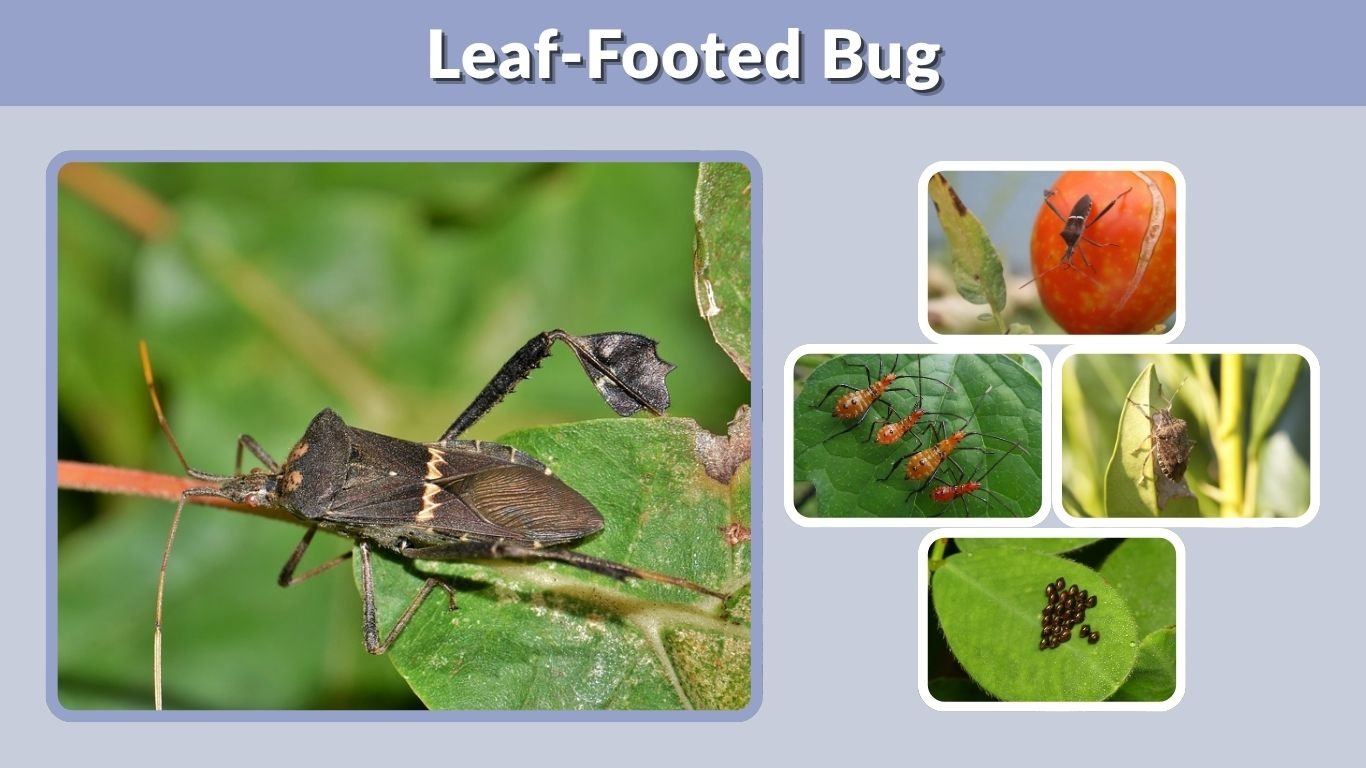
The leaf-footed bug is a plant-feeding insect recognized by the flattened, leaf-like expansions found on the hind legs of many species. These bugs are commonly seen on tomatoes, pomegranates, citrus, vegetables, fruits, and ornamental plants. Adults can look intimidating because of their large bodies and long legs, while young leaf-footed bug nymphs are often bright red or orange. Although they rarely pose a danger to people, large populations can damage garden plants and develop fruit. Here is how to identify leaf-footed bugs, understand their life cycle, recognize their damage, and control them.
What Is a Leaf-Footed Bug?
Leaf-footed bugs are true bugs belonging to the family Coreidae. The group includes numerous species found throughout North America and other parts of the world.
Their common name comes from the expanded sections on the hind legs of many adult species, which resemble small leaves. However, not every member of the family has equally noticeable expansions.
Leaf-footed bugs possess piercing-sucking mouthparts that they insert into plant tissue to remove juices.
Leaf-Footed Bug Identification
- Family: Coreidae
- Body shape: Long and somewhat narrow
- Typical size: About ½ to more than 1 inch, depending on species
- Color: Brown, gray, black, reddish, or combinations
- Hind legs: Often flattened or leaf-shaped
- Antennae: Long and segmented
- Wings: Present in adults
- Mouthparts: Piercing and sucking
- Food: Plant juices, seeds, fruits, and developing vegetables
Leaf-Footed Bug Nymph
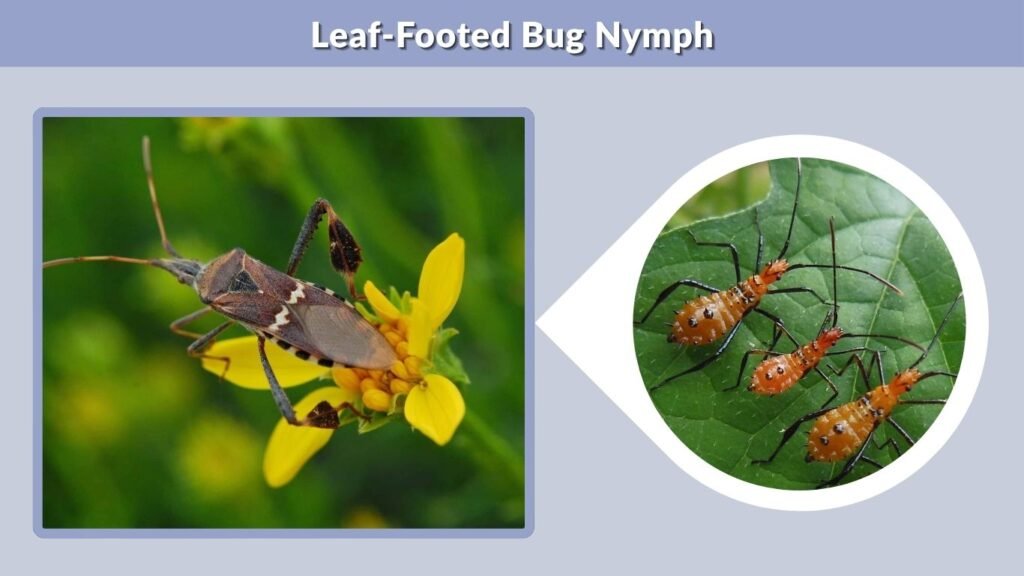
A leaf-footed bug nymph can look very different from an adult. Newly hatched nymphs are small, wingless, and often bright red, orange, or reddish-black.
They usually have long legs and antennae but lack the fully developed leaf-like hind-leg expansions seen in some adults.
Young nymphs often remain together shortly after hatching, creating clusters of red insects on leaves, stems, or fruit.
What Does a Leaf-Footed Bug Nymph Look Like?
Early-stage nymphs may have:
- Bright red or orange bodies
- Dark or black legs
- Long antennae
- Narrow bodies
- No developed wings
- No fully developed leaf-shaped hind legs
As they mature, their coloration generally becomes darker and wing pads begin developing.
A blue leaf-footed bug nymph or dark-colored nymph may simply represent a species or developmental stage with unusual coloration rather than a completely separate type.
Leaf-Footed Bug Eggs
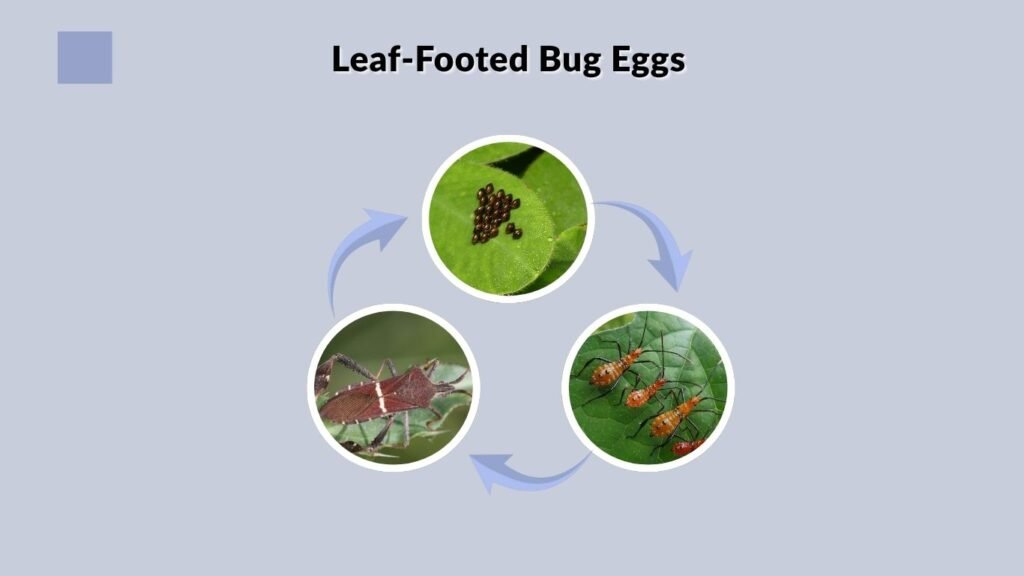
Leaf-footed bug eggs are usually laid in neat rows or chains on stems, leaves, branches, or other plant surfaces.
The eggs are often brown, bronze, or golden-brown and may appear barrel-shaped or slightly cylindrical.
A female can deposit numerous eggs, which eventually hatch into small nymphs that begin feeding nearby.
Leaf-Footed Bug Life Cycle
Leaf-footed bugs develop through incomplete metamorphosis, meaning there is no pupal stage.
Their life cycle includes:
Egg → Nymph → Adult
Nymphs pass through several developmental stages, called instars. At each stage, they molt and become progressively more similar to adults.
Once mature, adults develop functional wings and reproductive organs.
In warm climates, multiple generations may occur during a growing season.
Giant Leaf-Footed Bug
Some species are commonly described as giant leaf-footed bugs because they are noticeably larger than typical garden insects.
Species in genera such as Acanthocephala can have large bodies, powerful-looking hind legs, and dramatic leg expansions.
Despite their intimidating appearance, giant leaf-footed bugs are primarily plant feeders.
They may be seen on trees, shrubs, fruit crops, weeds, and garden plants, particularly in warm regions such as Florida and Texas.
Eastern Leaf-Footed Bug
The eastern leaf-footed bug is one of several leaf-footed bugs commonly encountered in eastern North America.
Species such as Leptoglossus phyllopus can be recognized by their elongated brown bodies, expanded hind legs, and pale band across the wings.
These bugs may feed on fruits, seeds, vegetables, and ornamental plants.
Western Leaf-Footed Bug
Western species of Leptoglossus are also common and may be found feeding on seeds, cones, fruits, and other plant material.
Some species occasionally enter houses during cooler weather while searching for protected overwintering sites.
Leaf-Footed Bug on Tomatoes
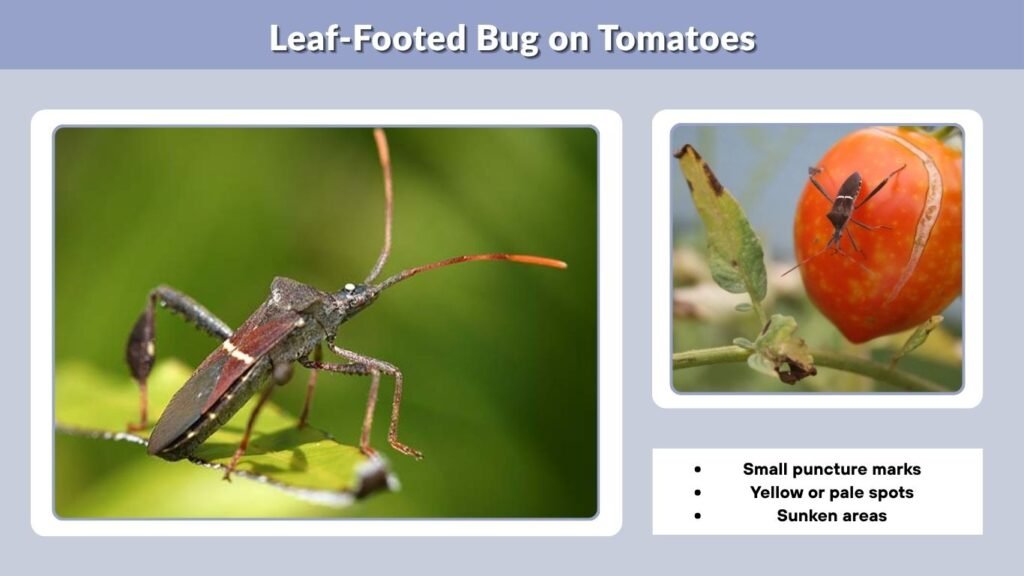
A leaf-footed bug on tomatoes can become a significant garden pest, especially when several adults and nymphs feed on developing fruit.
The insect pierces the tomato skin with its mouthparts and removes plant juices.
Leaf-Footed Bug Tomato Damage
Feeding can cause:
- Small puncture marks
- Yellow or pale spots
- Sunken areas
- Uneven fruit development
- Discoloration beneath the skin
- Premature fruit drop
- Damaged seeds
Young tomatoes may become deformed if feeding occurs while they are still developing.
Leaf-footed bugs can also feed on peppers, citrus, peaches, pomegranates, beans, squash, and other crops.
Are Leaf-Footed Bugs Dangerous?
Leaf-footed bugs are generally not dangerous to humans.
They are plant feeders and do not seek people or animals for blood.
Their large size sometimes causes confusion with insects that can bite humans, particularly assassin bugs and kissing bugs.
Leaf-footed bugs may release an unpleasant defensive odor when disturbed, but they are not considered medically important pests.
Do Leaf-Footed Bugs Bite?
A leaf-footed bug bite is uncommon.
Their mouthparts are designed primarily for piercing plant tissue rather than attacking humans. However, a bug that is roughly handled or trapped against the skin could potentially probe or puncture the skin defensively.
Such an incident may cause temporary pain, redness, or irritation but is not comparable to the bite of a blood-feeding kissing bug.
Avoid handling large leaf-footed bugs with bare hands if identification is uncertain.
Leaf-Footed Bug vs Assassin Bug
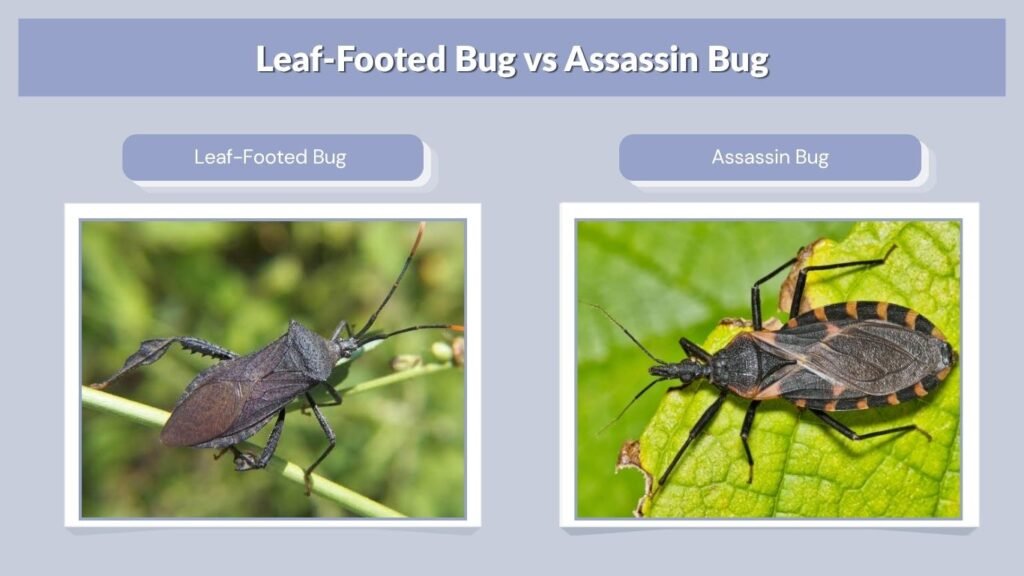
The leaf-footed bug vs assassin bug comparison is important because the two insects can look similar.
Both may have:
- Long legs
- Narrow bodies
- Long antennae
- Piercing mouthparts
- Red or orange nymphs
However, their feeding habits are very different.
Main Difference
Leaf-footed bugs are primarily plant feeders, while assassin bugs are predators that hunt insects and other small animals.
Adult leaf-footed bugs frequently have broad, leaf-like expansions on their hind legs. Assassin bugs generally lack these distinctive expansions.
Assassin bugs also tend to have a thicker, curved beak designed for piercing prey.
Leaf-Footed Bug Nymph vs Assassin Bug Nymph
Young leaf-footed bugs can be particularly difficult to distinguish from assassin bug nymphs because neither has fully developed adult features.
Leaf-footed bug nymphs commonly gather in groups around plants and feed directly on stems, fruit, or seeds.
Assassin bug nymphs are more often observed hunting other insects.
If several red nymphs are clustered around a row of eggs or feeding on a fruiting plant, they are more likely to be leaf-footed bugs.
Leaf-Footed Bug vs Kissing Bug
Leaf-footed bugs are also sometimes confused with kissing bugs, which belong to a different family.
Kissing bugs are blood-feeding insects and some species can transmit the parasite associated with Chagas disease.
Leaf-footed bugs, by contrast, mainly feed on plants.
One useful identification feature is the expanded hind legs of many leaf-footed bugs. Kissing bugs do not possess the characteristic leaf-like hind-leg structures.
Correct identification is important before handling either insect.
Leaf-Footed Bug vs Stink Bug
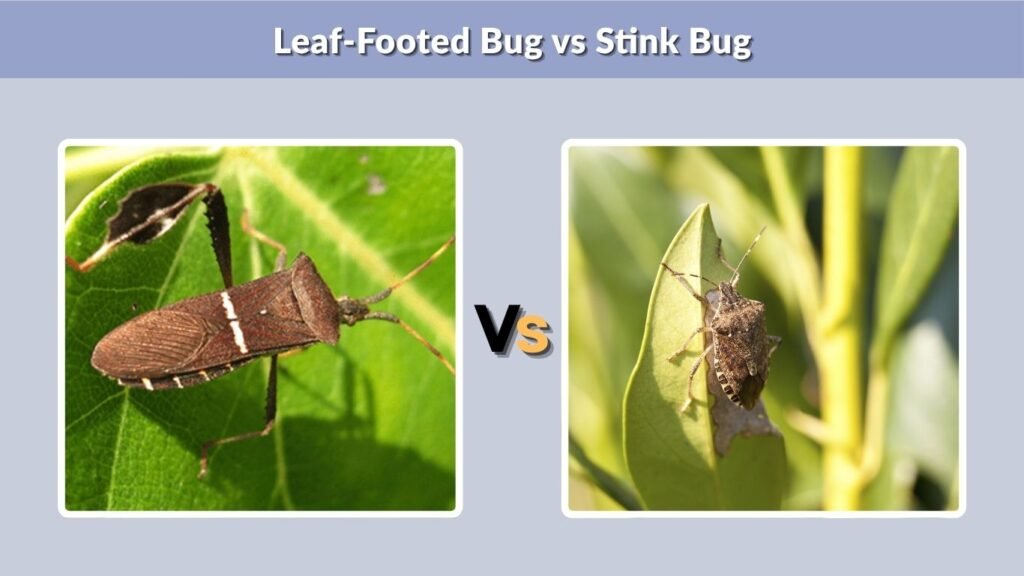
Leaf-footed bugs and stink bugs are both true bugs, but they belong to different families.
Stink bugs typically have:
- Broad, shield-shaped bodies
- Shorter-looking legs
- No leaf-shaped hind-leg expansions
Leaf-footed bugs generally have:
- Longer, narrower bodies
- Longer legs
- More noticeable hind-leg expansions
Both groups can produce defensive odors and both may damage garden plants.
Leaf-Footed Bug Damage
Leaf-footed bugs can become serious pests when large numbers gather on fruiting plants.
Both adults and nymphs use their piercing mouthparts to feed on developing seeds, fruit, and plant tissues.
Common symptoms include spots, deformities, shriveled seeds, poor fruit quality, and premature fruit drop.
Damage tends to be more noticeable when bugs attack young fruit.
How to Get Rid of Leaf-Footed Bugs
Early control is usually easier because young nymphs often remain clustered together.
1. Hand-Pick Adults and Nymphs
Wear gloves and remove visible bugs from plants. Drop them into a container of soapy water.
2. Remove Egg Rows
Inspect stems and leaves for rows of brown eggs. Removing eggs before they hatch can prevent dozens of nymphs from appearing.
3. Control Weeds
Leaf-footed bugs may develop on weeds before moving into gardens. Removing unnecessary vegetation around crops can reduce potential hiding and feeding sites.
4. Protect Valuable Crops
Fine insect netting or row covers can prevent adults from reaching susceptible plants when installed before flowering or fruit development.
5. Encourage Natural Predators
Birds, spiders, predatory insects, and parasitoids can help reduce leaf-footed bug populations naturally.
Insecticides may sometimes be necessary for severe infestations, but they can also kill beneficial insects. Treatment should therefore be targeted carefully and used according to the product label.
FAQs
What Is a Leaf-Footed Bug?
A leaf-footed bug is a plant-feeding true bug belonging to the family Coreidae. Many species have distinctive flattened expansions on their hind legs.
Are Leaf-Footed Bug Nymphs Red?
Yes. Many young leaf-footed bug nymphs are bright red or orange before gradually becoming darker as they mature.
Can Leaf-Footed Bugs Bite Humans?
They rarely bite humans because they primarily feed on plants. Defensive probing may occur if they are handled, but they are not blood-feeding insects.
Are Leaf-Footed Bugs Harmful to Tomatoes?
Yes. Heavy feeding can produce pale spots, punctures, deformities, damaged seeds, and poor-quality tomatoes.
How Do You Get Rid of Leaf-Footed Bugs?
Remove egg masses and clustered nymphs early, hand-pick adults, reduce weeds, use physical barriers when practical, and encourage natural predators. Severe infestations may require a labeled insecticide.
