
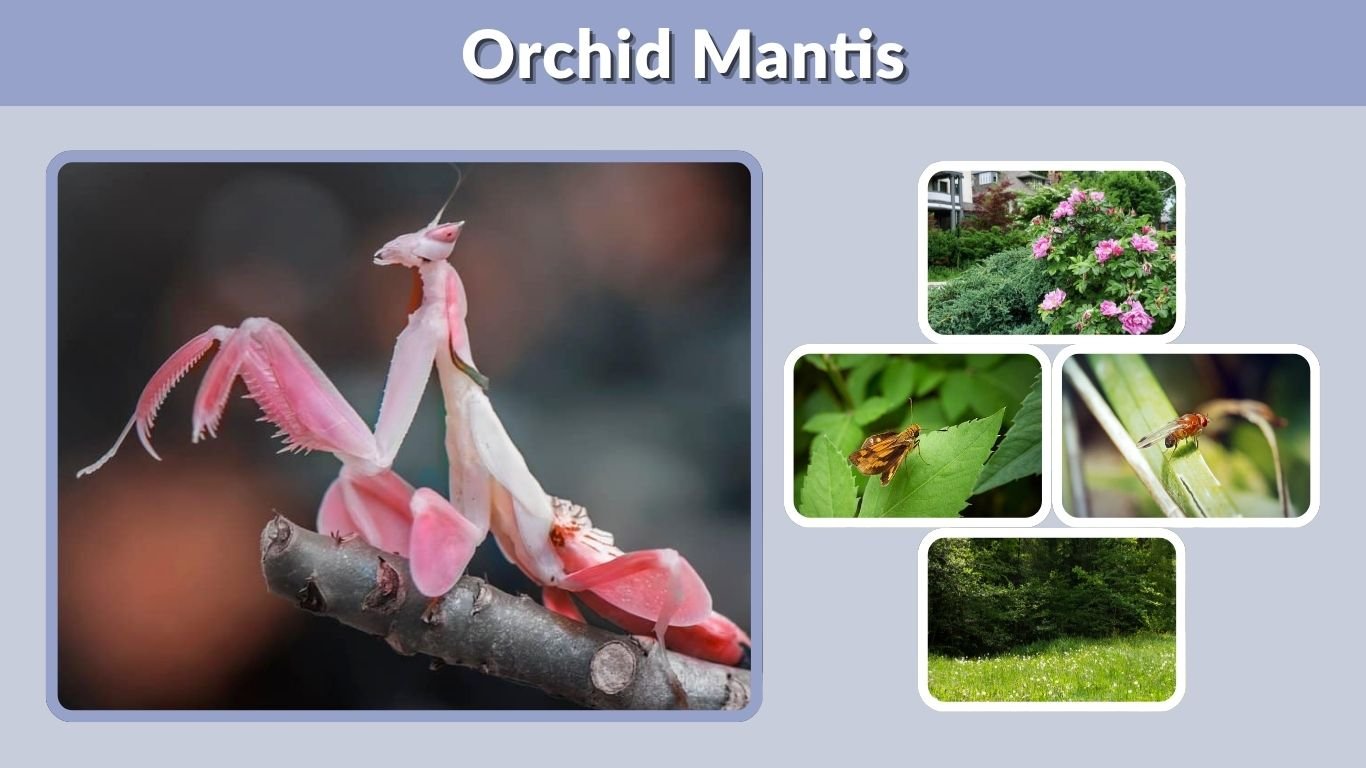
The orchid mantis (Hymenopus coronatus) is one of the most striking praying mantises in the world. Its white, cream, and pink body resembles flower petals, helping it disappear among blossoms while waiting for prey. Native to tropical parts of Southeast Asia, this flower-mimicking insect is also popular among experienced exotic-insect keepers. From its remarkable camouflage and unusual male-female size difference to enclosure requirements, feeding, lifespan, and behavior, the orchid mantis has many fascinating characteristics worth understanding.
What Is an Orchid Mantis?
The orchid mantis is a flower-mimicking praying mantis best known for its petal-shaped legs and delicate coloration. Rather than looking like a typical green or brown mantis, it can blend into pale flowers and surrounding vegetation. Its appearance provides both concealment from predators and an advantage while hunting insects that approach flowers.
Orchid Mantis Identification
An orchid mantis can usually be recognized by several distinctive characteristics:
- White, cream, or light pink body coloration
- Wide, petal-like lobes on the legs
- Triangular head with large compound eyes
- Long grasping forelegs equipped with spines
- Broad abdomen, particularly in adult females
- Wings covering much of the abdomen in adults
- Strong difference in size between males and females
Scientific Name and Appearance
The scientific name of the orchid mantis is Hymenopus coronatus. It belongs to a group of mantises famous for specialized flower mimicry.
Its unusual shape is more important than color alone. Flattened leg lobes create the appearance of flower petals, while irregular body outlines make the insect harder to distinguish from vegetation. Females generally develop the most impressive flower-like appearance because they are considerably larger and broader than males.
Orchid Mantis Colors and Camouflage
Pink orchid mantises receive considerable attention, but individuals are not always bright pink. Their natural appearance can range from almost white to cream with pink or reddish markings. Color may vary with age, surroundings, lighting, and individual development. Their camouflage involves body shape, posture, movement, and coloration working together rather than simply copying one specific orchid flower.
Pink, White, Purple, and Blue Orchid Mantises
A pink orchid mantis is usually an ordinary Hymenopus coronatus showing stronger pink coloration. White orchid mantises are also completely normal.
Photos described as purple or blue orchid mantises should be interpreted carefully. Strong blue or vivid purple coloration is not typical of this species and may result from lighting, image editing, camera conditions, or confusion with another mantis.
How Orchid Mantis Camouflage Works
Orchid mantis camouflage is a form of aggressive mimicry. Instead of relying only on hiding from enemies, the mantis uses its flower-like appearance to remain unnoticed by potential prey.
It stays motionless or moves slowly while waiting for insects to approach. When prey enters striking distance, the mantis rapidly extends its raptorial front legs and captures it. This combination of camouflage and ambush hunting makes the species an extremely specialized predator.
Where Do Orchid Mantises Live?
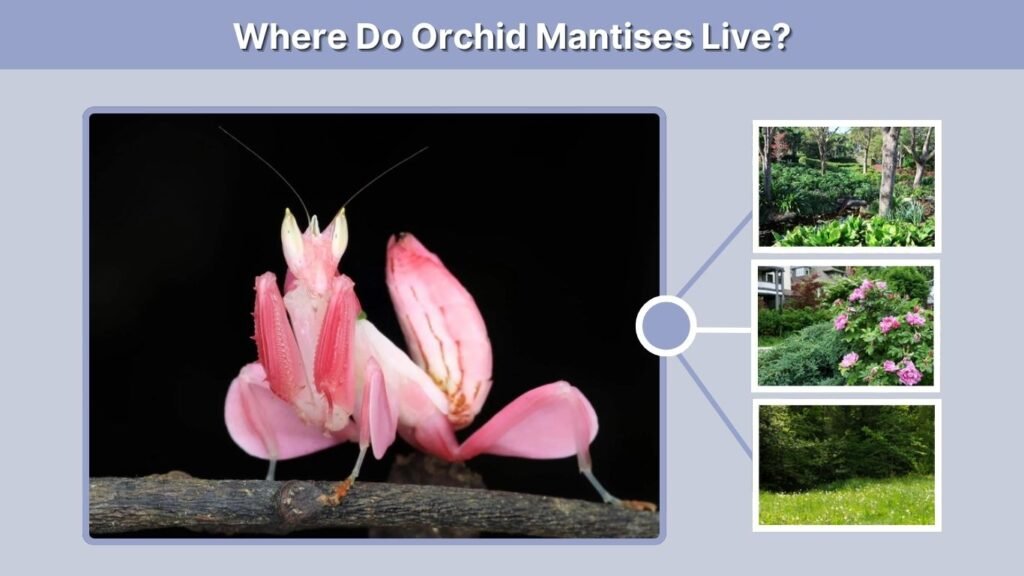
Orchid mantises are associated with warm, humid environments in Southeast Asia. They spend much of their time on vegetation where their pale bodies blend naturally with flowers, leaves, and bright backgrounds. Their tropical origin is particularly important for anyone keeping an orchid mantis because temperature, ventilation, humidity, and suitable climbing surfaces influence successful growth and molting.
Orchid Mantis Habitat
Natural orchid mantis habitat generally includes:
- Tropical and subtropical forests
- Flowering plants and shrubs
- Warm, humid vegetation
- Forest edges and dense plant growth
- Areas containing abundant flying insects
- Parts of Southeast Asia, including Malaysia and Indonesia
They normally remain above ground on plants rather than spending much time walking across open soil.
Why Their Habitat Supports Flower Mimicry
Flower-rich tropical environments provide an ideal hunting setting. Numerous bees, flies, butterflies, moths, and other insects visit blossoms looking for nectar or pollen.
An orchid mantis positioned among vegetation can therefore remain concealed close to a steady food source. Its resemblance does not need to perfectly copy one individual flower; instead, the combination of pale coloration, petal-like legs, and slow movement makes its outline difficult for prey to recognize.
Orchid Mantis Care and Enclosure
Keeping an orchid praying mantis successfully requires more attention than simply placing it inside a small container. Molting is particularly important because mantises must hang freely while shedding their old exoskeleton. The enclosure should provide adequate vertical space, good airflow, appropriate warmth, suitable humidity, climbing surfaces, and enough room for the mantis to hunt comfortably.
Orchid Mantis Enclosure Requirements
A suitable orchid mantis terrarium should provide:
- An enclosure roughly three times the mantis’s body length in height
- Adequate width for comfortable movement
- Fine mesh or textured surfaces for hanging
- Branches or artificial plants for climbing
- Good cross-ventilation
- Light misting when needed
- No deep standing water
- Enough open vertical space for molting
Young nymphs need smaller enclosures because finding prey can become difficult in an excessively large habitat.
Temperature and Humidity
Orchid mantises generally do well in warm conditions around 75–85°F (24–29°C), although requirements can vary with age and husbandry method.
Moderate to relatively high humidity is useful, especially during molting, but constantly wet conditions should be avoided. Good ventilation is essential because stagnant, excessively damp air can encourage mold and other enclosure problems.
Handling an Orchid Mantis
Orchid mantises are better treated as display animals than frequently handled pets. Gentle handling is possible, but unnecessary handling can cause stress or accidental injury.
Never pull a mantis from a surface. Allow it to walk onto your hand voluntarily. Handling should be especially limited when the abdomen becomes swollen before a molt, since the insect is more vulnerable during this stage.
What Do Orchid Mantises Eat?
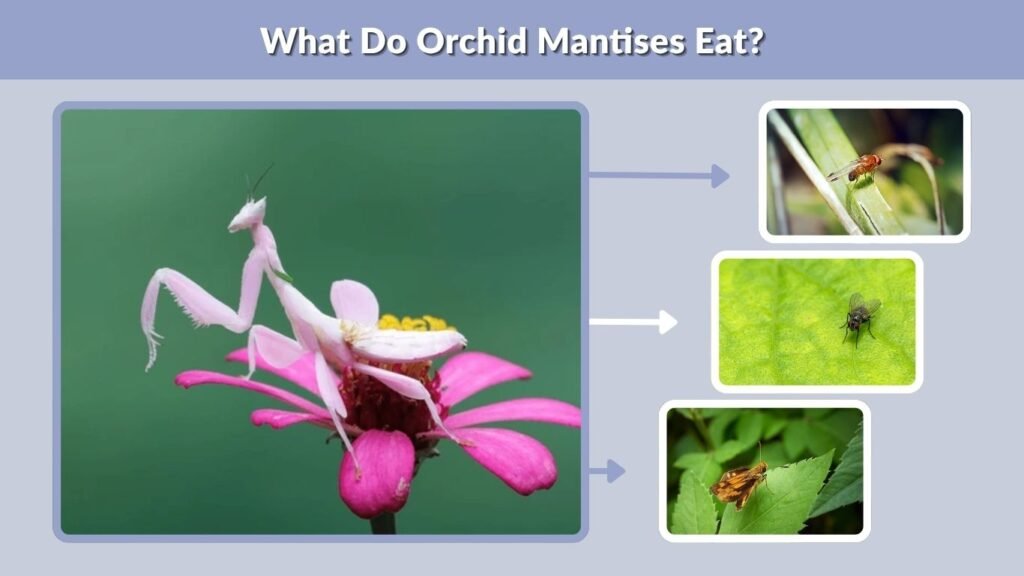
The orchid mantis is a carnivorous ambush predator. In nature, it captures insects visiting vegetation and flowers. Captive mantises should therefore receive appropriately sized live prey rather than fruit or plant material. Food size and feeding frequency should be adjusted according to the mantis’s age, abdominal condition, growth rate, and proximity to molting.
Best Foods for an Orchid Mantis
Common captive foods include:
- Fruit flies for small nymphs
- Houseflies
- Bluebottle or greenbottle flies
- Small moths
- Appropriately sized roaches
- Other safely raised feeder insects
Avoid prey that is too large or aggressive. Wild-caught insects can also introduce pesticide residues, parasites, or other hazards.
How Often Should You Feed It?
Young orchid mantises normally eat more frequently because they are growing rapidly. Adults can generally be fed less often.
Instead of following an inflexible schedule, observe the abdomen. A thin abdomen often suggests that feeding is appropriate, while a very swollen abdomen indicates that additional food may not be necessary. Mantises may also stop eating shortly before molting, which is usually normal.
Orchid Mantis Size, Male vs Female, and Lifespan
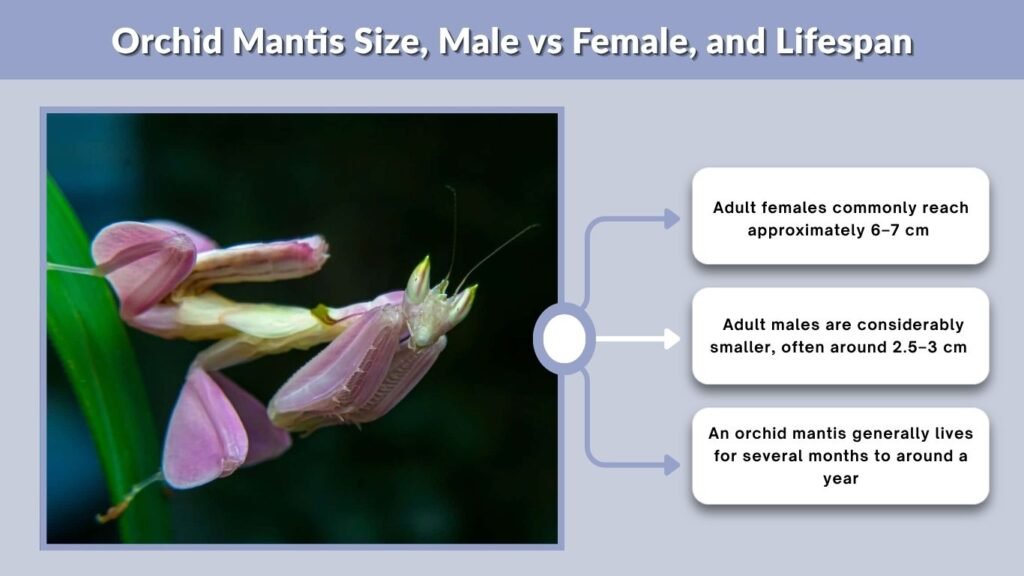
Orchid mantises display pronounced sexual dimorphism, meaning adult males and females look noticeably different. Females become much larger and heavier, while males remain smaller and more slender. Growth speed and lifespan also differ between the sexes. Understanding these differences helps keepers determine whether their mantis is developing normally and prevents smaller males from being mistaken for immature females.
How Big Do Orchid Mantises Get?
Adult females commonly reach approximately 6–7 cm (2.4–2.8 inches) in body length. Adult males are considerably smaller, often around 2.5–3 cm (1–1.2 inches).
Females also have broader abdomens and more prominent petal-like structures. Males mature sooner and have a noticeably lighter, narrower appearance.
Male vs Female Orchid Mantis
Females usually have a powerful flower-like shape and spend more time waiting for prey. Males are smaller, more mobile, and develop proportionally longer wings.
The size difference becomes increasingly obvious as they mature. Adult males may appear tiny beside females, which is normal for the species rather than a sign of poor development.
Orchid Mantis Lifespan
An orchid mantis generally lives for several months to around a year, depending on sex, temperature, diet, and environmental conditions.
Females usually live longer because they mature more slowly. Males develop faster and commonly have shorter adult lives. Proper feeding, safe molting conditions, suitable humidity, and stable temperatures can help captive individuals reach their normal lifespan.
Orchid Mantis as a Pet
The orchid praying mantis can be an extraordinary display pet, but its care requirements make it more suitable for keepers willing to closely manage temperature, ventilation, feeding, and molting conditions. It does not require social interaction and should normally be housed alone. Its spectacular appearance and hunting behavior are the main reasons enthusiasts choose this species.
Is an Orchid Mantis a Good Pet?
An orchid mantis can make an excellent pet for someone interested in observing insect behavior. It requires relatively little physical space and does not need daily handling.
However, successful care requires live feeder insects and careful monitoring during molts. Beginners should understand basic mantis husbandry before choosing very young or delicate nymphs.
Orchid Mantis Price and Buying Considerations
Orchid mantis prices vary considerably according to age, sex, location, availability, and breeder. Females may cost more because of their larger size and distinctive appearance.
When looking for an orchid mantis for sale, choose a reputable captive breeder whenever possible. Confirm the insect’s age, feeding history, and current condition, and check local regulations regarding keeping or importing exotic insects before purchasing.
FAQs
Are orchid mantises dangerous to humans?
No. Orchid mantises are predators of small insects and are not considered dangerous to people. A large individual might defensively grab or nip if stressed, but serious injury is extremely unlikely.
Can orchid mantises fly?
Adult orchid mantises have wings. Males are generally stronger and more active flyers because their bodies are much smaller and lighter. Females have wings but are heavier and less agile.
Are orchid mantises naturally pink?
Yes. Pink coloration can occur naturally, although many individuals are predominantly white or cream with pink markings. Color intensity can vary between individuals and life stages.
Can two orchid mantises live together?
It is generally safer to house them separately. Orchid mantises are predators and may attack or eat another mantis, particularly when there is a major size difference.
How long do orchid mantises live as pets?
Most live for several months, with females generally surviving longer than males. Under suitable captive conditions, some females may approach roughly a year of total lifespan, although individual longevity varies.
