
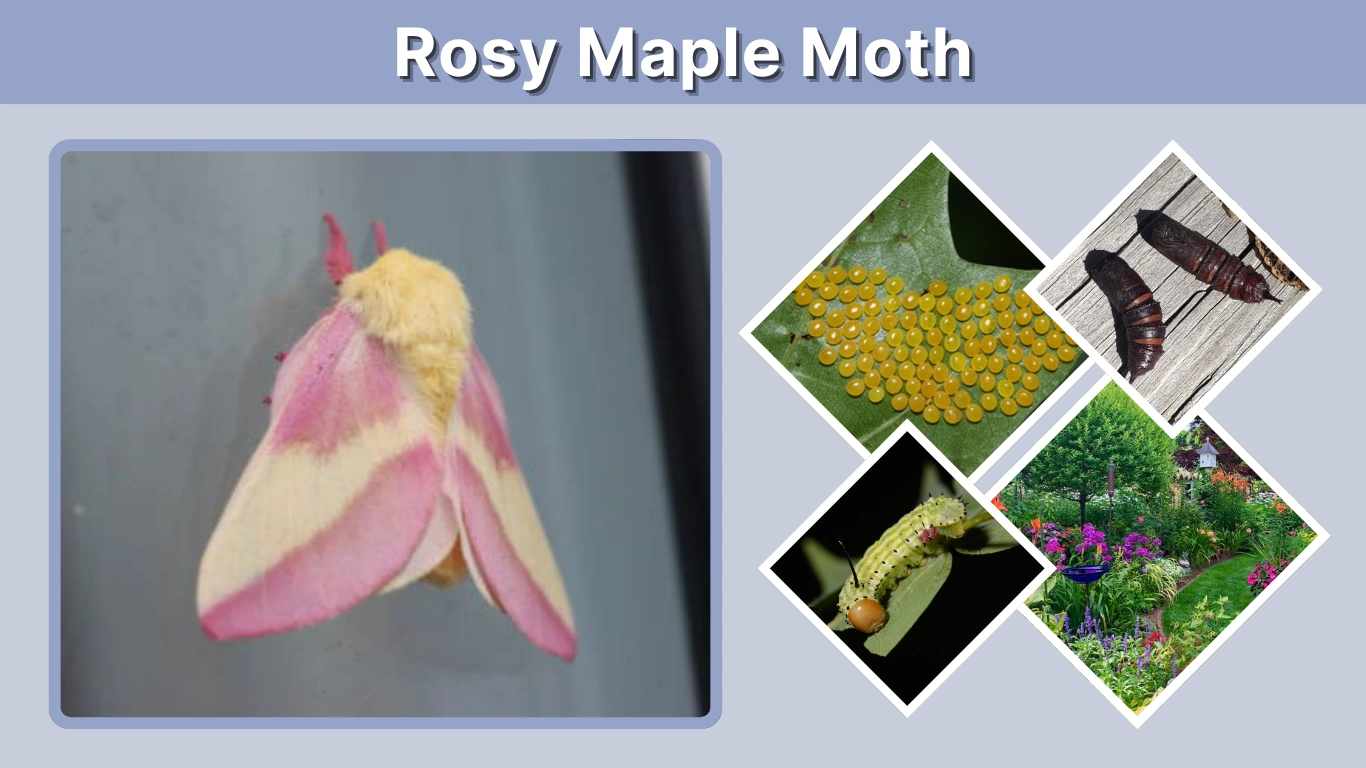
The Rosy Maple moth is one of the cutest and most colorful moth species in North America. Known for its soft pink and yellow wings, this tiny silk moth attracts attention because of its unusual appearance and fuzzy body. Its scientific name is Dryocampa rubicunda, and it belongs to the Saturniidae family. Although small compared to many silk moths, the Rosy Maple moth is widely admired by insect lovers, artists, and photographers. This fascinating species is also important for studying moth behavior, camouflage, life cycles, and woodland ecosystems across North America.
What Is a Rosy Maple Moth?
The Rosy Maple moth is a colorful nocturnal moth commonly found near maple trees and deciduous forests. It is famous for its pastel wing colors and soft appearance. Because of its bright coloration and harmless behavior, this moth has become extremely popular in nature photography, artwork, plush toys, and online communities.
Rosy Maple Moth Scientific Name
The scientific name of the Rosy Maple moth is Dryocampa rubicunda. It belongs to the Saturniidae family, which includes giant silk moths such as Luna moths and Cecropia moths.
Although it belongs to the silk moth family, the Rosy Maple moth is much smaller than many of its relatives. Its compact size and bright colors make it easy to recognize among North American moth species.
Rosy Maple Moth Characteristics
Rosy Maple moths have several distinctive features that separate them from other moths:
- Bright pink and yellow wings
- Thick fuzzy body texture
- Feather-like antennae
- Small compact body size
- Rounded wing shape
These characteristics help make the species one of the most recognizable and attractive moths in North America.
Why Rosy Maple Moths Are So Popular
Rosy Maple moths are widely admired because of their soft pastel coloration and cute appearance. Many people compare their colors to cotton candy because of the combination of pink and yellow tones.
Their popularity has also increased online through photography, artwork, stuffed animals, tattoos, and decorative designs inspired by the moth’s appearance.
Rosy Maple Moth Identification
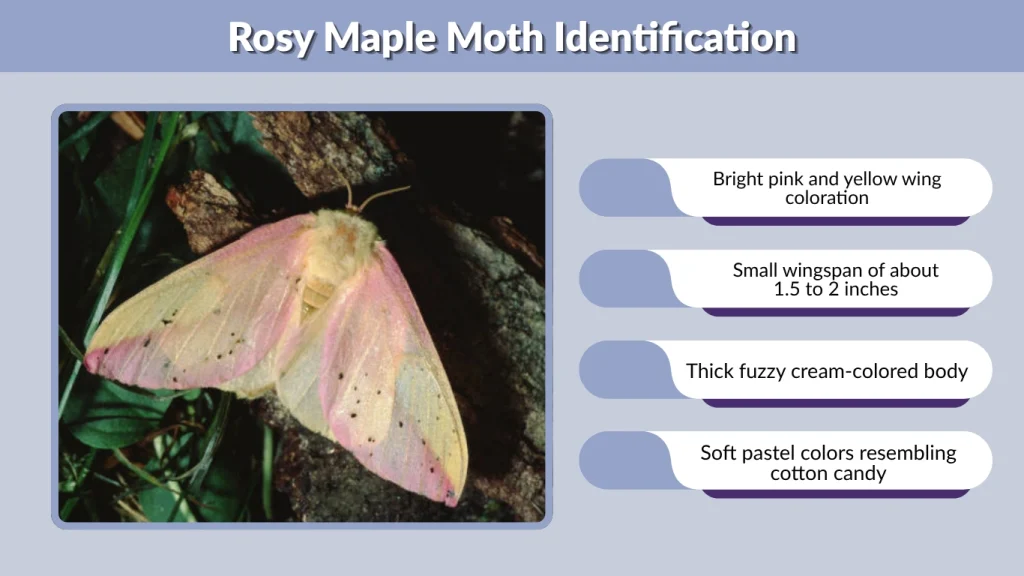
Rosy Maple moths are easy to identify because of their soft pastel coloration and fuzzy appearance. Their bright pink and yellow wings make them stand out from most other moth species in North America. Although small in size, these moths are highly recognizable because of their unique color patterns and rounded wing shape.
- Bright pink and yellow wing coloration
- Small wingspan of about 1.5 to 2 inches
- Thick fuzzy cream-colored body
- Rounded wings with smooth edges
- Feather-like antennae, especially in males
- Soft pastel colors resembling cotton candy
- Females usually have slightly larger bodies
- Nocturnal behavior with attraction to lights
Male vs Female Rosy Maple Moths
Male and female Rosy Maple moths show several small differences:
- Males usually have larger feathery antennae
- Females often have slightly broader bodies
- Females may appear less brightly colored
- Males are generally more active fliers
These differences mainly help with mating and pheromone detection.
Rosy Maple Moth Habitat and Distribution
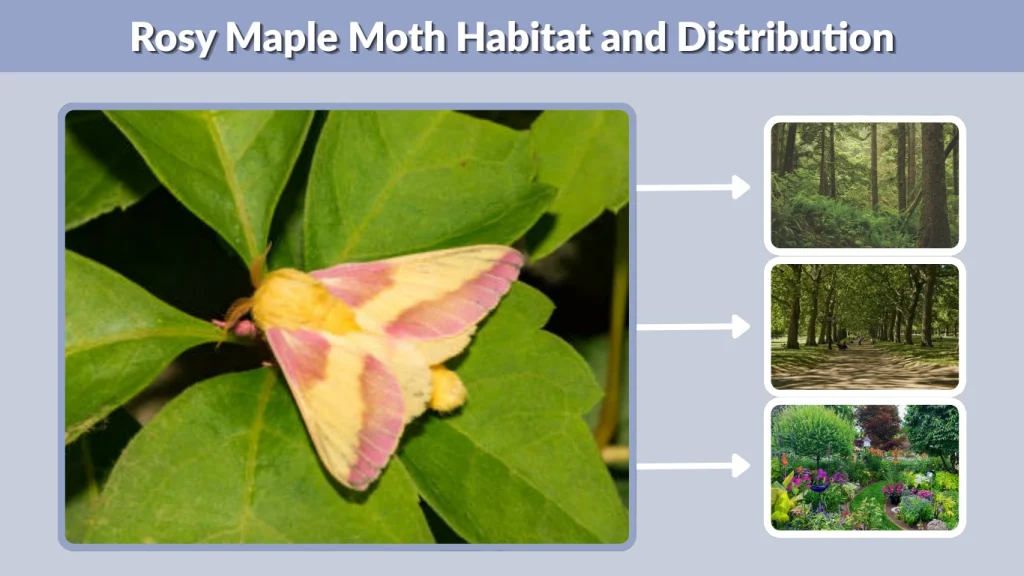
Rosy Maple moths live primarily in eastern North America, especially in regions with abundant deciduous trees. Maple forests provide important food sources and suitable breeding habitats for both larvae and adults.
Where Do Rosy Maple Moths Live?
Rosy Maple moths are commonly found throughout:
- Eastern United States
- Southern Canada
- Woodland forests
- Suburban neighborhoods with maple trees
They are especially common in areas where maple and oak trees grow naturally.
Rosy Maple Moth Habitat
The preferred habitat of the Rosy Maple moth includes forests, parks, gardens, and wooded suburban areas. These environments provide shelter, food sources, and safe locations for egg-laying.
The moth spends much of the daytime resting on leaves or tree bark where its coloration may help reduce visibility to predators.
Rosy Maple Moth Range
The Rosy Maple moth range extends from Canada down through the eastern and central United States. Some populations are also found in southern regions with warm climates and suitable host plants.
Their distribution closely follows the availability of maple trees because these plants are essential for larval development.
Rosy Maple Moth Life Cycle
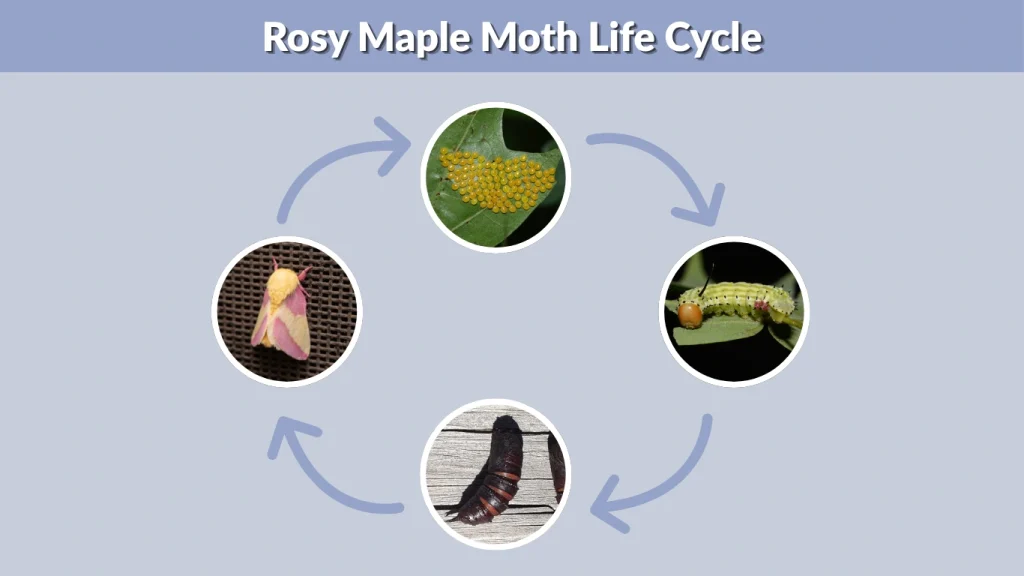
The Rosy Maple moth undergoes complete metamorphosis with four major life stages: egg, larva, pupa, and adult moth. Each stage plays an important role in survival and reproduction.
Rosy Maple Moth Eggs
Female Rosy Maple moths lay eggs on the underside of leaves belonging to host plants. The eggs are small, pale, and carefully positioned where newly hatched caterpillars can immediately begin feeding.
Egg-laying usually occurs during warmer months when food sources are abundant and environmental conditions support larval growth.
Rosy Maple Moth Caterpillar
Rosy Maple moth caterpillars are green with striped patterns running along their bodies. As they grow, they feed heavily on maple and oak leaves to gather energy for transformation.
The caterpillars molt several times before reaching full size. Their feeding stage is the most important period for storing nutrients needed later during adulthood.
Rosy Maple Moth Cocoon and Pupa
After completing the larval stage, the caterpillar leaves the tree and searches for a protected location in leaf litter or soil. There, it transforms into a pupa inside a protective cocoon.
The pupal stage allows the moth to survive environmental changes and complete metamorphosis safely. Adult moths later emerge with fully developed wings and reproductive structures.
Rosy Maple Moth Lifespan
Rosy Maple moths have relatively short adult lives. Most adults survive for only a few days to about one week after emerging from the cocoon.
Their short lifespan is mainly focused on reproduction. Much of the energy needed during adulthood comes from nutrients stored during the caterpillar stage.
What Do Rosy Maple Moths Eat?
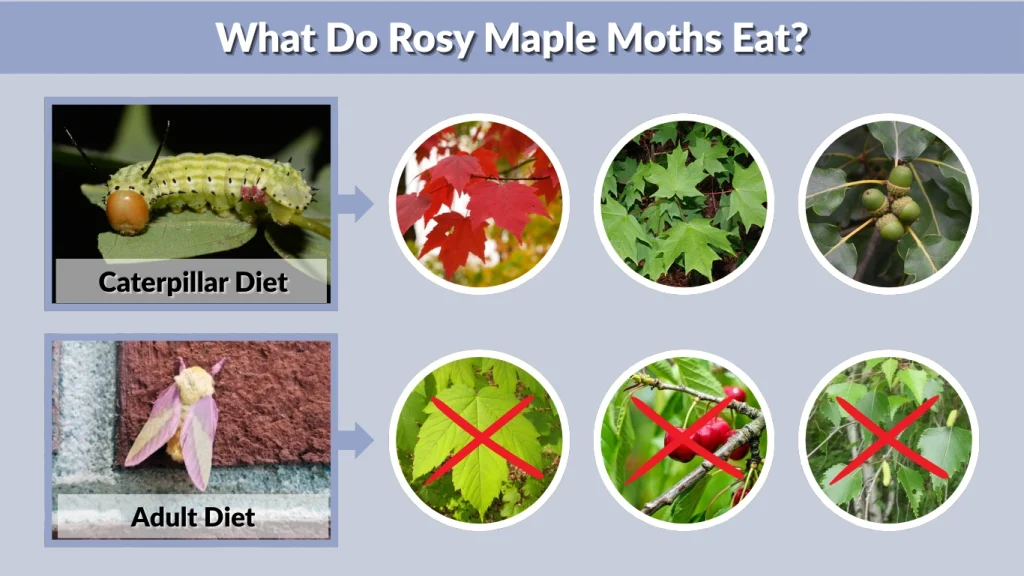
The diet of the Rosy Maple moth changes throughout its life cycle. Caterpillars feed heavily on tree leaves, while adults eat very little or not at all. This feeding pattern is common among many silk moth species.
Rosy Maple Moth Caterpillar Diet
Rosy Maple moth caterpillars feed mainly on deciduous tree leaves. Common food sources include:
- Red maple leaves
- Sugar maple leaves
- Silver maple leaves
- Oak tree leaves
These leaves provide essential nutrients for growth and development before pupation.
Adult Rosy Maple Moth Feeding Habits
Adult Rosy Maple moths generally do not feed much because their primary purpose is reproduction. In many cases, adults rely entirely on energy stored during the larval stage.
This explains why adult moths live for only a short period after emerging from the cocoon.
Rosy Maple Moth Behavior and Adaptations
Rosy Maple moths possess several adaptations that help them survive in woodland environments. Their coloration, nocturnal behavior, and resting habits all contribute to predator avoidance and successful reproduction.
Rosy Maple Moth Camouflage
Although brightly colored, Rosy Maple moths can still blend surprisingly well among leaves and flowers. Their pastel coloration may help soften their visibility in certain natural environments.
During the daytime, they usually remain motionless on leaves or tree bark to avoid attracting predators such as birds.
Rosy Maple Moth Flying Behavior
Rosy Maple moths are nocturnal insects and become active after sunset. They often fly around lights at night and search for mates during warm evening hours.
Their flight is usually slow and gentle compared to many faster moth species. Males actively search for females by detecting pheromones with their feathery antennae.
Are Rosy Maple Moths Poisonous?
Rosy Maple moths are completely harmless to humans and pets. They do not bite, sting, or produce toxic chemicals.
Their caterpillars are also non-poisonous, making them safe to observe in nature. This harmless nature is one reason the species is so popular among insect enthusiasts and photographers.
Are Rosy Maple Moths Rare?
Rosy Maple moths are not considered endangered, but many people rarely notice them because they are nocturnal and have short adult lifespans. Their populations remain stable in many areas with healthy woodland habitats.
Are Rosy Maple Moths Rare?
Rosy Maple moths may appear uncommon because they are active mostly at night and spend daylight hours hidden among leaves. Their brief adult stage also reduces the chances of human observation.
However, in suitable habitats with abundant maple trees, they can still be found regularly during warmer seasons.
Where to Find Rosy Maple Moths
Rosy Maple moths are most often found in:
- Deciduous forests
- Maple-rich woodlands
- Parks and gardens
- Residential neighborhoods with trees
They are easier to observe during spring and summer nights when adults become more active.
Interesting Facts About Rosy Maple Moths
Rosy Maple moths are among the most recognizable moth species because of their unusual coloration and soft appearance. Their popularity continues growing among nature lovers, artists, and insect collectors worldwide.
Cute Appearance and Internet Popularity
Many people consider the Rosy Maple moth one of the cutest moth species because of its fuzzy body and pastel pink coloration. Photos of these moths frequently appear in artwork, social media posts, plush toys, and decorative products.
Their resemblance to cotton candy has helped increase their popularity online.
Rosy Maple Moth Symbolism and Meaning
Rosy Maple moths are sometimes associated with beauty, transformation, gentleness, and positive change. Their colorful appearance and short lifespan often symbolize appreciating brief but beautiful moments in life.
FAQs
What Is a Rosy Maple Moth?
The Rosy Maple moth is a colorful silk moth species scientifically known as Dryocampa rubicunda. It is famous for its bright pink and yellow wings and is commonly found in eastern North America near maple trees and woodland habitats.
Are Rosy Maple Moths Poisonous?
Rosy Maple moths are completely harmless to humans and pets. They do not sting, bite, or produce venom. Their caterpillars are also non-poisonous, making them safe to observe in gardens and forest environments.
What Do Rosy Maple Moths Eat?
Rosy Maple moth caterpillars feed mainly on maple and oak leaves. Adult moths eat very little or not at all because they rely on energy stored during the larval stage to survive and reproduce.
How Long Do Rosy Maple Moths Live?
Adult Rosy Maple moths usually live for only a few days to about one week. Their short adult lifespan is focused mainly on mating and laying eggs before completing their life cycle.
Where Do Rosy Maple Moths Live?
Rosy Maple moths live throughout eastern North America, especially in forests, parks, and suburban areas with maple trees. They are most commonly found in regions with healthy deciduous woodland habitats.
