

A silverfish infestation occurs when these small, wingless insects establish a breeding population inside a home or building. Unlike many pests that appear suddenly in large numbers, silverfish infestations usually grow slowly and quietly. Because silverfish hide well and are active mainly at night, people often do not realize there is a problem until they start seeing them frequently or notice damage to books, paper, wallpaper, or fabrics. Understanding how silverfish infestations start and what signs to look for is the first step toward effective control.
What Is a Silverfish Infestation?
Seeing one silverfish occasionally does not always mean an infestation. A true silverfish infestation means there is an established population reproducing and surviving indoors. This often involves adults, young nymphs, and hidden eggs spread across one or more rooms. Since silverfish can live for years and reproduce repeatedly, even a small, unnoticed group can become a long-term problem if moisture, food, and shelter remain available.
Silverfish infestations are most common in places where humidity stays high and stored materials are abundant. Basements, bathrooms, kitchens, laundry rooms, libraries, and storage areas are typical infestation zones. Because silverfish move easily through wall cracks, plumbing gaps, and shared building spaces, they can spread slowly from one area to another.
Why Silverfish Infest Homes

Silverfish do not invade homes at random. They settle where survival conditions are stable.
Moisture and humidity problems
Moisture is the most important factor behind silverfish infestations. Silverfish lose water easily through their bodies and depend on humid air to survive. Leaky pipes, condensation, damp basements, poorly ventilated bathrooms, and crawl spaces create ideal environments. Homes in humid climates or buildings with frequent water use often support larger populations.
Availability of food sources
Silverfish feed on carbohydrates and proteins found in many household materials. Paper, book glue, wallpaper paste, cardboard, cotton, linen, silk, and even dead insects all serve as food. Unlike pests that depend on kitchen scraps, silverfish can survive entirely in storage areas, book collections, and wall voids, which allows infestations to grow unnoticed.
Shelter and hiding spaces
Silverfish prefer dark, tight, undisturbed locations. Cracks in walls, gaps under baseboards, inside cabinets, behind appliances, under flooring edges, and within stacked storage boxes all provide protection. Cluttered storage rooms and long-unused spaces greatly increase infestation risk.
Common Signs of a Silverfish Infestation
Because silverfish are secretive, signs often appear gradually.
Frequent sightings
One of the clearest signs of infestation is repeated sightings, especially at night. Seeing silverfish in multiple rooms, bathrooms, or storage areas suggests the population is spread out rather than accidental. Turning on lights and seeing several silverfish scatter is a strong indicator of an established infestation.
Physical damage in the home
Silverfish damage is usually subtle at first. Over time, you may notice irregular holes, rough edges, or yellow stains on books, magazines, wallpaper, photographs, and cardboard. Stored clothing, especially cotton, linen, and silk, may show small feeding marks. Important documents and old books are particularly vulnerable.
Indirect evidence
Shed skins are a common but overlooked sign. Silverfish molt throughout their lives, leaving behind thin, transparent skins near hiding areas. Small dark droppings or fine pepper-like debris may also appear near baseboards, shelves, and storage corners.
Where Silverfish Infestations Usually Start
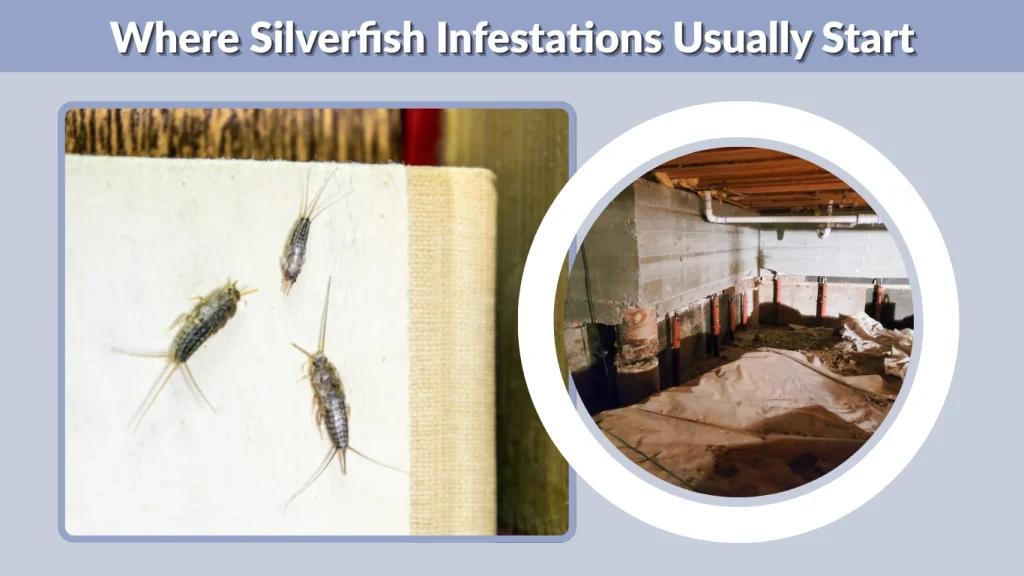
Most infestations begin in areas that combine moisture with low disturbance. Bathrooms are common starting points because of constant humidity and water sources. Basements and crawl spaces also support infestations due to dampness, darkness, and limited human traffic.
Kitchens, laundry rooms, and boiler rooms can become infestation centers because of warmth and plumbing. Storage rooms, closets, libraries, and attics may support large populations if paper, boxes, and fabrics are stored there long term. Once established, silverfish slowly expand through wall gaps and along plumbing lines to reach new areas.
How Fast Silverfish Infestations Grow
Silverfish infestations rarely explode suddenly. Instead, they develop slowly but persistently. Silverfish reproduce in small batches, but they live for several years and continue laying eggs over time. Their young develop slowly, and many remain hidden for long periods. This slow life cycle allows infestations to last for years if conditions remain favorable.
Because all life stages can be present at once, killing visible adults does not stop population growth. Hidden eggs and nymphs continue developing, which is why infestations often seem to return after partial treatment.
Are Silverfish Infestations Dangerous?
Silverfish are not known to bite people, sting, or transmit serious diseases. From a medical standpoint, they are considered low-risk pests. However, their presence can still cause concern and discomfort, especially when infestations become noticeable.
The main danger of a silverfish infestation is property damage. Over time, silverfish can destroy books, important papers, wallpaper, stored photographs, and clothing. Their feeding weakens materials and can permanently damage collections and household items. In sensitive individuals, shed skins and debris may also contribute to indoor allergies.
Silverfish Infestation vs Similar Household Pests

Silverfish infestations are often confused with other household insect problems. Firebrats look very similar but usually prefer hotter areas such as boiler rooms and near ovens. Cockroach infestations grow faster and are closely linked to food waste, grease, and kitchens, while silverfish are more often found in damp storage areas and around paper products. Booklice are much smaller, pale, and soft-bodied, and carpet beetle larvae are fuzzy and slow-moving. Correct identification is important because control methods differ between these pests.
Factors That Make Infestations Worse
Several household conditions can allow silverfish infestations to grow larger and last longer.
- High indoor humidity and damp air
- Poor ventilation in bathrooms, basements, and storage rooms
- Plumbing leaks and hidden condensation
- Large amounts of cardboard, books, and stored paper
- Infrequent cleaning of baseboards and storage areas
- Cracks, gaps, and wall voids that provide shelter
- Apartment living with shared walls and pipes
When these factors combine, silverfish populations can expand steadily without being detected.
How to Confirm a Silverfish Infestation
Confirming an infestation involves more than spotting one insect. Inspect damp areas such as under sinks, behind toilets, and near washing machines. Check storage rooms, closets, and bookcases for shed skins and damage. Sticky insect traps placed along baseboards and in dark corners overnight can reveal how widespread the problem is. Catching silverfish regularly in several locations usually confirms an established infestation.
Natural Ways to Control a Silverfish Infestation
Environmental control
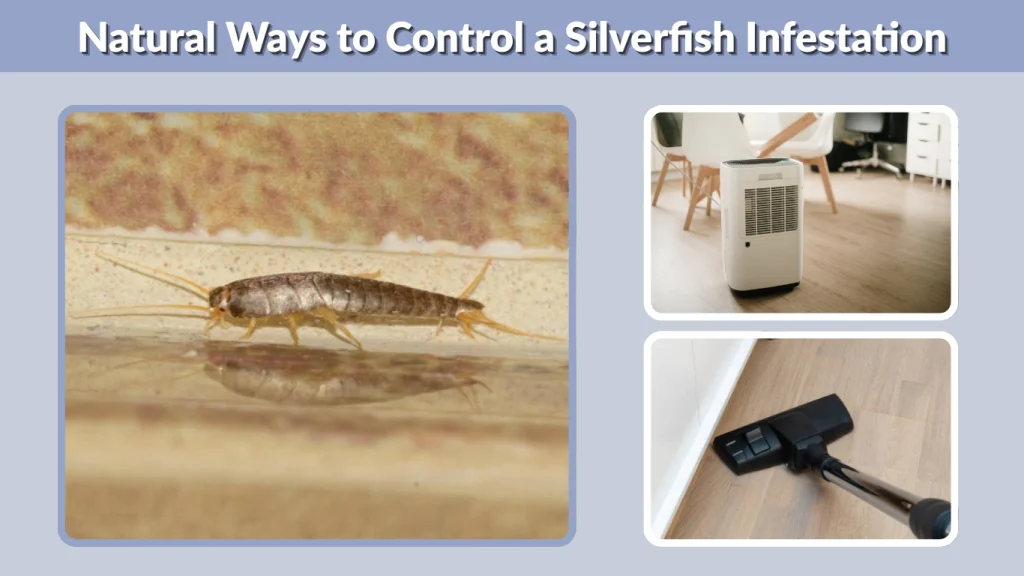
The most effective natural control method is moisture reduction. Using dehumidifiers, improving ventilation, and fixing leaks make homes less suitable for silverfish. Dry environments slow reproduction and weaken survival at all life stages.
Cleaning strategies
Vacuuming baseboards, shelves, cracks, and storage corners removes insects, eggs, and shed skins. Reducing paper clutter, replacing cardboard boxes with sealed plastic containers, and washing stored fabrics limit both food and shelter.
Treatment Options for Silverfish Infestations
Low-risk household treatments
Silica-based dusts, diatomaceous earth, and boric acid can be applied carefully into cracks and wall voids. These substances damage silverfish exoskeletons and slowly reduce populations. Sticky traps also help monitor and lower numbers.
Commercial and professional solutions
When infestations are large, long-lasting, or spread across multiple rooms, professional pest control may be necessary. Professionals focus on crack-and-crevice treatment, moisture sources, and long-term prevention rather than surface spraying alone.
Preventing Future Silverfish Infestations
Prevention depends on making the home unsuitable for silverfish. Seal wall cracks, caulk around pipes, and repair moisture problems promptly. Improve airflow in bathrooms and basements, regularly clean storage areas, and avoid long-term cardboard storage. Monitoring damp rooms with traps helps detect early activity before infestations develop.
