

Silverfish are small, fast-moving insects that often go unnoticed until people find strange specks on shelves, paper, or bathroom surfaces. These tiny dark particles are often silverfish droppings. Although silverfish poop is not usually dangerous, it is an important sign of insect activity and possible infestation. Learning how to identify silverfish droppings, understand whether they are harmful, and know what they indicate can help homeowners protect their belongings and keep indoor spaces clean and healthy.
What Is Silverfish Poop?
Silverfish poop, also called silverfish droppings or feces, is the waste material left behind after silverfish feed on paper, glue, fabrics, and organic debris. Because silverfish are small and eat tiny amounts at a time, their droppings are also extremely small and easy to overlook.
Silverfish usually leave droppings near their feeding and hiding areas. These include baseboards, bathroom corners, inside cabinets, behind appliances, on bookshelves, and inside stored boxes. Over time, droppings can build up in undisturbed places, making them more noticeable.
What Does Silverfish Poop Look Like? (Identification)

Correct identification is important because many household pests leave behind dark particles that look similar.
Size and shape of silverfish droppings
Silverfish droppings are very tiny, often compared to black pepper grains, fine sand, or ground coffee. They appear as small dots, short grains, or dust-like specks. Unlike mouse droppings, they are not large or clearly shaped. Unlike bed bug stains, they are usually dry rather than smeared.
Color and texture
Most silverfish poop appears black, dark brown, or sometimes dark gray. The texture is dry and gritty, not sticky. When wiped with a damp cloth, the particles usually break apart rather than smear like ink. Fresh droppings may appear slightly darker, while older droppings can look faded.
Where silverfish poop is usually found
Silverfish droppings are most often found in dark, quiet areas close to moisture and food sources. Common places include:
- Along baseboards and in wall corners
- On shelves, especially near books and paper
- Inside drawers, cabinets, and closets
- Around sinks, bathtubs, and drains
- Inside cardboard boxes and storage bins
If these specks repeatedly appear in the same areas, it strongly suggests active silverfish presence.
Silverfish Poop vs Other Pest Droppings
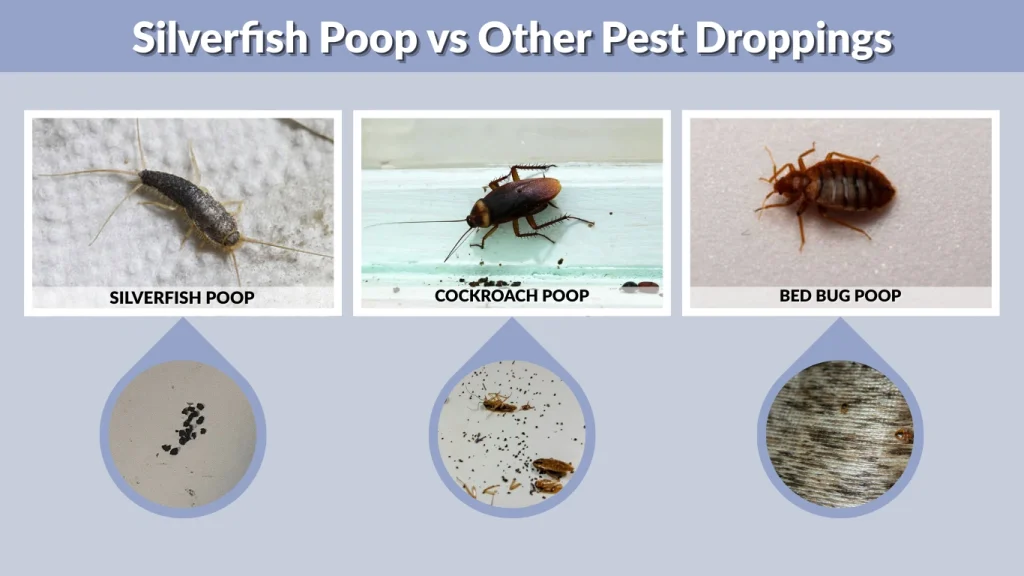
Because silverfish droppings are so small, they are often mistaken for other pests.
Cockroach droppings are usually larger and may look like black pepper, coffee grounds, or ridged pellets. Mouse droppings are much bigger and shaped like pointed grains of rice. Termite frass is uniform and often forms small piles beneath wood. Bed bug droppings appear as black ink-like stains that smear when wet. Silverfish droppings remain dry, gritty, and scattered near paper or damp zones.
Signs That Silverfish Poop Indicates an Infestation
Finding a few droppings once does not always mean a major problem. However, repeated droppings in the same rooms often indicate that silverfish are feeding and hiding nearby.
When silverfish poop is found together with shed skins, damaged paper, or frequent sightings of silverfish at night, it strongly suggests an infestation. Droppings in storage areas, libraries, and bathrooms usually point to hidden populations behind walls, under flooring, or inside cabinets.
Because silverfish reproduce slowly but live for years, droppings can continue appearing even when insects are rarely seen.
Is Silverfish Poop Harmful?
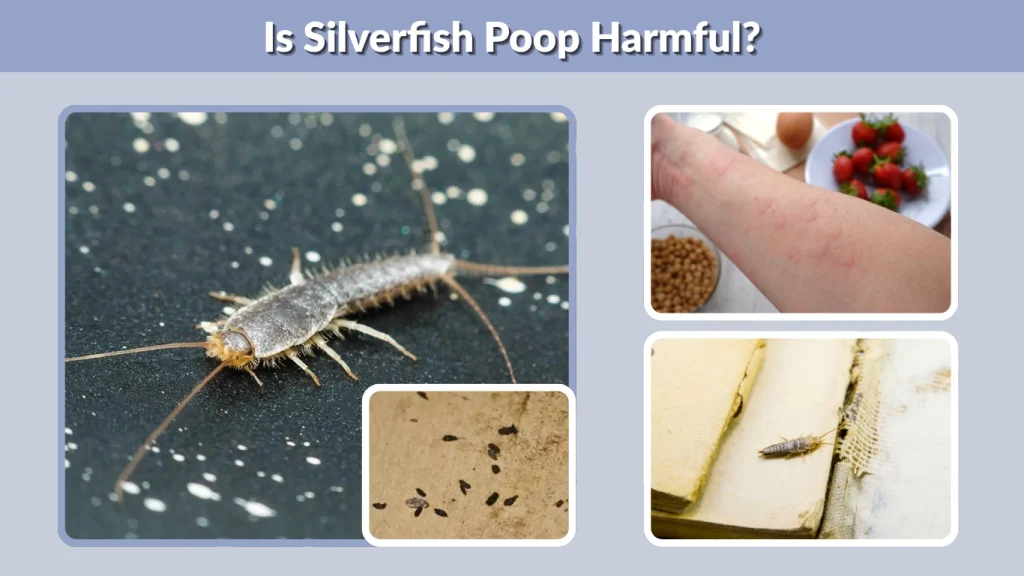
Health concerns
Silverfish droppings are not known to spread dangerous diseases. They do not contain strong toxins, and silverfish are not blood-feeding insects. However, droppings, shed skins, and body fragments can contribute to indoor allergens. In sensitive individuals, this may worsen asthma or allergy symptoms.
Droppings can also contaminate stored items and surfaces, which creates hygiene concerns, especially in kitchens, libraries, and bedrooms.
Property and material damage
Although the droppings themselves do not chew materials, they often appear alongside feeding damage. Over time, silverfish activity can ruin books, important papers, wallpaper, photographs, and stored fabrics. Droppings can stain surfaces and reduce the quality of stored items.
Where Silverfish Poop Comes From in the Home
Silverfish droppings reflect what these insects eat. When they feed on paper, glue, fabrics, or organic debris, the waste appears near those materials. Areas with moisture allow silverfish to digest food efficiently and survive longer, which is why droppings are often concentrated in bathrooms, basements, and storage rooms.
Cracks, baseboards, shelves, and cardboard boxes allow silverfish to feed and hide without disturbance, leading to gradual buildup of droppings.
Why You Should Not Ignore Silverfish Droppings
Silverfish poop is more than just dirt. It is a sign that silverfish are active, feeding, and likely reproducing nearby. Ignoring droppings allows populations to continue growing slowly and spreading to new areas. Over time, this can lead to greater material damage and more difficult control.
Cleaning Silverfish Poop Safely (Cleaning Process)
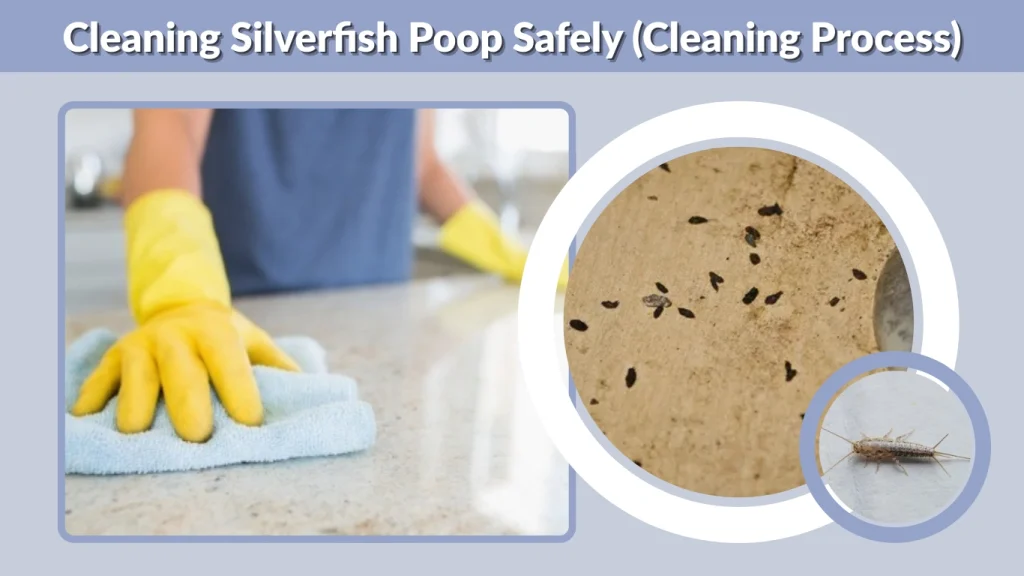
Removing silverfish droppings is important not only for cleanliness but also for monitoring activity. Cleaning should be done carefully to avoid spreading particles into the air.
Preparation and safety steps
Before cleaning, wear disposable gloves and, if possible, a mask, especially if you have allergies. Open windows or increase ventilation. Avoid dry sweeping or brushing, which can scatter fine particles into the air. Instead, use a vacuum with a hose attachment or a slightly damp cloth.
How to clean hard surfaces
For floors, shelves, baseboards, sinks, and countertops, vacuum the area first to remove loose droppings and debris. Dispose of the vacuum bag or empty the canister outside. Then wipe surfaces with warm soapy water or a mild disinfectant. Pay special attention to corners, cracks, and hidden edges where droppings often collect.
How to clean books, paper, and fabrics
Books and papers should be gently vacuumed using a soft brush attachment. For valuable books, lightly brushing pages outdoors or using a low-suction vacuum helps remove particles. Some people place affected books in sealed bags and freeze them for several days to kill insects before cleaning.
Fabrics such as clothing, curtains, and linens should be washed in warm water if the material allows. Dry items thoroughly, since moisture encourages silverfish. For delicate fabrics, dry cleaning or careful hand washing may be safer.
Disinfecting and deodorizing areas
After visible droppings are removed, wipe the area with a mild disinfectant or a vinegar-and-water solution. This helps remove residue and odors that might attract insects. Always dry the surface completely. Silverfish thrive in moisture, so drying is as important as cleaning.
How to Prevent Silverfish Poop From Returning
Moisture control
Lowering humidity is the most effective way to prevent silverfish activity. Fix leaking pipes, wipe up condensation, use exhaust fans in bathrooms and kitchens, and place dehumidifiers in damp rooms. Keeping indoor humidity low makes it harder for silverfish to survive and reproduce.
Storage improvements
Store books, documents, and seasonal clothing in sealed plastic containers rather than cardboard boxes. Keep shelves organized and avoid stacking paper directly on the floor. Using airtight containers reduces both food access and hiding places.
Regular cleaning habits
Vacuum baseboards, closets, and storage areas regularly. Clean behind appliances and inside cabinets. Routine cleaning removes food particles, shed skins, eggs, and droppings before they build up.
When Silverfish Poop Means You Need Pest Control
Finding small amounts of droppings occasionally can often be managed with cleaning and moisture control. However, professional help may be needed if droppings keep reappearing after cleaning, if silverfish are seen frequently, or if damage to books and fabrics is increasing.
Pest control professionals can inspect hidden areas, apply targeted treatments to cracks and wall voids, and help identify moisture sources that support infestations. This approach is more effective than surface spraying alone.
Long-Term Monitoring After Cleaning
Even after thorough cleaning, monitoring is important because silverfish live long lives and reproduce slowly. Sticky traps placed along baseboards, under sinks, and near storage areas help detect ongoing activity. Regularly inspect bookshelves, closets, and bathrooms for new droppings or shed skins. Keeping track of humidity levels and fixing problems quickly prevents new buildup.
FAQs
What does silverfish poop look like in real life?
Silverfish poop looks like tiny black or dark brown specks, similar to black pepper or fine sand. The particles are dry, gritty, and scattered rather than smeared. They are usually found near baseboards, shelves, books, and damp areas like bathrooms.
Is silverfish poop dangerous to humans?
Silverfish droppings are not known to carry serious diseases. However, they can contaminate surfaces and stored items, and in sensitive individuals, droppings and shed skins may worsen allergy or asthma symptoms. Cleaning them promptly is recommended.
How do you clean silverfish droppings from books?
Use a soft brush or low-suction vacuum to gently remove droppings from covers and page edges. For valuable books, clean outdoors and avoid moisture. Some people freeze books in sealed bags for several days to kill insects before wiping them.
Can silverfish poop cause allergies?
Silverfish droppings, along with shed skins and body fragments, can contribute to indoor allergens. While not highly toxic, they may irritate people with asthma, dust allergies, or sensitive respiratory systems.
Does finding silverfish poop always mean an infestation?
Not always. A small amount may indicate limited activity. However, repeated droppings in the same areas, especially with sightings or damage, often mean silverfish are established and reproducing nearby.
