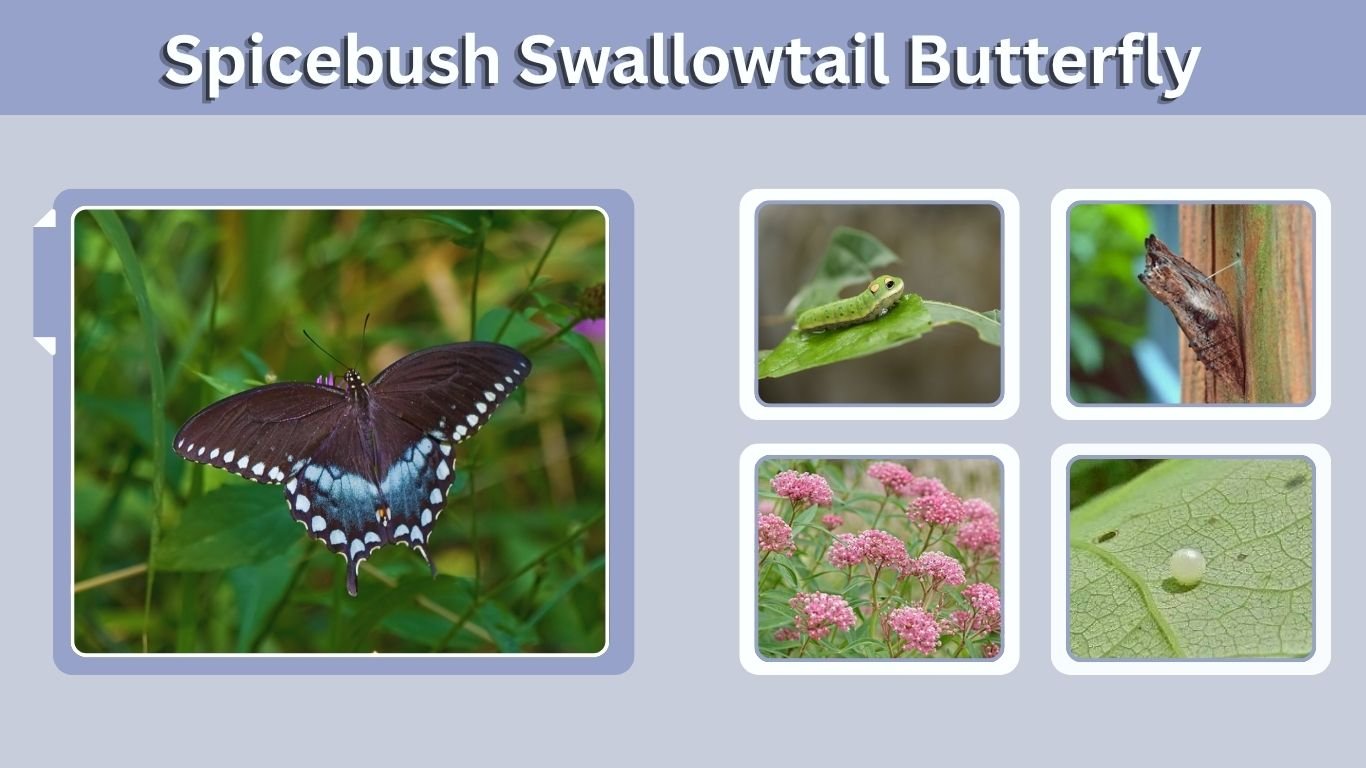
The Spicebush Swallowtail Butterfly is a beautiful North American species known for its black wings, shimmering blue markings, and fascinating caterpillar that resembles a small snake. Scientifically called Papilio troilus, this butterfly inhabits woodlands, gardens, and other natural areas across eastern North America. Its remarkable life cycle, unusual defense mechanisms, and close relationship with spicebush plants make it especially interesting to nature enthusiasts. Understanding its identification, habitat, diet, lifespan, and behavior helps butterfly lovers recognize this species and support its survival in the wild.
What Is a Spicebush Swallowtail Butterfly?
The Spicebush Swallowtail Butterfly (Papilio troilus) belongs to the Papilionidae family, which includes some of the world’s most recognizable butterflies. Its black wings, iridescent blue or blue-green hindwings, and distinctive tail-like extensions make it relatively easy to recognize. This species is also famous for its caterpillars, which develop large false eyespots resembling those of a snake.
Scientific Classification and Key Features
- Common Name: Spicebush Swallowtail Butterfly
- Scientific Name: Papilio troilus
- Family: Papilionidae
- Order: Lepidoptera
- Wingspan: Approximately 3–4 inches (7.5–10 cm)
- Primary Colors: Black, blue, blue-green, and orange
- Distribution: Eastern North America
- Primary Host Plants: Spicebush and sassafras
Physical Appearance and Identification
Adult Spicebush Swallowtails have dark, velvety wings decorated with pale spots near their outer edges. Their hindwings feature beautiful iridescent markings that change appearance under different lighting conditions.
Small orange spots and long, narrow wing tails provide additional identification clues. The underside of each hindwing displays pale greenish spots and orange markings.
Male vs. Female Spicebush Swallowtail Butterfly
Male Spicebush Swallowtails generally display blue-green iridescence across their hindwings, while females typically have more distinctly blue markings.
Although the differences can be subtle, comparing their wing coloration under natural sunlight can help distinguish the sexes. Both have similar body structures and overall wing patterns.
Spicebush Swallowtail Caterpillar Identification
The Spicebush Swallowtail caterpillar is among the most unusual-looking butterfly larvae in North America. Its appearance changes dramatically as it develops, beginning with a brown body resembling bird droppings before transforming into a bright green caterpillar with large false eyespots. These remarkable adaptations help protect it from predators while it feeds on leaves and prepares for metamorphosis.
What Does a Spicebush Swallowtail Caterpillar Look Like?
Young caterpillars are predominantly brown and white, which helps them resemble bird droppings.
As they mature, their bodies become green with blue spots along the sides. Two large black-and-yellow eyespots near the front create the appearance of a small snake or other larger animal.
Mature caterpillars can grow approximately two inches long.
Why Does the Caterpillar Look Like a Snake?
The caterpillar’s false eyespots are thought to discourage predators, particularly birds, by making it resemble a potentially threatening animal.
When disturbed, it may expose a reddish, forked defensive organ called an osmeterium. This organ releases an unpleasant odor and can resemble a snake’s tongue.
However, the caterpillar is harmless to humans.
Spicebush Swallowtail Butterfly Habitat and Range
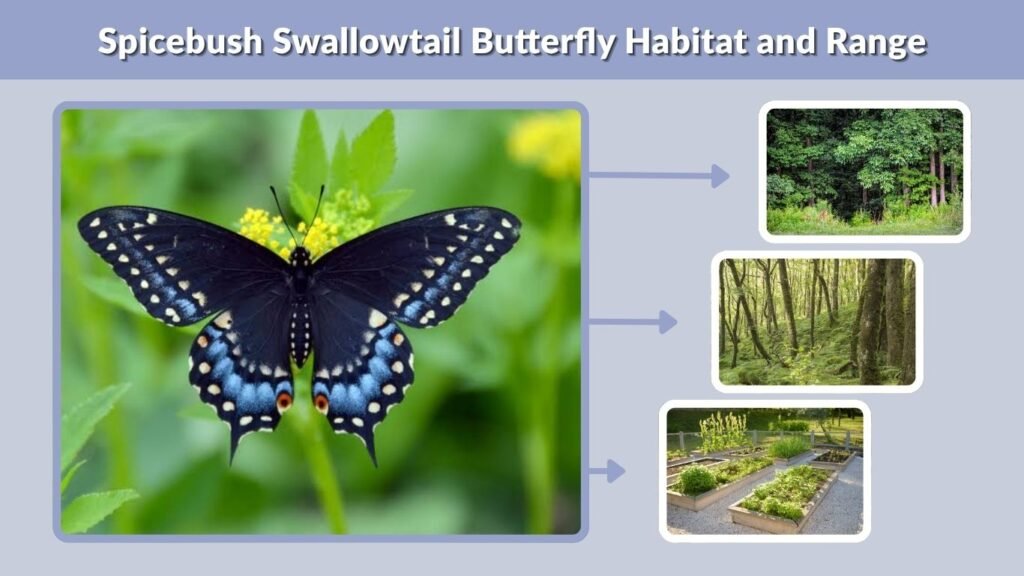
Spicebush Swallowtails inhabit various landscapes throughout eastern North America. They are especially associated with deciduous forests, woodland edges, and moist areas where suitable host plants grow. Although adults frequently visit gardens and flowering fields, their reproduction depends on the availability of appropriate trees and shrubs. Seasonal temperatures and regional vegetation influence their distribution and activity throughout the year.
Where Do Spicebush Swallowtail Butterflies Live?
These butterflies occur from southern Canada through much of the eastern United States, extending westward into parts of Texas and Oklahoma.
They inhabit forests, wooded wetlands, parks, roadsides, and residential gardens.
Spicebush Swallowtails are also found in Mississippi, where they are recognized as the official state butterfly. Their abundance varies depending on local habitat conditions.
Seasonal Activity and Behavior
Spicebush Swallowtails are most commonly observed during the warmer months.
Many areas experience two generations annually, while warmer southern regions may support additional generations.
Male butterflies often patrol woodland paths and forest edges searching for females. Adults also visit sunny flowering areas for nectar.
Spicebush Swallowtail Butterfly Life Cycle
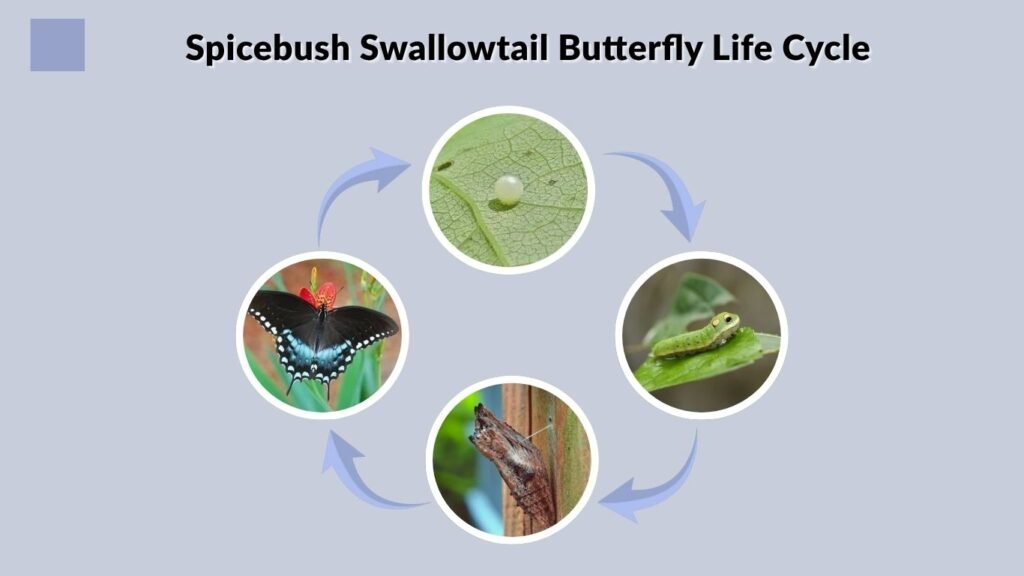
Like other butterflies, the Spicebush Swallowtail undergoes complete metamorphosis through four developmental stages. Each stage has a distinct appearance and purpose, beginning with a tiny egg and ending with a fully developed butterfly. Temperature, food availability, and seasonal conditions influence development. Some individuals complete their transformation during warmer months, while others survive winter inside protective chrysalises before emerging in spring.
Four Stages of Development
- Egg Stage: Females deposit individual, pale greenish eggs on the undersides of suitable host plant leaves.
- Larval Stage: Caterpillars hatch, feed on leaves, and gradually change from brown-and-white larvae into green caterpillars with false eyespots.
- Chrysalis Stage: Mature caterpillars form green or brown chrysalises, where their bodies undergo metamorphosis.
- Adult Stage: Fully developed butterflies emerge, expand their wings, and begin searching for nectar and potential mates.
Spicebush Swallowtail Butterfly Lifespan
Adult Spicebush Swallowtails typically live for several weeks, although their exact lifespan depends on environmental conditions.
The complete life cycle can take several weeks during favorable weather. Individuals that overwinter in the chrysalis stage may remain there for several months.
How Caterpillars Prepare for Metamorphosis
Spicebush Swallowtail caterpillars create protective shelters by folding leaves and securing them with silk.
They frequently rest inside these shelters and emerge to feed, often during nighttime.
Before pupation, mature caterpillars may turn yellowish-orange and leave their host plants to find suitable locations for forming chrysalises.
Spicebush Swallowtail Host Plants and Diet
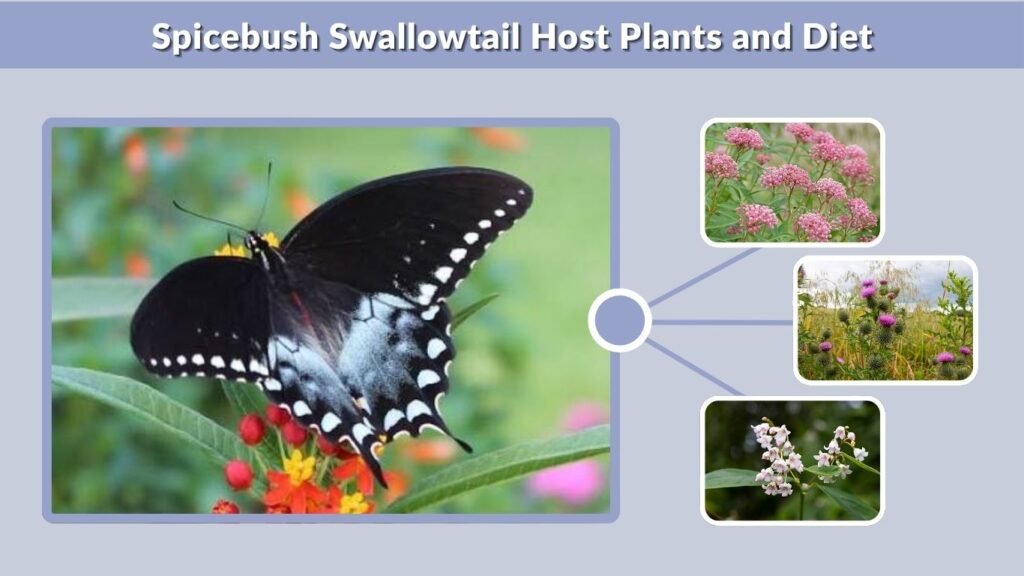
Host plants are essential for the survival of Spicebush Swallowtails because their caterpillars require particular foliage for growth. Female butterflies carefully select suitable leaves for laying eggs, ensuring that newly hatched larvae have immediate access to food. Adult butterflies have different dietary requirements, relying mainly on nectar from flowering plants. Both host plants and nectar sources help maintain healthy butterfly populations.
Common Spicebush Swallowtail Host Plants
- Northern Spicebush (Lindera benzoin): One of the primary host plants, particularly in eastern woodlands.
- Sassafras (Sassafras albidum): A widely used native host tree that supports caterpillar development.
- Redbay (Persea borbonia): An alternative host utilized by some southern populations.
- Sweetbay Magnolia (Magnolia virginiana): Another reported host plant in parts of the butterfly’s range.
Host plant preferences can differ geographically. Spicebush and sassafras are generally the most dependable choices for supporting caterpillars within their native ranges.
What Do Spicebush Swallowtail Butterflies Eat?
Adult Spicebush Swallowtails primarily consume flower nectar.
They frequently visit milkweed, thistles, azaleas, jewelweed, dogbane, and other nectar-producing flowers.
Their long proboscis allows them to reach nectar inside blossoms. Unlike their caterpillars, adult butterflies do not depend on spicebush foliage for nourishment.
Spicebush Swallowtail Defense and Mimicry
Spicebush Swallowtails possess remarkable defensive adaptations that help them avoid predators throughout their lives. Caterpillars use their unusual appearance, protective leaf shelters, and chemical defenses, while adults rely partly on their resemblance to other dark-colored swallowtail butterflies. These adaptations provide fascinating examples of how insects have evolved strategies to survive in environments containing birds, spiders, and other predators.
Spicebush Swallowtail vs. Black Swallowtail
Both butterflies have black wings decorated with blue markings, but their wing patterns differ.
Black Swallowtails generally display more conspicuous yellow spotting, while Spicebush Swallowtails have characteristic pale marginal spots and extensive blue or blue-green hindwing coloration.
Spicebush Swallowtails also resemble the chemically defended Pipevine Swallowtail, potentially discouraging predators through Batesian mimicry.
Are Spicebush Swallowtail Butterflies Poisonous?
Spicebush Swallowtail adults are not generally considered poisonous to predators in the same way as Pipevine Swallowtails.
Their resemblance to the toxic Pipevine Swallowtail may provide protection against predators familiar with its warning coloration.
They do not sting humans and are safe to observe without handling.
How to Attract Spicebush Swallowtail Butterflies
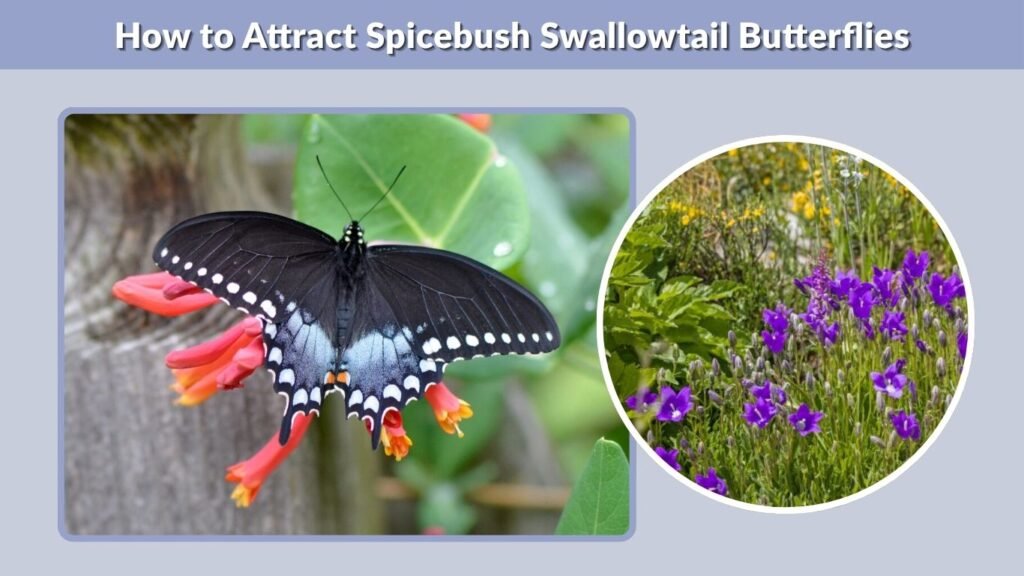
Creating a butterfly-friendly garden can help attract Spicebush Swallowtails while supporting their reproduction. These butterflies benefit from gardens containing suitable native host plants, accessible nectar sources, and sheltered vegetation. Because caterpillars depend on specific plants, providing flowers alone is not enough for successful breeding. Maintaining a natural garden environment encourages butterflies to visit, feed, lay eggs, and complete their life cycles.
Tips for Attracting Spicebush Swallowtails
- Plant native spicebush: Provide suitable foliage where females can deposit eggs.
- Grow sassafras trees: Include additional caterpillar host plants where space allows.
- Add nectar-rich flowers: Plant milkweed, thistles, and other regionally appropriate flowering species.
- Avoid unnecessary pesticides: Protect caterpillars, eggs, and adult butterflies from chemical exposure.
- Preserve leaf shelters: Avoid disturbing folded leaves that may contain developing caterpillars.
Why Are Spicebush Swallowtails Important?
Spicebush Swallowtails contribute to local ecosystems by visiting flowers and serving as part of the food web.
Their caterpillars support ecological relationships involving native plants and insect-eating animals.
Protecting their habitats also benefits many other pollinators and woodland insects.
FAQs
Spicebush Swallowtails attract attention because of their distinctive wing colors and unusual caterpillars. Gardeners and nature enthusiasts often have questions about their lifespan, feeding habits, toxicity, and symbolic meaning. Understanding these characteristics makes the species easier to identify and appreciate. The following frequently asked questions provide helpful answers about this remarkable North American swallowtail butterfly.
1. Is the Spicebush Swallowtail Butterfly Rare?
The Spicebush Swallowtail is generally widespread and relatively common in suitable eastern North American habitats. However, local populations may be uncommon where host plants or appropriate breeding habitats are limited.
2. What Is the Spiritual Meaning of a Spicebush Swallowtail Butterfly?
Some people associate the Spicebush Swallowtail with transformation, renewal, personal growth, and positive change. These interpretations are symbolic rather than scientifically established meanings.
3. Can Spicebush Swallowtail Caterpillars Bite?
Spicebush Swallowtail caterpillars are not considered dangerous to humans. Their primary defenses include false eyespots and a scent-producing osmeterium rather than biting or stinging.
4. What Is the Main Host Plant of the Spicebush Swallowtail?
Northern spicebush (Lindera benzoin) and sassafras (Sassafras albidum) are its two primary host plants. Other suitable plants may be used depending on geographic location.
5. Is the Spicebush Swallowtail Mississippi’s State Butterfly?
Yes. Mississippi officially designated the Spicebush Swallowtail as its state butterfly in 1991, recognizing this distinctive native species.