
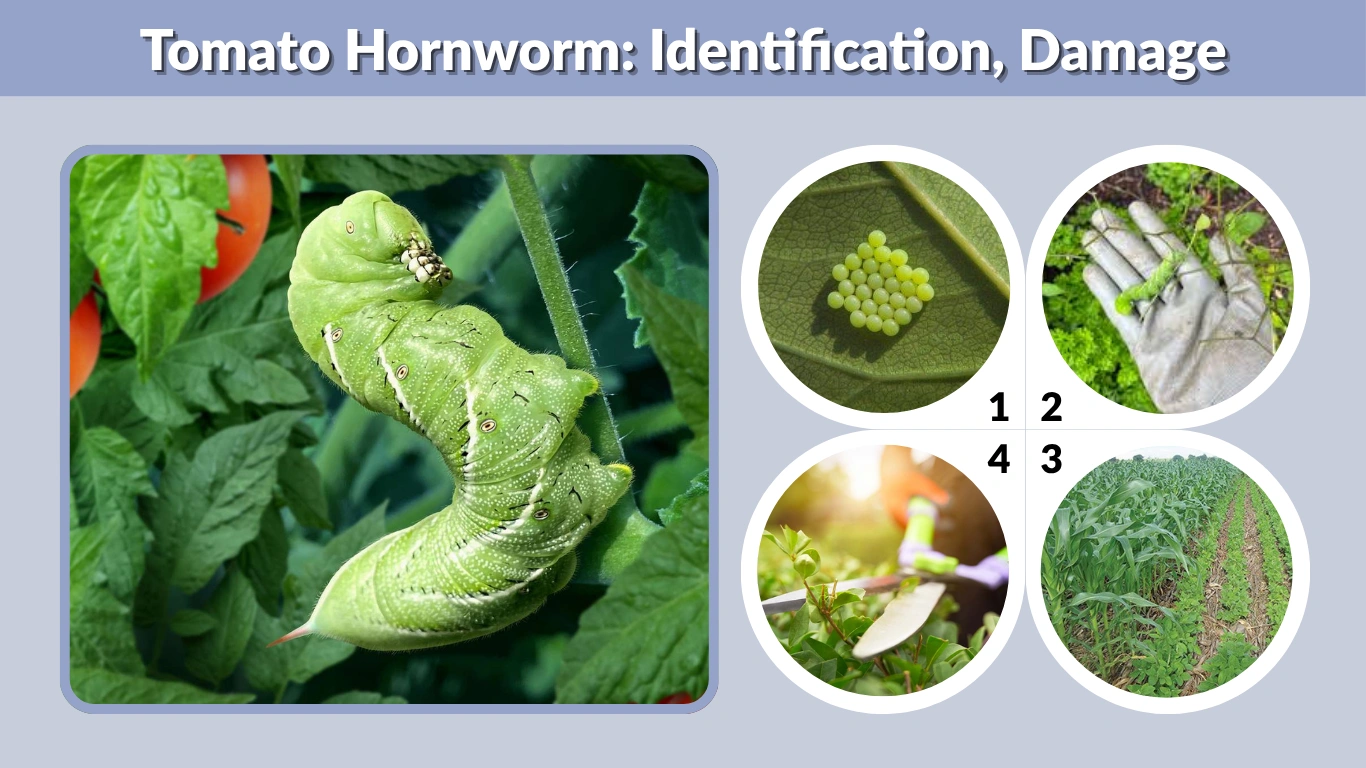
Tomato hornworms are among the most destructive pests that gardeners encounter when growing tomatoes. These large green caterpillars can quickly defoliate plants and damage fruit if left unchecked. Despite their size, they are often difficult to spot because they blend in with foliage. Understanding how to identify, manage, and prevent tomato hornworms is essential for protecting your garden and ensuring healthy, productive tomato plants.
What is a Tomato Hornworm?
The tomato hornworm (Manduca quinquemaculata) is a large caterpillar known for feeding on tomato plants and other members of the nightshade family. It belongs to the Sphingidae family, commonly referred to as hawk moths or sphinx moths.
Physical Characteristics
Tomato hornworms are bright green with white V-shaped diagonal stripes along their sides. One of their most distinctive features is the horn-like projection at the rear, which gives them their name. They can grow up to 4 inches long, making them one of the largest caterpillars found in home gardens.
Habitat and Distribution
These pests are commonly found across North America and thrive in warm climates where tomatoes, peppers, eggplants, and potatoes are grown. They are especially active during the growing season when host plants are abundant.
Tomato Hornworm Lifecycle
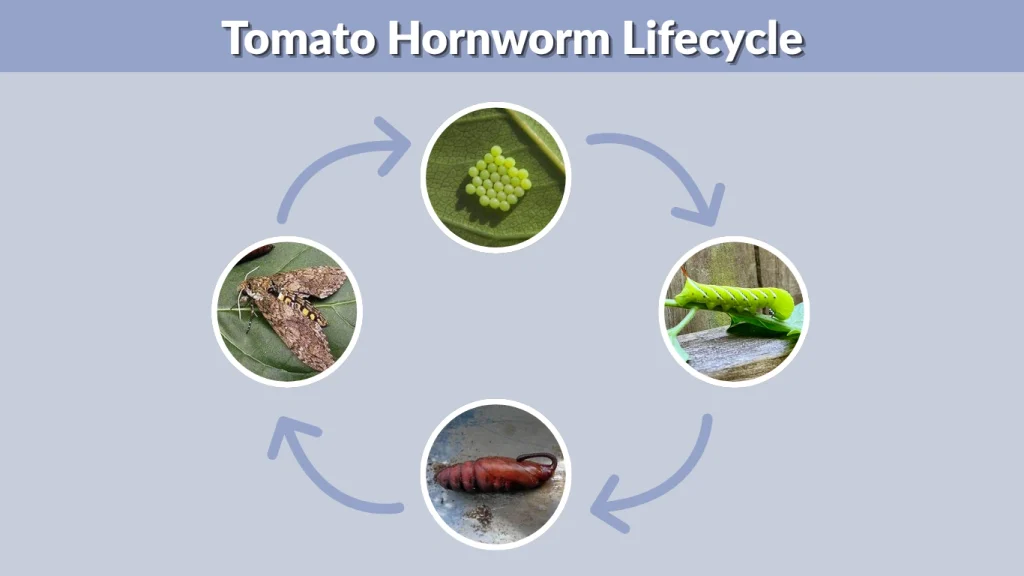
Understanding the lifecycle of the tomato hornworm helps gardeners control them more effectively.
Egg Stage
Adult moths lay small, round, pale green eggs on the underside of leaves. These eggs hatch within a few days, depending on temperature conditions.
Larva Stage (Most Destructive)
Once hatched, the larvae begin feeding immediately. This stage is the most damaging, as hornworms consume large amounts of foliage and fruit. They go through several growth phases, known as instars, and increase rapidly in size.
Pupa Stage
After feeding for several weeks, the caterpillar burrows into the soil to pupate. This stage allows them to transform into adult moths.
Adult Stage (Hawk Moth)
The adult tomato hornworm becomes a large moth that is often active at dusk. Interestingly, these moths act as pollinators, contributing positively to the ecosystem.
Signs of Tomato Hornworm Damage
Tomato hornworms can cause significant destruction in a short period. Recognizing early signs of infestation is crucial.
Leaf Damage
One of the first signs is large, irregular holes in leaves. Severe infestations can lead to complete defoliation of tomato plants.
Fruit Damage
Hornworms also feed on tomatoes themselves, leaving visible bite marks and making the fruit unmarketable.
Droppings (Frass)
Another key indicator is the presence of dark green or black droppings beneath the plant. These pellets often reveal the presence of a hidden hornworm above.
Tomato Hornworm vs Tobacco Hornworm
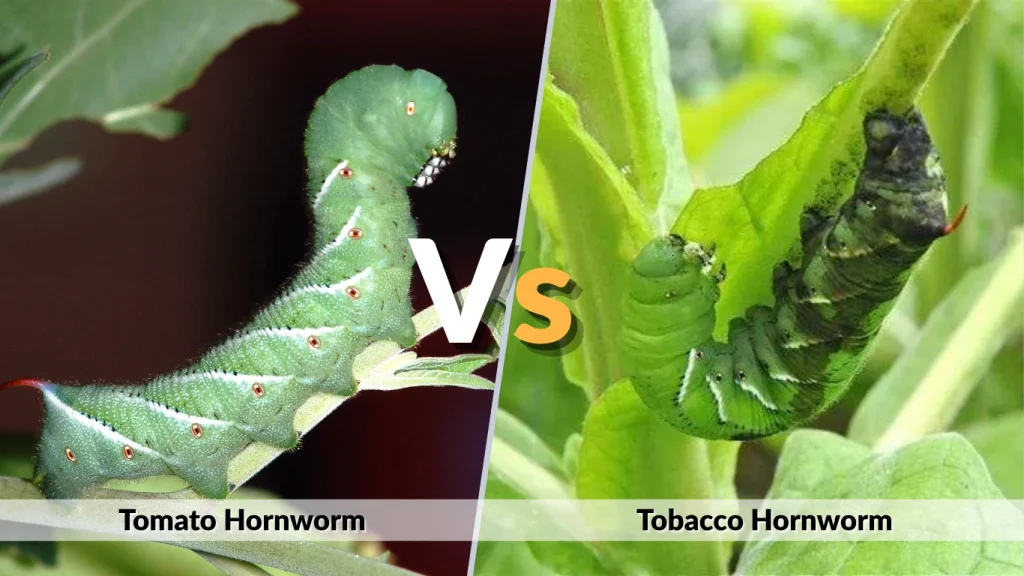
Many gardeners confuse tomato hornworms with tobacco hornworms, as they look very similar.
Key Differences
Tomato hornworms have white V-shaped markings and a dark horn, while tobacco hornworms display straight diagonal lines and a reddish horn.
Why Identification Matters
Although both species damage plants, correct identification can help in understanding their behavior and choosing appropriate control methods.
Are Tomato Hornworms Harmful?
Tomato hornworms are highly destructive to plants but pose no threat to humans.
Impact on Plants
They can strip leaves, weaken plants, and significantly reduce crop yield. A single hornworm can consume a large portion of a plant in just a few days.
Impact on Humans
Despite their intimidating appearance, hornworms do not bite or sting and are completely harmless to people.
Ecological Role
While harmful in gardens, hornworms play a role in the ecosystem. Their adult moth form helps pollinate plants, and they serve as food for birds and beneficial insects.
How to Get Rid of Tomato Hornworms
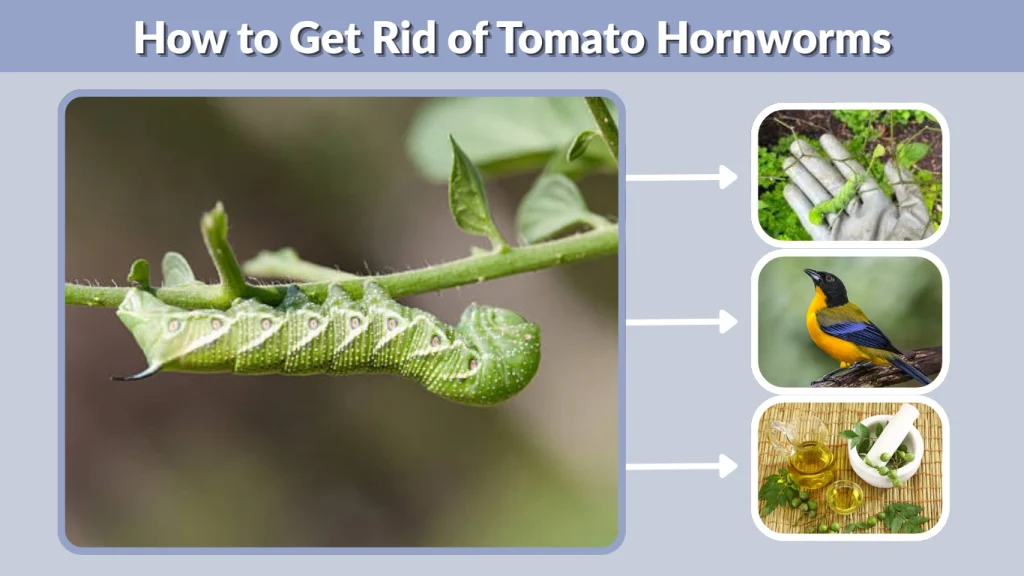
Effective control requires a combination of methods.
Manual Removal
Hand-picking is one of the simplest and most effective ways to remove hornworms. Check plants carefully, especially early in the morning or late in the evening when they are more active.
Natural Predators
Encouraging natural predators such as birds and parasitic wasps can help keep hornworm populations under control. Parasitic wasps lay eggs on hornworms, eventually killing them.
Organic Control Methods
Using organic solutions like neem oil or Bacillus thuringiensis (Bt) can effectively target hornworms without harming beneficial insects when used correctly.
Natural & Organic Control Methods
For gardeners who prefer eco-friendly solutions, several natural methods can effectively manage tomato hornworms without harming the environment.
Homemade Remedies
Simple homemade sprays can help deter hornworms. A mixture of mild soap and water can disrupt their feeding, while garlic spray may repel them due to its strong odor. Although these methods may not eliminate severe infestations, they can reduce pest activity.
Biological Control
Introducing beneficial insects is one of the most sustainable ways to control hornworms. Parasitic wasps are particularly effective, as they lay eggs on the caterpillars. If you notice white cocoons on a hornworm’s back, leave it in place—it is already being controlled naturally.
Eco-Friendly Gardening Tips
Maintaining a balanced garden ecosystem helps reduce pest outbreaks. Avoid excessive pesticide use, as it can kill beneficial insects that naturally keep hornworm populations in check.
How to Prevent Tomato Hornworms
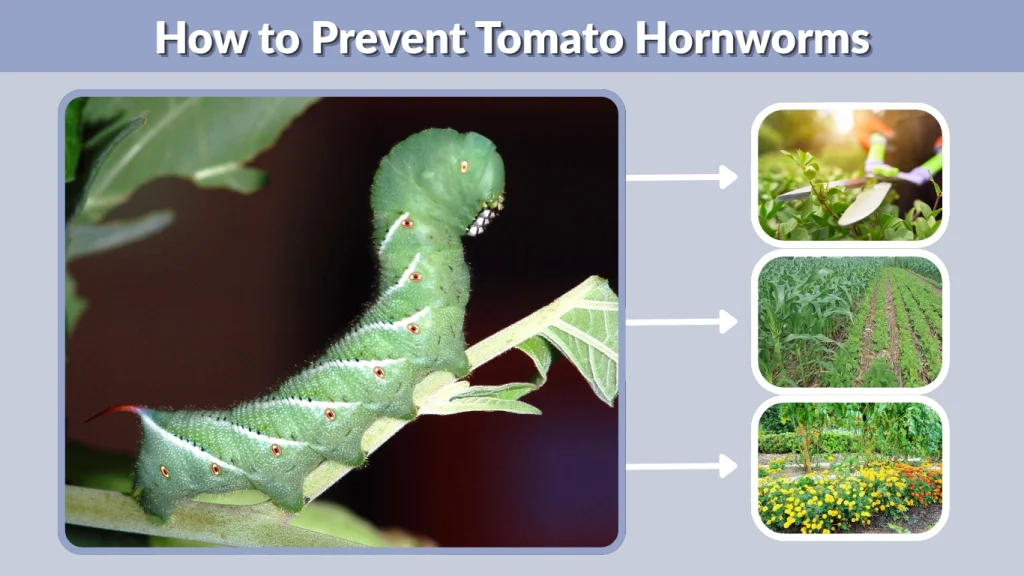
Prevention is always better than cure, especially when dealing with fast-feeding pests like hornworms.
Garden Hygiene
Keeping your garden clean is essential. Remove plant debris, fallen leaves, and weeds regularly to eliminate hiding and breeding spots.
Crop Rotation
Rotating crops each season prevents hornworms from completing their lifecycle in the same area, reducing the chance of recurring infestations.
Companion Planting
Certain plants can help deter hornworms. Growing basil, marigold, or dill near your tomatoes may reduce pest activity while also enhancing garden biodiversity.
Regular Inspection
Frequent inspection is one of the most effective preventive measures. Check the undersides of leaves and look for eggs, larvae, or droppings to catch infestations early.
Best Time to Check for Hornworms
Timing plays an important role in detecting these pests.
- Early morning: Hornworms are easier to spot before the heat of the day.
- Evening: They become more active during cooler hours.
- After watering: Moist leaves can make movement and feeding activity more noticeable.
Using a flashlight at night, especially a UV light, can make hornworms glow slightly, making them easier to find.
FAQs
Do hornworms turn into moths?
Yes, tomato hornworms eventually transform into hawk moths, which are large, fast-flying pollinators.
How fast do hornworms grow?
Hornworms grow rapidly, often reaching full size within two to three weeks under favorable conditions.
Can hornworms kill a tomato plant?
In severe infestations, hornworms can completely defoliate a plant, which may lead to reduced growth or even plant death.
Are hornworms beneficial in any way?
While destructive as larvae, their adult moth form contributes to pollination and supports the ecosystem.
Pro Tips for Gardeners
- Use a UV flashlight at night to easily locate hidden hornworms.
- Encourage birds and beneficial insects to naturally control pests.
- Combine manual removal with organic treatments for best results.
- Monitor your plants regularly during peak growing season.
Conclusion
Tomato hornworms are a serious threat to home gardens, but they can be effectively managed with the right knowledge and approach. Early identification, consistent monitoring, and a combination of natural and organic control methods are key to keeping these pests under control. By maintaining a healthy garden ecosystem and practicing preventive measures, you can protect your tomato plants and enjoy a productive harvest without relying heavily on chemical solutions.
