
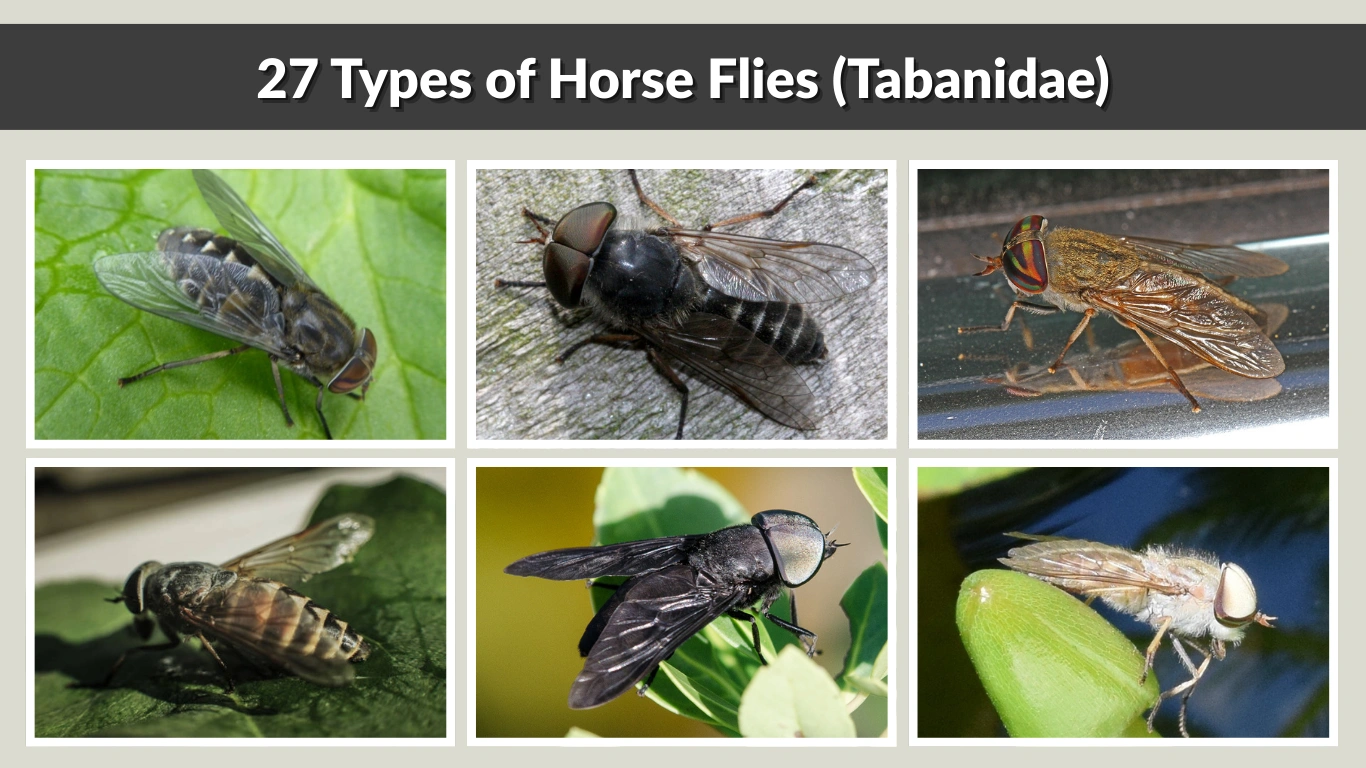
Horse flies are a notorious group of blood-feeding insects belonging to the family Tabanidae. Known for their painful bites and strong flying ability, they are often found near livestock, wetlands, forests, and even deserts. While males feed on nectar and play a role in pollination, females require blood meals to reproduce. With nearly 27 notable species worldwide, horse flies display a fascinating diversity in size, color, and habitat, from tropical forests to arid deserts.
1. Pale Giant Horse Fly (Tabanus bovinus)

The Pale Giant Horse Fly is the largest horse fly species in Europe, often feared for its painful bite. Despite its intimidating size, males feed mostly on nectar, while females require blood meals to reproduce. They are strong fliers, frequently found near cattle pastures and forest edges, where they target livestock and occasionally humans. Their sheer size and loud buzzing make them easy to notice in summer months.
Identification
- One of the largest horse flies, body length up to 25–30 mm
- Robust, pale brown body with lighter yellowish tones
- Large greenish eyes with horizontal bands
- Clear to lightly smoky wings
- Strong, piercing mouthparts adapted for blood-feeding
- Females larger and darker than males
Habitat and Distribution
The Pale Giant Horse Fly is distributed across much of Europe and parts of Asia. It prefers open grasslands, pastures, wetlands, and areas with livestock, as hosts provide easy access to blood meals. They are most active during warm, sunny days in late spring and summer.
Behavior and Diet
Females feed on the blood of cattle, horses, deer, and sometimes humans, using sharp mouthparts to slice the skin before lapping up blood. Males, in contrast, feed only on nectar and play a role in pollination. Both sexes are strong fliers, capable of chasing hosts over long distances. Despite being a nuisance, they are ecologically significant in food webs, serving as prey for birds, bats, and dragonflies.
2. Pale Giant Horse Fly (Tabanus sudeticus)

The Dark Giant Horse Fly is one of the largest and heaviest horse fly species in Europe, often mistaken for its relative, the Pale Giant Horse Fly. Known for its intimidating size and loud buzzing, it is a common summer nuisance in northern and central Europe. Females are aggressive blood feeders, while males sustain themselves on nectar. Its dark, robust body and strong flight make it a striking insect to encounter.
Identification
- Very large, body length around 25–30 mm
- Dark brown to almost black body, more robust than Tabanus bovinus
- Large compound eyes, usually green or reddish with bands
- Broad, powerful wings with a smoky-brown tint
- Females have sharp, blade-like mouthparts for cutting skin
- Males smaller, with more widely spaced eyes
Habitat and Distribution
This species is found mainly in northern and central Europe, including the British Isles, Scandinavia, and mountainous areas of Central Europe. It thrives in moist habitats such as marshes, moors, grasslands, and pastures where livestock and large mammals are abundant. They are especially noticeable in rural areas during mid-summer.
Behavior and Diet
Female Dark Giant Horse Flies are notorious for their painful bite, feeding on the blood of cattle, horses, deer, and occasionally humans. They slice through skin to lap up blood, which is vital for egg production. Males, on the other hand, feed on nectar and are harmless. These flies are strong, persistent fliers and are often seen buzzing around livestock, causing considerable stress. Despite their nuisance factor, they play a role in natural ecosystems, serving as prey for birds, bats, and predatory insects.
3. Greenhead Horse Fly (Tabanus nigrovittatus)

The Greenhead Horse Fly is a notorious species commonly found in coastal salt marshes of eastern North America. It is especially well known in New Jersey, where swarms make summer beach visits challenging. Recognized for its shiny green eyes and painful bite, this horse fly is a major pest to humans and animals alike. Despite its nuisance, it plays a role in coastal ecosystems.
Identification
- Medium-sized, about 12–16 mm in length
- Distinctive metallic green eyes that shimmer in sunlight
- Dark brown body with faint stripes on the thorax
- Wings clear to slightly smoky, with strong venation
- Females have blade-like mouthparts designed for blood feeding
- Males smaller, with broader eye spacing and non-biting
Habitat and Distribution
The Greenhead Horse Fly is primarily found along the Atlantic coast of North America, ranging from New England to the southern United States. It thrives in salt marshes, tidal wetlands, and coastal grasslands. Large populations are often associated with marshland habitats where breeding is favorable.
Behavior and Diet
Females are aggressive biters, often swarming humans on beaches, marshes, and fishing areas. Their bites are extremely painful, as they slice the skin to lap blood. They target mammals and humans but also feed on birds. Males, harmless to humans, feed exclusively on nectar. These flies are fast, persistent fliers and difficult to repel, making them a serious pest in coastal regions.
4. Black Horse Fly (Tabanus atratus)

The Black Horse Fly is one of the largest horse flies in North America, known for its entirely dark body and powerful flight. Unlike many other species, it has a strikingly uniform appearance that makes it easy to recognize. Females are aggressive blood feeders, while males feed only on nectar. Due to their size and biting behavior, they are feared by both humans and livestock.
Identification
- Large size, 20–30 mm in length
- Uniformly black body, thorax, and abdomen
- Wings broad and smoky-dark, often darker than other horse fly species
- Eyes dark purple to black, lacking the bright bands seen in many species
- Females equipped with strong cutting mouthparts
- Males slightly smaller, with non-biting mouthparts
Habitat and Distribution
Black Horse Flies are widely distributed across the United States and southern Canada, often found in wetlands, forests, grasslands, and near rivers or lakes. They are especially common in summer months when temperatures are high. Their breeding usually occurs near water bodies where larvae develop in damp soil or mud.
Behavior and Diet
Females are notorious for their painful bite, often attacking cattle, horses, deer, and humans. They slice through skin to lap up blood, which is required for egg production. Their bites can cause stress in livestock, leading to reduced productivity. Males feed harmlessly on nectar, contributing slightly to pollination. Despite their nuisance, Black Horse Flies are important prey for birds, bats, and predatory insects, helping balance ecosystems.
5. Marsh Horse Fly (Tabanus lineola)

The Marsh Horse Fly is a medium-sized horse fly commonly found across North America, particularly in wetland regions. It is one of the more frequently encountered species in marshes, swamps, and river valleys, where it thrives during the warm summer months. Known for its quick flight and persistent biting behavior, the Marsh Horse Fly is both a nuisance to humans and a pest to livestock.
Identification
- Medium-sized, about 12–18 mm in length
- Brownish-gray body with yellow or tan stripes on the thorax
- Abdomen marked with darker triangular patches or stripes
- Wings usually clear, with well-defined veins
- Bright green or reddish eyes in females, sometimes with faint horizontal bands
- Females have sharp, blade-like mouthparts for blood feeding
Habitat and Distribution
This species is widespread across the eastern and central United States, extending into Canada. It is most abundant in lowland marshes, wetlands, and along riverbanks. The larvae develop in wet soils and shallow water habitats, making marshes and swamps ideal environments.
Behavior and Diet
Female Marsh Horse Flies are aggressive biters, targeting cattle, horses, deer, and humans. Their bite is painful and often leaves welts due to the slicing action of their mouthparts. They are strong fliers, capable of pursuing their hosts persistently. Males feed on nectar and play no role in biting. This species is particularly active during hot, humid days in summer, often appearing in swarms around wetlands.
6. Striped Horse Fly (Tabanus lineolatus)

The Striped Horse Fly is a distinctive species recognized for the bold stripes running along its thorax and abdomen. It is slightly larger than the Marsh Horse Fly and has a reputation for being aggressive during the peak of summer. Its unique striped appearance makes it easier to identify compared to many other horse flies, which often have more subtle markings.
Identification
- Medium to large size, about 15–20 mm long
- Prominent dark and light stripes along the thorax and abdomen
- Eyes often green or reddish, sometimes banded with iridescent lines
- Wings clear with strong venation, occasionally faintly smoky
- Females with sharp, scissor-like mouthparts for cutting skin
- Males smaller, with non-biting nectar-feeding mouthparts
Habitat and Distribution
This species is widely distributed across North America, particularly in regions with abundant wetlands, grasslands, and open woodlands. It prefers sunny habitats near streams, lakes, and marshes where breeding conditions are favorable. Larvae develop in damp soil or shallow mud along water bodies.
Behavior and Diet
Female Striped Horse Flies are fierce biters, targeting livestock such as cattle and horses, along with humans and wild mammals. Their bites are painful and often result in swelling or irritation. They are active during hot, bright days, often flying quickly and persistently around their targets. Males, on the other hand, feed harmlessly on nectar, helping pollinate flowers in their environment.
7. Autumn Horse Fly (Tabanus autumnalis)

The Autumn Horse Fly is a large and robust species most often encountered in Europe. It is particularly known for being active later in the season, usually from late summer into autumn, which is how it earned its name. Because of its size and persistent biting behavior, it is a serious pest to both humans and livestock, especially in rural areas with wetlands.
Identification
- Large size, 15–25 mm in length
- Gray-brown body with yellowish tones on the sides
- Abdomen marked with lighter triangular patches on a darker background
- Eyes often iridescent green or reddish with distinctive horizontal bands
- Wings usually clear with strong venation
- Females have prominent cutting-sponging mouthparts for blood feeding
Habitat and Distribution
This species is widespread throughout Europe, extending into parts of western Asia. It favors damp, coastal regions, meadows, and marshes, as well as farmland with grazing animals. The larvae typically develop in wet soils near ponds, marshes, and ditches.
Behavior and Diet
Autumn Horse Flies are persistent and aggressive, especially females seeking blood meals. They are notorious for attacking cattle and horses, causing irritation, stress, and reduced productivity. Their painful bites are also a nuisance to humans, often leaving swollen marks. The species is most active on warm, sunny days from late July through September. Males feed only on nectar and are harmless.
8. Notch-Horned Cleg (Haematopota pluvialis)

The Notch-Horned Cleg is one of the most notorious horse flies in Europe, particularly recognized for its painful bite. Unlike many larger Tabanus horse flies, this species is smaller but still highly aggressive. Farmers and outdoor workers know it well, as it is often found around livestock and rural wetlands. Its patterned wings and characteristic antenna notch make it relatively easy to identify.
Identification
- Small to medium size, around 6–11 mm long
- Gray-brown body with mottled patterns
- Abdomen with faint lighter spots and darker background
- Wings distinctively mottled with dark and light patches
- Antennae with a distinct notch (hence the name)
- Females with strong, cutting mouthparts for blood feeding
Habitat and Distribution
The Notch-Horned Cleg is widespread across Europe, extending into parts of Asia. It thrives in damp meadows, marshes, farmlands, and woodlands with nearby water bodies. The larvae develop in moist soil, often in wetlands, ditches, or shaded areas rich in organic matter.
Behavior and Diet
Females are aggressive blood feeders, attacking cattle, horses, deer, and humans during the day. Their bites are extremely painful due to the tearing action of their mouthparts, and often cause irritation and swelling. Males feed on nectar and are harmless. These flies are most active in warm, humid conditions, especially from late spring to early autumn.
9. Black Horse Fly (Tabanus atratus)

The Black Horse Fly is one of the largest and most intimidating horse flies in North America. Known for its jet-black body and powerful flight, it can be a serious pest to both livestock and humans. Its size and dark coloring make it stand out among other horse flies, and its aggressive biting behavior has earned it a fearsome reputation.
Identification
- Very large size, often 20–25 mm long
- Shiny black body and abdomen with little to no markings
- Broad head with large compound eyes, usually dark-colored
- Wings are dark or smoky, matching the overall black appearance
- Females equipped with strong cutting mouthparts for blood feeding
- Males smaller and non-biting, feeding only on nectar
Habitat and Distribution
This species is widespread in the eastern and southern United States, extending into parts of Central America. It favors warm, humid environments such as swamps, marshes, woodlands, and pastures near water bodies. The larvae develop in moist soils and decaying organic matter, particularly near aquatic habitats.
Behavior and Diet
The female Black Horse Fly is an aggressive blood feeder, attacking cattle, horses, deer, and humans with painful bites. Its feeding can cause stress, blood loss, and reduced productivity in livestock. These flies are highly active during hot summer days, often circling persistently around their targets. Males, unlike females, do not bite and instead feed on flower nectar, contributing to pollination.
10. Yellow Horse Fly (Tabanus flavidus)

The Yellow Horse Fly is a striking member of the horse fly family, easily distinguished by its lighter, yellowish body compared to the darker tones of most related species. Although not as large as some other Tabanus flies, it is still a persistent biter and a notable pest of livestock and humans. Its coloring often helps it blend into grassy or sandy habitats.
Identification
- Medium-sized, about 12–18 mm long
- Body and abdomen predominantly yellow or golden brown
- Abdomen often marked with faint darker stripes
- Wings clear to slightly smoky with strong venation
- Large eyes, sometimes iridescent with faint banding
- Females possess cutting mouthparts for blood feeding
Habitat and Distribution
This species is distributed across parts of North America, often favoring open grasslands, sandy areas, and farmlands near water sources. The larvae develop in moist soil, especially in habitats with decaying plant material or wet sand near streams and marshes.
Behavior and Diet
Female Yellow Horse Flies aggressively bite mammals, including cattle, horses, and humans. Their bites are painful and can cause stress and blood loss in animals. These flies are active during warm, sunny days and are particularly attracted to movement and dark-colored surfaces. Males, as in other horse fly species, do not bite and feed exclusively on nectar.
11. Striped Horse Fly (Tabanus lineola)

The Striped Horse Fly is one of the most recognizable horse flies in North America due to its bold abdominal stripes. Farmers and livestock owners often encounter this species during the summer, as it is highly active and aggressive. Its distinct appearance makes it easier to identify compared to other, more uniformly colored horse flies.
Identification
- Medium to large size, 12–20 mm long
- Abdomen with clear yellow and dark brown stripes
- Thorax dark brown with lighter patterns
- Eyes often green or golden with horizontal banding
- Wings transparent with fine venation
- Females have strong blood-feeding mouthparts
Habitat and Distribution
This species is found primarily in the eastern United States, often in agricultural areas, pastures, and wetlands. It prefers habitats near water sources, as the larvae develop in moist soils and decaying vegetation. Striped Horse Flies are commonly encountered around cattle and horses, making them a significant pest.
Behavior and Diet
Female Striped Horse Flies are aggressive daytime feeders, often swarming around livestock and biting persistently. Their bites cause pain, blood loss, and irritation, sometimes leading to reduced productivity in farm animals. Males, as in other species, do not bite and instead feed on nectar and plant juices.
12. Greenhead Horse Fly (Tabanus nigrovittatus)

The Greenhead Horse Fly is infamous along the Atlantic coast of North America, particularly in salt marshes where it thrives in huge numbers. This species is notorious for harassing beachgoers, fishermen, and livestock, delivering painful bites that can ruin outdoor activities. Its emerald-green eyes give it a striking appearance, but they also make it easily identifiable.
Identification
- Medium size, 10–15 mm long
- Shiny, metallic green eyes (females sometimes with purple bands)
- Dark brown to black body with a slightly striped abdomen
- Wings transparent, sometimes lightly tinted
- Females with strong piercing mouthparts
- Males smaller, non-biting, with larger eyes that nearly touch
Habitat and Distribution
Greenhead Horse Flies are abundant along the Atlantic seaboard, from New England to the Gulf of Mexico. They are strongly associated with coastal salt marshes, where their larvae develop in muddy, saline environments. Adults emerge in swarms during the hottest summer months, creating major nuisance outbreaks.
Behavior and Diet
Female Greenhead Horse Flies are relentless daytime feeders, targeting humans, livestock, and wildlife. Their painful bites often leave welts and can transmit infections. They are especially aggressive toward moving targets and are strongly attracted to dark clothing. Males feed only on nectar and are less frequently observed.
13. Dark Horse Fly (Tabanus sudeticus)

The Dark Horse Fly is one of the largest horse fly species found in Europe, often reaching an impressive size compared to most other Tabanus species. Known for its heavy build and strong flight, it is a formidable insect that causes considerable discomfort to livestock and humans with its painful bites. Its dark appearance makes it stand out among other horse flies.
Identification
- Large size, up to 25–28 mm long
- Body robust, dark brown to nearly black
- Abdomen with faint, lighter side markings
- Wings clear but slightly smoky near the base
- Eyes dark, sometimes with a metallic sheen
- Females with powerful cutting-sponging mouthparts for blood feeding
Habitat and Distribution
This species is distributed across northern and central Europe, especially in wet meadows, pastures, and wooded areas near water. It favors cooler climates and can often be found in upland and mountainous regions. Larvae develop in moist soils, feeding on small invertebrates and organic matter.
Behavior and Diet
Female Dark Horse Flies are aggressive blood feeders, targeting large mammals such as cattle, horses, and occasionally humans. Their painful bites can lead to stress and blood loss in livestock, affecting productivity. Males, by contrast, feed on nectar and plant juices, playing no role in biting.
14. Marsh Horse Fly (Tabanus maculicornis)

The Marsh Horse Fly is a widespread species often associated with wetland habitats, as its name suggests. Known for its preference for marshy environments, this horse fly is active during warm summer months and is considered a nuisance to livestock, wildlife, and humans. Its distinctive wing markings and habitat association make it a recognizable member of the Tabanus genus.
Identification
- Medium size, about 12–16 mm long
- Body brownish with lighter patches on the abdomen
- Antennae with pale segments at the base
- Wings transparent with distinct darker markings along the veins
- Eyes large, sometimes showing iridescent reflections
- Females equipped with cutting mouthparts for blood feeding
Habitat and Distribution
Marsh Horse Flies are commonly found in wetlands, marshes, and areas with slow-moving or stagnant water. They are widely distributed across Europe and parts of Asia. The larvae develop in muddy soils rich in organic matter, thriving in the damp conditions of marshlands.
Behavior and Diet
Females are persistent daytime feeders, frequently attacking cattle, horses, and humans near marshes and riverbanks. Their bites can cause significant irritation and stress in livestock. Males, consistent with other horse fly species, do not bite and feed instead on nectar and plant juices.
15. Black Horse Fly (Tabanus atratus)

The Black Horse Fly is among the largest and most aggressive horse fly species in North America. Its sheer size and jet-black coloration make it easy to recognize. Highly feared by livestock owners, it is notorious for painful bites that can lead to stress, blood loss, and secondary infections in animals. Humans are also frequent targets, especially in rural and wetland regions.
Identification
- Very large, often 20–30 mm in length
- Body entirely black, including thorax and abdomen
- Wings dark, smoky, almost opaque
- Eyes dark brown to black with little iridescence
- Females with strong cutting mouthparts for blood feeding
- Males smaller, with larger compound eyes that nearly touch
Habitat and Distribution
This species is widely distributed across the eastern United States, especially in warm, humid regions near rivers, lakes, and wetlands. Larvae develop in moist soil or decaying organic matter near water sources, making these habitats hotspots for outbreaks of adults in summer.
Behavior and Diet
Female Black Horse Flies are aggressive daytime feeders, attacking cattle, horses, and humans with painful precision. Their bites can cause wounds that bleed freely, attracting other biting flies and creating further irritation. Males feed harmlessly on nectar. The Black Horse Fly is considered one of the most troublesome pests for livestock in North America.
16. Striped Horse Fly (Tabanus lineola)

The Striped Horse Fly is one of the more easily recognizable species due to its distinctive thoracic stripes and lighter body patterning. Found mainly in coastal and wetland regions, it is an aggressive blood-feeding species that frequently targets both humans and livestock. Its strong flight and persistence make it a challenging pest during summer months.
Identification
- Medium size, about 10–15 mm long
- Thorax with two or more pale longitudinal stripes
- Abdomen yellowish-brown with darker central markings
- Wings transparent with faint brownish veins
- Eyes often brightly iridescent in fresh specimens
- Females have sharp, blade-like mouthparts for cutting skin
Habitat and Distribution
This species is abundant in the southeastern United States, particularly in coastal plains, marshlands, and areas near estuaries. It thrives in warm, humid conditions and is often found near pastures and woodlands adjacent to wetlands. Larvae develop in moist soils and decaying organic matter.
Behavior and Diet
Female Striped Horse Flies are persistent daytime feeders, known for swarming in large numbers around livestock and humans near water. Their painful bites are not only irritating but can also serve as mechanical vectors for livestock diseases. Males are non-biting and instead feed on flower nectar.
17. Greenhead Horse Fly (Tabanus nigrovittatus)

The Greenhead Horse Fly is one of the most infamous horse fly species, especially along the coastal marshes of the eastern United States. Recognized by its strikingly green eyes, this species is notorious for its aggressive biting behavior during the summer months. Swarms of these flies can make outdoor activities nearly unbearable in coastal areas.
Identification
- Medium size, about 10–13 mm long
- Body brownish with pale markings on the abdomen
- Eyes vivid metallic green, often with rainbow reflections
- Wings transparent with faint brownish venation
- Females with prominent slicing mouthparts designed for blood feeding
- Males have larger eyes that nearly meet in the middle
Habitat and Distribution
Greenhead Horse Flies thrive in salt marshes, estuaries, and coastal wetlands. They are widespread along the Atlantic seaboard of the United States, particularly from New England down to the Gulf Coast. Larvae develop in moist, salty soils of marshes where organic matter is abundant.
Behavior and Diet
Females are highly aggressive daytime feeders, often attacking humans, cattle, and horses in swarms. Their bites are extremely painful and can draw blood quickly, causing major discomfort. Males do not bite and instead feed on nectar. The abundance of Greenhead Horse Flies during summer makes them a major nuisance in recreational and fishing areas.
18. Deer Fly (Chrysops callidus)

The Deer Fly is a smaller but equally notorious relative of the larger horse flies. Known for their patterned wings and iridescent eyes, these flies are swift, persistent, and inflict very painful bites. Unlike the larger Tabanus species, Deer Flies often attack in shaded woodlands and meadows, making them a serious nuisance for both humans and animals during summer.
Identification
- Smaller than most horse flies, typically 6–10 mm long
- Abdomen yellowish-brown with dark banding
- Wings patterned with dark crossbands, giving a spotted appearance
- Eyes brightly iridescent, often gold, green, or red depending on angle
- Females with sharp, blade-like mouthparts for cutting skin
- Males have larger eyes that nearly touch at the top
Habitat and Distribution
Deer Flies are widely distributed across North America, especially in wooded areas, marshlands, and near streams or lakes. They prefer habitats with both forest cover and open clearings where hosts such as deer, livestock, and humans pass through. Larvae develop in moist soils, mud, or decaying vegetation near water.
Behavior and Diet
Females are aggressive blood feeders, attacking deer, livestock, and humans, often in swarms. Their bites are painful and can cause allergic reactions, itching, and swelling. Deer Flies are also capable of mechanically transmitting diseases such as tularemia and certain parasitic infections. Males, in contrast, are harmless nectar feeders.
19. Yellow Horse Fly (Diachlorus ferrugatus)

The Yellow Horse Fly is one of the more colorful species within the family, easily recognized by its golden-yellow body and shimmering eyes. Found primarily in warmer, humid regions, this fly is a strong daytime biter that poses a nuisance to both humans and livestock. Its persistence and painful bite make it a significant pest in tropical and subtropical habitats.
Identification
- Medium-sized, around 8–12 mm long
- Body golden-yellow with darker abdominal bands
- Eyes iridescent, often appearing green or reddish depending on light
- Wings clear or faintly smoky with visible veins
- Females with scissor-like mouthparts for cutting skin and feeding on blood
- Males smaller-eyed, feeding only on nectar
Habitat and Distribution
This species is distributed across the southeastern United States, Central America, and parts of South America. It thrives in forests, wetlands, and tropical lowlands, often near rivers and ponds. Larvae typically develop in moist soils rich in decaying organic matter, making marshy habitats ideal breeding grounds.
Behavior and Diet
Females are aggressive feeders, attacking livestock, wildlife, and humans during the day. Their bites are extremely painful and often lead to localized swelling. While they do not transmit diseases as efficiently as some other blood-feeding insects, their swarming behavior can stress animals and reduce grazing efficiency. Males are non-biting and sustain themselves on plant nectar.
20. Black Horse Fly (Tabanus atratus)

The Black Horse Fly is among the largest and most intimidating horse flies, instantly recognizable due to its solid black body and powerful build. Known for its painful bite, this species is a common pest in many regions of North America. Its large size and aggressive behavior make it one of the most troublesome horse flies encountered by humans and livestock.
Identification
- Large size, often 20–25 mm long
- Entire body robust and covered in dark, almost black hairs
- Eyes usually dark brown to black, lacking the bright iridescence seen in other species
- Wings smoky or dark-tinted, broad and strong
- Females possess sharp, blade-like mouthparts for cutting skin
- Males are smaller-headed, nectar-feeding only
Habitat and Distribution
The Black Horse Fly is widespread across the eastern and central United States, commonly found near rivers, lakes, wetlands, and forests. Larvae develop in muddy soils or decaying vegetation near water, taking advantage of damp habitats to complete their growth cycle.
Behavior and Diet
Females are highly aggressive blood feeders, preferring large mammals such as cattle, horses, and deer, though humans are also frequent targets. Their bite is extremely painful, often leaving behind swelling and irritation. They feed primarily during sunny summer days. Males do not bite and instead consume nectar, playing a minor role in pollination.
21. Striped Horse Fly (Tabanus lineola)

The Striped Horse Fly is a distinctive species within the horse fly family, easily recognized by the clear stripes that run along its thorax. It is a strong flier and a persistent biter, often troubling both livestock and humans. Although smaller than some of its relatives, its painful bite and aggressive feeding habits make it a significant nuisance in warm, coastal regions.
Identification
- Medium-sized, about 12–16 mm in length
- Thorax marked with pale longitudinal stripes, giving it a striped appearance
- Abdomen brownish with lighter crossbands
- Eyes brightly iridescent, often green or gold with horizontal banding
- Wings usually clear or lightly tinted
- Females possess cutting mouthparts for blood feeding; males feed on nectar
Habitat and Distribution
This species is most common along the Atlantic coast of the United States, particularly in sandy coastal plains, salt marshes, and wetlands. It favors habitats near water where its larvae can develop in moist soils or decaying vegetation. Its presence is seasonal, peaking during warm summer months.
Behavior and Diet
Females are aggressive day-time feeders, attacking cattle, horses, and humans. Their bites are painful and can cause localized swelling. They are notorious for harassing beachgoers and people near coastal areas. Males, in contrast, are harmless nectar feeders and do not bite.
22. Greenhead Horse Fly (Tabanus nigrovittatus)

The Greenhead Horse Fly is one of the most notorious species, well known for tormenting beach visitors and fishermen along the coastal marshes of North America. It is smaller than some of the giant horse flies but makes up for its size with persistence, speed, and a painful bite. Its bright metallic-green eyes give the species its common name and make it easy to identify.
Identification
- Medium-sized, about 10–15 mm long
- Striking metallic-green eyes, often with copper or gold highlights
- Body brownish with lighter markings on the abdomen
- Wings clear to lightly tinted
- Females have blade-like mouthparts for blood feeding
- Males have larger eyes that almost meet at the top of the head, feeding only on nectar
Habitat and Distribution
This species is most abundant along the Atlantic coast of the United States, particularly from New England through the Mid-Atlantic and down into the Southeast. It thrives in salt marshes, sandy shorelines, and brackish wetlands. Its larvae develop in moist, muddy soil rich in organic matter, making coastal marshes perfect breeding grounds.
Behavior and Diet
Females are aggressive day-biting flies that target humans, horses, and other large mammals. Their bite is painful, often drawing blood immediately. Greenhead Horse Flies are especially bothersome in summer months, harassing beachgoers, boaters, and fishermen. Males feed harmlessly on nectar and help pollinate flowers.
23. Brown Horse Fly (Tabanus bovinus)
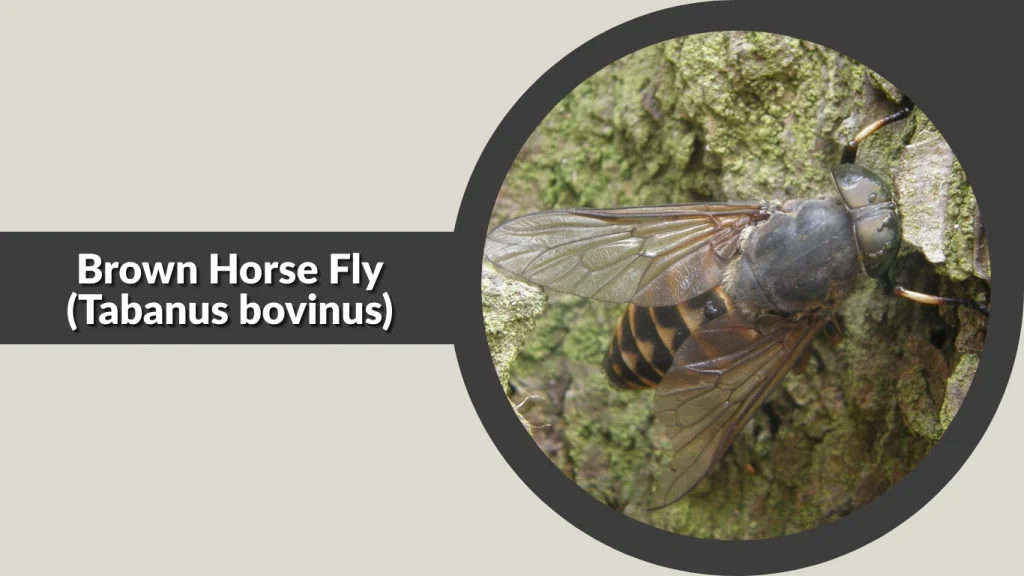
The Brown Horse Fly is one of the largest and most widespread horse flies in Europe, easily recognized by its size and coloration. It is a formidable pest of livestock and can deliver a painful bite to humans as well. Though intimidating, it plays a role in natural ecosystems, particularly in wetland habitats where its larvae develop.
Identification
- Large, robust species reaching 20–25 mm in length
- Brownish body with lighter bands across the abdomen
- Eyes iridescent green or golden with subtle horizontal bands
- Wings broad, often smoky or lightly patterned
- Females equipped with cutting mouthparts for blood feeding
- Males have larger eyes and feed exclusively on nectar
Habitat and Distribution
The Brown Horse Fly is common throughout much of Europe, particularly in northern and central regions, and extends into parts of Asia. It inhabits meadows, wetlands, woodlands, and agricultural areas, especially near ponds, lakes, and rivers. Larvae thrive in muddy soils and decaying organic matter found in damp environments.
Behavior and Diet
Females are aggressive daytime feeders that seek blood from cattle, horses, deer, and humans. Their bite is painful, leaving swelling and irritation. In agricultural areas, heavy infestations can disturb livestock, reducing feeding and productivity. Males, being nectar feeders, play a minor role in pollination but are harmless to humans.
24. Marsh Horse Fly (Tabanus miki)

The Marsh Horse Fly is a European species that thrives in wetlands, meadows, and marshy habitats. Known for its strong flight and persistent biting, it is considered a nuisance to both livestock and humans. Although not as large as the Brown Horse Fly, it is still quite robust and can be recognized by its wing pattern and body coloration.
Identification
- Medium to large size, about 15–20 mm long
- Body grayish-brown with darker markings along the abdomen
- Eyes iridescent, often greenish with horizontal banding
- Wings slightly smoky with distinct dark patches near the cross-veins
- Females have blade-like mouthparts for blood feeding
- Males are nectar feeders with broader eyes that nearly touch
Habitat and Distribution
Marsh Horse Flies are widespread across central and southern Europe, especially in areas rich in wetlands, marshes, and river valleys. They prefer humid conditions and are often found near livestock pastures adjacent to water bodies. Their larvae develop in moist, muddy soils filled with decaying organic material.
Behavior and Diet
Females are aggressive daytime feeders, targeting cattle, horses, and humans. Their bites are painful and often cause swelling. They are most active in summer months, with peak biting activity occurring on warm, humid days. Males feed only on nectar and contribute slightly to pollination but are otherwise harmless.
25. Black Horse Fly (Tabanus atratus)
The Black Horse Fly is one of the largest and most intimidating horse flies in North America. With its all-black appearance and strong flight, it is easily recognized. Females are notorious for their painful bites, making them a serious pest to livestock and humans during the summer months. Despite their aggressive behavior, they are fascinating insects with striking iridescent eyes.
Identification
- Very large species, reaching 20–30 mm in length
- Uniformly black body and wings, giving a bold appearance
- Eyes large, iridescent, often purple, green, or bronze in males
- Females have wide-spaced eyes, males’ eyes nearly touch
- Robust thorax and abdomen with velvety black hair
- Females use sharp mouthparts to feed on blood; males feed on nectar
Habitat and Distribution
This species is found across much of the eastern and central United States, particularly in warm, humid regions. They prefer habitats near rivers, swamps, and wetlands, where larvae develop in moist soils rich in organic matter. Their presence is seasonal, peaking in late spring and summer when temperatures rise.
Behavior and Diet
Females are aggressive and persistent biters, feeding on cattle, horses, and humans. Their bites are deep and painful, often leaving swollen welts. Heavy infestations can cause livestock stress and blood loss. Males, being nectar feeders, are harmless and occasionally play a role in pollination. Black Horse Flies are most active on hot, sunny days.
26. Tropical Horse Fly (Tabanus tropicalis)

The Tropical Horse Fly is a striking species native to warmer parts of the Americas. Known for its bold size and patterned wings, it is one of the more colorful horse flies. While males feed on nectar, females are persistent blood-feeders, making them a notable pest in both rural and forested regions. Their tropical distribution gives them a longer active season than many temperate species.
Identification
- Large, typically 18–25 mm long
- Body brownish to dark with yellow or golden hair
- Eyes bright, often metallic green or striped in males
- Wings clear with subtle brown patches or banding
- Females with broad, blade-like mouthparts for piercing skin
- Males slightly slimmer and strictly nectar feeders
Habitat and Distribution
This species thrives in tropical and subtropical regions of Central and South America, with occasional records in southern parts of North America. It prefers rainforests, savannas, and areas close to rivers and wetlands. Larvae develop in moist soils, feeding on organic matter and small invertebrates.
Behavior and Diet
Females are aggressive biters, often targeting cattle, horses, and humans. Their painful bite is not only irritating but may also transmit pathogens and parasites. They are especially active during hot, humid conditions and can form swarms in suitable environments. Males, in contrast, are harmless and spend their time feeding on nectar and aiding in pollination.
27. Desert Horse Fly (Tabanus deserti)
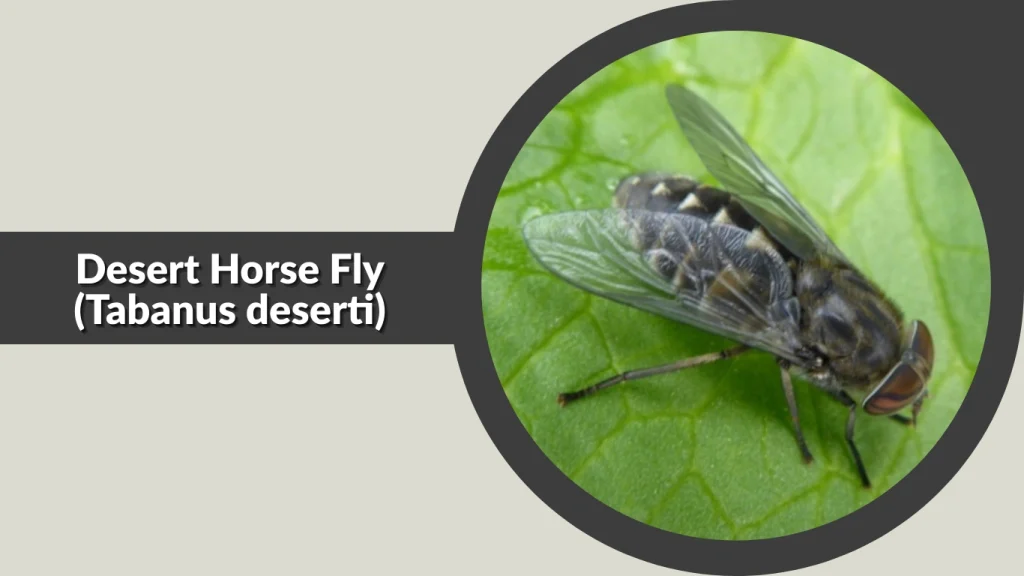
The Desert Horse Fly is an impressive species adapted to thrive in hot, arid regions where few other horse flies can survive. Despite the harsh environment, females remain aggressive feeders, often targeting livestock and wildlife near scarce water sources. Their resilience and unique desert adaptations make them one of the most fascinating members of the horse fly family.
Identification
- Medium to large size, around 15–22 mm in length
- Body sandy brown or gray, blending well with desert terrain
- Eyes large, sometimes striped or iridescent in males
- Wings lightly tinted, sometimes with faint smoky patches
- Females possess sharp, cutting mouthparts for blood feeding
- Males smaller, harmless, and nectar-feeding
Habitat and Distribution
As the name suggests, this species is found in desert and semi-arid regions, particularly in North Africa, the Middle East, and parts of Central Asia. They are often associated with oases, desert springs, and seasonal rivers where host animals gather, creating opportunities for feeding and reproduction.
Behavior and Diet
Females are persistent biters, seeking blood meals from camels, goats, horses, and humans. Their activity peaks during the hottest daylight hours, when desert animals come to drink water. Unlike many horse fly species, they are highly resilient to heat and drought, giving them a competitive advantage in extreme environments. Males, as with most horse flies, feed only on nectar and plant juices.
