

Water bug bites may be rare, but when they happen, they can deliver a surprisingly sharp and painful sting. Found in ponds, lakes, slow-moving streams, and even backyard pools, certain aquatic insects like giant water bugs, backswimmers, and water scorpions can bite humans if provoked. While these bites are not typically dangerous, they can cause discomfort, swelling, and temporary irritation. In this guide, we’ll cover the different types of water bugs that bite, how to identify and treat their bites, prevention tips, and when to seek medical attention.
Overview of Water Bugs
Water bugs are aquatic insects found in a variety of habitats, including ponds, lakes, rivers, marshes, and even backyard pools. They belong to different families, but many share the same traits—flat bodies, strong legs for swimming, and in some species, sharp mouthparts capable of piercing skin. While most water bugs feed on other insects, tadpoles, or small fish, some can bite humans if handled or threatened. These bites are not typically venomous but can still be quite painful.
Common Misidentifications
People often confuse water bugs with other insects, especially cockroaches, due to similar size or shape. However, true water bugs live in aquatic environments, while cockroaches are land insects. Another common mix-up is between water boatmen and backswimmers. Water boatmen are harmless and feed mostly on algae, while backswimmers are aggressive predators capable of delivering a painful bite. Similarly, giant water bugs are sometimes called “toe-biters” because swimmers occasionally get bitten when these insects mistake toes for prey.
Why Water Bugs Bite
Water bugs do not actively seek out humans to bite. Most bites occur when the insect feels threatened or trapped. For example, if a swimmer accidentally grabs one, or if a water bug gets stuck against skin in shallow water, it may use its sharp mouthparts to defend itself. Certain predatory species, like giant water bugs and backswimmers, can also bite when handled because their mouthparts are designed to pierce and inject digestive enzymes into prey.
1. Giant Water Bug Bite

Giant water bugs, also called toe-biters, are large aquatic insects found in ponds, lakes, and slow-moving streams. They are known for their strong front legs used to grab prey and their ability to deliver a painful bite when threatened. Although not venomous, their bite can cause intense pain and temporary swelling.
Bite Identification
- Sudden sharp, pinching sensation in the skin
- Small puncture mark at the bite site
- Rapid swelling or redness around the affected area
Symptoms
- Immediate, intense pain at the bite site
- Swelling and redness within minutes
- Possible numbness or tingling for a short period
- Mild itching as the bite heals
Treatment
To treat a giant water bug bite, first clean the wound with soap and water to reduce infection risk. Apply a cold pack for 10–15 minutes to ease pain and swelling. Over-the-counter pain relievers or antihistamines can help reduce discomfort and inflammation. The bite typically heals within a few days, but seek medical care if pain worsens, signs of infection appear, or symptoms persist.
2. Backswimmer Bite
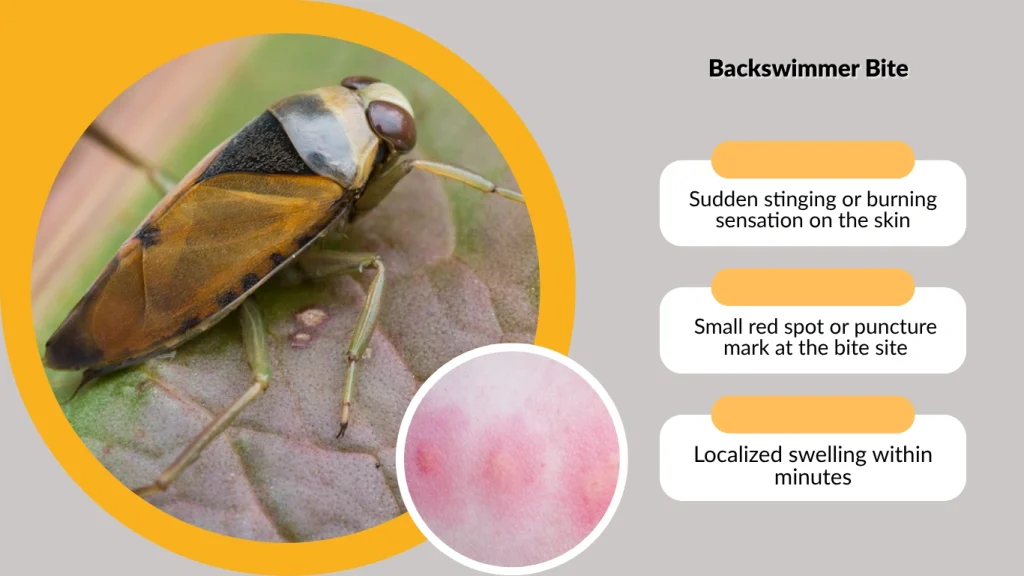
Backswimmers are small aquatic insects that swim upside down, using their oar-like hind legs to move quickly through the water. They are often mistaken for harmless water boatmen, but unlike water boatmen, backswimmers can bite and inject saliva that causes pain. They usually bite in self-defense when handled or trapped against the skin.
Bite Identification
- Sudden stinging or burning sensation on the skin
- Small red spot or puncture mark at the bite site
- Localized swelling within minutes
Symptoms
- Sharp pain that may last for several hours
- Redness and mild swelling around the bite area
- Occasional itching or tenderness during healing
- Rarely, minor allergic reactions in sensitive individuals
Treatment
Wash the bite area with soap and warm water to prevent infection. Apply an ice pack or cold compress to reduce swelling and numb the pain. Over-the-counter painkillers or topical creams can help with discomfort. The bite generally heals quickly, but seek medical advice if unusual symptoms such as severe swelling or allergic reactions occur.
3. Water Scorpion Bite
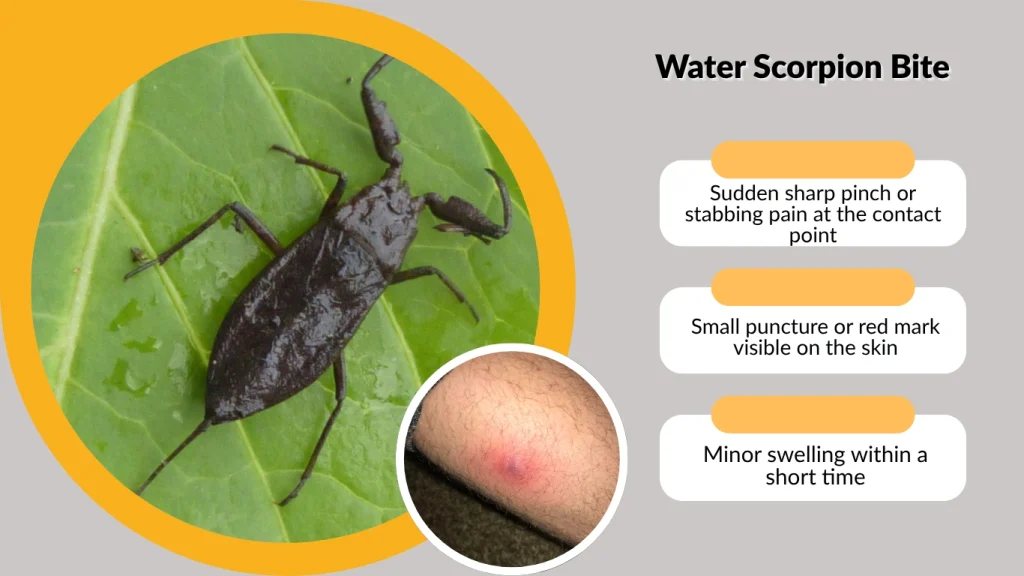
Water scorpions are elongated aquatic insects that resemble terrestrial scorpions due to their long, slender bodies and pincer-like front legs. They are slow swimmers and often lie still, waiting to ambush prey. While not aggressive toward humans, they can deliver a painful bite if provoked or handled.
Bite Identification
- Sudden sharp pinch or stabbing pain at the contact point
- Small puncture or red mark visible on the skin
- Minor swelling within a short time
Symptoms
- Immediate localized pain
- Slight swelling and redness around the bite area
- Mild irritation or itching during recovery
- Rarely, numbness for a brief period
Treatment
Clean the affected area thoroughly with soap and water to reduce the risk of infection. Apply an ice pack for 10–15 minutes to ease swelling and pain. Over-the-counter pain relievers or antihistamines can be used to manage discomfort. Most bites heal without complications, but seek medical help if swelling worsens or infection develops.
4. Water Strider Bite

Water striders are slender insects that can walk and glide across the water’s surface thanks to their long, hydrophobic legs. They primarily feed on small insects trapped on the water but may bite humans if mishandled. Although their bite is rare and generally harmless, it can still cause mild discomfort.
Bite Identification
- Quick, light pinching sensation
- Tiny red dot or pinpoint puncture at the bite site
- Minimal or no swelling in most cases
Symptoms
- Mild pain or stinging that fades within minutes
- Slight redness around the bite area
- Occasional itching or tenderness
- Rare allergic response in sensitive individuals
Treatment
Gently wash the bite with soap and water to keep the area clean. If there’s slight swelling or discomfort, apply a cold compress. Topical hydrocortisone or an antihistamine cream can help with any itching. Symptoms usually disappear within a day, requiring no special medical care unless unusual reactions occur.
5. Predaceous Diving Beetle Bite

Predaceous diving beetles are robust aquatic insects with strong jaws used for hunting prey underwater. They are skilled swimmers and can bite humans if picked up or threatened. While their bite is not venomous, it can be surprisingly painful due to their powerful mandibles.
Bite Identification
- Noticeable pinching or crushing sensation at the bite site
- Small puncture marks left by the mandibles
- Mild redness or swelling shortly after the bite
Symptoms
- Immediate sharp pain that may last several minutes
- Localized swelling and redness
- Possible mild itching during the healing process
- Rarely, temporary numbness in the area
Treatment
Wash the bite area thoroughly with soap and water to prevent infection. Apply a cold compress to minimize swelling and pain. Over-the-counter pain relief or antihistamine cream can help with discomfort and itching. The bite typically heals quickly, but consult a doctor if symptoms worsen or signs of infection appear.
Prevention Tips
Reducing your chances of being bitten by a water bug comes down to limiting direct contact with them. Here are some effective measures:
- Avoid handling aquatic insects you find in ponds or pools.
- Wear water shoes when swimming in natural waters to protect your feet.
- Maintain clean water sources—remove algae, debris, and standing leaves to make the area less attractive.
- Use proper lighting at night near water areas, as bright lights can draw flying aquatic insects toward swimming spots.
- Check swimming areas before entering to spot any large water bugs resting near the surface.
FAQs
1. Can water bugs live in swimming pools?
Yes, certain water bugs such as backswimmers and water boatmen can end up in swimming pools, especially if there’s algae or debris for them to feed on. Regular cleaning and maintaining proper chlorine levels can help keep them away.
2. Are water bug bites poisonous?
No, water bug bites are not poisonous. However, they can be very painful and may cause temporary swelling, redness, and mild irritation. In rare cases, an allergic reaction may occur.
3. Do water bugs bite pets?
Yes, if a dog or cat plays in a pond or pool where water bugs are present, they can be bitten if the insect feels threatened. The bite may cause temporary pain and swelling, similar to a human reaction.
4. Can a water bug bite cause fever?
A fever from a water bug bite is uncommon. If a fever develops, it may be a sign of infection or an allergic reaction, and you should seek medical attention.
5. How long does it take for a water bug bite to heal?
Most water bug bites heal within a few days with proper cleaning and basic first aid. If symptoms such as swelling, pain, or redness worsen after 48 hours, consult a healthcare professional.
