
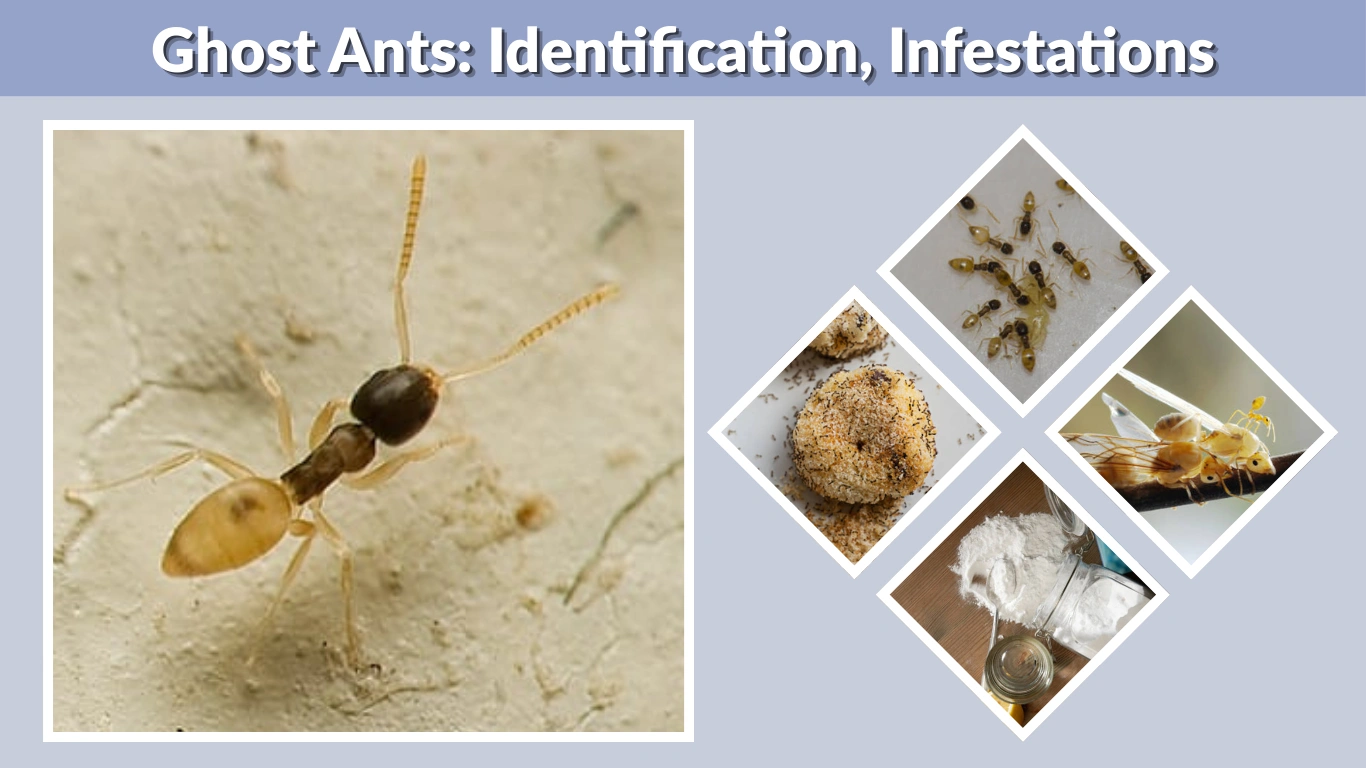
Ghost ants are tiny household ants that often seem to “disappear” as they move across walls and countertops. Their pale legs and nearly transparent bodies make them difficult to see, which is why they are called ghost ants. These ants are common in kitchens, bathrooms, and wall voids, especially in warm and humid environments. Although they are very small, ghost ants can quickly form large infestations that are difficult to eliminate without proper identification and control.
What Are Ghost Ants?
Ghost ants are a species of small ant scientifically known as Tapinoma melanocephalum. They are believed to have originated in tropical regions but have spread worldwide through trade and indoor environments. Today, ghost ants are common household pests in warm climates and heated buildings, where they can survive year-round.
Unlike many outdoor ants, ghost ants prefer nesting inside walls, behind baseboards, in potted plants, under sinks, and even inside electrical outlets. They build multiple small nests rather than one large colony, which allows them to spread rapidly through buildings.
Scientific Name and Classification
Ghost ants belong to the family Formicidae and the genus Tapinoma. They are closely related to other household ants such as odorous house ants. Their small size and light coloration make them one of the most difficult ants to notice until large numbers appear.
Why They Are Called Ghost Ants
Ghost ants get their name from their unusual appearance. Their head and thorax are dark brown, but their abdomen, legs, and antennae are pale white to nearly transparent. When they walk across light-colored surfaces, their bodies seem to fade in and out of view, giving them a ghost-like look.
Identification Guide for Ghost Ants

Correct identification is essential because ghost ants are often mistaken for other tiny household ants. Several features set them apart.
- Size: Extremely small, usually about 1.3–1.5 mm long
- Color: Dark head with a pale, almost translucent abdomen
- Legs and antennae: Very light, making them hard to see
- Movement: Quick, erratic trails that split into many directions
- Nesting habits: Prefer hidden, warm, and moist indoor spaces
Because of their tiny size and pale color, many people describe ghost ants as “tiny pale ants” or “almost invisible ants” in the house.
Types of Tiny Ants Commonly Confused With Ghost Ants
Ghost ants are frequently misidentified. Several household ants look similar but behave very differently.
Ghost Ants vs Little Black Ants
Little black ants are solid black and easier to see on most surfaces. They often form neat, straight trails. Ghost ants, in contrast, have pale bodies and irregular movement patterns. Treatment also differs because ghost ants tend to form more scattered nests indoors.
Ghost Ants vs Pharaoh Ants
Pharaoh ants are yellow to light brown and slightly larger than ghost ants. They often nest in hospitals, apartments, and heated buildings. Both species form multiple-queen colonies, but pharaoh ants usually appear darker and more uniform in color.
Ghost Ants vs Sugar Ants
“Sugar ant” is a general term used for small sweet-loving ants. Some sugar ants are dark, while others are light. Ghost ants are specifically identified by their translucent abdomen and legs, which most sugar ants lack.
Where Ghost Ants Commonly Appear Indoors

Ghost ants prefer warm, humid, and hidden environments. Indoors, they tend to concentrate in areas that provide food, moisture, and protection.
Ghost Ants in the Kitchen
Kitchens are the most frequent infestation sites. Ghost ants are strongly attracted to sweet foods such as honey, syrup, fruit, juice, and soda. They are often seen around sinks, cabinets, trash bins, coffee machines, and pet bowls.
Because they are so small, ghost ants can squeeze into sealed packaging, crumb-filled drawers, and tiny gaps behind appliances. Once a food source is found, workers create scattered trails that quickly bring hundreds of ants into the area.
Ghost Ants in the Bathroom
Bathrooms offer constant moisture, making them ideal for ghost ants. They commonly appear around drains, sinks, bathtubs, toilet bases, and leaky pipes. Soap residue and cosmetic products can also attract them.
If ghost ants are seen mainly in bathrooms, it often indicates hidden moisture problems such as slow leaks, condensation inside walls, or damp wood.
Ghost Ants in Bedrooms and Electronics
Ghost ants are also known to nest in unusual places such as inside wall outlets, behind picture frames, under carpets, and even inside electronics. Warmth from devices and the protection of tight spaces make these areas attractive nesting locations.
Their presence in bedrooms often suggests that nests are established deep inside walls rather than only in kitchens or bathrooms.
Signs of a Ghost Ant Infestation

Because ghost ants are difficult to see, infestations often go unnoticed until populations become large.
Common signs include:
- Tiny ants that seem to vanish against light surfaces
- Irregular, scattered trails instead of straight lines
- Ants gathering around sweets and moisture
- Reappearance shortly after cleaning
- Ants emerging from wall sockets, cracks, and drains
These signs usually indicate multiple nests within the structure rather than a single outdoor colony.
Do Ghost Ants Bite or Sting?
Ghost ants can technically bite, but they are not aggressive and rarely break human skin. Their mandibles are extremely small, and most people never feel a bite. They do not sting and are not considered dangerous.
Their main risk is food contamination, as they crawl through drains, trash, and decaying organic material before entering kitchens and food storage areas.
Ghost Ants With Wings – What It Means
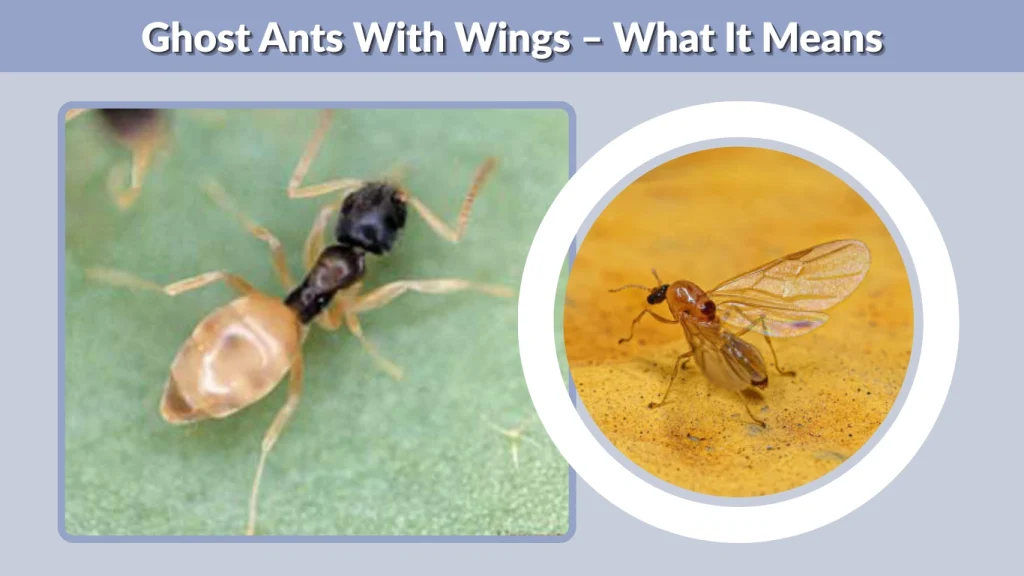
At certain times of the year, ghost ant colonies produce winged reproductive ants called swarmers. These ants are responsible for mating and forming new colonies. Indoors, winged ghost ants are often seen near windows, light fixtures, and doors, especially in warm, humid conditions.
The appearance of winged ghost ants usually indicates that a mature colony is established nearby. Because ghost ants often nest inside walls, swarmers may emerge suddenly in large numbers, even when workers were rarely noticed before.
Ghost Ants vs Termites (Winged)
Winged ghost ants are sometimes mistaken for termites. However, ghost ants have bent antennae, narrow waists, and front wings that are longer than their hind wings. Termites have straight antennae, thick waists, and equal-sized wings. Correct identification is important because termite infestations require very different treatment approaches.
Why Ghost Ants Are So Hard to Eliminate
Ghost ants are notoriously difficult to control. They do not rely on a single large nest. Instead, they form many small satellite colonies spread throughout a building. These nests can exist behind baseboards, under floors, inside cabinets, and within wall voids.
Colonies contain multiple queens, allowing populations to recover quickly even if part of the nest is destroyed. When threatened, ghost ants may “bud,” meaning a group of workers and queens breaks off to form new nests elsewhere. This behavior often makes spray-based treatments ineffective and can even worsen infestations.
How to Get Rid of Ghost Ants

Effective control focuses on eliminating colonies rather than killing visible ants. This requires patience and targeted treatment.
Immediate Cleaning and Control Steps
Begin by removing food and moisture sources. Clean all surfaces with soap and water or vinegar to remove scent trails. Store sweet and greasy foods in airtight containers. Wipe spills immediately and empty trash daily.
Seal cracks, gaps, and openings around windows, pipes, baseboards, and cabinets. Reducing entry points limits the number of ants entering living spaces.
Natural Home Remedies for Ghost Ants
Natural methods may help reduce activity in mild infestations. Vinegar disrupts trails. Lemon juice, peppermint oil, cinnamon, and clove oil can repel workers temporarily. Diatomaceous earth can kill ants that crawl through treated areas.
While these methods may lower visible numbers, they rarely eliminate all nests because ghost ants often live deep inside structures.
Best Baits and Professional Treatments
Baiting is the most reliable method for controlling ghost ants. Workers carry bait back to queens and larvae, slowly weakening colonies. Because ghost ants prefer sweets, sugar-based liquid baits are often more effective than protein-based ones.
Sprays should be avoided around bait stations, as they can kill workers before they deliver poison to the colony. Consistent baiting over several weeks is usually necessary.
Severe or long-term infestations may require professional pest control, especially when nests are widespread throughout walls or commercial buildings.
How to Prevent Ghost Ants From Returning
Long-term prevention depends on making environments unattractive to ghost ants. Moisture control is critical. Repair leaks, improve ventilation, and reduce condensation in kitchens and bathrooms.
Keep food sealed, counters clean, and floors crumb-free. Regularly inspect cabinets, sinks, and baseboards. Outdoors, trim vegetation away from structures, remove debris, and avoid storing firewood or compost near walls.
Because ghost ants can re-enter through very small openings, sealing cracks and monitoring problem areas is essential.
Ghost Ant Lifecycle and Colony Structure
Ghost ants develop through four stages: egg, larva, pupa, and adult. Queens can lay hundreds of eggs, allowing colonies to grow quickly. Workers care for young, forage for food, and expand nests throughout structures.
Because colonies contain multiple queens and multiple nesting sites, populations spread rapidly. This lifecycle explains why infestations can seem to vanish temporarily and then return suddenly in other rooms.
Ghost Ants vs Other Household Ants
Ghost ants differ significantly from other common ants. Unlike carpenter ants, they do not damage wood. Unlike pavement ants, they rarely nest outdoors in soil. Compared to little black ants, ghost ants are paler, harder to see, and more likely to form indoor nests.
Understanding these differences helps determine why certain treatments work for some ants but fail for ghost ants.
