
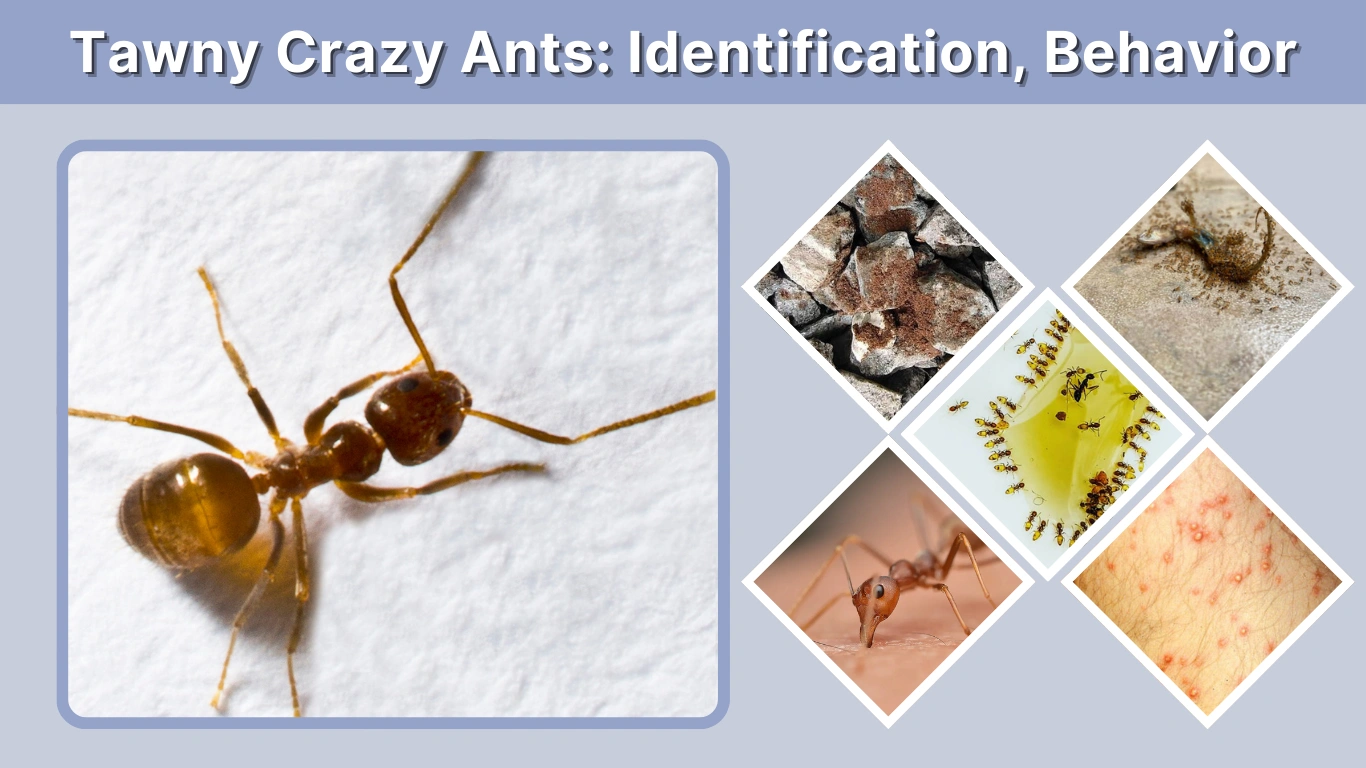
Tawny crazy ants are one of the most disruptive invasive ant species in the southern United States. Famous for their frantic, unpredictable movement and massive population explosions, these ants can overwhelm homes, electrical equipment, farmland, and natural ecosystems. Formerly known as “Rasberry crazy ants,” tawny crazy ants are especially difficult to control because they form huge supercolonies with many queens. Learning how to identify them and understand their behavior is the first step toward effective management.
What Are Tawny Crazy Ants?
The tawny crazy ant, scientifically named Nylanderia fulva, is a fast-moving, light-brown ant species native to South America. Over the past few decades, it has spread rapidly across parts of the United States, particularly Texas, Florida, Louisiana, Mississippi, Alabama, and Georgia.
They earned the name “crazy ants” because their movement patterns are erratic and chaotic rather than straight and organized like many other ants. Tawny crazy ants are considered a major invasive pest because they displace native ant species, invade buildings in huge numbers, and are extremely hard to eliminate once established.
Identification of Tawny Crazy Ants

Tawny crazy ants can be mistaken for fire ants or other small brown ants, but several features help identify them:
- Light brown to reddish-brown body color
- Small to medium size (about 2.5–3 mm long)
- Very long legs and antennae compared to body size
- Fast, jerky, and unpredictable movement
- Soft-bodied appearance
- No stinger, but capable of biting and chemical defense
- Unlike fire ants, they do not build tall mound nests
When crushed, tawny crazy ants give off a mild, musty odor, which can also help distinguish them from other ant species.
Tawny Crazy Ant Size and Appearance
Worker ants
Worker tawny crazy ants are slender and light brown, with long legs that make them appear larger than they actually are. Their bodies are covered with fine hairs, and they move rapidly across walls, floors, vegetation, and outdoor surfaces.
Queens and males
Queens are noticeably larger than workers and darker in color, ranging from brown to dark amber. Colonies often contain many queens, which is a key reason for their explosive population growth. Males are winged, smaller than queens, and usually only seen during mating periods.
Eggs, larvae, and pupae
Eggs are tiny, white, and oval-shaped. Larvae are soft, legless, and depend entirely on worker ants for food. Pupae resemble small white ants and are found deep within nesting sites. These immature stages are well hidden, making colonies difficult to destroy.
Tawny Crazy Ant Habitat and Distribution

Tawny crazy ants prefer warm, humid environments. They are now widespread across the southern United States and continue to expand their range. Outdoors, they nest in soil, under rocks, inside rotting logs, beneath mulch, within electrical boxes, and under debris.
Indoors, they commonly nest in wall voids, insulation, potted plants, appliances, and electronic devices. Unlike mound-building ants, tawny crazy ants create shallow, scattered nests spread across large areas, which allows colonies to relocate quickly if disturbed.
This nesting flexibility helps them thrive in urban neighborhoods, farms, forests, coastal areas, and industrial sites.
Behavior and Colony Structure
Tawny crazy ants form enormous supercolonies made up of interconnected nests with multiple queens. Instead of fighting neighboring colonies, they merge, creating huge cooperative networks that can cover entire neighborhoods.
Important behavior traits include:
- Presence of many queens in one colony
- Constant movement and aggressive foraging
- Ability to overwhelm and replace fire ants
- Strong attraction to electrical equipment
- Rapid relocation when nests are disturbed
Their attraction to electrical systems is especially problematic. They often invade circuit breakers, air conditioners, and electronics, where mass electrocution of workers can trigger more ants to swarm the same area.
What Do Tawny Crazy Ants Eat?

Tawny crazy ants are omnivores with highly adaptable diets. They feed on sugary substances, dead insects, small live prey, plant nectar, fruit juices, and greasy food residues.
One of their most important food sources is honeydew, a sugary liquid produced by aphids, scale insects, and mealybugs. Tawny crazy ants actively protect these plant pests, helping them spread and multiplying crop and garden damage.
Because their food preferences shift over time, effective control often requires using both sweet and protein-based baits.
Life Cycle of Tawny Crazy Ants
Tawny crazy ants develop through four stages: egg, larva, pupa, and adult. Queens lay eggs year-round in warm climates. Worker ants feed and protect the larvae until they transform into pupae and eventually emerge as adult ants.
Under favorable conditions, development from egg to adult can take just a few weeks. With multiple queens producing eggs at the same time, colonies can grow at astonishing rates, leading to sudden infestations involving millions of ants.
Why Tawny Crazy Ants Are a Serious Problem
Tawny crazy ants cause extensive ecological, agricultural, and structural damage. In invaded areas, they often eliminate fire ants and native ant species, completely altering local insect populations. This disruption affects birds, reptiles, and other animals that rely on insects as a food source.
They are also a major nuisance to humans. Massive swarms can cover homes, yards, sidewalks, and buildings. On farms, tawny crazy ants protect aphids and scale insects, leading to increased plant disease, crop damage, and mold growth. Their ability to colonize electrical equipment creates both financial losses and safety concerns.
Do Tawny Crazy Ants Bite or Sting?
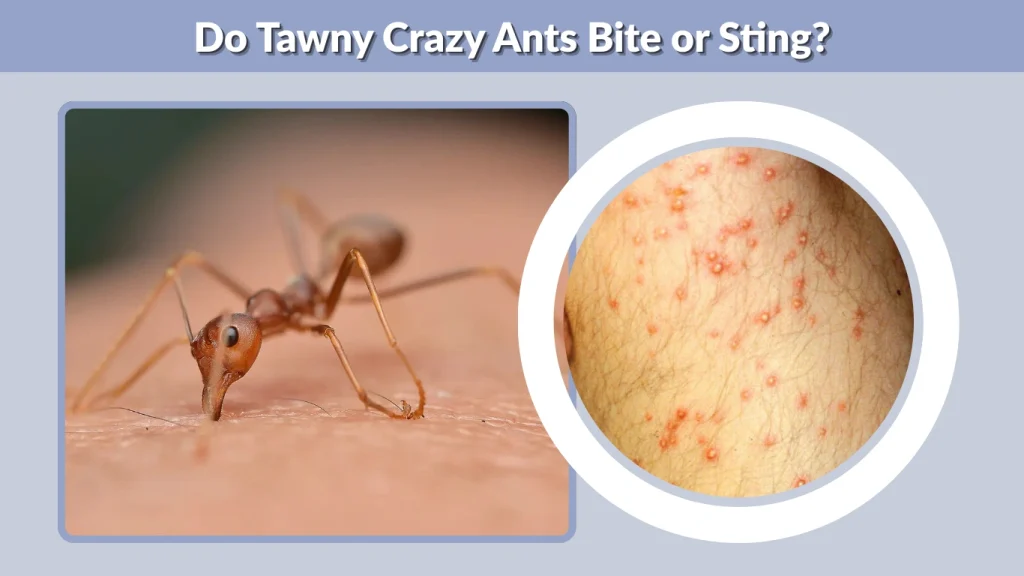
Tawny crazy ants do not have stingers like fire ants, but they can bite. Their bite is usually mild, but they also release defensive chemicals that can cause a burning or itching sensation on the skin.
Most people experience minor irritation rather than serious injury. However, when large numbers of ants swarm, repeated bites can become uncomfortable. Pets and small animals may be affected more severely, especially if ants enter eyes, ears, or wounds.
Signs of a Tawny Crazy Ant Infestation
Early detection is difficult because colonies are spread out, but common warning signs include:
- Huge numbers of fast-moving ants across walls, floors, and vegetation
- Ants emerging from electrical outlets, appliances, and breaker boxes
- Persistent reinfestation even after spraying
- Large outdoor populations under mulch, rocks, and debris
- Sudden disappearance of fire ants and native ants
- Increased aphid or scale insect problems on plants
Unlike many ants that form narrow trails, tawny crazy ants often appear in massive, disorganized swarms.
Tawny Crazy Ants in Homes and Yards
Inside buildings, tawny crazy ants invade kitchens, bathrooms, electronics, air-conditioning units, and wall voids. They are attracted to moisture, warmth, and food residues. Homeowners often report ants pouring out of outlets, computers, and wiring systems.
Outdoors, they form dense populations in lawns, gardens, potted plants, compost piles, and woodpiles. Their protection of honeydew-producing insects weakens ornamental plants, vegetables, and fruit trees. In severe infestations, yards may appear to be constantly moving with ants.
How to Get Rid of Tawny Crazy Ants
Tawny crazy ants are extremely difficult to eliminate using sprays alone. Surface insecticides may kill visible workers but rarely reach queens and brood. In many cases, spraying causes colonies to scatter and expand.
Effective management depends on a long-term baiting program. Baits must be slow-acting so workers can carry them back to multiple nests and queens. Because food preferences change, rotating sweet and protein-based baits is often necessary. Treatments usually continue for several months.
Tawny Crazy Ant Control Methods

Successful control programs usually combine several strategies:
- Applying sweet and protein baits over large areas
- Using insect growth regulators to disrupt reproduction
- Treating outdoor nesting zones, not only indoor spaces
- Reducing aphids and scale insects to limit food supplies
- Working with professional pest control services
Area-wide management is critical, because neighboring untreated colonies can quickly reinvade.
Natural and Eco-Friendly Control Options
Eco-friendly approaches focus on reducing habitat suitability. Removing debris, trimming vegetation, improving drainage, and sealing entry points can lower ant activity.
Low-toxicity baits containing borates or plant-based insecticides may help suppress small populations. Managing aphids and other honeydew-producing pests is especially important, because it removes one of their main food sources.
How to Prevent Tawny Crazy Ant Infestations
Prevention involves limiting access to food, water, and nesting sites. Homes should be sealed around windows, doors, and utility lines. Food should be stored in airtight containers, and spills cleaned promptly.
Outdoors, keep mulch, firewood, and debris away from foundations. Inspect potted plants, soil, and outdoor equipment before bringing them inside. Regular monitoring makes early control much easier.
Tawny Crazy Ants vs Other Ant Species
Tawny crazy ants are often confused with fire ants, carpenter ants, and yellow crazy ants. Unlike fire ants, they do not build tall mounds or sting. Compared to yellow crazy ants, they are darker and more dominant in the southern United States. Carpenter ants are larger, slower, and usually nest in wood rather than forming massive ground-based supercolonies.
A comparison table can later highlight differences in color, size, nesting habits, and risk levels.
Interesting Facts About Tawny Crazy Ants
Tawny crazy ants were once called “Rasberry crazy ants,” named after the exterminator who first reported them in Texas. They are famous for overwhelming fire ant colonies and for invading electronics in huge numbers. Their success comes from extreme cooperation, multiple queens, and their ability to thrive in both natural and urban environments.
