

Snowflies are fascinating insects that thrive in cold, snowy environments, often appearing during late winter and early spring. These small, delicate insects are highly adapted to survive on snow-covered streams and rivers, where their larvae play an essential role in freshwater ecosystems. This guide explores 13 types of snow flies, detailing their identification, habitats, diets, and behaviors, offering a comprehensive look at these unique winter-adapted insects.
1. Common Snowfly

The Common Snowfly (Capnia spp.) is a small, cold-adapted insect often seen on snow surfaces during late winter and early spring. Unlike many other insects, it is active in freezing temperatures and is well-adapted to life in snowy, mountainous regions. These insects play a key role in freshwater ecosystems, as their larvae develop in streams and rivers.
Identification
- Small, delicate body, usually 5–10 mm in length
- Gray to brown coloration, sometimes with lighter markings
- Two pairs of membranous wings held flat over the body
- Long, slender antennae
- Legs adapted for clinging to rocks and vegetation
Habitat
Common Snowflies are typically found near cold, fast-flowing streams, rivers, and meltwater areas in temperate and subarctic regions. Adults are often seen crawling on snow near water sources.
Diet
Adults generally do not feed much, surviving off stored energy from the larval stage. Larvae are aquatic, feeding on algae, detritus, and decaying plant material in streambeds.
Behavior
These snowflies are primarily active in winter and early spring. Adults move slowly across snow surfaces and are important prey for birds and other predators. Larvae play a crucial ecological role by contributing to nutrient cycling in freshwater ecosystems.
2. Mountain Snowfly

The Mountain Snowfly (Taeniopteryx spp.) is a hardy insect that thrives in cold, high-altitude environments. It is commonly observed on snow patches near mountain streams during late winter, making it a remarkable example of insect adaptation to frigid conditions. Its presence often indicates clean, well-oxygenated water in nearby streams.
Identification
- Small body, about 6–12 mm in length
- Dark brown to black coloration with subtle patterns on wings
- Two pairs of clear or slightly tinted wings
- Long, threadlike antennae
- Legs designed for gripping slippery rocks and snow surfaces
Habitat
Mountain Snowflies inhabit alpine and subalpine regions, especially near snowmelt streams and cold mountain rivers. They prefer areas with clean, fast-flowing water and minimal human disturbance.
Diet
Adult Mountain Snowflies feed little and rely on energy reserves from their larval stage. Larvae are aquatic and consume algae, decaying vegetation, and organic detritus from streambeds.
Behavior
These snowflies are primarily active during winter and early spring, crawling on snow near streams. Larvae develop underwater, contributing to nutrient cycling and serving as a food source for fish and other aquatic predators.
3. Arctic Snowfly

The Arctic Snowfly (Capnia arctica) is a cold-adapted insect found in polar and subpolar regions. It is one of the few insects capable of remaining active on snow and ice during harsh winter conditions. Its ability to survive freezing temperatures makes it an important species for studying insect cold tolerance.
Identification
- Small, slender body, approximately 5–9 mm in length
- Pale gray to brown coloration, often blending with snowy surroundings
- Two pairs of narrow, membranous wings
- Long antennae for sensing the environment
- Legs adapted for walking on snow and ice
Habitat
Arctic Snowflies are found near snowfields, glaciers, and icy streams in Arctic and sub-Arctic regions. They prefer areas with clean, flowing water for larval development and are rarely found in warmer environments.
Diet
Adult Arctic Snowflies do not feed extensively, relying on stored larval energy. Larvae are aquatic, feeding on algae, decaying plant material, and microorganisms in cold streams and meltwater pools.
Behavior
Arctic Snowflies are active during the coldest months, crawling slowly over snow surfaces. Larvae develop in icy waters, playing a vital ecological role by processing organic material and supporting aquatic food webs.
4. Western Snowfly

The Western Snowfly (Capnia occidentalis) is commonly found in mountainous regions of western North America. It is adapted to cold climates and is often seen on snow near streams and rivers during late winter and early spring. This species is an important indicator of freshwater ecosystem health.
Identification
- Small, slender body, around 6–10 mm long
- Dark brown to gray wings with subtle markings
- Two pairs of narrow, membranous wings
- Long, threadlike antennae
- Legs suited for clinging to snow and rocks
Habitat
Western Snowflies prefer cold, fast-flowing mountain streams and snow-covered areas in western North America. They are most abundant in alpine and subalpine zones where water is clean and well-oxygenated.
Diet
Adult Western Snowflies feed minimally, surviving on energy stored from the larval stage. Larvae are aquatic and feed on algae, detritus, and decaying organic material in streams.
Behavior
These snowflies are active on snow surfaces during winter and early spring. Larvae play a significant role in nutrient cycling and provide food for fish and other aquatic predators. Adults are often seen slowly moving on snow near water sources.
5. Eastern Snowfly

The Eastern Snowfly (Capnia eastonensis) is native to eastern North America and is well-adapted to cold, snowy environments. It is commonly observed crawling on snow near streams and rivers during late winter, making it an important species for cold-region freshwater ecosystems.
Identification
- Small, slender body, 5–9 mm in length
- Light to dark brown coloration with subtle wing patterns
- Two pairs of narrow, membranous wings
- Long, threadlike antennae
- Legs adapted for walking on snow and gripping rocks
Habitat
Eastern Snowflies are found near cold, flowing streams in forests, mountains, and snow-covered areas of eastern North America. They prefer clean water habitats and are sensitive to pollution.
Diet
Adult Eastern Snowflies feed very little and rely mostly on stored larval energy. Larvae are aquatic, feeding on algae, decaying plant matter, and detritus in streambeds.
Behavior
These snowflies are active in winter and early spring, crawling slowly on snow surfaces near streams. Larvae play a key role in nutrient cycling and serve as a food source for fish and other aquatic predators.
6. Alpine Snowfly

The Alpine Snowfly (Taeniopteryx alpina) thrives in high-altitude regions and is specially adapted to survive in cold, snowy environments. Often spotted on snow near mountain streams, this species is active during late winter and early spring, making it an excellent example of insect cold adaptation.
Identification
- Small, slender body, around 6–11 mm in length
- Dark brown to gray wings with faint markings
- Two pairs of narrow, membranous wings
- Long, threadlike antennae
- Legs adapted for gripping snow and rocky surfaces
Habitat
Alpine Snowflies are found in alpine and subalpine streams, snowfields, and mountainous regions. They require clean, well-oxygenated water for larval development.
Diet
Adults feed very little, relying on energy stored from the larval stage. Larvae are aquatic, feeding on algae, decaying vegetation, and other organic matter in streams.
Behavior
Active on snow surfaces during winter and early spring, Alpine Snowflies move slowly to conserve energy. Larvae contribute to nutrient cycling in freshwater ecosystems and provide an important food source for fish and other predators.
7. Northern Snowfly

The Northern Snowfly (Capnia borealis) is a cold-adapted insect commonly found in northern regions of North America and Europe. It is active during winter and early spring, often seen crawling on snow near streams and rivers, and plays an important ecological role in freshwater habitats.
Identification
- Small, slender body, approximately 5–9 mm in length
- Gray to dark brown coloration
- Two pairs of narrow, membranous wings
- Long, thin antennae
- Legs adapted for walking on snow and clinging to rocks
Habitat
Northern Snowflies inhabit cold, fast-flowing streams and rivers in northern forests, tundras, and mountainous areas. They prefer clean, oxygen-rich water and are sensitive to pollution.
Diet
Adults feed minimally, relying on energy stored from the larval stage. Larvae are aquatic and consume algae, decaying plant matter, and detritus in streams.
Behavior
These snowflies are active on snow during winter and early spring. Larvae play a vital role in nutrient cycling in freshwater ecosystems and are a key food source for fish and other aquatic predators.
8. Pacific Snowfly
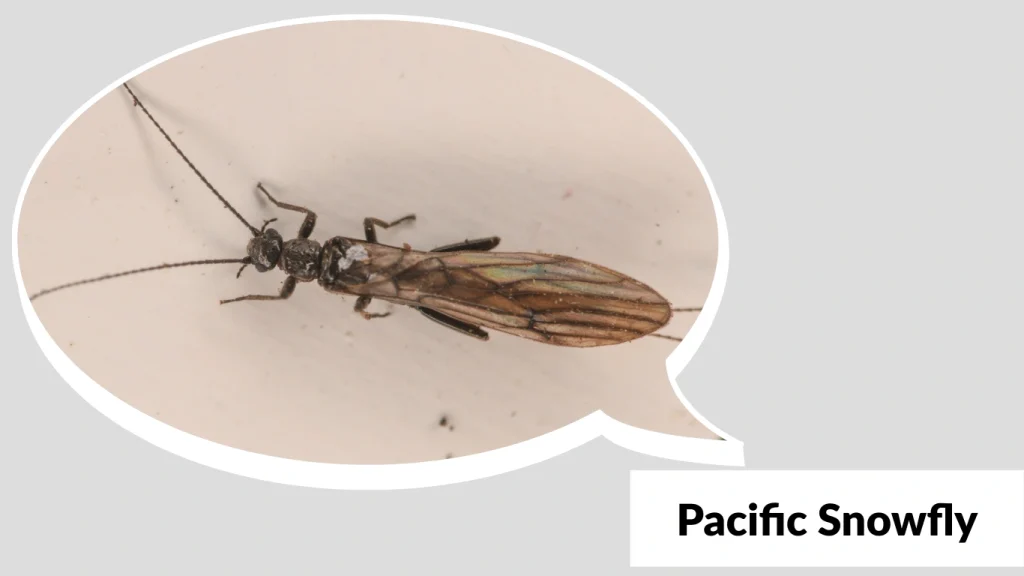
The Pacific Snowfly (Capnia pacifica) is native to the Pacific coastal and mountainous regions of North America. It is well-adapted to cold environments and is typically seen on snow near streams during late winter and early spring.
Identification
- Small, slender body, about 6–10 mm long
- Light brown to dark gray wings with subtle markings
- Two pairs of narrow, membranous wings
- Long, threadlike antennae
- Legs suited for walking on snow and gripping rocks
Habitat
Pacific Snowflies inhabit cold, fast-flowing streams and snow-covered areas in coastal mountains. They prefer clean water with high oxygen levels and minimal pollution.
Diet
Adult Pacific Snowflies feed very little, relying on energy stored from their larval stage. Larvae are aquatic and feed on algae, decaying leaves, and detritus in streams.
Behavior
Active during winter and early spring, these snowflies crawl slowly on snow surfaces near streams. Larvae contribute to nutrient cycling in freshwater habitats and provide food for fish and other aquatic predators.
9. Rocky Mountain Snowfly

The Rocky Mountain Snowfly (Capnia montana) is commonly found in the cold, high-altitude regions of the Rocky Mountains. It is active during winter and early spring, often seen crawling on snow near streams and alpine lakes.
Identification
- Small, slender body, 6–11 mm in length
- Dark brown to gray wings with faint markings
- Two pairs of narrow, membranous wings
- Long, threadlike antennae
- Legs adapted for gripping snow and rocky surfaces
Habitat
Rocky Mountain Snowflies inhabit fast-flowing streams, snowfields, and alpine rivers. They require clean, well-oxygenated water for larval development and are sensitive to environmental changes.
Diet
Adults feed minimally, relying on energy stored from the larval stage. Larvae are aquatic and feed on algae, decaying vegetation, and organic detritus in streams.
Behavior
These snowflies are active on snow during winter and early spring. Larvae play an important role in nutrient cycling and serve as a food source for fish and other aquatic predators.
10. Cascade Snowfly

The Cascade Snowfly (Capnia cascadia) is native to the Cascade Range in western North America. It is adapted to cold, snowy environments and is typically observed on snow near mountain streams during late winter and early spring.
Identification
- Small, slender body, about 6–10 mm long
- Light brown to gray wings with subtle markings
- Two pairs of narrow, membranous wings
- Long, thin antennae
- Legs suited for walking on snow and clinging to rocks
Habitat
Cascade Snowflies are found near cold, fast-flowing streams, rivers, and snow-covered areas in the Cascade Mountains. They prefer clean, oxygen-rich water for larval development.
Diet
Adult Cascade Snowflies feed very little, relying on energy stored from the larval stage. Larvae are aquatic and consume algae, decaying plant matter, and detritus.
Behavior
Active in winter and early spring, these snowflies crawl slowly on snow surfaces near streams. Larvae contribute to nutrient cycling in freshwater ecosystems and provide an important food source for fish and other aquatic predators.
11. Sierra Snowfly

The Sierra Snowfly (Capnia sierrae) is found in the Sierra Nevada mountain range of western North America. It is well-adapted to cold, snowy environments and is usually seen crawling on snow near streams during late winter and early spring.
Identification
- Small, slender body, around 6–11 mm in length
- Light to dark brown wings with faint markings
- Two pairs of narrow, membranous wings
- Long, threadlike antennae
- Legs adapted for walking on snow and gripping rocks
Habitat
Sierra Snowflies inhabit cold, fast-flowing streams and snow-covered alpine areas. They require clean, well-oxygenated water for larval development and are sensitive to environmental pollution.
Diet
Adults feed minimally, relying on stored energy from the larval stage. Larvae are aquatic, feeding on algae, decaying leaves, and detritus in streams.
Behavior
These snowflies are active on snow surfaces during winter and early spring. Larvae play an essential role in nutrient cycling in freshwater habitats and serve as a food source for fish and other aquatic predators.
12. Appalachian Snowfly
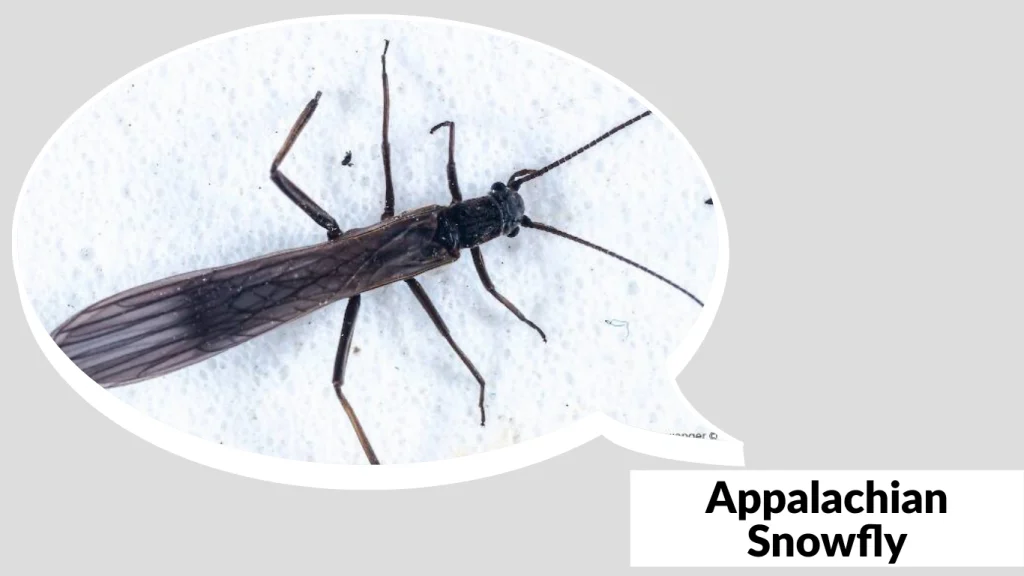
The Appalachian Snowfly (Capnia appalachia) is native to the Appalachian Mountains of eastern North America. It thrives in cold, snowy environments and is commonly observed on snow near streams and rivers during late winter and early spring.
Identification
- Small, slender body, approximately 6–10 mm long
- Dark brown to gray wings with subtle markings
- Two pairs of narrow, membranous wings
- Long, threadlike antennae
- Legs adapted for walking on snow and gripping rocks
Habitat
Appalachian Snowflies inhabit fast-flowing streams, rivers, and snow-covered areas in the Appalachian region. They prefer clean, oxygen-rich water for larval development.
Diet
Adult Appalachian Snowflies feed very little, relying on energy stored from the larval stage. Larvae are aquatic and feed on algae, decaying leaves, and other organic matter in streams.
Behavior
Active in winter and early spring, these snowflies crawl slowly on snow surfaces near streams. Larvae contribute to nutrient cycling in freshwater ecosystems and are an important food source for fish and other aquatic predators.
13. Alaskan Snowfly

The Alaskan Snowfly (Capnia alaskaensis) is native to the cold regions of Alaska and northern Canada. It is highly adapted to snowy, icy environments and is typically seen crawling on snow near streams and rivers during late winter and early spring.
Identification
- Small, slender body, about 6–11 mm long
- Gray to dark brown wings with subtle markings
- Two pairs of narrow, membranous wings
- Long, threadlike antennae
- Legs suited for walking on snow and gripping rocks
Habitat
Alaskan Snowflies inhabit cold, fast-flowing streams, rivers, and snow-covered areas. They require clean, oxygen-rich water for larval development and are sensitive to environmental pollution.
Diet
Adults feed very little, relying on energy stored from the larval stage. Larvae are aquatic and feed on algae, decaying plant matter, and detritus in streams.
Behavior
These snowflies are active on snow surfaces during winter and early spring. Larvae play a crucial role in nutrient cycling in freshwater ecosystems and provide an essential food source for fish and other aquatic predators.
