

Honey bees are beloved for their role in pollination and honey-making, but their sting is one of nature’s small yet memorable warnings. While they aren’t naturally aggressive, honey bees will defend themselves or their colony when threatened. Understanding why honey bees sting, which bees can sting, and how to handle an encounter can help you stay safe while appreciating these important pollinators.
What Are Honey Bees?
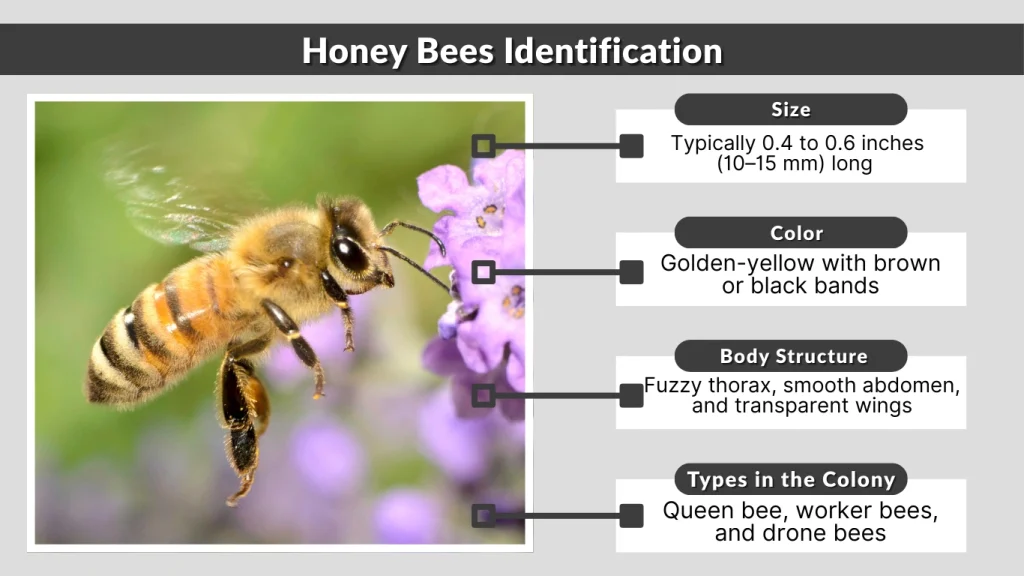
Honey bees are social insects belonging to the genus Apis, known for their complex colonies, honey production, and vital role in pollination. They live in highly organized hives containing thousands of individuals, each with a specific role in the survival of the colony.
Identification
- Size: Typically 0.4 to 0.6 inches (10–15 mm) long
- Color: Golden-yellow with brown or black bands
- Body Structure: Fuzzy thorax, smooth abdomen, and transparent wings
- Types in the Colony: Queen bee, worker bees, and drone bees
- Distinct Features: Barbed stinger in worker bees, pollen baskets on hind legs
Which Honey Bees Sting and Which Don’t?
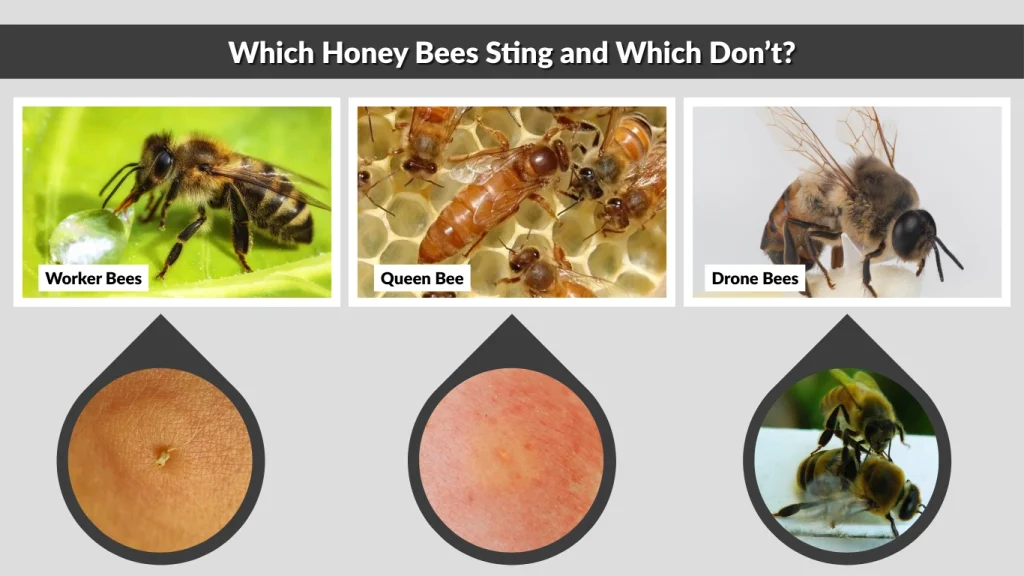
Not every honey bee in the colony can sting. The ability to sting depends on their role and anatomy.
Worker Bees
- Female bees with barbed stingers
- Defend the hive from threats
- Die after stinging mammals due to the stinger getting stuck
Queen Bee
- Has a smooth stinger, allowing multiple stings
- Rarely stings humans; uses stinger mainly to kill rival queens
Drone Bees
- Male bees with no stingers
- Cannot sting at all and serve mainly for mating with a queen
Why Do Honey Bees Sting?

Honey bees sting as a defensive response, not out of aggression. They are generally calm while foraging but become protective when they sense a threat to themselves or their hive.
- Defense of the Hive: The main reason bees sting is to protect their colony, especially the queen and stored honey.
- Perceived Threats: Sudden movements, strong scents, or vibrations near the hive can trigger defensive behavior.
- Self-Protection: A bee may sting if it feels trapped, stepped on, or handled roughly.
What Happens When a Honey Bee Stings?
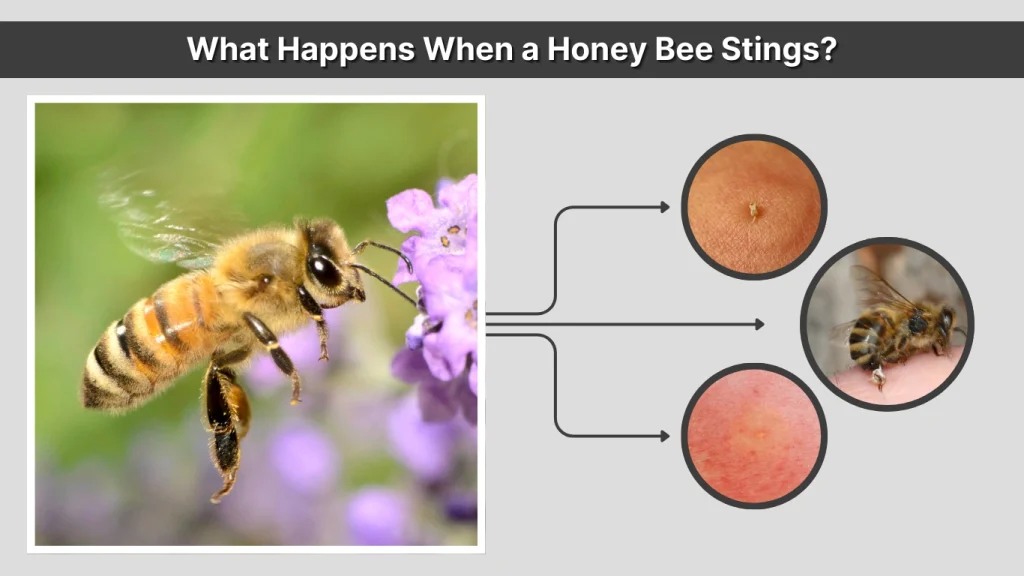
When a honey bee stings, its barbed stinger pierces the skin and releases venom. This venom contains proteins that cause pain, swelling, and itching.
- Barbed Stinger Lodging: In mammals, the stinger often remains stuck in the skin, pulling part of the bee’s abdomen with it.
- Venom Injection: The venom sac continues to pump venom for several seconds after the sting.
- Bee’s Death: Because of the stinger’s design, the worker bee dies shortly after stinging a mammal.
- Effect on the Victim: The reaction can range from mild pain and redness to severe allergic responses in sensitive individuals.
Symptoms of a Honey Bee Sting
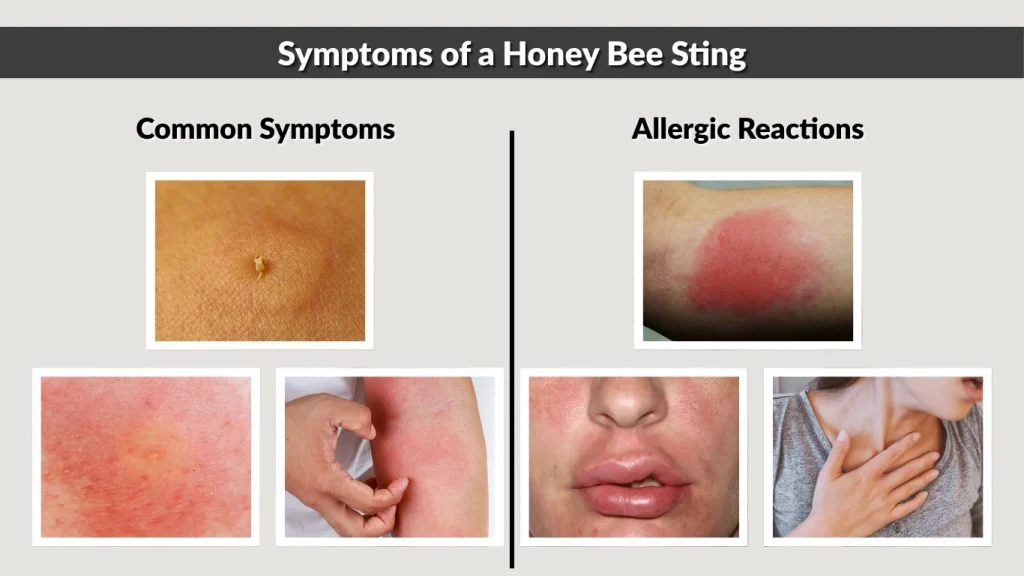
A honey bee sting usually causes immediate, localized pain followed by redness and swelling. Most reactions are mild, but some individuals may experience more severe symptoms.
Common Symptoms
- Sharp, burning pain at the sting site
- Redness and mild swelling
- Itching or tenderness lasting several hours
Allergic Reactions
- Widespread hives or rash
- Swelling of the face, lips, or throat
- Difficulty breathing or dizziness
- Risk of anaphylaxis, a life-threatening condition requiring immediate medical care
First Aid for a Honey Bee Sting

Proper treatment after a honey bee sting can reduce pain, swelling, and the risk of infection. Acting quickly also minimizes the amount of venom entering your body.
Remove the Stinger Immediately
- Use the edge of a credit card, fingernail, or blunt knife to scrape it out.
- Avoid pinching with fingers or tweezers, as this can squeeze more venom into the skin.
Clean the Area Thoroughly
- Wash with soap and warm water to remove venom residue and reduce infection risk.
- Pat dry with a clean towel.
Reduce Pain and Swelling
- Apply a cold pack or ice wrapped in a cloth for 10–15 minutes at a time.
- Elevate the affected area to limit swelling.
Relieve Itching and Discomfort
- Apply over-the-counter hydrocortisone cream or calamine lotion.
- Take an oral antihistamine to control itching and redness.
Seek Medical Attention If Needed
- If symptoms worsen or allergic reactions occur, contact emergency services immediately.
- People with known severe allergies should use an epinephrine auto-injector if prescribed.
How to Avoid Getting Stung by Honey Bees

Honey bees are not naturally aggressive, so avoiding stings often comes down to respecting their space and behavior. By following a few precautions, you can reduce the risk of an unwanted encounter.
- Stay Calm and Move Slowly: Sudden movements can make bees feel threatened.
- Avoid Strong Scents: Perfumes, scented lotions, and even certain shampoos can attract bees.
- Wear Light-Colored Clothing: Bees are more defensive toward dark or bright colors.
- Keep a Safe Distance from Hives: Never disturb an active hive or block the bees’ flight path.
- Be Cautious Around Flowering Plants: Bees may be foraging, so watch your step and movements.
Do Honey Bees Sting More Than Once?
Worker honey bees can sting only once when defending against mammals. Their stinger is barbed, so it becomes lodged in the skin, tearing away part of the bee’s abdomen and causing the bee to die shortly afterward.
Queen honey bees, however, have smooth stingers, allowing them to sting multiple times — but they rarely sting humans, using their stinger mainly to fight rival queens. Drone bees, being males, have no stingers at all and cannot sting under any circumstances.
Misconceptions About Honey Bee Stings
There are several myths about honey bee stings that lead to unnecessary fear or confusion. Understanding the truth helps people interact with bees more confidently and safely.
- “Honey bees sting for no reason” – False: They sting only when they feel threatened or provoked.
- “All bees can sting” – False: Only female worker bees and the queen have stingers; drones cannot sting.
- “Bee stings are always dangerous” – False: Most stings cause mild reactions; severe allergic responses are rare.
- “Bees are aggressive by nature” – False: Honey bees are generally calm when foraging and become defensive only near their hive.
Importance of Honey Bees Despite Their Sting
Even though honey bees can sting, their ecological value far outweighs the occasional risk. They play a critical role in pollination, helping produce fruits, vegetables, nuts, and seeds that sustain both humans and wildlife. Without them, global food production would face severe challenges. Protecting honey bee populations ensures biodiversity, environmental balance, and agricultural success.
Environmental Factors That Influence Bee Behavior
Honey bee behavior, including their likelihood to sting, can change based on surroundings and conditions.
- Weather: Bees are more defensive on windy, rainy, or cold days.
- Season: Defensive behavior increases during late summer when nectar sources decline.
- Hive Disturbance: Loud noises, vibrations, or strong scents can trigger stinging.
Coexisting Peacefully with Honey Bees
It’s possible to live near honey bees without fear if you respect their space and habits.
- Keep gardens bee-friendly but maintain safe distances from hives.
- Avoid swatting at bees; move away slowly if they approach.
- Support beekeeping efforts in your area, as managed hives are less defensive when handled by experienced beekeepers.
FAQs
Do honey bees sting for no reason?
No, honey bees don’t sting without cause. They sting only if they feel threatened, trapped, or provoked, often when defending their hive or queen. If left undisturbed during foraging, they remain calm and harmless, focusing on collecting nectar and pollen rather than attacking humans.
Will a honey bee die if it stings me?
Yes. Worker honey bees have barbed stingers that lodge in mammal skin, tearing away part of their abdomen when they fly off. This fatal injury means the bee dies shortly after stinging. The queen bee’s smooth stinger, however, allows her to sting multiple times without dying.
Can you prevent allergic reactions to bee stings?
While allergic reactions can’t be completely prevented, individuals with known bee sting allergies should always carry an epinephrine auto-injector. Wearing protective clothing, avoiding strong scents, and staying calm around bees reduces sting risk. Immediate medical attention is vital if symptoms like swelling, hives, or breathing difficulty occur.
Are honey bee stings worse than wasp stings?
Honey bee stings usually cause pain, redness, and swelling but are less dangerous than wasp stings in most cases. Wasps can sting multiple times, delivering more venom, while honey bees sting only once. However, in allergic individuals, a single honey bee sting can still trigger a severe reaction.
Do male honey bees sting?
No, male honey bees, called drones, have no stinger and cannot sting under any circumstances. Their sole purpose is to mate with the queen. All stinging in a hive is done by female worker bees or, rarely, the queen bee, who primarily uses her stinger against rival queens.
