

The rabid wolf spider is one of the most commonly misunderstood spiders due to its alarming name. Despite what many people think, this spider has nothing to do with rabies and is generally harmless to humans. Known for its speed and hunting ability, it plays an important role in controlling insect populations. In this guide, you’ll learn how to identify the rabid wolf spider, where it lives, how it behaves, and whether it poses any real danger.
What Is a Rabid Wolf Spider?
The rabid wolf spider is a species of ground-dwelling spider that belongs to the wolf spider family. Unlike many other spiders, it does not rely on webs to catch prey. Instead, it actively hunts insects, making it a fast and efficient predator.
Scientific Classification
The rabid wolf spider is scientifically known as Rabidosa rabida. It belongs to the family Lycosidae, commonly referred to as wolf spiders. These spiders are widely distributed and are known for their excellent vision and hunting skills.
Why the Name “Rabid”?
The term “rabid” in its name often causes unnecessary fear. However, spiders cannot carry or transmit rabies. The name likely comes from the spider’s quick, aggressive-looking movements rather than any real threat. In reality, this species is not dangerous and tends to avoid human interaction.
Physical Appearance and Identification
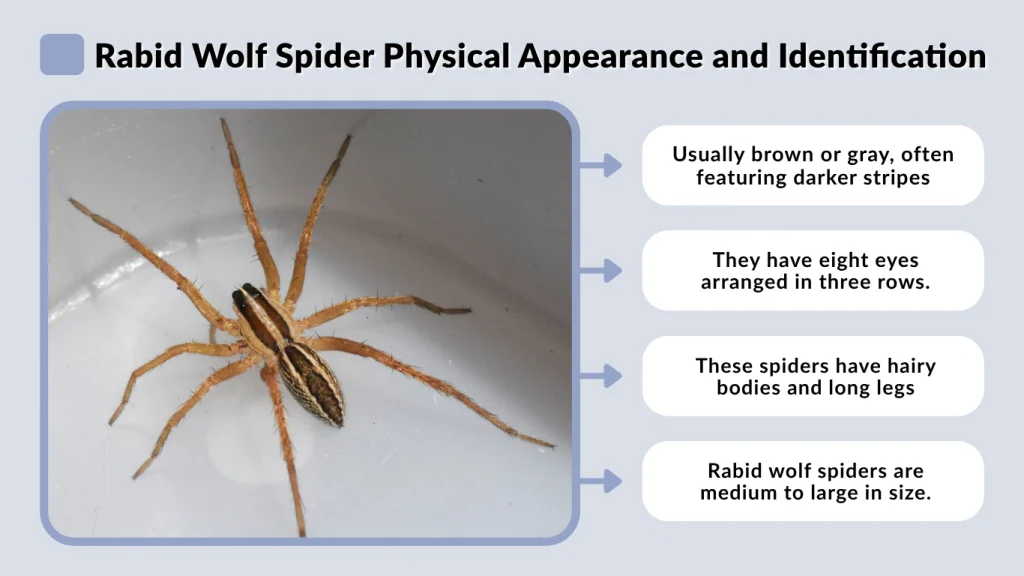
Identifying a rabid wolf spider is relatively easy once you know what to look for. These spiders have a distinct appearance that sets them apart from more dangerous species.
Size and Color
Rabid wolf spiders are medium to large in size. Their bodies are usually brown or gray, often featuring darker stripes or markings that help them blend into their surroundings. This camouflage makes them difficult to spot in natural environments.
Eye Arrangement
One of the most distinctive features of wolf spiders is their eye pattern. They have eight eyes arranged in three rows. The middle row contains two large, prominent eyes that reflect light, making them easier to identify at night.
Unique Features
These spiders have hairy bodies and long legs, which give them a rugged appearance. They are also incredibly fast runners, relying on speed rather than webs to capture prey. Their movement is often what draws attention to them.
Habitat and Where They Are Found
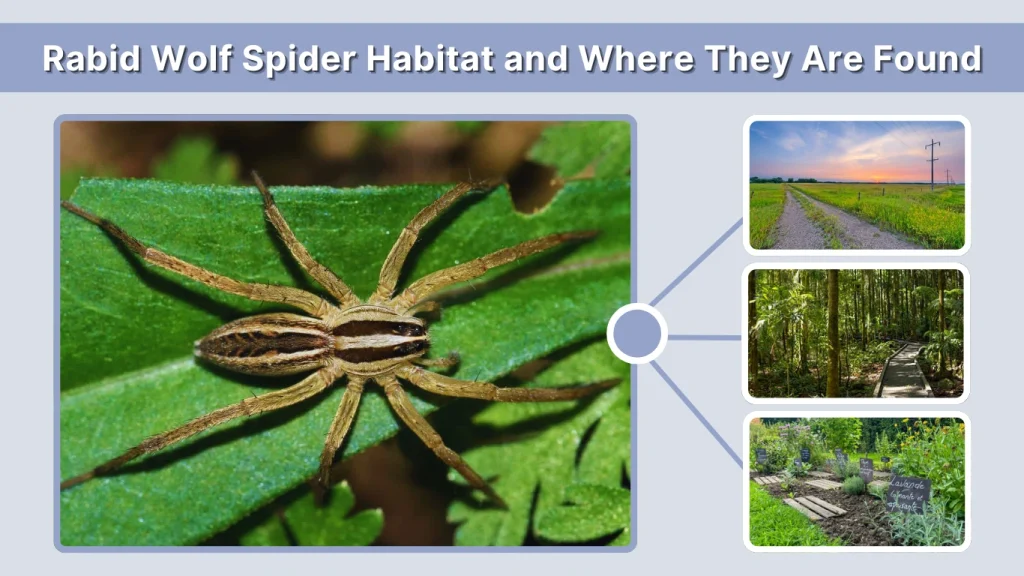
Rabid wolf spiders are commonly found in a variety of environments, especially where there is plenty of prey.
Geographic Range
This species is most commonly found in North America, particularly in the United States. They thrive in warm climates but can adapt to different environments.
Natural Habitat
Rabid wolf spiders prefer outdoor habitats such as grasslands, forests, gardens, and fields. They typically live on the ground, hiding under rocks, leaves, or debris during the day.
Do They Enter Homes?
Although they prefer outdoor environments, rabid wolf spiders may occasionally enter homes. This usually happens when they are searching for food or shelter. They are not indoor spiders and do not typically infest homes.
Behavior and Hunting Style

The rabid wolf spider is known for its active hunting behavior and impressive speed.
Hunting Behavior
Unlike web-building spiders, rabid wolf spiders hunt their prey directly. They chase and capture insects using their strong legs and sharp reflexes. This makes them highly effective predators.
Diet
Their diet mainly consists of insects and other small arthropods, such as ants, beetles, and flies. Because they feed on pests, they are actually beneficial to humans and gardens.
Activity Patterns
Rabid wolf spiders are mostly nocturnal, meaning they are more active at night. During the day, they hide in sheltered areas to avoid predators. At night, they come out to hunt, using their excellent vision to locate prey.
Are Rabid Wolf Spiders Dangerous?
One of the biggest concerns people have is whether these spiders pose a threat.
Venom and Toxicity
Rabid wolf spiders do have venom, but it is mild and not harmful to healthy humans. Their venom is primarily used to subdue prey rather than for defense against larger animals.
What Happens If They Bite?
Bites from rabid wolf spiders are rare and usually occur only when the spider feels threatened. A bite may cause mild pain, redness, or swelling, similar to a bee sting. Symptoms typically go away within a short time without medical treatment.
When to Seek Medical Help
Although bites are generally harmless, medical attention may be needed in rare cases. If you notice severe swelling, persistent pain, signs of infection, or an allergic reaction such as difficulty breathing, it’s best to consult a healthcare professional. These situations are uncommon but should not be ignored.
Rabid Wolf Spider vs Other Spiders
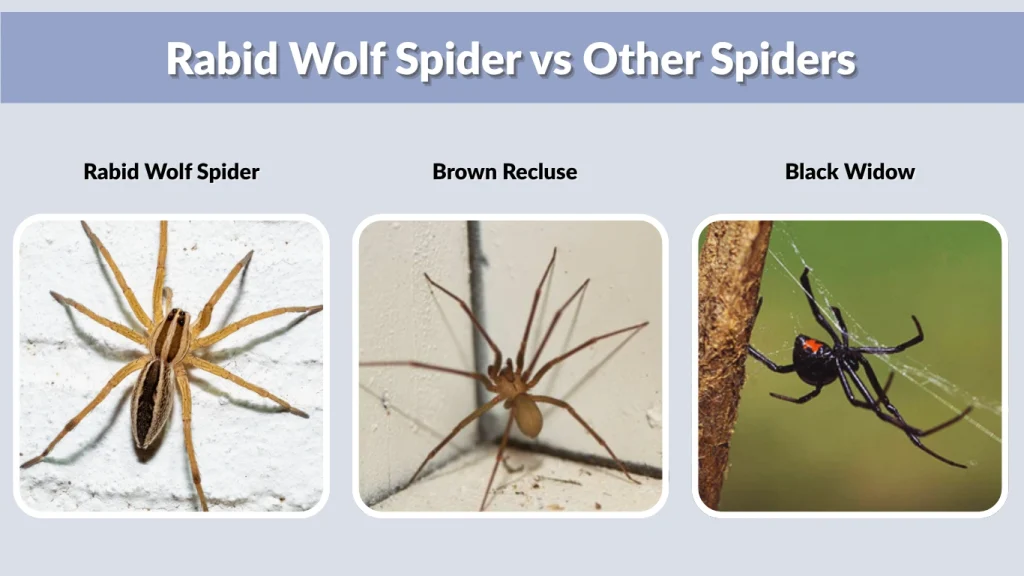
Many people confuse rabid wolf spiders with more dangerous species. Understanding the differences can help reduce unnecessary fear.
vs Brown Recluse
The brown recluse spider is often mistaken for a wolf spider, but there are clear differences. Brown recluses have a violin-shaped marking on their back and prefer dark, undisturbed indoor spaces. Their venom is more potent and can cause serious skin damage. In contrast, rabid wolf spiders are more active, lack the violin marking, and are far less dangerous.
vs Black Widow
Black widows are easily recognizable due to their shiny black bodies and red hourglass marking. Their venom is significantly stronger than that of a rabid wolf spider. Unlike wolf spiders, black widows build webs and tend to stay hidden. Rabid wolf spiders, on the other hand, roam freely and rely on speed rather than webs.
Common Myths and Misconceptions
There are several myths surrounding rabid wolf spiders that often cause unnecessary panic.
- Myth: They carry rabies
This is completely false. Spiders cannot carry or transmit rabies. - Myth: They are aggressive toward humans
Rabid wolf spiders are not aggressive. They may appear intimidating due to their speed, but they usually run away when disturbed. - Myth: Their bite is deadly
Their bite is not dangerous to most people and rarely requires medical attention.
How to Identify a Rabid Wolf Spider
Correct identification is important to avoid confusing this harmless spider with more dangerous species.
Visual Clues
Look for a brown or gray body with subtle stripes and a somewhat hairy appearance. The eye arrangement is one of the most reliable features—two large eyes in the middle row are especially noticeable.
Behavior Clues
Rabid wolf spiders do not spin webs to catch prey. Instead, they are often seen running across the ground, especially at night. This behavior is a key indicator that you’re dealing with a wolf spider rather than a web-building species.
Prevention and Control Tips
While these spiders are generally harmless, some people prefer to keep them out of their homes.
Inside the Home
- Seal cracks and gaps around doors and windows
- Keep floors and corners clean and clutter-free
- Reduce indoor insects that may attract spiders
Outdoor Prevention
- Trim grass and maintain your yard
- Remove piles of leaves, wood, or debris
- Keep outdoor lighting minimal to avoid attracting insects
What to Do If You See One
Encountering a rabid wolf spider can be surprising, but there’s no need to panic.
Safe Removal
The safest way to remove a spider is to use a container and gently trap it, then release it outside. Avoid handling it directly to reduce the risk of a defensive bite.
When to Call Professionals
If you notice frequent sightings or suspect a larger spider problem, contacting pest control may be helpful. However, a single spider is usually not a cause for concern.
Ecological Importance
Rabid wolf spiders play an important role in maintaining ecological balance.
They help control insect populations by feeding on common pests, reducing the need for chemical pesticides. This makes them beneficial for gardens and agricultural areas. Additionally, they are part of the food chain, serving as prey for birds and other animals.
FAQs
Is the rabid wolf spider poisonous or venomous?
Rabid wolf spiders are venomous, not poisonous. Their venom is mild and used to subdue prey, and it does not pose a serious threat to humans.
Why do rabid wolf spiders run so fast?
These spiders rely on speed instead of webs to catch prey. Their fast movement helps them hunt effectively and escape from predators.
Are rabid wolf spiders active during the day?
They are mostly nocturnal, meaning they are more active at night. During the day, they usually hide under rocks, leaves, or other sheltered areas.
Do rabid wolf spiders jump like jumping spiders?
No, rabid wolf spiders do not jump like jumping spiders. They primarily run quickly to chase and capture their prey.
Can rabid wolf spiders infest homes?
They do not typically infest homes. If they enter indoors, it is usually accidental while searching for food or shelter, not because they live there permanently.
Conclusion
The rabid wolf spider may sound frightening, but it is largely harmless and even beneficial. By understanding its behavior, appearance, and role in nature, you can replace fear with awareness. These spiders help control pests and rarely pose any real threat to humans. Instead of fearing them, it’s better to respect their place in the ecosystem and handle encounters calmly and safely.