





Rabbits come in a fascinating variety of species and breeds, each with its own unique traits, behaviors, and appearances. From the speedy jackrabbits of North America to the rare and endangered Amami rabbit of Japan, these mammals are found across diverse habitats—from deserts and forests to arctic tundras. Domesticated breeds like the Flemish Giant and Mini Rex have also won hearts as lovable pets.
In this guide, you’ll explore 25 types of rabbits—both wild and domestic—complete with their key identification traits, habitat preferences, and personality highlights. Whether you’re a nature lover or a rabbit enthusiast, there’s a lot to discover.
1. European Rabbit

The European rabbit (Oryctolagus cuniculus) is the original ancestor of most domestic rabbit breeds and is also one of the few rabbit species that digs complex burrow systems called warrens. Native to Europe and parts of North Africa, it has been introduced to many regions around the world.
Identification
- Color: Typically grayish-brown with a white belly
- Size: Body length 15–18 inches (38–46 cm)
- Weight: 1.2–2.5 kg (2.6–5.5 lbs)
- Ears: Medium-length and upright
- Tail: Short and fluffy, white underneath
- Build: Compact body, strong hind legs, and a slightly rounded face
Habitat and Distribution
Found in meadows, grasslands, woods, and farmlands throughout Western Europe, Australia, New Zealand, and South America (as an introduced species). Prefers areas with loose soil suitable for burrowing.
Behavior and Diet
Herbivorous—feeds on grasses, herbs, bark, and leafy greens. They live in social groups and build underground warrens for protection. Mostly active during dawn and dusk (crepuscular). Known for their rapid reproduction, which contributes to their success—and invasive status—in many regions.
2. Eastern Cottontail
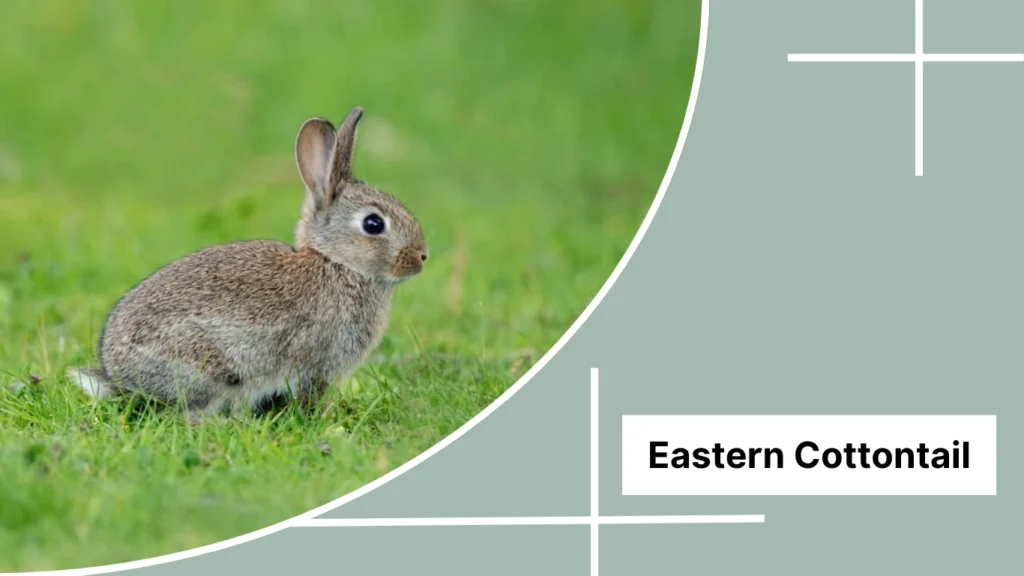
The Eastern cottontail (Sylvilagus floridanus) is the most common wild rabbit in North America. It’s easily recognized by its fluffy white tail and is often seen in suburban yards, fields, and forests.
Identification
- Color: Reddish-brown or grayish-brown fur with a white underside
- Size: Body length 14–17 inches (35–43 cm)
- Weight: 0.9–1.8 kg (2–4 lbs)
- Ears: Long and upright
- Tail: Puffy and white, resembling a cotton ball
- Build: Compact body with large eyes and powerful hind legs
Habitat and Distribution
Found throughout the eastern and central United States, Mexico, and parts of Canada. Prefers brushy areas, meadows, edges of forests, and suburban landscapes.
Behavior and Diet
Herbivorous—eats grasses, clover, bark, buds, and garden vegetables. Solitary and territorial. Builds shallow ground nests called forms and relies on camouflage and speed to evade predators. Breeds prolifically during warmer months.
3. Desert Cottontail

The Desert cottontail (Sylvilagus audubonii), also known as Audubon’s cottontail, is well-adapted to arid environments of the American Southwest and northern Mexico.
Identification
- Color: Light brown to grayish with a pale belly and reddish nape
- Size: Body length 12–15 inches (30–38 cm)
- Weight: 0.8–1.2 kg (1.8–2.6 lbs)
- Ears: Long and thin, often translucent in sunlight
- Tail: White and fluffy
- Build: Slender with long limbs for speed
Habitat and Distribution
Found in deserts, dry shrublands, and grasslands across Arizona, New Mexico, Texas, Utah, and northern Mexico. Often seen in areas with cactus, mesquite, and low brush.
Behavior and Diet
Feeds on grasses, mesquite leaves, bark, and cactus pads. Primarily active during early morning and evening. They rely on stillness and short bursts of high-speed running to escape predators. Unlike some other rabbits, they do not dig burrows but may use abandoned dens or rest under shrubs.
4. Mountain Cottontail

The Mountain cottontail (Sylvilagus nuttallii) is a wild rabbit native to the western United States and Canada, typically found in mountainous or rocky terrain. It’s smaller than the Eastern cottontail and well-adapted to drier, open habitats.
Identification
- Color: Grayish-brown or tan with a white underside and light-tipped fur
- Size: Body length 13–15 inches (33–38 cm)
- Weight: 0.8–1.1 kg (1.7–2.4 lbs)
- Ears: Medium-length with black tips
- Tail: Round and white, like a cotton ball
- Build: Compact and sturdy, suited for quick movement on rocky surfaces
Habitat and Distribution
Common in rocky hills, sagebrush plains, and foothills across the western U.S., from Montana to California and parts of western Canada. Often found in brushy or wooded valleys.
Behavior and Diet
Feeds on sagebrush, grasses, and woody plants. Active at dawn and dusk (crepuscular) and uses dense vegetation or rock crevices for cover instead of burrows. Solitary and very alert, this species uses quick, zigzag jumps to escape predators.
5. Brush Rabbit

The Brush rabbit (Sylvilagus bachmani) is a small, shy species of cottontail native to the Pacific coast of the United States. It thrives in dense brush and coastal scrubland.
Identification
- Color: Dark gray or brown with a slate-gray belly
- Size: Body length 11–14 inches (28–36 cm)
- Weight: 0.6–1.0 kg (1.3–2.2 lbs)
- Ears: Shorter and rounder than other cottontails
- Tail: Short, fluffy, and less prominent
- Build: Compact body with small limbs
Habitat and Distribution
Found from southern Oregon to Baja California, mostly in chaparral, brambles, and coastal forest edges. Avoids open spaces, preferring thick cover.
Behavior and Diet
Eats grass, shrubs, berries, and green plants. Primarily active at twilight and night. Builds runways through brush and rarely strays far from cover. Unlike burrowing species, brush rabbits nest above ground in shallow depressions.
6. Swamp Rabbit

The Swamp rabbit (Sylvilagus aquaticus) is the largest of the cottontail rabbits and is uniquely adapted to wetland environments. It is an excellent swimmer and thrives in the swampy areas of the southern United States.
Identification
- Color: Dark brown fur with a reddish nape and white belly
- Size: Body length 16–20 inches (41–51 cm)
- Weight: 1.5–2.5 kg (3.3–5.5 lbs)
- Ears: Medium-sized and rounded
- Tail: White and fluffy, like other cottontails
- Build: Stocky with powerful hind legs
Habitat and Distribution
Found in wetlands, swamps, bayous, and river floodplains from Texas to South Carolina and north into Illinois and Missouri.
Behavior and Diet
Feeds on grasses, sedges, twigs, and aquatic plants. Active at night and dawn/dusk. It often escapes predators by diving into water and hiding beneath overhanging vegetation. Nests are built in dense, moist vegetation rather than burrows.
7. Marsh Rabbit
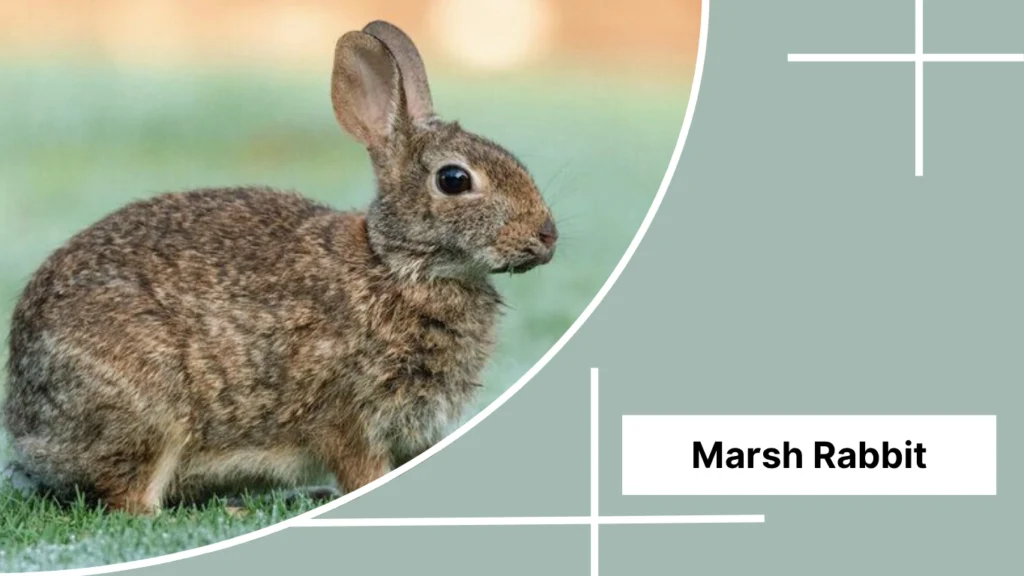
The Marsh rabbit (Sylvilagus palustris) is another water-loving rabbit found in the southeastern U.S., especially in Florida and along the Gulf Coast. It’s smaller than the swamp rabbit but shares similar aquatic habits.
Identification
- Color: Dark brown back, reddish sides, and grayish-brown belly
- Size: Body length 14–16 inches (36–41 cm)
- Weight: 1.0–1.5 kg (2.2–3.3 lbs)
- Ears: Small and rounded
- Tail: Small, barely visible
- Build: Short-legged and compact
Habitat and Distribution
Common in marshes, wet meadows, tidal flats, and swamps across Florida, Georgia, and nearby coastal states.
Behavior and Diet
Eats aquatic vegetation, grasses, and shrubs. Marsh rabbits are excellent swimmers and may use water to avoid predators. Unlike most rabbits, they walk rather than hop when moving slowly and frequently use well-worn runways through marsh plants.
8. New England Cottontail

The New England cottontail (Sylvilagus transitionalis) is a rare and declining species of rabbit found only in a few northeastern U.S. states. It’s often confused with the Eastern cottontail but has more specific habitat needs and a smaller range.
Identification
- Color: Brownish with black-tipped guard hairs and a cinnamon or grayish belly
- Size: Body length 15–18 inches (38–45 cm)
- Weight: 1.0–1.4 kg (2.2–3.1 lbs)
- Ears: Rounded, with a dark spot between the ears
- Tail: White and fluffy, similar to other cottontails
- Build: Compact and short-legged
Habitat and Distribution
Found in dense thickets and young forest growth in New England states, including parts of Connecticut, Rhode Island, Massachusetts, New Hampshire, and New York.
Behavior and Diet
Feeds on woody shrubs, grasses, and bark. It requires thick, brushy cover to hide from predators. Unlike the adaptable Eastern cottontail, this species is dependent on early successional habitats and is considered vulnerable due to habitat loss.
9. Appalachian Cottontail

The Appalachian cottontail (Sylvilagus obscurus) is a high-elevation rabbit found in the Appalachian Mountains. It was previously grouped with the New England cottontail but is now recognized as a separate species.
Identification
- Color: Brownish-gray with black-tipped fur and a pale belly
- Size: Body length 14–17 inches (36–43 cm)
- Weight: 1.0–1.3 kg (2.2–2.9 lbs)
- Ears: Rounded with a faint black spot between them
- Tail: White below, dark above
- Build: Slightly stocky and well-insulated
Habitat and Distribution
Inhabits mountainous regions from Pennsylvania to northern Georgia, mainly in dense shrubs and heath thickets at elevations above 2,500 feet.
Behavior and Diet
Eats grasses, berries, bark, and twigs. It prefers dense understory and avoids open areas. Shy and elusive, it is less commonly seen than other cottontails and is considered near threatened due to limited range and habitat disturbance.
10. Pygmy Rabbit

The Pygmy rabbit (Brachylagus idahoensis) is the smallest rabbit species in North America and one of the few that digs its own burrow. It’s specially adapted to sagebrush habitats in the western United States.
Identification
- Color: Grayish-brown overall with fine fur and no white on the tail
- Size: Body length 9–12 inches (23–30 cm)
- Weight: 0.3–0.5 kg (0.6–1.1 lbs)
- Ears: Short and rounded
- Tail: Small and inconspicuous, blends with body color
- Build: Petite and rounded with short limbs
Habitat and Distribution
Found in sagebrush-dominated areas of Idaho, Montana, Nevada, Oregon, Utah, and Wyoming. Prefers deep, loose soils for burrowing beneath sagebrush.
Behavior and Diet
Feeds almost exclusively on sagebrush, especially in winter. It is shy, crepuscular, and an excellent digger—often creating elaborate burrow systems for shelter and nesting. Due to its dependence on sagebrush habitat, it is considered a species of concern in many areas.
11. Amami Rabbit
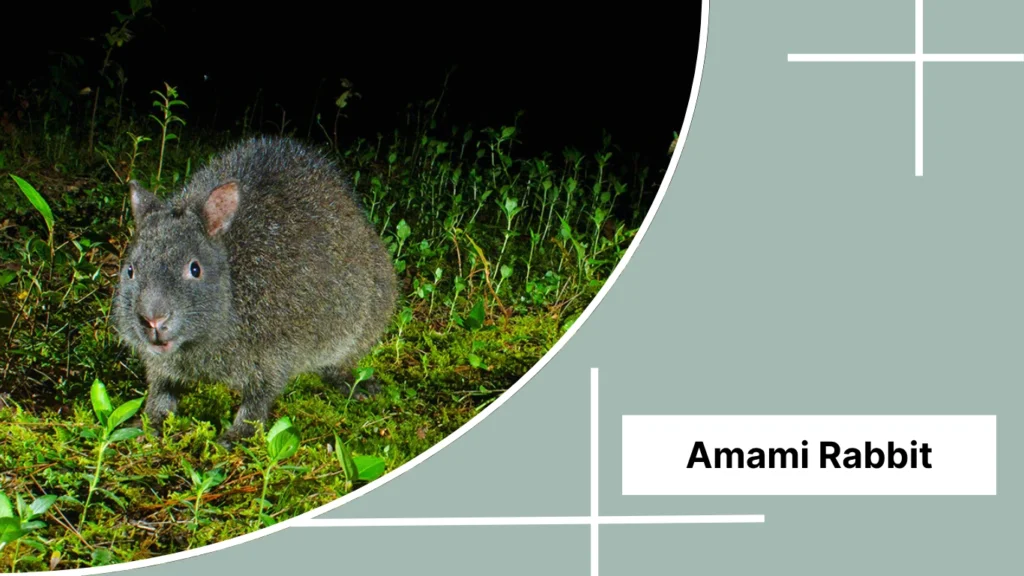
The Amami rabbit (Pentalagus furnessi) is a primitive and endangered species found only on two small Japanese islands—Amami Ōshima and Tokunoshima. It is sometimes called a “living fossil” due to its ancient lineage.
Identification
- Color: Dark brown to black, with short, dense fur
- Size: Body length 16–20 inches (40–50 cm)
- Weight: 2.0–2.5 kg (4.4–5.5 lbs)
- Ears: Very short and rounded
- Tail: Tiny and barely visible
- Build: Stocky with short limbs and long claws
Habitat and Distribution
Restricted to subtropical forests on Amami Ōshima and Tokunoshima islands in southern Japan. Prefers old-growth forests with thick leaf litter.
Behavior and Diet
Nocturnal—feeds on leaves, grasses, and tree bark. Unlike most rabbits, it doesn’t hop but walks or waddles. It digs shallow burrows and may use tree hollows. Due to habitat loss and introduced predators, it is listed as endangered and protected by law in Japan.
12. Volcano Rabbit

The Volcano rabbit (Romerolagus diazi) is one of the world’s rarest and smallest rabbits, found only in a small region of central Mexico near volcanic slopes. Locally known as the “teporingo,” it is critically endangered.
Identification
- Color: Dark brown to blackish fur
- Size: Body length 10–13 inches (25–33 cm)
- Weight: 0.4–0.6 kg (0.9–1.3 lbs)
- Ears: Very small and rounded
- Tail: Tiny and hard to distinguish from the body
- Build: Compact with short limbs and dense fur
Habitat and Distribution
Restricted to high-altitude pine forests and grassy volcanic slopes near Mexico City, typically at elevations between 2,800 and 4,200 meters.
Behavior and Diet
Feeds on bunchgrasses, herbs, and bark. Very secretive and mostly active at dusk and dawn. Lives in underground burrows or dense vegetation. Habitat destruction and urban expansion threaten its survival.
13. Riverine Rabbit
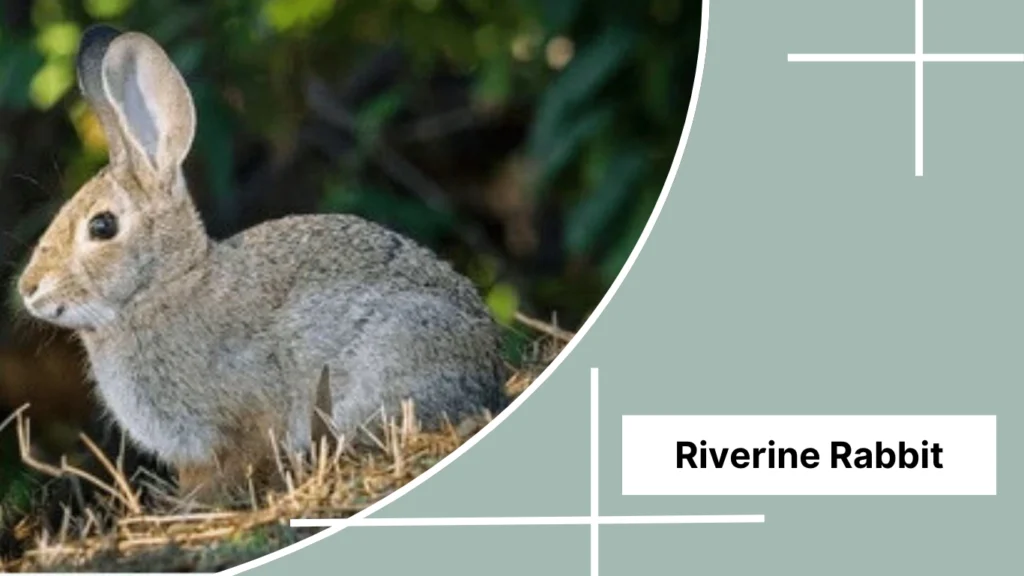
The Riverine rabbit (Bunolagus monticularis) is one of Africa’s most endangered mammals. It lives exclusively along seasonal rivers in South Africa’s Karoo Desert and has a highly specialized habitat.
Identification
- Color: Brown with a black stripe running from mouth to cheek; cream-colored ring around the eye
- Size: Body length 14–18 inches (36–46 cm)
- Weight: 1.4–2.0 kg (3.1–4.4 lbs)
- Ears: Long and narrow with dark tips
- Tail: Short and inconspicuous
- Build: Slender with strong hind limbs
Habitat and Distribution
Found only in a few isolated patches in the Central and Upper Karoo regions of South Africa. Depends on dense vegetation along dry riverbeds for shelter and food.
Behavior and Diet
Feeds on grasses, shrubs, and desert plants. Nocturnal and solitary, it builds shallow scrapes in thick brush for resting. The Riverine rabbit is critically endangered due to habitat fragmentation from farming and livestock grazing. Conservation efforts are underway to protect its remaining population.
14. Japanese Hare

The Japanese hare (Lepus brachyurus) is a wild hare species native to Japan. It is well adapted to hilly, forested, and even snowy regions, and is known for its seasonal coat color change in some populations.
Identification
- Color: Reddish-brown in most seasons; some populations turn white in winter
- Size: Body length 18–22 inches (45–55 cm)
- Weight: 2.5–3.5 kg (5.5–7.7 lbs)
- Ears: Shorter than other hares, with black-tipped ends
- Tail: Small and rounded
- Build: Muscular with long hind limbs for jumping
Habitat and Distribution
Commonly found in Honshu, Shikoku, and Kyushu islands in Japan. Inhabits forested mountains, hillsides, farmlands, and even suburban green spaces.
Behavior and Diet
Feeds on grasses, bark, buds, and shrubs. Mostly nocturnal and solitary. It doesn’t dig burrows but hides in vegetation or shallow depressions. It is occasionally active during the day, especially in quiet, remote areas.
15. Arctic Hare
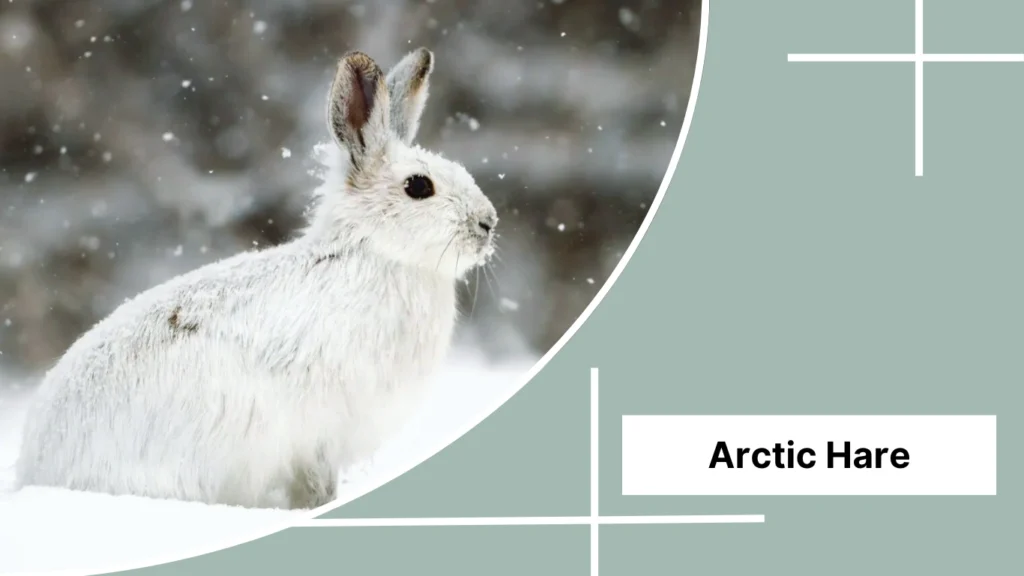
The Arctic hare (Lepus arcticus) is a species adapted to the extreme cold of the Arctic tundra. It is known for its thick white coat and powerful limbs that help it survive in harsh climates.
Identification
- Color: White in winter; grayish or blue-gray in summer
- Size: Body length 17–28 inches (43–70 cm)
- Weight: 3.5–6.0 kg (7.7–13.2 lbs)
- Ears: Short and rounded to reduce heat loss
- Tail: Short and fluffy
- Build: Stout body with strong hind legs and dense fur
Habitat and Distribution
Found in northern Canada, Greenland, and the Arctic Archipelago. Inhabits open tundra, rocky outcrops, and coastal areas.
Behavior and Diet
Feeds on mosses, lichens, woody plants, and berries. Active year-round, even in deep snow. It uses snow burrows for shelter and can run at speeds over 60 km/h to escape predators. Often forms groups during winter for warmth and protection.
16. Snowshoe Hare

The Snowshoe hare (Lepus americanus) is named for its large, furry hind feet that help it move easily across snow. It is native to North America and is well-known for its seasonal fur color change.
Identification
- Color: White in winter, rusty-brown in summer
- Size: Body length 16–20 inches (41–51 cm)
- Weight: 1.4–1.7 kg (3.0–3.8 lbs)
- Ears: Long with black tips
- Tail: Small and white
- Build: Large hind feet with thick fur and long legs
Habitat and Distribution
Found across Canada, Alaska, and northern parts of the U.S., including the Rocky and Appalachian Mountains. Inhabits boreal forests, dense undergrowth, and mixed woodlands.
Behavior and Diet
Feeds on twigs, bark, buds, and grasses. Nocturnal and very elusive, relying on camouflage and quick zigzag hops to evade predators. Its population is known to fluctuate in cycles of about 10 years due to predator-prey dynamics.
17. Cape Hare
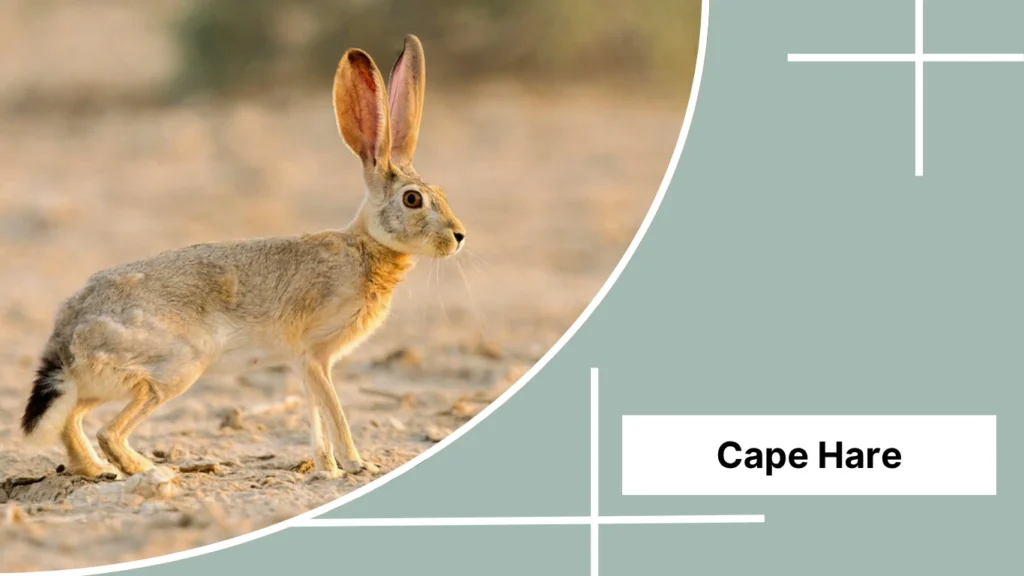
The Cape hare (Lepus capensis) is a desert- and savanna-adapted hare found throughout Africa and parts of the Middle East and Central Asia. It is swift and alert, built for life in open landscapes.
Identification
- Color: Light brown to sandy tan with white belly and black-edged ears
- Size: Body length 18–26 inches (45–66 cm)
- Weight: 1.5–3.5 kg (3.3–7.7 lbs)
- Ears: Long and upright, often with dark tips
- Tail: Short with black top and white underside
- Build: Long legs and slender body for running
Habitat and Distribution
Found across much of sub-Saharan Africa, North Africa, the Middle East, and Central Asia. Prefers arid regions, grasslands, and open scrubland.
Behavior and Diet
Feeds on grasses, herbs, and desert shrubs. Mostly nocturnal and solitary. Rests in shallow depressions during the day and becomes active at night. Excellent runner—can reach speeds over 70 km/h (43 mph) when fleeing predators.
18. Black-tailed Jackrabbit

The Black-tailed jackrabbit (Lepus californicus) is a species of hare native to the western United States and Mexico. Known for its extremely long ears and powerful legs, it thrives in deserts and grasslands.
Identification
- Color: Grayish-brown body with a white underside and a black stripe on the tail
- Size: Body length 18–25 inches (46–64 cm)
- Weight: 1.5–3.0 kg (3.3–6.6 lbs)
- Ears: Very long and thin, with black tips
- Tail: Prominent, black on top, white underneath
- Build: Slender, built for speed and long-distance running
Habitat and Distribution
Common throughout the southwestern U.S., including California, Arizona, Texas, and northern Mexico. Prefers deserts, prairies, shrublands, and open woodlands.
Behavior and Diet
Feeds on sagebrush, grasses, cacti, and crops. Active mostly at dusk and night. Uses its keen hearing and strong hind legs to detect and escape predators. Can leap up to 10 feet and run at speeds over 40 mph (64 km/h).
19. White-tailed Jackrabbit
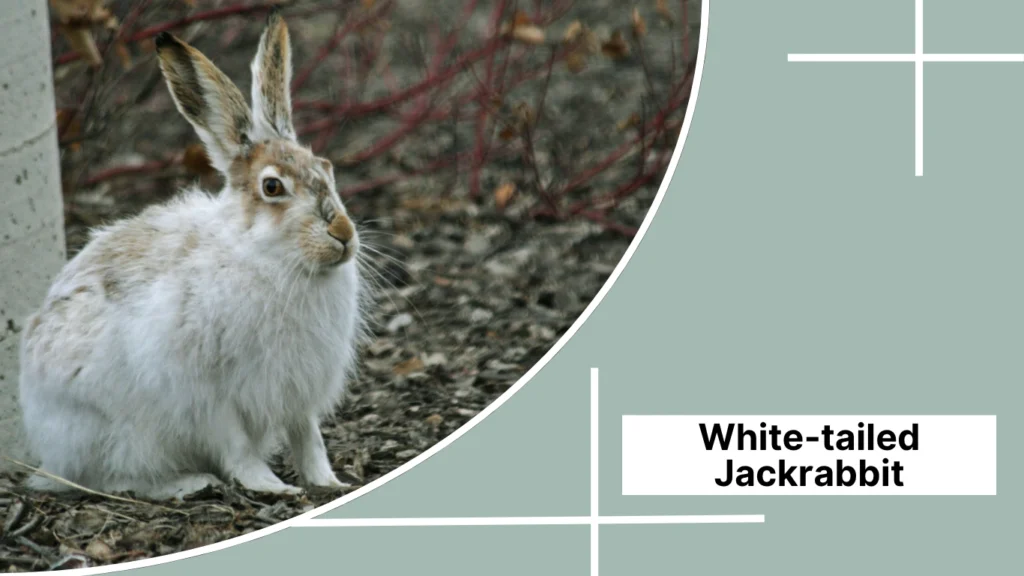
The White-tailed jackrabbit (Lepus townsendii) is a large hare species adapted to grasslands and high-elevation habitats in North America. It’s especially well-known for its striking white tail and seasonal coat changes.
Identification
- Color: Brownish-gray in summer; white or pale gray in winter
- Size: Body length 20–26 inches (51–66 cm)
- Weight: 3.0–4.5 kg (6.6–9.9 lbs)
- Ears: Long, with black tips
- Tail: Large and entirely white
- Build: Robust and long-legged
Habitat and Distribution
Native to the Great Plains and western U.S., from Minnesota and the Dakotas to Montana, Wyoming, and parts of Canada. Found in grasslands, agricultural areas, and alpine meadows.
Behavior and Diet
Feeds on grasses, shrubs, and cultivated crops. Mostly nocturnal and solitary. When threatened, it relies on its strong legs to flee at high speeds and can cover great distances in a single bound. Uses its white coat to blend in with snowy landscapes during winter.
20. Belgian Hare

The Belgian Hare is a domestic rabbit breed developed in the 19th century to resemble a wild hare in both body and movement. Despite its name, it is a rabbit—not a true hare—and is valued for its sleek build and energetic personality.
Identification
- Color: Rich reddish-rust or chestnut red with black ticking
- Size: Body length 20–26 inches (50–66 cm)
- Weight: 2.7–4.1 kg (6–9 lbs)
- Ears: Long, upright, and slender
- Tail: Medium-length and matching body color
- Build: Slender, arched back, long limbs—hare-like appearance
Habitat and Distribution
As a domestic breed, it’s raised in homes, farms, and breeding facilities worldwide, especially in the U.S., U.K., and Belgium.
Behavior and Diet
Eats hay, vegetables, rabbit pellets, and herbs. Known for being alert, nervous, and quick—requiring plenty of space to exercise. Not ideal for young children due to their sensitivity and speed, but popular among rabbit show enthusiasts.
21. Flemish Giant

The Flemish Giant is one of the largest domestic rabbit breeds in the world. Originally bred for meat and fur, it is now widely kept as a gentle and friendly pet.
Identification
- Color: Comes in a variety of colors—light gray, black, blue, white, and fawn
- Size: Body length up to 30 inches (76 cm)
- Weight: 6.8–10 kg (15–22 lbs) or more
- Ears: Long and wide, standing upright
- Tail: Medium-length and fluffy
- Build: Heavy, muscular, and broad with a long body
Habitat and Distribution
Domesticated globally, especially popular in North America and Europe as show animals or family pets.
Behavior and Diet
Feeds on hay, leafy greens, and commercial rabbit food. Despite their size, Flemish Giants are known for their calm and docile temperament. They need large enclosures or free-roaming space due to their massive size and should be handled gently.
22. Dutch Rabbit

The Dutch rabbit is one of the most recognizable and popular domestic breeds, easily identified by its unique color pattern. Originally developed in England, it’s known for being friendly, playful, and easy to care for.
Identification
- Color: Typically black, blue, chocolate, or gray with a white blaze on the face, shoulders, and front legs
- Size: Body length 10–12 inches (25–30 cm)
- Weight: 1.8–2.5 kg (4–5.5 lbs)
- Ears: Short to medium, upright
- Tail: Short and well-rounded
- Build: Compact and rounded with a broad head
Habitat and Distribution
A domesticated breed kept as pets and show animals worldwide, especially in Europe and North America.
Behavior and Diet
Feeds on hay, leafy greens, and rabbit pellets. Known for its calm, social behavior—ideal for families and beginners. Likes regular playtime and companionship. Easy to train for litter habits and can be housed indoors or in spacious hutches.
23. English Angora
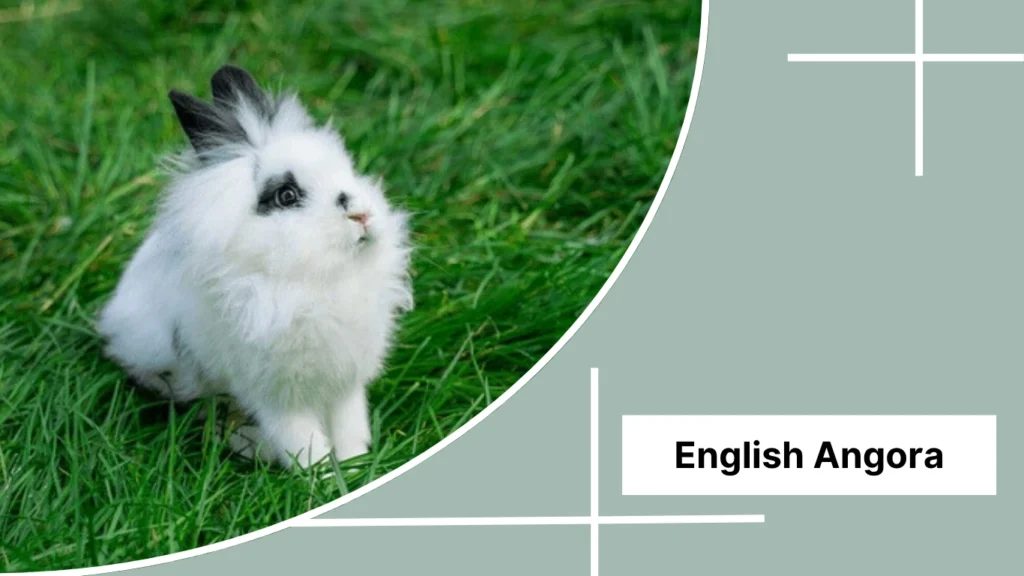
The English Angora is a wool-producing domestic rabbit breed known for its long, silky fur covering even the face and ears. It is one of the oldest Angora breeds and requires regular grooming.
Identification
- Color: Comes in many colors, including white, black, chocolate, and blue
- Size: Body length 12–16 inches (30–40 cm)
- Weight: 2.0–3.5 kg (4.4–7.7 lbs)
- Ears: Short to medium, often tufted with fur
- Tail: Hidden under thick wool
- Build: Round, compact body covered in dense wool
Habitat and Distribution
Domesticated and bred worldwide, especially in Europe, the U.S., and Asia for wool production and showing.
Behavior and Diet
Eats hay, vegetables, and rabbit pellets. Gentle and social, but requires frequent grooming to prevent wool mats and hair ingestion. Wool needs to be trimmed every few months. Best suited for owners who can commit time to coat care.
24. Mini Rex

The Mini Rex is a popular domestic rabbit breed known for its exceptionally soft, velvety fur and compact size. It’s a favorite among pet owners and rabbit show enthusiasts.
Identification
- Color: Available in many colors including black, white, chocolate, lilac, and broken (spotted)
- Size: Body length 10–12 inches (25–30 cm)
- Weight: 1.4–2.0 kg (3–4.5 lbs)
- Ears: Short, upright, and proportionate to body
- Tail: Small and fluffy
- Build: Compact, rounded body with fine bone structure
Habitat and Distribution
A domesticated breed kept as pets and show animals around the world, especially in the United States and Europe.
Behavior and Diet
Feeds on hay, leafy greens, and quality rabbit pellets. Known for its calm temperament and ease of handling. Great for children and small living spaces. Their low-maintenance fur (short and plush) requires minimal grooming.
25. Lionhead Rabbit

The Lionhead rabbit is a distinctive domestic breed recognized by the woolly “mane” of fur around its head, resembling a lion. It’s a newer breed that has quickly become a popular pet due to its unique look and friendly nature.
Identification
- Color: Wide variety—white, black, blue, chestnut, and more
- Size: Body length 8–10 inches (20–25 cm)
- Weight: 1.1–1.6 kg (2.5–3.5 lbs)
- Ears: Short to medium, upright or slightly lopped
- Tail: Short and fluffy
- Build: Compact with a mane of longer fur around the head and sometimes the flanks
Habitat and Distribution
A domestic breed popular across North America and Europe, commonly kept as a house rabbit or in hutches.
Behavior and Diet
Eats hay, greens, and pellets. Known for being social, playful, and gentle. Requires moderate grooming to maintain the mane and prevent tangles. Enjoys human interaction and can be trained for litter use and simple tricks.