




The Greenland shark (Somniosus microcephalus) is one of the most mysterious and remarkable creatures in the ocean. Living in the icy waters of the Arctic and North Atlantic, this massive deep-sea predator is best known for its extraordinary lifespan—making it the longest-living vertebrate ever recorded. Slow-moving and rarely seen, the Greenland shark thrives in freezing temperatures where few other large sharks can survive. In this guide, we’ll explore its size, habitat, diet, behavior, and the science behind its incredible longevity.
What Is a Greenland Shark?
The Greenland shark is a large deep-water shark belonging to the sleeper shark family, Somniosidae. It is specially adapted to cold, dark marine environments and has evolved to survive in some of the harshest ocean conditions on Earth.
Scientific Classification
- Scientific name: Somniosus microcephalus
- Family: Somniosidae
- Order: Squaliformes
Greenland sharks are closely related to other sleeper sharks, which are known for their slow movements and deep-sea habitats.
Why Is It Called a Sleeper Shark?
Greenland sharks are often referred to as “sleeper sharks” because of their extremely slow swimming speed and low metabolism. They move at a leisurely pace, conserving energy in the cold Arctic waters.
This slow lifestyle is not a weakness—it is a survival strategy. In freezing temperatures, a reduced metabolic rate helps them live longer and use less energy.
General Appearance
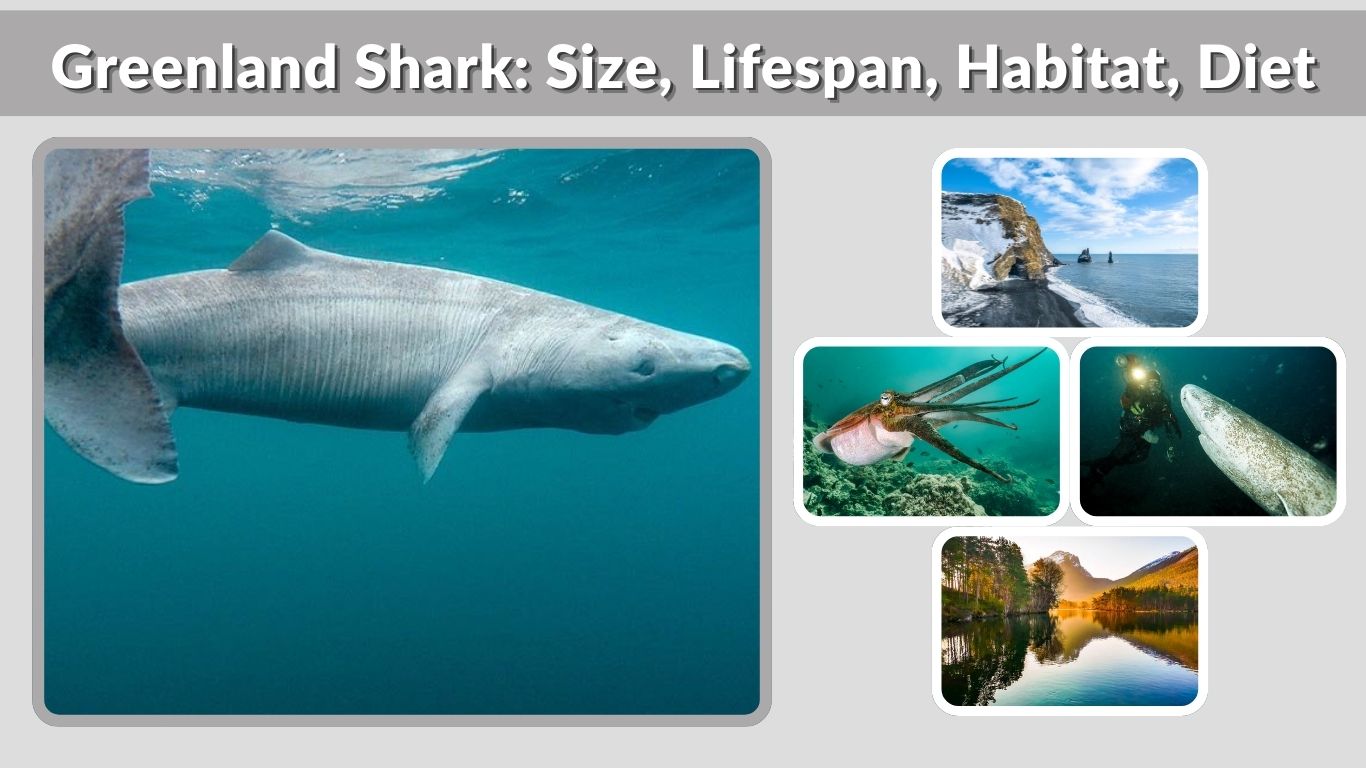
Greenland sharks have a thick, cylindrical body with a blunt snout and relatively small eyes. Their coloration ranges from dark gray to brown, often with lighter patches or scars.
Their skin is rough to the touch due to tiny tooth-like scales called dermal denticles. Unlike fast predatory sharks, they have small dorsal fins and lack the sleek body shape associated with speed.
Greenland Shark Size and Physical Characteristics
The Greenland shark is among the largest shark species in the world.
How Big Do Greenland Sharks Get?
- Average length: 8 to 14 feet (2.4–4.3 meters)
- Maximum length: Up to 21 feet (6+ meters)
- Weight: Can exceed 2,000 pounds (900+ kilograms)
Large females are typically bigger than males. Their massive size makes them one of the top predators in Arctic marine ecosystems.
Body Structure and Cold Adaptations
Greenland sharks have a heavy, muscular body built for endurance rather than speed. Their slow swimming speed—estimated at less than 1 mile per hour—reflects their low-energy lifestyle.
To survive in near-freezing waters, their bodies contain high levels of compounds like trimethylamine N-oxide (TMAO), which help stabilize proteins and prevent freezing damage.
Unique Physical Traits
One of the most unusual features of the Greenland shark is the presence of eye parasites. Many individuals host small copepods attached to their corneas. These parasites may impair vision, but the shark relies more heavily on its sense of smell than eyesight.
Their strong olfactory system helps them detect food in dark, deep waters where visibility is limited.
Greenland Shark Habitat and Distribution

Greenland sharks inhabit some of the coldest marine environments on Earth.
Where Do Greenland Sharks Live?
They are primarily found in:
- The Arctic Ocean
- The North Atlantic Ocean
- Waters around Greenland
- Iceland
- Norway
- Canada
They are especially common in deep waters near continental shelves.
Depth Range
Greenland sharks are highly adaptable when it comes to depth. They have been recorded:
- Near the surface in polar regions
- At depths of over 7,000 feet (2,200 meters)
In colder northern waters, they may swim closer to the surface, while in slightly warmer regions, they remain in deeper areas.
Cold-Water Adaptations
These sharks thrive in temperatures ranging from about 28°F to 45°F (-2°C to 7°C). Their specialized body chemistry prevents ice crystal formation in tissues, allowing them to function in freezing seawater.
Greenland Shark Diet: What Do They Eat?

Greenland sharks are carnivorous and opportunistic feeders.
Primary Food Sources
Their diet includes:
- Fish such as cod and halibut
- Squid
- Eels
- Deep-sea species
They consume a wide variety of prey depending on availability.
Scavenging Behavior
In addition to hunting, Greenland sharks are known scavengers. They feed on carcasses of marine mammals, including seals and whales, that sink to the ocean floor.
There have even been reports of remains of terrestrial animals found in their stomachs, likely carried into the sea by rivers or ice.
Do Greenland Sharks Hunt Seals?
One of the biggest mysteries surrounding Greenland sharks is how they manage to eat fast-moving seals despite being so slow.
Some researchers suggest they may ambush sleeping seals in cold waters. Others believe they mostly scavenge seal carcasses rather than actively hunting them. Ongoing research continues to explore this question.
Greenland Shark Behavior and Lifestyle
Greenland sharks are known for their slow, energy-efficient lifestyle. Everything about their movement and behavior reflects adaptation to cold, deep environments.
Slowest Shark Species
The Greenland shark is considered one of the slowest-moving shark species in the world. Studies estimate their cruising speed at less than 1 mile per hour (about 1.6 km/h). This sluggish pace is linked to their cold habitat and low metabolic rate.
Rather than chasing prey over long distances, they rely on stealth, patience, and opportunistic feeding.
Solitary Nature
Greenland sharks are generally solitary animals. They are rarely observed in groups and spend much of their lives moving quietly through deep, dark waters.
Because of their remote habitat, much about their daily behavior remains unknown. Most information comes from deep-sea cameras and accidental catches.
Vertical Movement
Although they are deep-sea sharks, Greenland sharks are known to move vertically in the water column. In Arctic regions, they may swim closer to the surface, especially during colder seasons. In warmer areas, they tend to stay at greater depths where temperatures remain low.
Greenland Shark Lifespan and Life Cycle

One of the most extraordinary facts about the Greenland shark is its incredible longevity.
How Long Do Greenland Sharks Live?
Greenland sharks are believed to live 250 to over 400 years, making them the longest-living vertebrates ever discovered.
Scientists estimated their age using radiocarbon dating techniques on eye tissue proteins. Some large females examined in studies were estimated to be nearly four centuries old.
This means a Greenland shark alive today may have been swimming in the ocean during the 1600s.
Growth Rate
Their long lifespan is linked to an extremely slow growth rate. Greenland sharks grow only about 0.5 to 1 centimeter per year.
Because of this slow development, they do not reach sexual maturity until around 100 to 150 years of age. This delayed maturity makes their populations particularly vulnerable to overfishing.
Reproduction
Greenland sharks are ovoviviparous, meaning embryos develop inside eggs that hatch within the mother’s body. The female then gives birth to live young.
Although research is limited, scientists believe a female may produce several pups per litter. Newborn sharks are already relatively large and independent at birth.
Due to their slow reproductive cycle and late maturity, population recovery takes a very long time.
Are Greenland Sharks Dangerous to Humans?
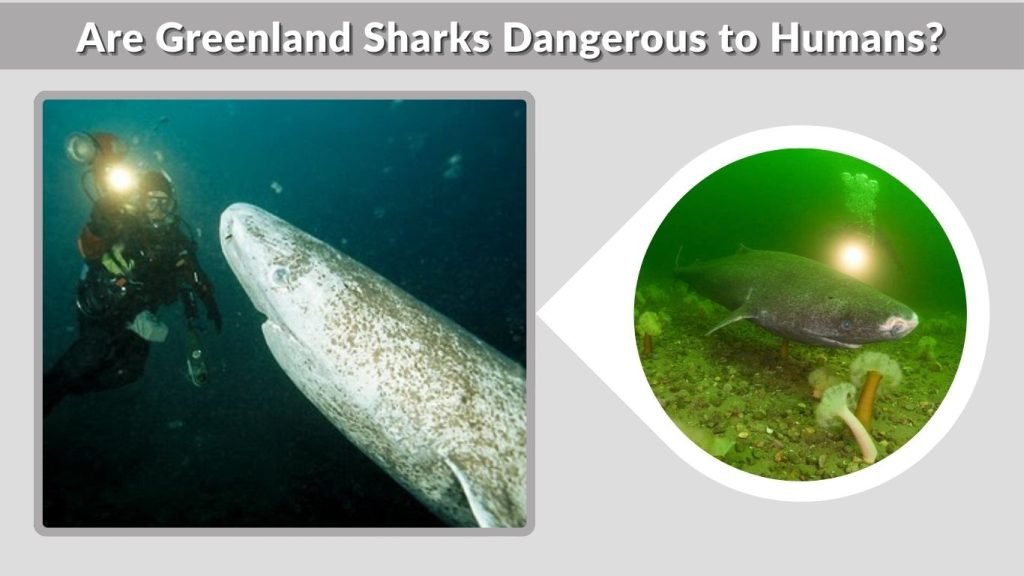
Despite their massive size, Greenland sharks pose very little threat to humans.
Human Encounters
Encounters are extremely rare because these sharks live in cold, deep waters where few people swim or dive. Most human contact has occurred through fishing operations or research expeditions.
They are not commonly found in popular swimming areas.
Documented Attacks
There are no confirmed modern records of unprovoked Greenland shark attacks on humans. A few historical accounts exist, but none have been verified by modern scientific standards.
Why They Pose Little Risk
Several factors reduce the risk of danger:
- Remote Arctic habitat
- Extremely slow swimming speed
- Limited interaction with humans
Overall, Greenland sharks are not considered aggressive toward people.
Fascinating Greenland Shark Facts
- They are the longest-living vertebrates known to science.
- Some individuals may be older than entire nations.
- Their flesh is toxic when fresh due to high levels of TMAO.
- In Iceland, fermented Greenland shark meat is eaten as a traditional dish called hákarl.
- Many individuals host eye parasites that may partially impair vision.
- They can survive in near-freezing water that would kill most other large fish.
These unique characteristics make the Greenland shark one of the most extraordinary marine animals on Earth.
Conservation Status and Threats
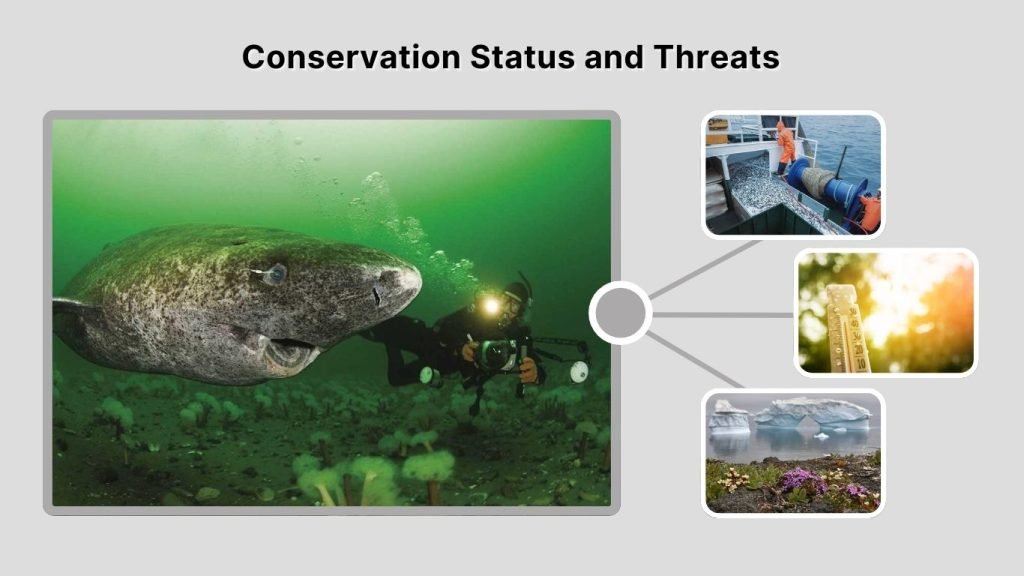
Although they live in remote waters, Greenland sharks are not free from threats.
IUCN Status
The Greenland shark is currently classified as Vulnerable due to its slow growth, long lifespan, and late maturity.
Main Threats
- Bycatch in commercial fisheries
- Historical fishing for liver oil
- Climate change affecting Arctic ecosystems
- Slow reproductive rate
Because they mature so late and live so long, even small increases in mortality can significantly impact population stability.
Importance of Protection
Protecting Greenland sharks is essential for maintaining Arctic marine ecosystems. As large predators and scavengers, they help recycle nutrients and maintain ecological balance.
Sustainable fishing practices and climate action are crucial for their long-term survival.
FAQs
How big is a Greenland shark?
Greenland sharks typically grow between 8 and 14 feet long, but some individuals can exceed 20 feet. Large females are usually bigger than males, and they can weigh over 2,000 pounds.
How long do Greenland sharks live?
They are believed to live between 250 and 400 years, making them the longest-living vertebrates known. Scientists estimate age using radiocarbon dating of eye tissue.
What do Greenland sharks eat?
Their diet includes fish, squid, and eels, along with scavenged marine mammals. They are opportunistic feeders and sometimes consume large carcasses on the seafloor.
Are Greenland sharks blind?
Many Greenland sharks carry eye parasites that may reduce vision, but they are not completely blind. They rely heavily on their strong sense of smell to find food.
Where do Greenland sharks live?
They inhabit the Arctic Ocean and North Atlantic, including waters around Greenland, Iceland, Norway, and Canada. They prefer deep, cold environments but may move closer to the surface in polar regions.